High-Protein Breakfast Burrito (38g Protein, No Sad Fillings)
A muscle-building breakfast burrito that ditches the greasy pork and limp scrambled eggs in favor of turkey sausage, cottage cheese folded into the eggs, and a Greek yogurt cilantro sauce. 38g protein per serving. Meal-preps beautifully. Better than anything you'd order through a drive-through window.
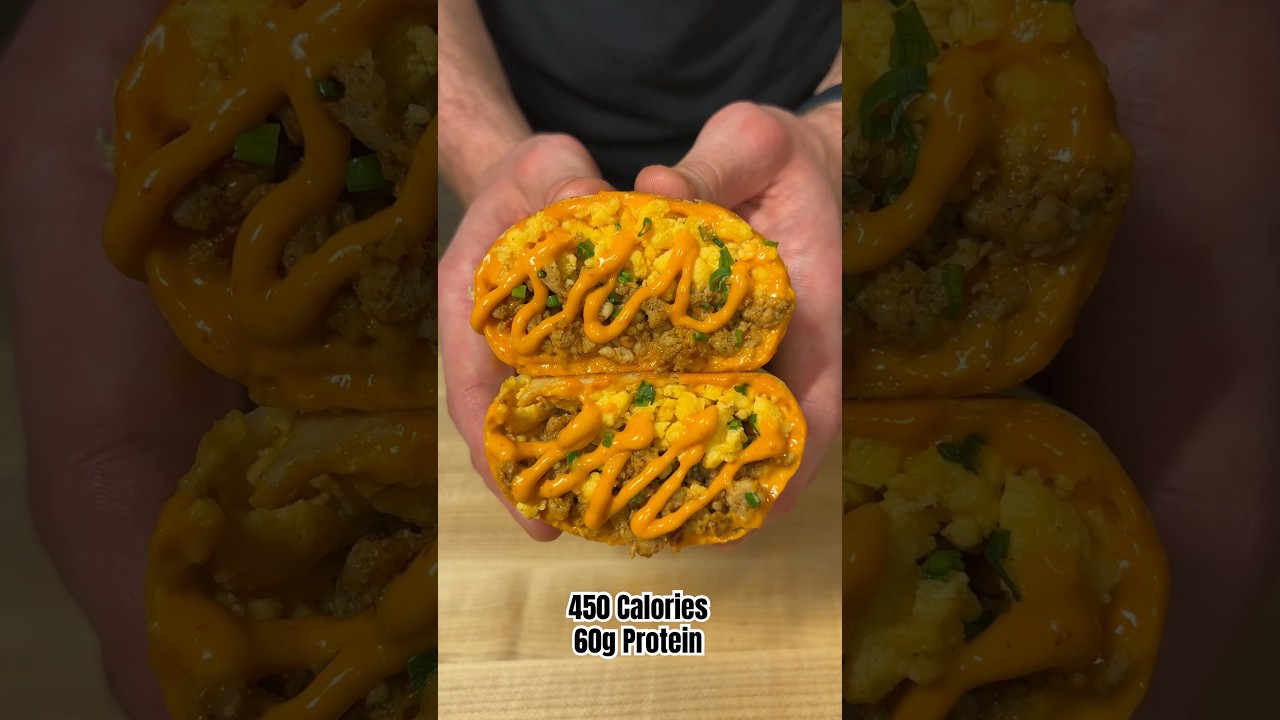
“Most breakfast burritos are 420 calories of regret: runny eggs, greasy sausage, and a quarter-inch of cheese doing nothing for your morning. This version swaps every low-protein ingredient for a higher-performing one — turkey sausage over pork, cottage cheese folded into the eggs for a custard-like creaminess, and Greek yogurt standing in for sour cream. The total protein jumps from 18g to 38g per burrito. Same format. Completely different result.”
Why This Recipe Works
The average breakfast burrito is a delivery mechanism for calories that runs out of gas by 10am. It has the right architecture — eggs, meat, cheese, tortilla — but the wrong ingredients filling each role. Swap them out systematically and you get the same format with more than double the protein, better satiety, and a filling that actually reheats without turning into a science experiment.
The Cottage Cheese Play
This is the move most people won't make because it sounds wrong. Cottage cheese in scrambled eggs. It sounds like a diet food compromise, the kind of swap that technically works but produces something you eat out of obligation rather than desire.
It doesn't work that way. Fold low-fat cottage cheese into scrambled eggs during the last 30 seconds of cooking and it melts into the curds, creating a custard-like creaminess that butter and cream can approximate but can't match. The casein protein — 14g per half-cup — is slow-digesting, which means it extends satiety beyond what whey or egg protein alone provides. It's not a compromise. It's an upgrade you can't taste as a substitution.
The technique matters: last 30 seconds, low heat, gentle folds. Add it too early and you get weeping liquid and broken curds. Overmix and the same thing happens. The goal is visible pockets of softened cottage cheese distributed through the scramble, not complete incorporation.
The Turkey Sausage Case
Ground turkey sausage isn't the exciting choice. It's the correct one. Pork breakfast sausage runs 300 calories and 25g fat per 4oz serving with about 15g protein. Ground turkey at the same weight: 160 calories, 8g fat, 22g protein. The trade-off in flavor is real but smaller than most people expect, especially once the sausage is caramelized in a hot skillet and mixed with cumin, cayenne, and bell pepper. Seasoning does the work that fat used to do.
The caramelization step is non-negotiable. Let the turkey sit undisturbed for 90 seconds before breaking it up. The contact with the hot pan creates Maillard browning — the same chemistry that makes seared steak taste different from boiled meat. Ground meat that's constantly stirred from the first second never develops this. You get gray protein instead of brown, flavorful protein.
The Yogurt Sauce Logic
Greek yogurt replacing sour cream is a swap that shows up on every fitness blog and mostly gets dismissed because it's presented wrong — a direct one-to-one substitution that produces something too dense and too sour. The correct application: mix nonfat Greek yogurt with fresh cilantro, salt, and pepper before using it. The herbs soften the acidity, the seasoning rounds out the flavor, and the resulting sauce reads as intentional rather than substituted. Twenty grams of protein per cup versus sour cream's three. The math is not subtle.
Why the Egg Technique Matters for Meal Prep
Standard scrambled eggs reheated from the fridge are rubbery and dry. This is physics: egg proteins tighten when reheated and, without additional moisture, they have nowhere to go. The cottage cheese and Greek yogurt in this recipe both act as moisture buffers during reheating, releasing liquid slowly into the eggs as they warm up. The result is a reheated burrito that's noticeably better than day-one standard scrambled eggs — a rare claim for any meal-prep breakfast.
Pull the eggs off heat when they're still slightly underdone. They carry over from residual heat inside the foil-wrapped burrito. Fully cooked eggs at assembly time turn to rubber by day three. Deliberately undercook them.
The Whole Wheat Tortilla Question
Whole wheat tortillas over white is a genuine nutritional improvement — 3g additional fiber per tortilla, more complex carbohydrates, better blood sugar stability — but they require warmer handling. White flour tortillas are more pliable at room temperature. Whole wheat tortillas crack at room temperature and need 30 full seconds of direct heat on each side before they'll roll without splitting. This is not optional. A cracked tortilla on a meal-prep burrito means four days of eating a pile of filling out of a torn wrapper.
Thirty-eight grams of protein per serving. The structure of a thing you'd actually want to eat every morning.
Where Beginners Mess This Up
Before we start, read this. These are the 4 reasons your high-protein breakfast burrito (38g protein, no sad fillings) will fail:
- 1
Overmixing the cottage cheese into the eggs: Cottage cheese needs to be folded in during the last 30 seconds of cooking, not whisked in at the start. Add it too early and it breaks down into watery curds and kills the creamy texture you're building. Add it at the end and it melts into the eggs in soft, rich pockets.
- 2
Not warming the tortillas: A cold tortilla cracks the moment you try to roll it, dumping your filling everywhere. Thirty seconds per side in a dry skillet or directly over a gas flame makes it pliable and slightly charred, which adds flavor and structural integrity. Skip this step and the burrito falls apart before it reaches your mouth.
- 3
Overcooking the eggs: Pull the eggs off heat when they're still slightly creamy — not fully set. They carry over from residual heat and the hot filling. Fully cooked eggs at this stage turn rubbery after rolling and even worse after reheating. Undercook deliberately.
- 4
Skipping the yogurt sauce step: Plain Greek yogurt straight from the container is too dense and slightly sour. Mixing it with fresh cilantro, salt, and pepper transforms it into a sauce with real flavor. It also acts as the moisture layer that keeps the burrito cohesive. Don't skip it.
The Video Reference Library
Want to see it in action? Here are the exact videos we analyzed and combined to build this foolproof recipe translation:
The primary video reference for this recipe. Covers the cottage cheese fold technique and the Greek yogurt sauce assembly in clear detail.
🛠️ Core Equipment
- Large skillet (12-inch)You need enough surface area to cook the eggs and vegetables together without crowding. Crowded eggs steam instead of scramble and release water that makes the burrito soggy.
- WhiskProperly whisked eggs — beaten until no streaks of white remain — scramble more uniformly and stay creamier longer. A fork doesn't aerate them enough.
- Aluminum foilEssential for meal prep. Wrapped tight, foil holds the burrito's shape during storage and lets you reheat directly in the oven without unrolling. Also traps steam during reheating to prevent dryness.
High-Protein Breakfast Burrito (38g Protein, No Sad Fillings)
🛒 Ingredients
- ✦8 large eggs
- ✦1 cup low-fat cottage cheese
- ✦4 oz lean ground turkey sausage
- ✦1 cup diced bell peppers (red and yellow)
- ✦1 medium yellow onion, finely diced
- ✦1 cup fresh spinach, roughly chopped
- ✦1/2 cup shredded low-fat cheddar cheese
- ✦4 large whole wheat tortillas (10-inch)
- ✦1/2 cup plain nonfat Greek yogurt
- ✦2 tablespoons fresh cilantro, chopped
- ✦1 tablespoon olive oil
- ✦1/2 teaspoon garlic powder
- ✦1/2 teaspoon cumin
- ✦1/4 teaspoon cayenne pepper
- ✦Salt and black pepper to taste
- ✦1/4 cup salsa (optional, for serving)
👨🍳 Instructions
01Step 1
Brown the ground turkey sausage in a large skillet over medium-high heat, breaking it apart as it cooks, until no pink remains and it's lightly caramelized, about 6 minutes.
02Step 2
Transfer the cooked sausage to a clean plate and set aside.
03Step 3
Add olive oil to the same skillet and sauté the diced onion until softened and translucent, about 3 minutes.
04Step 4
Stir in the bell peppers and cook for another 2 minutes until they begin to soften.
05Step 5
Add the fresh spinach and cook, stirring frequently, until completely wilted, about 1 minute.
06Step 6
Whisk the 8 eggs in a bowl with garlic powder, cumin, cayenne, salt, and black pepper until fully combined with no streaks of white.
07Step 7
Return the cooked sausage to the skillet. Pour the egg mixture over the vegetables and sausage, stirring gently but consistently until the eggs are mostly set but still slightly creamy, about 4 minutes.
08Step 8
Fold in the cottage cheese during the last 30 seconds of cooking, stirring just until combined. Do not overmix.
09Step 9
Warm the tortillas in a dry skillet or directly over a gas flame for about 30 seconds per side until pliable and lightly charred.
10Step 10
Mix the Greek yogurt with fresh cilantro and a pinch of salt and pepper to create a sauce.
11Step 11
Lay out one warm tortilla and spread 2 tablespoons of the Greek yogurt sauce down the center.
12Step 12
Divide the egg and sausage mixture evenly among the four tortillas, spooning about 1 cup of filling onto each.
13Step 13
Sprinkle 2 tablespoons of shredded cheddar cheese over the filling on each tortilla.
14Step 14
Fold the sides of each tortilla inward, then roll tightly from bottom to top, creating a secure burrito.
15Step 15
Serve immediately or wrap tightly in foil for meal prep. Reheat in a 350°F oven for 8-10 minutes until warmed through.
Nutrition Per Serving
Estimates based on standard preparation. Adjustments alter macros.
🔄 Substitutions
Instead of Sour cream...
Use Plain nonfat Greek yogurt
Slightly tangier, dramatically higher in protein — 20g per cup versus sour cream's 3g. Mix with cilantro and seasoning before using.
Instead of Ground turkey sausage...
Use Lean ground chicken or extra-firm tofu crumbled
Ground chicken behaves nearly identically. Tofu needs to be pressed dry first and cooked on high heat to develop browning — otherwise it adds texture without flavor.
Instead of Whole wheat tortillas...
Use Low-carb flour tortillas or large collard green leaves
Low-carb tortillas cut carbs by roughly 10g per serving. Collard green wraps are grain-free but require blanching to make pliable and won't hold up to meal prep storage as well.
Instead of Low-fat cheddar...
Use Pepper jack or sharp provolone
Pepper jack adds heat that complements the cumin and cayenne. Provolone melts more smoothly. Either works at the same quantity.
🧊 Storage & Reheating
In the Fridge
Wrap individual burritos tightly in foil and refrigerate for up to 4 days. The filling actually improves slightly overnight as the spices develop.
In the Freezer
Freeze foil-wrapped burritos for up to 2 months. Thaw overnight in the fridge before reheating for best texture.
Reheating Rules
Reheat foil-wrapped burritos in a 350°F oven for 8-10 minutes. Remove foil for the last 2 minutes if you want a slightly crisped exterior. Microwave works in a pinch — 90 seconds on high — but the tortilla turns soft and the eggs tighten up.
❓ Frequently Asked Questions
Why does cottage cheese go in the eggs instead of being served on the side?
Folding cottage cheese into scrambled eggs during the last 30 seconds of cooking allows it to melt into the curds, adding creaminess and 14g of casein protein per half-cup. Served on the side, it's just a cold white blob. Cooked in, it disappears into the texture and makes the eggs noticeably richer.
Can I make these ahead of time?
Yes — this is one of the better meal prep burritos because Greek yogurt and cottage cheese retain moisture during reheating, whereas standard scrambled eggs dry out. Cool the filling completely before rolling, wrap in foil, and refrigerate for up to 4 days or freeze for up to 2 months.
Why is the protein count so much higher than a regular breakfast burrito?
Every ingredient substitution was made specifically for protein density. Turkey sausage over pork sausage, egg whites as an optional boost, cottage cheese over cream, Greek yogurt over sour cream, whole wheat tortillas over white. Each swap individually adds 4-12g protein while reducing saturated fat. Combined, they take the burrito from 18g to 38g protein per serving.
My tortilla cracked when I tried to roll it. What happened?
Cold tortillas crack. You must warm them — 30 seconds per side in a dry skillet or over a gas flame — before rolling. Room-temperature tortillas from a sealed bag are still too stiff to roll without cracking. The brief heat makes them genuinely pliable.
Can I use regular full-fat cottage cheese instead of low-fat?
Yes. Full-fat cottage cheese adds roughly 40 calories and 2g of saturated fat per half-cup compared to low-fat. The texture is creamier and the flavor is richer. If you're not specifically optimizing for calories, full-fat is the better-tasting option.
The eggs turned watery after I added the cottage cheese. What went wrong?
You either added the cottage cheese too early or overmixed it after adding. It goes in during the last 30 seconds of cooking only, with a few gentle folds — not stirred aggressively. High heat also causes cottage cheese to weep liquid, so make sure your heat is medium-low by the time you fold it in.
The Science of
High-Protein Breakfast Burrito (38g Protein, No Sad Fillings)
We turned everything on this page into a beautiful, flour-proof PDF cheat sheet. Print it out, stick it to your fridge, and never mess up your high-protein breakfast burrito (38g protein, no sad fillings) again.
*We'll email you the high-res PDF instantly. No spam, just perfectly cooked meals.
AlmostChefs Editorial Team
We translate the internet's most popular cooking videos into foolproof, beginner-friendly written recipes. We analyze multiple methods, test them in our kitchen, and engineer a single "Master Recipe" that gives you the best possible result with the least possible stress.