Homemade Gyro (Street Food Results Without the Spit)
Seasoned ground lamb packed into warm pita with crisp vegetables and a proper garlicky tzatziki. We broke down the pan-cooking method that gets you authentic Mediterranean flavor in under 30 minutes — no vertical spit required.
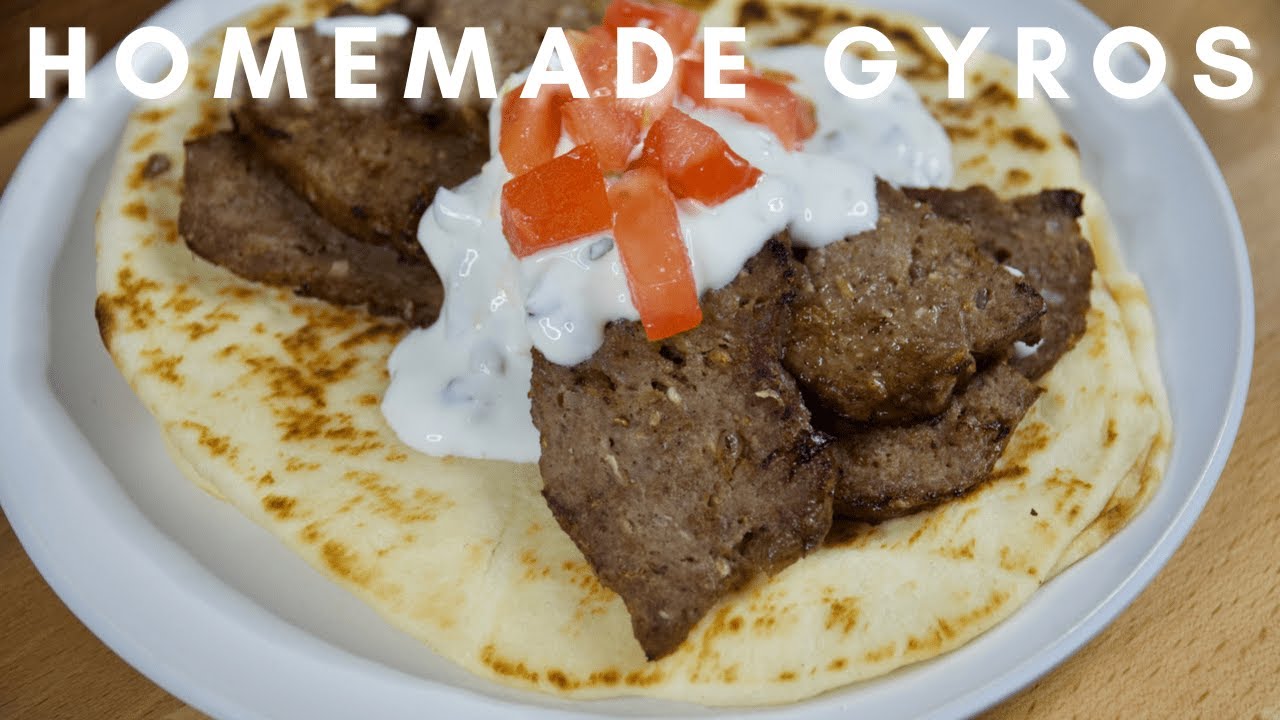
“The vertical spit is theater. The actual flavor in a great gyro comes from three things: properly seasoned meat cooked until deeply browned (not gray and steamed), tzatziki made with properly drained cucumber so it doesn't turn your pita into wet paper, and warm pita that's soft enough to fold without cracking. None of that requires special equipment. It requires paying attention.”
Why This Recipe Works
The vertical spit is the most intimidating piece of equipment in Mediterranean cooking. It's also unnecessary. What the spit actually does is expose meat to consistent radiant heat from all sides while the rotation constantly introduces the exterior to air, creating a dry-crust-on-outside, juicy-on-inside result. A cast iron skillet running hot with enough surface area achieves the same physics — you just have to work in stages and resist the urge to stir constantly.
The Meat Problem
Ground lamb is the right call for home gyro. It has the right fat content (around 20%), enough to keep the meat juicy during the hard pan sear without turning greasy, and a flavor profile that takes to the herb-and-spice blend better than beef does. Ground beef works — but it tastes like a spiced burger. Ground chicken works — but it's lean enough that the flavor depends almost entirely on the seasoning carrying the load.
The spice blend is doing the work here that hours on a rotating spit would normally accomplish. Oregano and cumin are the base — oregano for the distinctly Greek herbaceous note, cumin for depth and warmth. Smoked paprika adds color and a subtle smokiness that hints at char. Cayenne is heat, not flavor — adjust it down if you're cooking for people who complain about spicy food.
Kneading the mixture for two minutes before cooking is not optional. It develops the myosin proteins in the meat into a cohesive matrix — the same mechanism that makes sausage hold together and gives meatballs their structure. Without this step, the cooked meat crumbles into gravel. With it, you get pieces that break into satisfying chunks rather than dust.
The Tzatziki Problem
Tzatziki fails for one reason: wet cucumber. Cucumber is approximately 95% water by weight, and every gram of that water migrates into your yogurt the moment you combine them. Within five minutes of mixing, untreated grated cucumber will turn thick tzatziki into something resembling yogurt soup.
The fix is mechanical, not chemical. After grating the cucumber on a box grater, transfer it to a clean kitchen towel, gather the corners, and wring it with both hands until liquid stops dripping. Then wring it again. The amount of water you extract is always more than you expect. The cucumber that goes into the yogurt should feel almost dry to the touch. The resulting tzatziki should be thick enough to scoop with a spoon and hold its shape.
Garlic strength in tzatziki is personal. Two minced cloves is assertive — the sauce will have presence. If you're feeding people who are sensitive to raw garlic, drop to one clove or grate the clove instead of mincing, which creates a milder flavor. Fresh dill is better than dried here — dried dill has half the volatile oil content and the flavor registers as dusty rather than bright.
The Assembly Architecture
Gyro assembly order is structural engineering. The warm meat goes in first, directly against the tzatziki coating the pita — the heat from the meat slightly warms the sauce, loosening it so it distributes rather than sitting in a cold clump. Red onion goes next, directly on the meat, where residual heat from the lamb gently softens its sharpness without fully wilting it. Tomatoes in the middle. Lettuce on top, where it stays crisp and away from the heat below.
Invert this order and you get soggy lettuce, raw-tasting onion, and tomatoes that slide out the bottom when you take your first bite. The sequence is the difference between a gyro you can eat with one hand while standing up and one that falls apart into a pile in your lap.
Warm pita is the non-negotiable foundation. Cold pita is structurally inert — it tears along the fold line the moment you try to close it around the filling. Thirty seconds per side in a dry skillet changes its tensile properties entirely: the gluten softens, the surface develops slight flexibility, and it becomes a container instead of a liability. Do this immediately before assembly, not five minutes before.
This is 30 minutes of focused cooking with techniques you already know. The result tastes like it took longer because the spices are aggressive and the browning is real.
Where Beginners Mess This Up
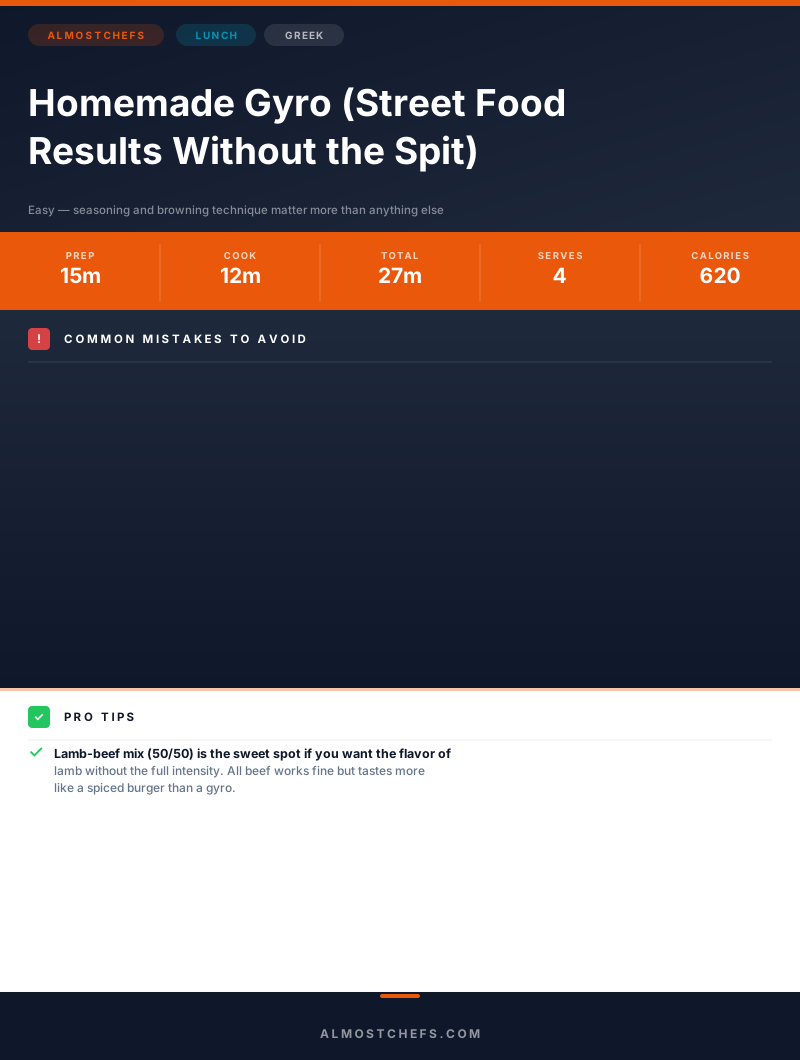
Before we start, read this. These are the 4 reasons your homemade gyro (street food results without the spit) will fail:
- 1
Not browning the meat properly: Ground lamb cooked on too-low heat steams in its own fat and turns pale gray. You want a hot pan, enough space so the meat isn't crowded, and patience to let it develop a real crust before stirring. Brown bits equal flavor. Gray bits equal disappointment.
- 2
Skipping the cucumber drain: Cucumber is 95% water. If you grate it and dump it straight into your yogurt, you'll have tzatziki soup within 5 minutes. Grate it, squeeze it hard in a clean kitchen towel, and squeeze it again. The sauce should be thick enough to mound on a spoon.
- 3
Using cold pita: Cold pita is stiff and tears the second you fold it. Thirty seconds per side in a dry skillet transforms it — soft, warm, slightly toasted. Do this right before assembling. Don't do it ahead and let it sit.
- 4
Under-seasoning the meat: The spice blend here — oregano, cumin, paprika, cayenne — is doing the work that 8 hours on a rotating spit would do. Don't hold back. Mix thoroughly, knead it, and taste a small pinch before it hits the pan. If it doesn't taste aggressively seasoned raw, it won't be flavorful cooked.
The Video Reference Library
Want to see it in action? Here are the exact videos we analyzed and combined to build this foolproof recipe translation:
The source video for this recipe's core technique. Covers the meat seasoning ratios and pan-browning method that replicates spit-cooked texture at home.
🛠️ Core Equipment
- Large heavy-bottomed skilletSurface area matters for browning ground meat. A crowded pan steams instead of sears. Cast iron or stainless steel hold heat better than nonstick and give you superior color on the meat.
- Box graterFor the cucumber in the tzatziki. You need fine shreds that release maximum water so you can squeeze them dry. A food processor makes chunks that don't drain properly.
- Clean kitchen towel or cheeseclothFor squeezing the grated cucumber completely dry before it goes into the yogurt. Paper towels are too weak — they shred under the pressure you need to apply.
- Small dry skilletFor warming the pita. You need direct contact heat, not oven heat, to get that soft-with-slight-char texture. A separate small pan keeps your assembly line moving.
Homemade Gyro (Street Food Results Without the Spit)
🛒 Ingredients
- ✦1.5 pounds ground lamb (or ground beef)
- ✦3 cloves garlic, minced
- ✦2 teaspoons dried oregano
- ✦1.5 teaspoons ground cumin
- ✦1 teaspoon smoked paprika
- ✦0.5 teaspoon cayenne pepper
- ✦0.5 teaspoon black pepper
- ✦0.75 teaspoon sea salt
- ✦2 tablespoons olive oil
- ✦1 cup Greek yogurt
- ✦2 tablespoons fresh lemon juice
- ✦1 medium cucumber, grated and drained
- ✦2 cloves garlic, minced (for tzatziki)
- ✦2 tablespoons fresh dill (or 1 teaspoon dried dill)
- ✦4 large whole wheat pita breads
- ✦2 medium red onions, thinly sliced
- ✦2 cups Roma tomatoes, diced
- ✦2 cups crisp romaine lettuce, chopped
- ✦0.25 cup fresh cilantro, roughly chopped
- ✦Salt and pepper to taste
👨🍳 Instructions
01Step 1
Combine ground lamb with minced garlic, oregano, cumin, paprika, cayenne, black pepper, and sea salt in a large bowl. Mix until the spices are evenly distributed.
02Step 2
Knead the meat mixture with your hands for 2 minutes. This develops protein bonds that give the cooked meat a cohesive, sliceable texture rather than crumbling apart.
03Step 3
Grate the cucumber on the large holes of a box grater. Transfer to a clean kitchen towel, gather the edges, and wring out as much water as possible. Do this twice.
04Step 4
Whisk together Greek yogurt, lemon juice, drained cucumber, minced garlic, and dill. Season with salt and pepper. Refrigerate until ready to serve.
05Step 5
Heat olive oil in a large [cast iron skillet](/kitchen-gear/review/cast-iron-skillet) over medium-high heat until shimmering, about 1 minute.
06Step 6
Add the meat mixture in an even layer. Let it cook undisturbed for 3 minutes to develop a crust, then break it apart and stir. Continue cooking 5-7 minutes until deeply browned throughout.
07Step 7
Warm pita breads in a dry skillet over medium heat, 30 seconds per side, until soft and pliable. Work in batches and assemble immediately.
08Step 8
Spread a generous spoonful of tzatziki inside each warm pita.
09Step 9
Add the browned meat mixture, dividing evenly among the four pitas.
10Step 10
Layer on red onion, diced tomatoes, and romaine in that order.
11Step 11
Finish with fresh cilantro and a second spoonful of tzatziki on top. Serve immediately.
Nutrition Per Serving
Estimates based on standard preparation. Adjustments alter macros.
🔄 Substitutions
Instead of Ground lamb...
Use Ground chicken breast
Milder flavor, leaner texture. Reduce cook time by 1-2 minutes. Season slightly more aggressively to compensate for the lower fat content carrying less flavor.
Instead of Regular pita bread...
Use Whole grain or sprouted grain pita
Slightly nuttier, more textural. Higher fiber keeps you fuller. Warm it a few extra seconds — whole grain pita needs a bit more time to become pliable.
Instead of Greek yogurt tzatziki...
Use Cashew cream with lemon and dill
Soak raw cashews for 4 hours, blend with water, lemon, garlic, and dill until smooth. Dairy-free and surprisingly close in texture. Slightly earthier flavor.
Instead of Romaine lettuce...
Use Fresh spinach or arugula
Arugula's peppery bite complements the spiced lamb well. Spinach wilts faster once it hits the warm meat — add it last and eat immediately.
🧊 Storage & Reheating
In the Fridge
Store the meat and tzatziki separately in airtight containers for up to 3 days. Do not store assembled gyros — the pita absorbs moisture and becomes inedible.
In the Freezer
Freeze the cooked meat only, in portions, for up to 2 months. Tzatziki does not freeze well — the cucumber breaks down and turns watery. Make fresh tzatziki when reheating.
Reheating Rules
Reheat meat in a skillet over medium heat with a splash of water and a lid for 3-4 minutes. Warm fresh pita as you would the first time. Assemble to order.
❓ Frequently Asked Questions
Why does my gyro meat taste bland even though I followed the recipe?
Ground meat mutes seasoning intensity when cooked. If it tastes bland, it was under-seasoned before cooking. Taste the raw mixture before it hits the pan — it should taste aggressively salty and spiced. Also verify your dried spices aren't stale; oregano and cumin lose potency after 6 months open.
Can I make the meat mixture ahead of time?
Yes. Season and knead the meat, then refrigerate it raw for up to 24 hours. The spices actually penetrate deeper overnight, improving flavor. Cook it cold straight from the fridge — just add 2 minutes to your cook time.
Why is my tzatziki watery?
The cucumber wasn't drained enough. Grated cucumber contains enormous amounts of water that releases into the yogurt within minutes. After grating, wring it out in a kitchen towel until no more liquid drips out. This step cannot be shortcut.
What's the difference between a gyro and a shawarma?
Gyro uses Greek spices (oregano, cumin) and is typically served with tzatziki in pita. Shawarma uses Middle Eastern spice blends (turmeric, cinnamon, allspice) and is served with tahini or garlic sauce in flatbread. Both cook meat on a vertical spit traditionally — but the flavor profiles are distinct.
Can I grill the meat instead of pan-cooking?
You can form the seasoned mixture into flat patties and grill them over medium-high heat, 4 minutes per side. The grill adds smokiness but you lose the browned, crumbly texture. Slice the patties thin before loading them into the pita.
How do I keep the pita from tearing?
Warm it long enough — 30 seconds per side minimum in a dry skillet. It should be visibly soft and bend without resistance. If you're making several gyros, keep finished pitas wrapped in a clean towel to retain heat while you work through the batch.
The Science of
Homemade Gyro (Street Food Results Without the Spit)
We turned everything on this page into a beautiful, flour-proof PDF cheat sheet. Print it out, stick it to your fridge, and never mess up your homemade gyro (street food results without the spit) again.
*We'll email you the high-res PDF instantly. No spam, just perfectly cooked meals.
AlmostChefs Editorial Team
We translate the internet's most popular cooking videos into foolproof, beginner-friendly written recipes. We analyze multiple methods, test them in our kitchen, and engineer a single "Master Recipe" that gives you the best possible result with the least possible stress.