Crispy Homemade Gyoza (The Pan-Fry and Steam Method That Actually Works)
Japanese pan-fried dumplings with seasoned ground pork and napa cabbage, golden-crisp on the bottom and tender on top. We broke down the hybrid cook method to give you the exact technique that produces restaurant-quality gyoza at home in under an hour.
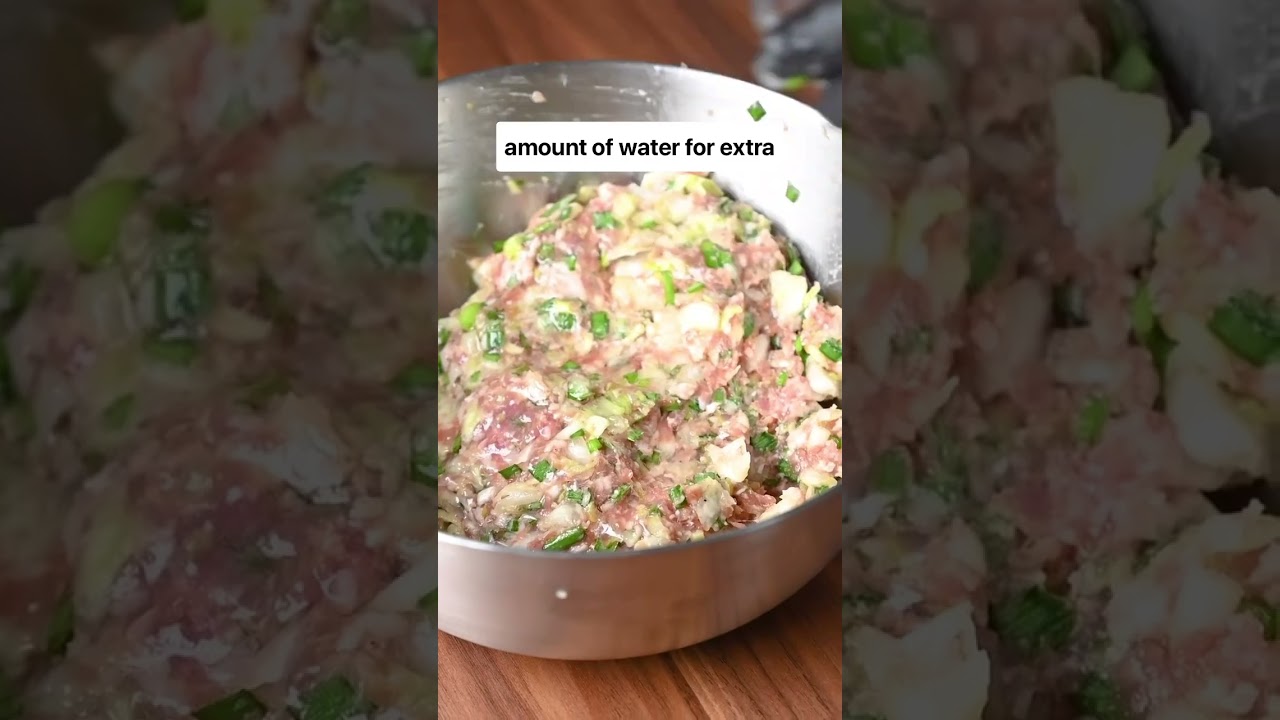
“Most homemade gyoza fail in one of two ways: the bottoms burn before the filling cooks through, or the wrapper turns soggy and pale. The fix is a two-stage cooking method — sear first, then steam — that every Japanese home cook has memorized. The sequence is not complicated. But most Western recipes bury the critical details in vague instructions, and that's where everything goes wrong. Here is exactly what you need to know.”
Why This Recipe Works
Gyoza is a dumpling engineered around a single textural contradiction: the bottom should be shattering-crisp, the top should yield like fresh pasta, and the filling should be juicy without making the wrapper wet. Achieving all three simultaneously is the entire technical challenge of the dish, and it's solved entirely by a two-stage cooking method that most recipes describe incorrectly.
The Moisture Problem
Every gyoza filling failure starts with water. Napa cabbage is over 90% water by weight, which means a filling made with unsqueezed cabbage is a filling that will turn your wrappers translucent and soggy before they ever hit the pan. The salt draw — salting the cabbage and waiting 20 minutes — pulls that water out through osmosis. The squeeze step physically removes it. Neither step alone is sufficient. Both together extract enough moisture that the filling behaves like a cohesive, shapeable mass rather than a wet slurry.
The cornstarch in the filling serves as a secondary binding agent. During cooking, the starch gelatinizes and traps the remaining moisture inside the filling, creating that characteristic slightly sticky, cohesive texture. Skip the cornstarch and the filling crumbles apart when you bite in.
The Sear-Steam Sequence
Here is the method precisely: hot oil, gyoza flat-side-down, no movement for 3 to 4 minutes, then water around the perimeter, lid on immediately. This sequence is not negotiable and not reversible.
The initial sear is pure Maillard reaction — the wrappers in contact with the 375°F oil undergo rapid browning that creates hundreds of flavor compounds and, critically, a rigid, lacquered surface that will not become soggy during the steam phase. The crust forms first. Then the steam cooks the filling through from above.
This is why you add water around the edges, not directly on the dumplings. Water on the wrappers breaks the crust before it's fully set. Water in the hot oil converts to steam that rises and surrounds the dumplings uniformly. The lid traps that steam for 5 to 6 minutes — exactly long enough to cook 1 tablespoon of pork filling through to 160°F without touching the bottom crust.
The Equipment Reality
A cast-iron skillet is the best pan for this job because it retains heat when the water hits. Thin nonstick pans drop temperature dramatically when cold water is added, which extends the steam time and can leave the filling undercooked in the center. Cast iron absorbs the thermal shock and recovers quickly, maintaining enough heat to continue evaporating the water on schedule.
The lid matters too. A loose or vented lid bleeds steam continuously. The pan interior needs to build and hold steam pressure to cook the filling in 5 to 6 minutes. If your lid has a steam vent, cover it with a folded towel for the duration.
The Filling Architecture
The filling ratio in this recipe — half a pound of pork to two cups of cabbage — is deliberately balanced. Too much meat and the filling becomes a dense sausage. Too much cabbage and it turns watery and structurally loose. This ratio, once the cabbage is squeezed dry, produces a filling that's approximately 60% meat and 40% vegetable by volume — enough cabbage to lighten the texture and add crunch, not enough to dominate.
The ginger and garlic are not background notes here. A full tablespoon of fresh ginger is aggressive by most standards, but it's the correct amount. Ginger's volatile aromatic compounds (primarily gingerols and shogaols) burn off partially during cooking — what tastes sharp raw becomes warm and fragrant cooked. Under-gingered gyoza are flat. This recipe is not under-gingered.
Why You Serve Them Immediately
Gyoza have a five-minute window. In that window, the bottom crust is crisp, the wrapper is tender, and the filling is hot enough to push steam through when you bite in. After ten minutes, the steam from the hot filling migrates into the crust and softens it. After thirty minutes, you have a respectable but unremarkable dumpling. The entire point of gyoza is the contrast, and that contrast exists only right off the pan. Have the dipping sauce mixed, have the plates warm, and call people to the table before the gyoza are done — not after.
Where Beginners Mess This Up
Before we start, read this. These are the 4 reasons your crispy homemade gyoza (the pan-fry and steam method that actually works) will fail:
- 1
Not squeezing the cabbage dry: Napa cabbage is roughly 92% water. If you skip the salt-draw and squeeze step, that water releases into the filling during cooking and turns your gyoza into soggy steamed pouches with no structural integrity. Salt the cabbage, wait 15 minutes, and squeeze it aggressively — you should wring out several tablespoons of liquid. This is not optional.
- 2
Overworking the filling: The pork mixture needs to be combined just until the ingredients are distributed. Overworking develops the myosin proteins in the meat the same way kneading develops gluten — you get a dense, bouncy filling instead of a tender, juicy one. Mix with your hands and stop the moment there are no visible dry pockets.
- 3
Adding water directly onto the gyoza: When you add water to create steam, pour it around the edges of the pan — never directly on top of the dumplings. Water hitting the wrappers makes them gum up and stick together. Pour along the perimeter, cover immediately, and let the steam do the work.
- 4
Lifting the lid during steaming: The steam that builds inside the covered pan is what cooks the filling through. Every time you lift the lid, you drop the internal temperature and extend the cook time unevenly. Set a timer for 5 minutes and leave it alone.
The Video Reference Library
Want to see it in action? Here are the exact videos we analyzed and combined to build this foolproof recipe translation:
The definitive technique video covering filling preparation, the pleating method, and the exact pan-fry and steam sequence. Clear close-ups on the folding technique and how the bottoms should look before adding water.
🛠️ Core Equipment
- Large nonstick skillet or cast-iron pan with a lidThe flat surface is critical for even contact between the gyoza bottoms and the hot oil. A [cast-iron pan](/kitchen-gear/review/cast-iron-skillet) retains heat exceptionally well, giving you a deeper sear before the steam phase. The lid must fit tightly — loose lids let steam escape and stall the cook.
- Parchment paperFor holding the folded gyoza before cooking. Raw gyoza stick to plates and to each other. Parchment prevents tearing the wrappers when you pick them up to pan-fry.
- Fine-mesh sieve or clean kitchen towelFor squeezing the salted cabbage dry. A towel gives you the most mechanical advantage to wring out the maximum amount of liquid. This step directly determines your filling texture.
- Small mixing bowlFor the dipping sauce. Simple assembly, but having a dedicated bowl ready before the gyoza hit the pan means you serve them the second they come off the heat — which is the only correct way to serve gyoza.
Crispy Homemade Gyoza (The Pan-Fry and Steam Method That Actually Works)
🛒 Ingredients
- ✦1/2 pound ground pork
- ✦2 cups napa cabbage, finely chopped
- ✦1 teaspoon cornstarch
- ✦1 teaspoon salt (for cabbage)
- ✦3 medium garlic cloves, minced
- ✦1 tablespoon fresh ginger, minced
- ✦3 scallions, thinly sliced
- ✦2 tablespoons soy sauce
- ✦1 tablespoon sesame oil
- ✦1/4 teaspoon white pepper
- ✦24 to 30 gyoza wrappers
- ✦3 tablespoons vegetable oil, for cooking
- ✦1/4 cup water, for steaming
- ✦2 tablespoons soy sauce, for dipping
- ✦1 tablespoon rice vinegar, for dipping
- ✦1 teaspoon sesame oil, for dipping
👨🍳 Instructions
01Step 1
Toss the chopped napa cabbage with 1 teaspoon of salt and let sit for 15 to 20 minutes to draw out excess moisture.
02Step 2
Squeeze the salted cabbage firmly with your hands to remove as much liquid as possible, then place it in a large mixing bowl.
03Step 3
Add the ground pork, minced garlic, minced ginger, sliced scallions, cornstarch, soy sauce, sesame oil, and white pepper to the bowl with the cabbage.
04Step 4
Mix the filling ingredients together gently with your hands until just combined. Do not overwork.
05Step 5
Lay out a gyoza wrapper on a clean, dry surface and place approximately 1 tablespoon of filling in the center.
06Step 6
Wet your finger with water and run it along the edges of the wrapper to create a seal.
07Step 7
Fold the wrapper in half to create a half-moon shape, then create 4 to 5 small pleats along the sealed edge by folding and pressing the dough.
08Step 8
Place each finished gyoza on a parchment-lined plate. Repeat until all filling is used.
09Step 9
Heat 3 tablespoons of vegetable oil in a large nonstick skillet or cast-iron pan over medium-high heat until it shimmers.
10Step 10
Arrange the gyoza in a single layer in the hot oil with the flat side down. Pan-fry without moving them for 3 to 4 minutes until the bottoms are deeply golden brown.
11Step 11
Pour 1/4 cup of water carefully around the edges of the pan (not directly on the gyoza), then immediately cover with a lid.
12Step 12
Reduce heat to medium and steam for 5 to 6 minutes, until the water has fully evaporated and the filling is cooked through. Do not lift the lid.
13Step 13
Remove the lid and let any remaining moisture evaporate, then transfer gyoza to a serving plate.
14Step 14
Combine 2 tablespoons soy sauce, 1 tablespoon rice vinegar, and 1 teaspoon sesame oil in a small bowl to make the dipping sauce.
15Step 15
Serve immediately while hot.
Nutrition Per Serving
Estimates based on standard preparation. Adjustments alter macros.
🔄 Substitutions
Instead of Ground pork...
Use Ground chicken or turkey
Leaner and milder. Works well but benefits from an extra 1/2 teaspoon of sesame oil to compensate for the reduced fat flavor.
Instead of Napa cabbage...
Use Bok choy or Chinese broccoli
Slightly more bitter and mineral-forward. Still needs the salt-and-squeeze treatment to remove moisture. Chop finer than you think necessary.
Instead of Regular gyoza wrappers...
Use Whole wheat gyoza wrappers
Nuttier flavor and denser texture. Add 1 extra minute to the steaming phase. Harder to pleat cleanly — keep them well-covered between folds.
Instead of Soy sauce...
Use Low-sodium tamari or coconut aminos
Tamari has a richer, slightly deeper umami. Coconut aminos are more subtle and noticeably less salty. Either works in both the filling and the dipping sauce.
🧊 Storage & Reheating
In the Fridge
Store cooked gyoza in an airtight container for up to 2 days. They will soften in the fridge — reheat in a dry skillet over medium heat to restore some crispness.
In the Freezer
Freeze uncooked gyoza on a parchment-lined sheet in a single layer until solid, then transfer to a zip-lock bag. Keeps for up to 2 months. Cook directly from frozen.
Reheating Rules
Reheat cooked gyoza in a nonstick pan with a small splash of water and a lid for 3 minutes. Microwave reheating makes the wrapper rubbery — avoid it.
❓ Frequently Asked Questions
Why are my gyoza sticking to the pan?
Either the oil wasn't hot enough when the gyoza went in, or the pan surface isn't suitable. The oil should be shimmering and just past the point of rippling before the gyoza touch it. A nonstick or well-seasoned cast-iron pan is essential — stainless steel without proper preheating will stick every time.
Can I make gyoza ahead of time?
Yes, two ways. Assemble and freeze uncooked (best option — cook from frozen), or make the filling up to 24 hours ahead and refrigerate it. Pre-cooked gyoza are fine but lose their crispy bottoms. Frozen raw gyoza are nearly identical to fresh when cooked.
How do I know when the filling is cooked through?
After 5 to 6 minutes of steaming, the water should have fully evaporated and the wrappers should look slightly translucent. If you're uncertain, cut one open — the pork should be fully opaque with no pink. An instant-read thermometer at the center should read 160°F.
Why are my wrappers bursting open?
Two causes: too much filling (1 tablespoon is the upper limit), or an incomplete seal. Make sure the entire edge is pressed firmly with no air pockets trapped inside. Air expands during cooking and blows the seam open.
What's the difference between gyoza and potstickers?
Gyoza are the Japanese iteration of the Chinese jiaozi (potsticker). Gyoza wrappers are thinner and more delicate than Chinese dumpling wrappers, the filling tends to be finer in texture with more garlic and ginger, and the pleating style is different. The cooking method — pan-fry then steam — is essentially the same.
Can I steam gyoza without pan-frying first?
You can, but you get pale, soft dumplings with no textural contrast. The crispy bottom is the entire point of gyoza. If you want fully steamed dumplings, make shumai instead — they're designed for it.
The Science of
Crispy Homemade Gyoza (The Pan-Fry and Steam Method That Actually Works)
We turned everything on this page into a beautiful, flour-proof PDF cheat sheet. Print it out, stick it to your fridge, and never mess up your crispy homemade gyoza (the pan-fry and steam method that actually works) again.
*We'll email you the high-res PDF instantly. No spam, just perfectly cooked meals.
AlmostChefs Editorial Team
We translate the internet's most popular cooking videos into foolproof, beginner-friendly written recipes. We analyze multiple methods, test them in our kitchen, and engineer a single "Master Recipe" that gives you the best possible result with the least possible stress.