Gyeran Jjim (Korean Steamed Egg)
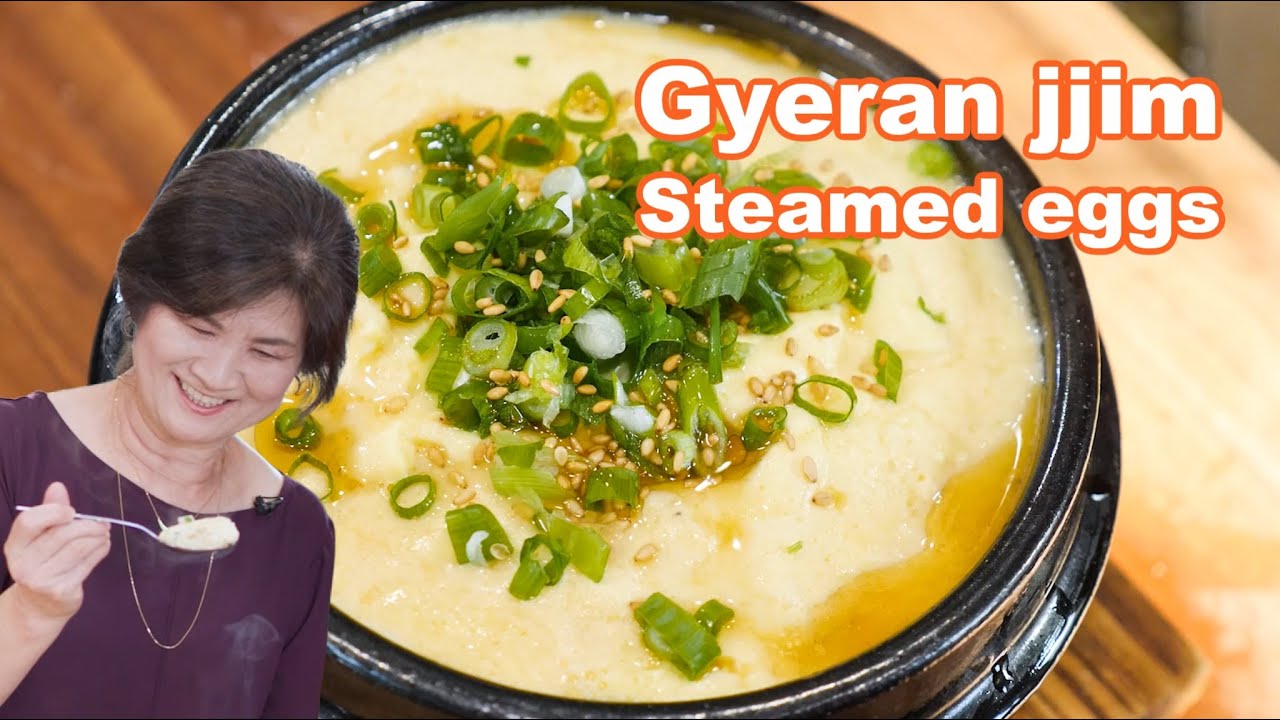
Fluffy, cloud-like steamed eggs in a stone pot — silky custard puffed up to twice its size. The simplest Korean side dish that steals the show.
Why This Recipe Works
Most people who've eaten gyeran jjim at a Korean BBQ restaurant have no idea what they're actually eating. They call it "that fluffy egg thing" and reach for it reflexively between bites of galbi. That's fine. Ignorance of mechanism doesn't diminish enjoyment. But if you're going to make it yourself — and fail at it, as most people do on the first attempt — you should understand exactly what is happening inside that pot, and why every variable you ignore will punish you with a flat, rubbery, weeping disc of disappointment.
Let's be methodical.
The Physics of the Puff
Gyeran jjim is not scrambled eggs. It is not an omelette. It is a steam-leavened egg custard, and that distinction matters enormously. The dramatic dome that rises above the rim of the pot is caused by one thing: trapped steam expanding the protein matrix as it sets. This is the same principle that makes a soufflé rise — except gyeran jjim is faster, more forgiving, and does not require a 400-degree oven or the anxiety of a French culinary education.
The egg proteins begin denaturing and cross-linking around 145°F (63°C). If you apply heat too aggressively — too much, too fast — the proteins seize before the steam has a chance to do its work. You get a tight, dense curd instead of an open, cloud-like structure. This is why the two-stage cooking method is non-negotiable: open heat first, to develop structure at the base; then covered, low steam to inflate the top without toughening it. One stage without the other produces an inferior result.
The 1:1 Ratio Is Not Negotiable
Four eggs to one cup of liquid. This is not a preference — it is a structural specification. The ratio controls the viscosity of the egg mixture before cooking, which in turn controls how easily steam can expand through the setting protein network. Too little liquid and the matrix is too dense to puff; the eggs cook solid before the steam has traction. Too much liquid and the mixture never fully sets — you end up with watery curds floating in a pale broth, which is its own category of failure.
The liquid itself matters beyond its volume. Water with salt works, technically. But anchovy-dashima stock delivers glutamates and inosinates that interact with the egg proteins to amplify what food scientists call "kokumi" — a mouthfeel enhancement, a sense of depth and continuity that plain salt cannot replicate. The eggs taste more like eggs. That sounds paradoxical until you taste the difference side by side.
The Vessel Is Load-Bearing
This is the part home cooks skip over, and it is why they fail. The ttukbaegi stone pot is not decorative. It is a thermal flywheel. Stone's specific heat capacity means it absorbs and releases energy slowly — far more slowly than stainless steel or aluminum. When you reduce the heat to low for the steaming phase, a ttukbaegi holds the accumulated heat and delivers it evenly to the egg mixture without spiking. That even, gentle heat is what allows the steam to puff the custard without scrambling it.
Furthermore, the ttukbaegi continues cooking the egg after it leaves the burner. It arrives at the table still bubbling, still puffed, still alive. Serve gyeran jjim in a thin-walled pan and it deflates in sixty seconds. Thermal mass is the difference between a showpiece and a sad collapsed puddle.
If you don't own a ttukbaegi, a cast iron skillet — specifically a small, deep-sided one — approximates the thermal behavior well enough for home use. Alternatively, an oven-safe ramekin placed inside a steamer or a 350°F oven for twenty minutes will produce a respectable, if less dramatic, result. Neither substitute will give you the same table presence as the stone pot, but both will give you the correct texture if your ratios and technique are right.
Fish Sauce as Seasoning Infrastructure
Fish sauce here is doing two jobs. The obvious one: salt. The less obvious one: additional glutamates layered on top of the stock, deepening the umami baseline. A dish with this few ingredients — six, if you count the garnish — cannot afford to waste any of them on a single-purpose role. Everything must do double duty. One tablespoon of fish sauce seasons and enriches simultaneously. Soy sauce can substitute in a pinch, but it shifts the flavor profile toward a sweeter, slightly different fermented register. It works. It is not the same.
Don't Lift the Lid
This instruction appears in the steps and it is the one most frequently violated. The steam trapped under the lid during the final cooking phase is the leavening agent. Lifting the lid vents that steam, drops the temperature, and collapses the structure mid-rise. There is no recovery. The puff deflates, the top surface weeps, and you are left explaining to your dinner guests why the egg looks "rustic." Cover it. Leave it. Trust the process.
The Garnish Isn't Optional
Green onion, sesame seeds, a few drops of sesame oil — this is not decoration, it is contrast delivery. The custard is rich, soft, and savory in a quiet way. The raw bite of green onion, the toasted nuttiness of sesame, and the grassy fragrance of sesame oil create the counterpoints that make the dish feel complete rather than monotonous. A bowl of unadorned gyeran jjim is a technically successful custard. A properly garnished one is a finished dish.
The Humble Show-Stealer
Gyeran jjim is technically a banchan — a side dish, one of many small plates that orbit the main event at a Korean meal. In practice, it is the one that goes first. There is something reflexively appealing about a pot of eggs that has risen above its own rim, golden and trembling, smelling of sesame and the sea. It looks like effort. It is not. Twenty minutes start to finish, five of which are active. The rest is heat, steam, and physics doing the work while you attend to everything else.
At Korean BBQ restaurants, it arrives free. It is always the first thing gone. Now you know why it works — and exactly why yours went flat last time.
Gyeran Jjim (Korean Steamed Egg)
🛒 Ingredients
- ✦4 large eggs
- ✦1 cup anchovy-dashima stock (or water with 1/2 teaspoon salt)
- ✦1 tablespoon fish sauce (or 1/2 teaspoon salt)
- ✦1 green onion, finely sliced
- ✦1 teaspoon sesame oil (optional)
- ✦Pinch of sesame seeds (for garnish)
👨🍳 Instructions
01Step 1
Beat 4 eggs in a bowl until just combined — don't whisk vigorously or create foam. You want a smooth, streak-free mixture.
02Step 2
Add anchovy-dashima stock and fish sauce to the eggs. Stir gently to combine.
03Step 3
Pour the egg mixture into a ttukbaegi (stone pot) or small heavy pot. Add half the green onions.
04Step 4
Place over medium heat. As the edges start to set (about 3-4 minutes), gently stir from the outside in to create soft curds.
05Step 5
Once the bottom half is set but the top is still liquid, reduce heat to low. Cover with a lid and steam for 8-10 minutes.
06Step 6
Remove from heat. The egg should be puffed up above the rim of the pot, fluffy and golden. Garnish with remaining green onions, sesame seeds, and a drizzle of sesame oil.
Nutrition Per Serving
Estimates based on standard preparation. Adjustments alter macros.
🔄 Substitutions
Instead of Anchovy-dashima stock...
Use Water + 1/2 teaspoon salt
Works fine but lacks the umami depth of proper stock
Instead of Fish sauce...
Use Soy sauce (1/2 tablespoon)
Different flavor profile but provides the salt and umami
Instead of Stone pot...
Use Oven-safe ramekin or small cast iron
Ramekins work in a steamer or 350°F oven for 20 minutes
🧊 Storage & Reheating
In the Fridge
Best eaten fresh. Leftovers deflate and lose the fluffy texture.
In the Freezer
Not recommended.
Reheating Rules
Microwave for 30 seconds — it will puff slightly but won't match the original.
❓ Frequently Asked Questions
Why does my gyeran jjim come out flat?
Three common causes: not enough liquid (need 1:1 egg-to-stock ratio), heat too high (should be medium then low), or lid removed too early (steam needs to be trapped for the puff). The gentle covered steaming phase is what creates the soufflé effect.
Is gyeran jjim the same as Japanese chawanmushi?
They're cousins. Both are steamed egg custards, but gyeran jjim is puffier and more rustic — beaten with stock and steamed in a stone pot until it rises. Chawanmushi is silkier, strained, and steamed gently with toppings inside. Different textures, same comforting spirit.

The Science of
Gyeran Jjim (Korean Steamed Egg)
We turned everything on this page into a beautiful, flour-proof PDF cheat sheet. Print it out, stick it to your fridge, and never mess up your gyeran jjim (korean steamed egg) again.
*We'll email you the high-res PDF instantly. No spam, just perfectly cooked meals.
AlmostChefs Editorial Team
We translate the internet's most popular cooking videos into foolproof, beginner-friendly written recipes. We analyze multiple methods, test them in our kitchen, and engineer a single "Master Recipe" that gives you the best possible result with the least possible stress.