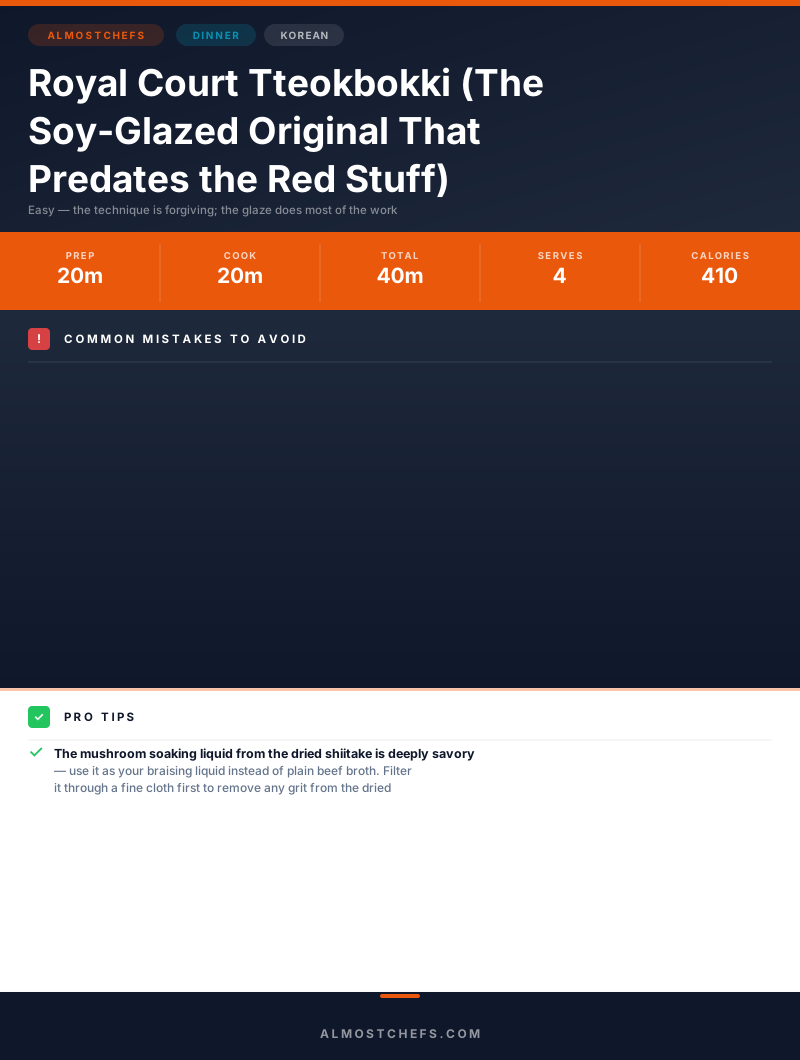
Royal Court Tteokbokki (The Soy-Glazed Original That Predates the Red Stuff)
The palace-era version of tteokbokki that existed centuries before gochujang took over the streets. Chewy rice cakes, thinly sliced beef, and earthy mushrooms brought together with a soy-sesame glaze that's savory, balanced, and nothing like what you've ordered from a pojangmacha. We broke down the technique to make it achievable at home without losing what makes it royal.

“Most people think tteokbokki means red. Furious, gochujang-drenched, sweat-inducing red. But that version is barely 70 years old — a postwar street food invention born from necessity and cheap ingredients. The original, the one served inside the walls of Joseon royal palaces for centuries, is a soy-glazed study in restraint. Chewy rice cakes, marinated beef, mushrooms, and a sauce that coats without overwhelming. This is the tteokbokki that existed before the red stuff. It's better.”
Why This Recipe Works
Before gochujang conquered every tteokbokki cart from Seoul to Los Angeles, there was this. The royal court version. The one that existed for centuries inside palace walls, served to kings and their households as an expression of Korean culinary refinement rather than cheap street energy. Gungjung tteokbokki is not the same dish with the heat removed. It is a different dish entirely — and understanding why it works requires understanding what it was designed to do.
The Sauce Architecture
Modern tteokbokki sauce is a blunt instrument. Gochujang, sugar, and fish sauce create a thick, intensely sweet-spicy paste that coats everything in the same flavor. It works. It's addictive. But it's not what's happening here.
The gungjung sauce is built on soy sauce, sesame oil, and sugar in ratios that produce a thin, glossy glaze rather than a thick paste. This glaze doesn't overwhelm — it enhances. The soy sauce provides umami and salinity. The sugar provides just enough sweetness to balance the salt without tipping into candy territory. The sesame oil adds fat and a toasted, nutty backdrop that persists long after the bite.
The critical technique: reduce this sauce in the pan with the rice cakes, not separately. As the liquid cooks off, the sugar concentrates and the glaze thickens to exactly the consistency that clings to the tteok without pooling at the bottom of the plate. This is why heat management matters so much. Too high and the reduction happens in seconds, scorching the sugars before they can coat anything. Too low and you get watery tteok sitting in thin, unthickened sauce.
The Beef Question
Thin-sliced beef in this dish is not filler — it's the umami anchor. Where gochujang tteokbokki often skips protein entirely because the sauce provides enough flavor on its own, gungjung tteokbokki needs the beef's rendered fat and Maillard-browned surface to give the soy glaze something to cling to and amplify.
The partial-freeze slicing technique is not optional if you're cutting your own beef. At room temperature, connective fibers in the sirloin flex away from the knife. At 15 minutes from frozen, the muscle locks in place and a sharp knife glides through at the 2-3mm you need. Thicker slices take longer to cook, guaranteeing they toughen before the outside caramelizes. This is the single most impactful knife technique in the entire recipe.
Sear the beef in a wide skillet or carbon steel wok on high heat, undisturbed, for 90 seconds before tossing. The Maillard crust that forms in those 90 seconds is what gives the finished dish its depth. Without it, the beef tastes boiled and flat regardless of how good your soy sauce is.
The Mushroom Layer
Dried shiitake mushrooms, rehydrated and added alongside fresh oyster mushrooms, create a textural and flavor complexity that elevates this dish beyond a simple stir-fry. Dried shiitake contain elevated concentrations of glutamates developed during the drying process — more than fresh shiitake by a significant margin. Their soaking liquid is essentially a light dashi that becomes the backbone of your sauce.
Do not discard that liquid. Filter it, add it to your sauce base, and use it as the braising medium that lets the rice cakes finish cooking without drying out. It carries more flavor than plain broth and costs you nothing.
The Rice Cake Reality
Garae-tteok are made from short-grain rice pounded into a dense, elastic cylinder. Their texture is the entire point of the dish — that satisfying chew that resists the first bite and then surrenders cleanly. But this texture is fragile and time-sensitive.
Cold or dried tteok must be soaked or blanched first. The water rehydrates the outer layer and prevents the starch from seizing when it hits the hot pan. Once properly hydrated and added to the reducing sauce, the tteok cooks in 5-7 minutes — long enough for the glaze to penetrate the surface, not so long that the center turns gummy.
The dish must be served immediately. Unlike the gochujang version, which stays saucy and loosens with heat, the soy glaze cools and sets as a sticky film around each rice cake within 20 minutes. This is a dish that cannot be held. Plan accordingly — have every component ready to go before the pan heats up.
This is court food. It was engineered for precision, not convenience. Treat it that way.
Where Beginners Mess This Up
Before we start, read this. These are the 4 reasons your royal court tteokbokki (the soy-glazed original that predates the red stuff) will fail:
- 1
Starting with cold, hard rice cakes: Refrigerated or dried garae-tteok are dense and rubbery. If you add them directly to the pan without soaking or blanching first, they won't absorb the sauce — the glaze slides off instead of penetrating the surface. Soak in cold water for 30 minutes or blanch in boiling water for 2 minutes. This is not optional.
- 2
Overmarinating the beef: The soy-sesame marinade works fast on thin-sliced beef. More than 20 minutes and the proteins begin to tighten from the salt, making the meat tough and dry in the pan rather than tender. Set a timer. This is not a marinade that benefits from overnight rest.
- 3
High heat through the entire cook: Gungjung tteokbokki is not a wok-blast dish. High heat at the start to sear the beef — yes. But once you add the rice cakes and sauce, the heat must drop to medium. At high heat, the soy-sugar glaze burns in seconds, turning from savory-sweet to acrid. The rice cakes also seize on the outside while staying cold in the center.
- 4
Crowding the pan: Too much in the pan at once drops the temperature, causing the beef to steam rather than sear. Steamed beef in this dish is gray and flavorless. Work in batches if needed. A wide skillet or [wok](/kitchen-gear/review/carbon-steel-wok) is essential — not a saucepan.
🛠️ Core Equipment
- Wide skillet or carbon steel wokSurface area is everything. The rice cakes and beef need direct contact with the hot surface to caramelize the glaze. A narrow pot just steams everything into submission.
- Sharp chef's knifeSlicing beef paper-thin (2-3mm) is the key to quick, even cooking. A dull knife tears the meat and creates uneven pieces that cook at different rates. Partially freezing the beef for 15 minutes makes clean slicing significantly easier.
- Mixing bowlsTwo separate bowls — one for marinating the beef, one for mixing the sauce before it hits the pan. Pre-mixing the sauce lets you add it in one confident pour rather than scrambling to measure soy sauce while the beef burns.
- Tongs or long chopsticksFor tossing the rice cakes without breaking them. A wooden spoon drags and tears. Tongs keep the cakes intact through the stir-fry.
Royal Court Tteokbokki (The Soy-Glazed Original That Predates the Red Stuff)
🛒 Ingredients
- ✦1.5 pounds garae-tteok (cylindrical rice cakes), sliced on the diagonal into 2-inch pieces
- ✦8 ounces beef sirloin or ribeye, partially frozen, sliced paper-thin
- ✦6 dried shiitake mushrooms, rehydrated and sliced
- ✦4 fresh oyster mushrooms, torn into strips
- ✦1 medium carrot, julienned
- ✦1 medium yellow onion, thinly sliced
- ✦3 scallions, cut into 2-inch pieces
- ✦3 cloves garlic, minced
- ✦3 tablespoons soy sauce, divided
- ✦2 tablespoons sesame oil, divided
- ✦1.5 tablespoons sugar, divided
- ✦1 tablespoon toasted sesame seeds
- ✦1 teaspoon freshly ground black pepper
- ✦1/2 teaspoon ginger, finely grated
- ✦1/2 cup beef broth or mushroom soaking liquid
- ✦1 tablespoon neutral oil (avocado or grapeseed)
- ✦Pine nuts for garnish (optional)
👨🍳 Instructions
01Step 1
Soak the rice cakes in cold water for 30 minutes, then drain and pat dry.
02Step 2
Combine the sliced beef with 1.5 tablespoons soy sauce, 1 tablespoon sesame oil, 1 teaspoon sugar, half the minced garlic, ginger, and black pepper. Toss to coat and marinate for 15-20 minutes.
03Step 3
Mix the sauce: remaining soy sauce, remaining sugar, beef broth (or mushroom soaking liquid), and remaining garlic in a small bowl. Set aside.
04Step 4
Heat neutral oil in a wide skillet or wok over high heat. Add the marinated beef in a single layer and sear for 90 seconds without stirring, then toss quickly for another 30 seconds until just cooked through. Remove and set aside.
05Step 5
Reduce heat to medium-high. Add the carrots and onion to the same pan and stir-fry for 2 minutes.
06Step 6
Add the shiitake and oyster mushrooms. Stir-fry for another 2 minutes until softened and lightly browned at the edges.
07Step 7
Add the drained rice cakes to the pan. Pour the prepared sauce over everything. Toss to combine.
08Step 8
Cook over medium heat for 5-7 minutes, tossing occasionally, until the sauce reduces and clings to the rice cakes in a glossy coat.
09Step 9
Return the beef to the pan along with the scallions. Toss everything together and cook for 1 minute until the scallions just soften.
10Step 10
Remove from heat. Drizzle remaining sesame oil over the top. Toss once more.
11Step 11
Transfer to a serving platter. Garnish with toasted sesame seeds and pine nuts if using. Serve immediately.
Nutrition Per Serving
Estimates based on standard preparation. Adjustments alter macros.
🔄 Substitutions
Instead of Beef sirloin...
Use Pork loin, thinly sliced
Works well with the soy-sesame marinade. Slightly less umami than beef but leaner. Keep the marinade time to 15 minutes — pork firms up faster than beef.
Instead of Garae-tteok (rice cakes)...
Use Frozen tteok, fully thawed
Thaw completely at room temperature, then soak for 10 minutes in cold water. Frozen tteok can turn rubbery if there's any residual ice inside when they hit the hot pan.
Instead of Dried shiitake mushrooms...
Use Fresh cremini or king oyster mushrooms
You lose the concentrated umami and the soaking liquid that builds the sauce base. Add a teaspoon of soy sauce and a splash of water to compensate for the lost liquid depth.
Instead of Sesame oil...
Use Toasted perilla oil
Perilla oil (들기름) is nuttier and slightly more herbaceous than sesame. It's a traditional Korean fat that pairs exceptionally well with the soy glaze. Less common outside Korean grocery stores but worth seeking out.
🧊 Storage & Reheating
In the Fridge
Store in an airtight container for up to 2 days, though texture degrades significantly. The rice cakes become very firm and dense as they cool.
In the Freezer
Not recommended. Rice cakes become grainy and fall apart when frozen and thawed after cooking.
Reheating Rules
Add 2-3 tablespoons of water or broth to a pan over medium-low heat. Add the leftover tteokbokki and cover with a lid for 3-4 minutes, stirring once, until the rice cakes soften and the sauce re-loosens. Do not microwave — it turns the rice cakes into rubber.
❓ Frequently Asked Questions
What makes gungjung tteokbokki different from regular tteokbokki?
The sauce. Modern tteokbokki uses gochujang as its base — a thick, fermented red pepper paste that delivers heat and a lot of sweetness. Gungjung tteokbokki predates that entirely, using soy sauce, sesame oil, and beef as its flavor foundation. The result is savory and umami-forward, not spicy. It also includes beef and a wider variety of vegetables, reflecting its origins as royal court cuisine rather than street food.
My rice cakes are sticking together in clumps. What went wrong?
Two likely causes. First, they weren't dry enough before hitting the pan — excess moisture creates steam that gelatinizes the surface and causes sticking. Second, the heat was too low. Rice cakes need immediate high-surface-heat contact to set the exterior before they have time to bond. Make sure they're patted dry and the pan is properly hot before they go in.
Can I make this vegetarian?
Yes. Replace the beef with extra mushrooms — king oyster and shiitake together give you enough texture and umami. Use mushroom soaking liquid or vegetable broth as your sauce base. The dish loses some depth but the soy-sesame glaze carries enough weight to hold it together.
Where do I find garae-tteok?
Any Korean grocery store will carry them fresh or refrigerated. In the US, H-Mart and most Asian supermarkets stock them year-round. Look for them in the refrigerated section near the mandu (dumplings). Online Korean grocery retailers ship them vacuum-sealed. If you can only find them frozen, that works — just thaw completely before using.
Why does the recipe call for blood sugar as a health focus?
Rice cakes have a high glycemic index on their own, but the beef, mushrooms, and sesame oil in this dish slow glucose absorption significantly compared to eating plain tteok. The fiber from the vegetables and the fat from the sesame oil both moderate the blood sugar impact. This is not a low-carb dish, but it's meaningfully better than the sweet, gochujang-based version for blood sugar management.
Can I add egg to this dish?
Yes — a fried egg or a soft-boiled egg halved on top is a common addition and works well with the soy glaze. Some traditional versions also include a single whole egg cracked into the sauce during the final 2 minutes of cooking, stirred gently so it partially sets in ribbons throughout the dish.
The Science of
Royal Court Tteokbokki (The Soy-Glazed Original That Predates the Red Stuff)
We turned everything on this page into a beautiful, flour-proof PDF cheat sheet. Print it out, stick it to your fridge, and never mess up your royal court tteokbokki (the soy-glazed original that predates the red stuff) again.
*We'll email you the high-res PDF instantly. No spam, just perfectly cooked meals.
AlmostChefs Editorial Team
We translate the internet's most popular cooking videos into foolproof, beginner-friendly written recipes. We analyze multiple methods, test them in our kitchen, and engineer a single "Master Recipe" that gives you the best possible result with the least possible stress.