Authentic Louisiana Gumbo (The Roux Is Everything)
A deeply flavored Louisiana stew built on a chocolate-dark roux, the holy trinity of vegetables, andouille sausage, and chicken. We broke down the most common gumbo failures to give you one foolproof method that nails the roux color, okra timing, and broth depth every time.
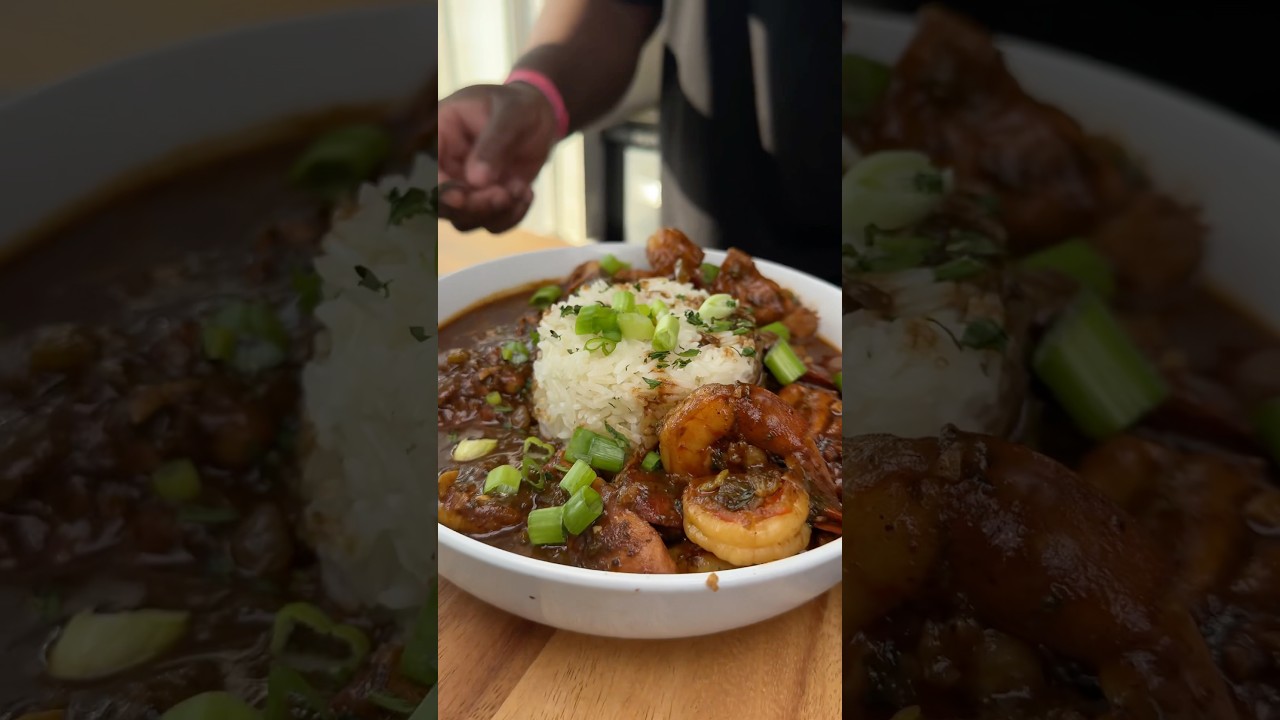
“Every gumbo recipe online says 'stir constantly.' Almost none of them tell you what you're actually waiting for, what you're looking at, or what burning smells like before it's too late. The roux is the entire dish. Get it right and the rest is just assembling parts. Get it wrong and no amount of sausage, okra, or cayenne will save you. We broke down exactly what a proper chocolate roux looks like at each stage so you can stop guessing.”
Why This Recipe Works
Gumbo is the rare dish where one technique determines the outcome of everything that follows. Get the roux right and the rest — the trinity, the broth, the okra timing — falls into place with ordinary attention. Get it wrong and you cannot compensate with spice, protein, or extra cook time. This is not a recipe with a margin for error in the first 12 minutes. It is, in the most literal sense, a dish built on its foundation.
The Roux Is the Dish
A roux is flour and fat cooked together. Every French-derived cuisine uses one. What makes gumbo's roux categorically different is the target color — chocolate brown, not blonde, not peanut butter, not amber. Deep, dark, nearly mahogany. To reach that color, the flour's starch molecules must undergo sustained Maillard reaction at temperatures exceeding 350°F, breaking down into hundreds of new flavor compounds that taste nutty, complex, and faintly bitter in the best possible way.
This takes 8–12 minutes of active stirring over medium-high heat. You are not walking away. You are not answering your phone. You are watching a color transformation in real time, scraping every millimeter of pot bottom with a flat-edged spoon so the flour doesn't sit still long enough to burn. The smell tells you everything: a proper chocolate roux smells like toasted nuts and dark bread. Scorched roux smells acrid and wrong within seconds of crossing the line. When it's right, you'll know. When it burns, you'll know faster.
The Holy Trinity and Why It Goes in Hot
The moment the roux hits chocolate stage, the diced onions, celery, and green bell pepper go in immediately. This serves two purposes. First, the moisture in the vegetables deglazes the pot and stops the roux from darkening further — you're locking in the color. Second, cooking the trinity directly in the roux means every cell of those vegetables is coated in roasted fat and flour from the start, which binds their aromatic compounds into the base in a way that adding them to broth later never achieves.
Seven minutes of sautéing here builds the flavor scaffold the entire stew hangs on. Rushing to four minutes produces a noticeably thinner, less complex broth. This is one of those places where the clock genuinely matters.
Okra as a Finishing Move
Okra contains a polysaccharide called mucilage, which acts as a natural thickener when it releases into hot liquid. This is useful. It is also the reason overcooked okra is one of the most texturally unpleasant things in Louisiana cooking — slimy, gray, and structureless.
The solution is timing. Okra goes in during the final 15–20 minutes, after the broth has already developed its depth from the roux and the 30-minute simmer. At that point, the okra contributes its thickening without sacrificing its structure. You want pieces that are tender but identifiable — not dissolved into the broth. If you are using frozen okra, thaw and pat it dry before it goes in. Ice water dilutes the broth and delays thickening by ten minutes you don't need.
Building the Broth Correctly
Six cups of low-sodium broth in a Dutch oven is a lot of liquid to season. The single biggest mistake home cooks make with gumbo is timidity at the end — a half teaspoon of salt when the pot needs a full teaspoon, a cautious dash of hot sauce when it needs four. Gumbo served over rice gets diluted by the starch. Season the broth to taste aggressively spiced on its own, and it will land exactly right in the bowl.
The bay leaves, thyme, oregano, cayenne, and smoked paprika are not decorative. They are the aromatic backbone of a dish that Creole and Cajun cooks have been refining for three centuries across French, African, and Spanish culinary traditions. Respect the seasoning. Taste relentlessly. The gumbo will tell you what it needs.
Where Beginners Mess This Up
Before we start, read this. These are the 4 reasons your authentic louisiana gumbo (the roux is everything) will fail:
- 1
Pulling the roux too early: A blonde or peanut-butter-colored roux will thicken your gumbo but it will not flavor it. The Maillard reaction that creates gumbo's signature deep, nutty, almost smoky taste only fully develops at the chocolate stage — around 375–400°F, which takes 8–12 minutes of constant stirring over medium-high heat. Pale roux makes pale-tasting gumbo. Commit to the dark.
- 2
Burning the roux: The margin between chocolate and scorched is about 30 seconds of inattention. If you smell something acrid or see black specks forming, it's done. Do not try to salvage it — burnt roux makes bitter gumbo. Dump it, wipe the pot, and start over. It costs you 10 minutes, not the whole dish.
- 3
Adding okra too early: Okra added at the beginning of the simmer disintegrates into slime. It should go in during the final 15–20 minutes so it thickens the broth gently while still holding its shape. Overcooked okra turns gumbo into something texturally unpleasant and visually gray.
- 4
Under-seasoning the broth: Gumbo is built on volume — six cups of broth in a big pot. You need to season aggressively at the end, not timidly. Taste after the bay leaves come out and adjust salt, cayenne, and hot sauce until the broth has a sharp, forward heat that mellows when it hits the rice.
The Video Reference Library
Want to see it in action? Here are the exact videos we analyzed and combined to build this foolproof recipe translation:
The primary reference for this recipe. Clear demonstration of roux color progression from blonde through chocolate, with real-time commentary on what to watch for at each stage.
🛠️ Core Equipment
- Heavy-bottomed Dutch oven or enameled cast iron potEven heat distribution is non-negotiable for roux. Thin pots create hot spots that scorch the flour before it reaches the chocolate stage. A [Dutch oven](/kitchen-gear/review/dutch-oven) gives you full control over the roux from start to finish.
- Flat-edged wooden spoon or silicone spatulaYou need to scrape every corner of the pot bottom continuously. A round spoon misses the edges where flour accumulates and burns. The flat edge keeps the roux in constant motion across the entire surface.
- LadleGumbo is a stew meant to be served over rice in deep bowls. A proper [ladle](/kitchen-gear/review/ladle) controls portion size and keeps the solid components — chicken, sausage, okra — evenly distributed across each serving.
- Slotted spoonFor fishing out the bay leaves cleanly before serving. Bay leaves left in the pot are a choking hazard and add bitterness if eaten directly.
Authentic Louisiana Gumbo (The Roux Is Everything)
🛒 Ingredients
- ✦3 tablespoons olive oil
- ✦3 tablespoons all-purpose flour
- ✦2 medium yellow onions, finely diced
- ✦3 celery stalks, diced
- ✦1 large green bell pepper, diced
- ✦6 cloves garlic, minced
- ✦1 pound boneless, skinless chicken thighs, cut into bite-sized pieces
- ✦8 ounces andouille sausage, sliced into rounds
- ✦6 cups low-sodium chicken broth
- ✦1 can (14.5 ounces) diced tomatoes with juice
- ✦2 cups fresh okra, sliced, or 1.5 cups frozen
- ✦2 teaspoons dried thyme
- ✦1 teaspoon dried oregano
- ✦1 teaspoon cayenne pepper
- ✦2 bay leaves
- ✦1 teaspoon smoked paprika
- ✦1/2 teaspoon black pepper
- ✦1/2 teaspoon sea salt
- ✦Hot sauce to taste
- ✦2 green onions, chopped for garnish
👨🍳 Instructions
01Step 1
Heat olive oil in a large heavy-bottomed pot over medium-high heat until shimmering.
02Step 2
Sprinkle flour into the hot oil and stir constantly with a flat-edged wooden spoon, scraping the entire bottom of the pot, for 8–12 minutes until the roux reaches a deep chocolate-brown color.
03Step 3
Add the diced onions, celery, and green bell pepper directly into the hot roux. Sauté for 5–7 minutes, stirring frequently, until the vegetables soften and become translucent.
04Step 4
Stir in the minced garlic and cook for 1 minute until fragrant.
05Step 5
Push the vegetables to the sides of the pot. Add the chicken pieces and andouille sausage slices to the center and cook for 4–5 minutes until the chicken is no longer pink on the outside.
06Step 6
Pour in the chicken broth and canned tomatoes with their liquid. Stir well to incorporate everything into the roux base.
07Step 7
Add thyme, oregano, cayenne pepper, bay leaves, and smoked paprika. Stir to combine and bring to a boil.
08Step 8
Reduce heat to low and simmer uncovered for 30 minutes, allowing the flavors to meld and the broth to develop depth.
09Step 9
Stir in the sliced okra and continue simmering for 15–20 minutes until the okra is tender and the broth has thickened slightly.
10Step 10
Season with black pepper and sea salt. Add hot sauce to your preferred heat level. Taste again — gumbo should be assertively seasoned.
11Step 11
Remove and discard the bay leaves with a slotted spoon.
12Step 12
Ladle over white rice in deep bowls and garnish with chopped green onions.
Nutrition Per Serving
Estimates based on standard preparation. Adjustments alter macros.
🔄 Substitutions
Instead of Andouille sausage...
Use Turkey sausage or extra chicken breast
Lighter taste with less richness and significantly less smoky depth. Compensate with an extra half teaspoon of smoked paprika.
Instead of All-purpose flour...
Use Brown rice flour
Works as a thickener with a slightly different texture. Watch the roux more carefully — rice flour browns faster than wheat flour and the color cues are slightly different.
Instead of Canned diced tomatoes...
Use Fresh tomatoes, roughly chopped
Brighter, less concentrated tomato flavor. Use two medium Roma tomatoes. Fresh tomatoes release more water, so extend the simmer by 5–10 minutes to compensate.
Instead of Chicken thighs...
Use Boneless, skinless chicken breast
Leaner and drier. Breast meat overcooks more easily — add it 10 minutes later than the recipe indicates and don't let the simmer run too hard.
🧊 Storage & Reheating
In the Fridge
Store in an airtight container for up to 4 days. The broth thickens considerably when cold — add a splash of water or broth when reheating.
In the Freezer
Freeze without rice in portions for up to 3 months. Thaw overnight in the refrigerator before reheating.
Reheating Rules
Reheat on the stovetop over medium-low heat, covered, adding 2–3 tablespoons of water or broth to loosen the roux. Stir frequently. Microwave works but the texture suffers.
❓ Frequently Asked Questions
Why does my gumbo taste flat even though I followed the recipe?
Undertasted roux is almost always the culprit. Gumbo requires aggressive seasoning across a large volume of broth. Taste after the bay leaves come out and push the salt and cayenne higher than feels comfortable — the heat mellows considerably once served over rice.
Can I make the roux ahead of time?
Yes. A finished roux can be refrigerated for up to a week or frozen for up to three months. Reheat it gently in the pot before adding the trinity. Making the roux ahead is how most Louisiana home cooks manage large batches efficiently.
Why is my gumbo slimy?
Okra was added too early or cooked too long. Okra releases mucilage — a natural thickening agent — when it's overcooked, turning it from pleasantly viscous to slick and unpleasant. Add it in the final 15–20 minutes only, and don't stir aggressively once it's in.
What's the difference between Cajun and Creole gumbo?
Creole gumbo uses tomatoes and is associated with New Orleans city cooking. Cajun gumbo skips the tomatoes and tends to be darker and more intensely flavored, reflecting rural Louisiana roots. This recipe splits the difference — it includes tomatoes but uses a dark chocolate roux more typical of Cajun tradition.
Do I have to serve gumbo over rice?
Traditionally, yes — the rice absorbs the roux-thickened broth and balances the richness of the sausage. Some serve it with potato salad instead, which is a south Louisiana tradition worth trying. Without a starch, the dish is too rich and the broth has nothing to bind against.
My roux broke and looks greasy. What happened?
The fat separated from the flour, usually because the heat was too high or the stirring stopped. You can try whisking vigorously to re-emulsify it, but a broken roux usually means starting over. It happens — especially the first time. The second attempt takes half the time because you know exactly what to look for.

The Science of
Authentic Louisiana Gumbo (The Roux Is Everything)
We turned everything on this page into a beautiful, flour-proof PDF cheat sheet. Print it out, stick it to your fridge, and never mess up your authentic louisiana gumbo (the roux is everything) again.
*We'll email you the high-res PDF instantly. No spam, just perfectly cooked meals.
AlmostChefs Editorial Team
We translate the internet's most popular cooking videos into foolproof, beginner-friendly written recipes. We analyze multiple methods, test them in our kitchen, and engineer a single "Master Recipe" that gives you the best possible result with the least possible stress.