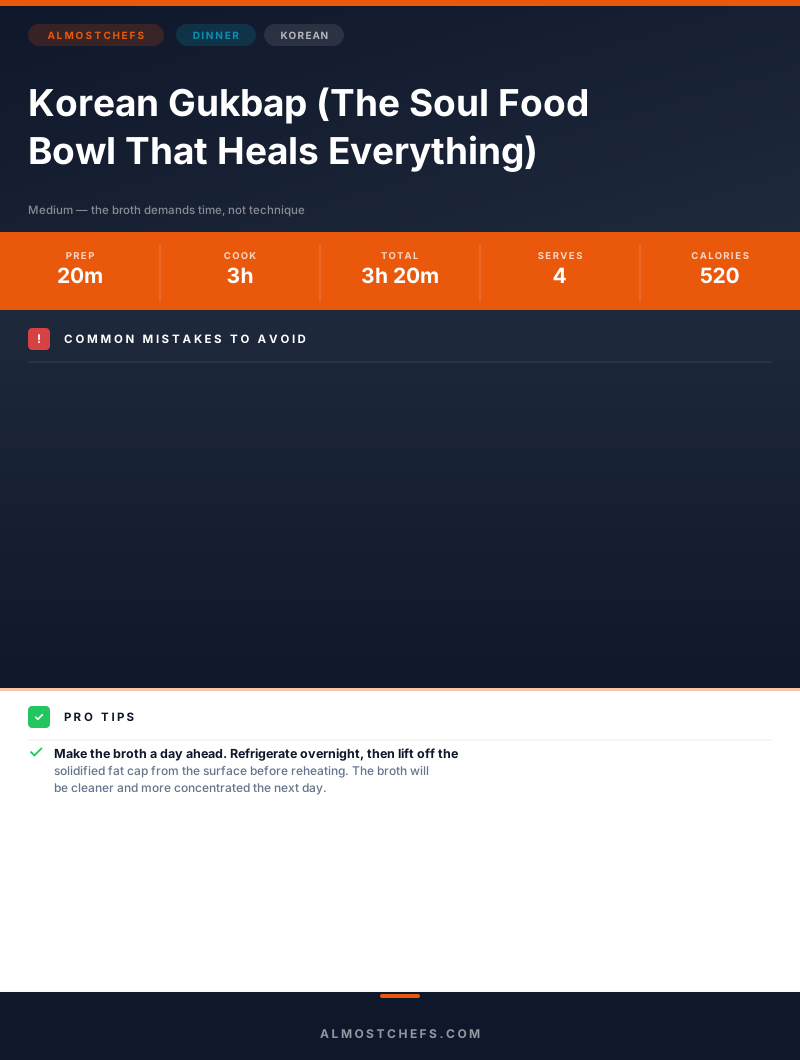
Korean Gukbap (The Soul Food Bowl That Heals Everything)
A deeply restorative Korean rice-in-soup bowl built on slow-simmered beef bone broth, tender brisket, and perfectly cooked white rice. We break down why the broth is everything, how to get silky rather than greasy results, and the one step most home cooks skip that ruins the whole bowl.

“Gukbap is the dish Korean night workers eat at 3am, the hangover cure older than any Western brunch trend, the thing grandmothers make when nothing else will do. Rice submerged in a milky bone broth that took hours to build, brisket pulled to silk, a slick of sesame on top. Most home versions taste like hot water with beef nearby. The difference between those and the real thing is one decision: did you actually cook the bones long enough?”
Why This Recipe Works
Gukbap does not care about trends. It predates them by centuries. It is what you eat when you need actual food — not food that photographs well, not food with eleven components, but something hot, restorative, and built to make you feel functional again. The fact that it also happens to be one of the better gut-health dishes in the Korean canon is almost beside the point. It just tastes right.
The Broth Is the Dish
There is no gukbap without a proper broth, and a proper gukbap broth is opaque white, not clear. This distinction matters more than any other single factor in the recipe. The milky color comes from emulsified fat and dissolved collagen — specifically, the gelatin that leaches out of connective tissue during a sustained, active simmer. A gentle simmer produces a refined, clear broth. An active simmer creates turbulence that breaks fat droplets into fine particles and suspends them permanently in the liquid. Same ingredients. Completely different result.
This is also why the parboiling step is non-negotiable. Blood and impurities that remain in the bones will interfere with that emulsification, turning your broth gray instead of white and adding an off-flavor that no amount of seasoning fixes. Ten minutes of boiling, a full rinse, a clean pot — then you build the broth from zero. The extra step takes 15 minutes and changes everything.
The Bone Selection
Marrow bones and knuckle bones are the structural pillars of gukbap broth. Brisket alone produces a thin, meaty liquid that tastes of beef without having body. You need the collagen-dense connective tissue in marrow and knuckle bones to create the silky, coating mouthfeel that defines the dish. The brisket contributes the meat for the bowl; the bones build the liquid it floats in. Both are load-bearing.
The Separation Principle
Gukbap has a division of labor that Western cooks often collapse out of convenience: the broth and the rice are cooked entirely separately and combined only at the moment of serving. This is not a stylistic preference — it's structural logic. Rice cooked in the broth releases starch into the liquid, thickening it toward porridge and muting the clean broth flavor. Separately cooked rice retains its texture, soaks up broth gradually from the outside in, and allows each person to calibrate the ratio in their own bowl. A rice cooker makes the rice step invisible and repeatable.
The Condiment Architecture
Gukbap is intentionally under-seasoned in the pot. The broth is brought to mild salinity — enough to not taste flat — and everything beyond that happens at the table. Saeujeot adds fermented salinity and funk. Kimchi adds acidity, crunch, and probiotic depth. Gochugaru adds heat calibrated to the individual. This is not a plating choice. It is a philosophy. The dish is designed around personal adjustment, which is why gukbap shops in Korea keep those condiments on every table in unlabeled ceramic dishes like they're made of free air.
The Gut Health Logic
The bone broth base here delivers gelatin and collagen hydrolysates — compounds that support intestinal lining integrity according to emerging research. Combined with kimchi's dense probiotic profile and the gentle, easily digestible nature of the rice, gukbap is the kind of meal that functions differently than it looks. It looks simple. It works hard. That's the Korean food philosophy in one bowl: nothing wasted, nothing excessive, everything earning its place.
The stockpot you use matters here — not for performance theater but because thin pots create hot spots that scorch the bottom while the center stays at the wrong temperature. Even heat over three hours is what turns a home broth into something worth eating at midnight.
Where Beginners Mess This Up
Before we start, read this. These are the 4 reasons your korean gukbap (the soul food bowl that heals everything) will fail:
- 1
Pulling the broth too early: Gukbap broth needs a minimum of 2.5 hours of active simmering to turn milky white and develop body. Pulled at 90 minutes, you get a thin, pale liquid that tastes like beef-adjacent water. The collagen needs time to fully dissolve and emulsify into the broth. If it's still translucent, keep going.
- 2
Skipping the parboil on the bones: Bone-in beef cuts must be parboiled in plain water for 10 minutes and rinsed before making the actual broth. This removes blood, impurities, and the source of off-flavors that turn your broth gray and funky. This step is not optional — it is what separates cloudy-clean from cloudy-murky.
- 3
Adding rice too early: Rice added to simmering broth at the start will disintegrate and turn the soup into porridge. Cook the rice separately. Add it to the bowl at serving, then ladle the hot broth over it. The broth heats the rice through in 60 seconds. It keeps its texture. This is the architecture of the dish.
- 4
Under-seasoning at the table: Gukbap broth is intentionally mild before serving — neutral enough to accommodate the table condiments: salted shrimp (saeujeot), fermented kimchi, sliced scallions, and gochugaru. If you salt the broth to full seasoning in the pot, you destroy the balance. Season lightly in the pot, finish individually at the table.
🛠️ Core Equipment
- Large heavy-bottomed stockpotYou need volume — at least 6 quarts — and even heat to hold a sustained simmer for hours without scorching. A thin pot will concentrate heat at the base and give you brown, not white, broth.
- Fine-mesh skimmerDuring the first 20 minutes of simmering, fat and foam rise continuously to the surface. Skim every 5 minutes in this window. Stop skimming after that — the emulsification process that whitens the broth needs the fat to stay in.
- Rice cooker or heavy pot with lidGukbap rice must be cooked separately and properly — not as an afterthought. Undercooked or sticky rice ruins the texture of the final bowl. A [rice cooker](/kitchen-gear/review/rice-cooker) produces consistent results every time.
- Ladle with pour spoutBroth service needs to be generous — 1.5 to 2 cups per bowl — and the ladle needs control. A wide-mouth ladle without a spout splashes and cools the bowl before service.
Korean Gukbap (The Soul Food Bowl That Heals Everything)
🛒 Ingredients
- ✦2 pounds beef brisket, cut into 3-inch chunks
- ✦1 pound beef marrow bones or knuckle bones
- ✦12 cups cold water, plus more for parboiling
- ✦1 large yellow onion, halved
- ✦8 garlic cloves, smashed
- ✦1 tablespoon whole black peppercorns
- ✦2 teaspoons sea salt, plus more to taste
- ✦2 cups short-grain white rice, rinsed
- ✦4 scallions, thinly sliced
- ✦2 tablespoons toasted sesame oil
- ✦1 tablespoon toasted sesame seeds
- ✦Kimchi, for serving
- ✦Saeujeot (salted fermented shrimp), for serving
- ✦Gochugaru (Korean red pepper flakes), for serving
- ✦Additional sea salt and black pepper, for seasoning at the table
👨🍳 Instructions
01Step 1
Place the brisket chunks and marrow bones in a large stockpot. Cover with cold water by 3 inches. Bring to a boil over high heat and cook for 10 minutes.
02Step 2
Drain completely. Rinse the pot, the brisket, and the bones thoroughly under cold running water, scrubbing off any grey residue clinging to the meat and bones.
03Step 3
Return the rinsed brisket and bones to the clean pot. Add 12 cups cold water, the halved onion, smashed garlic, and black peppercorns. Bring to a hard boil over high heat.
04Step 4
Once boiling vigorously, reduce heat to maintain a strong simmer (not a gentle simmer — active bubbling). Skim the surface every 5 minutes for the first 20 minutes.
05Step 5
Simmer uncovered for 2.5 to 3 hours, adding water as needed to keep the bones submerged. The broth should gradually turn from pale yellow to opaque white as it reduces.
06Step 6
Remove the brisket with tongs. It should be completely tender — a chopstick should pass through with no resistance. Let it cool for 15 minutes, then pull apart into bite-sized pieces along the grain.
07Step 7
Strain the broth through a fine-mesh sieve, discarding the bones, onion, and aromatics. Return the broth to the pot and bring to a gentle simmer. Season with 2 teaspoons sea salt.
08Step 8
Cook the rice according to your preferred method — rice cooker or stovetop, using a 1:1.1 rice-to-water ratio for slightly firmer grains that hold up in broth.
09Step 9
To assemble: add a generous portion of cooked rice to a deep bowl. Scatter pulled brisket over the top. Ladle 1.5 to 2 cups of hot broth directly over the rice and meat.
10Step 10
Finish each bowl with sliced scallions, a drizzle of sesame oil, and a pinch of sesame seeds. Serve immediately with kimchi, saeujeot, gochugaru, and extra salt on the side.
Nutrition Per Serving
Estimates based on standard preparation. Adjustments alter macros.
🔄 Substitutions
Instead of Beef brisket...
Use Pork shoulder or pork neck bones
Produces the Busan-style dwaeji gukbap. The broth will be slightly fattier and richer with a different flavor profile. Cook time remains the same.
Instead of Marrow bones...
Use Oxtail
Higher collagen yield means an even thicker, more gelatinous broth. Oxtail also adds more meat to the bowl. Adds roughly 30 minutes to cook time.
Instead of Saeujeot...
Use Fish sauce
Loses the textural element but preserves the fermented seafood umami hit. Use sparingly — fish sauce is significantly saltier by volume than saeujeot.
Instead of Short-grain white rice...
Use Cooked barley or multi-grain rice blend
Adds a nutty, chewy texture and additional fiber. Aligns with the gut health focus of the dish. Barley holds up better in broth than white rice over time.
🧊 Storage & Reheating
In the Fridge
Store broth and rice separately in airtight containers for up to 4 days. Storing them together turns the rice to mush as it continues absorbing liquid.
In the Freezer
Broth freezes for up to 3 months. Cooked brisket freezes well for up to 2 months in a small amount of broth to prevent drying. Do not freeze cooked rice — it becomes grainy on reheating.
Reheating Rules
Bring broth to a full boil before serving. Cold broth ladled over room-temperature rice will produce a lukewarm bowl. Gukbap must be served searingly hot.
❓ Frequently Asked Questions
Why is my broth clear instead of milky white?
Two likely causes: you simmered too gently, or you skimmed too aggressively. Milky gukbap broth requires a sustained active simmer (not a gentle blip) to emulsify the fat and collagen into the liquid. A low simmer produces a clear, light broth. Also, if you skimmed the fat off after the first 20 minutes, you removed the emulsifying agent. Milky broth needs that fat present.
Can I use a pressure cooker to speed up the broth?
Yes, with caveats. A pressure cooker produces tender meat and extracted collagen in about 45 minutes at high pressure, but the broth will typically be less milky and more clear than the stovetop version. The extended stovetop simmer creates a specific emulsion that pressure cooking doesn't fully replicate. It's faster, but the result is different.
What does gukbap taste like? I've never had it.
Clean, deeply savory, and subtly rich — closer to a refined bone broth than a heavy stew. The broth itself is mild and almost neutral before condiments. The salt, heat, and fermented funk come from what you add at the table. It's a study in restraint: the broth carries the bowl, and everything else supports it.
Why do I add the rice separately instead of cooking it in the broth?
Rice cooked directly in broth releases starch into the liquid, thickening it to a porridge-like consistency and muddying the clean broth flavor. Separately cooked rice keeps its texture, the broth keeps its clarity and body, and you can control the ratio in each bowl individually.
Is gukbap actually good for gut health?
The collagen-rich bone broth contains gelatin, which some research suggests supports gut lining integrity. The fermented condiments — particularly kimchi — are probiotic-dense and actively support gut microbiome diversity. Together, they make gukbap one of the more genuinely functional traditional Korean dishes, not just anecdotally but mechanistically.
How do I know when the brisket is done?
A chopstick or thin skewer should pass through the thickest part with zero resistance — the texture should feel like pushing through soft butter. If there's any springback or chewiness, give it another 20-30 minutes. Undercooked brisket is chewy and unpleasant; properly braised brisket pulls apart along natural grain lines with almost no effort.
The Science of
Korean Gukbap (The Soul Food Bowl That Heals Everything)
We turned everything on this page into a beautiful, flour-proof PDF cheat sheet. Print it out, stick it to your fridge, and never mess up your korean gukbap (the soul food bowl that heals everything) again.
*We'll email you the high-res PDF instantly. No spam, just perfectly cooked meals.
AlmostChefs Editorial Team
We translate the internet's most popular cooking videos into foolproof, beginner-friendly written recipes. We analyze multiple methods, test them in our kitchen, and engineer a single "Master Recipe" that gives you the best possible result with the least possible stress.