Perfect Guacamole (Stop Buying the Jarred Stuff)
Classic Mexican guacamole made from ripe avocados, fresh lime, cilantro, jalapeño, and diced tomato — ready in 12 minutes. We broke down why most homemade guacamole turns brown, tastes flat, or goes watery, and built one technique that solves all three.
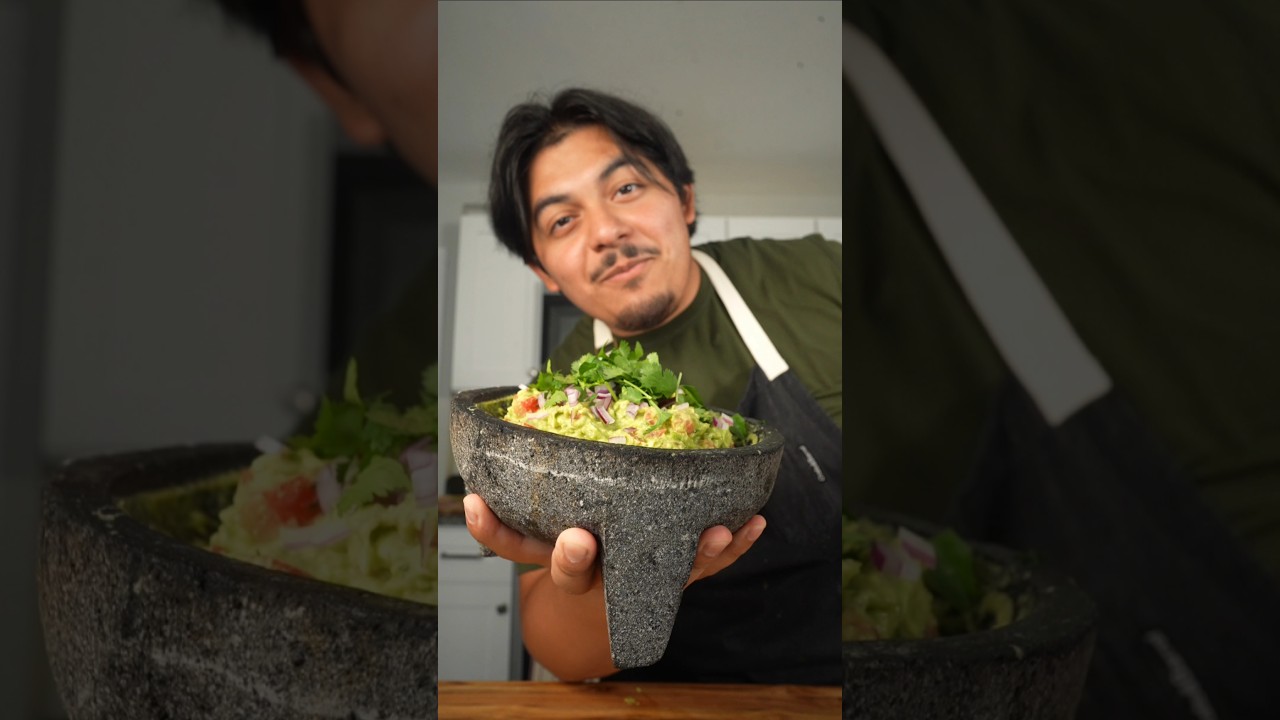
“Jarred guacamole exists because most people have made bad homemade guacamole at least once. It turned brown. It tasted flat. The tomatoes released water and made it soupy. None of these are recipe failures — they're technique failures. Three specific moves fix all of them: lime juice on the avocado before anything else, tomatoes folded in last, and serving immediately after mixing. Everything else is just seasoning.”
Why This Recipe Works
Guacamole has the deceptive quality of all great simple food: it looks like it requires no technique, so nobody bothers learning any. The result is an enormous amount of mediocre guacamole in the world — flat, brown, or watery — made by people who assumed that mashing avocados with some lime was the whole job. It is not.
The Ripeness Prerequisite
Nothing else matters if the avocados aren't ripe. An underripe avocado is 60% water by weight versus 25% water in a ripe one. The difference in fat content is what gives guacamole its unctuousness — that coating, satisfying richness that makes it work as a dip. Underripe avocados produce a bland, watery mash that no amount of seasoning can rescue.
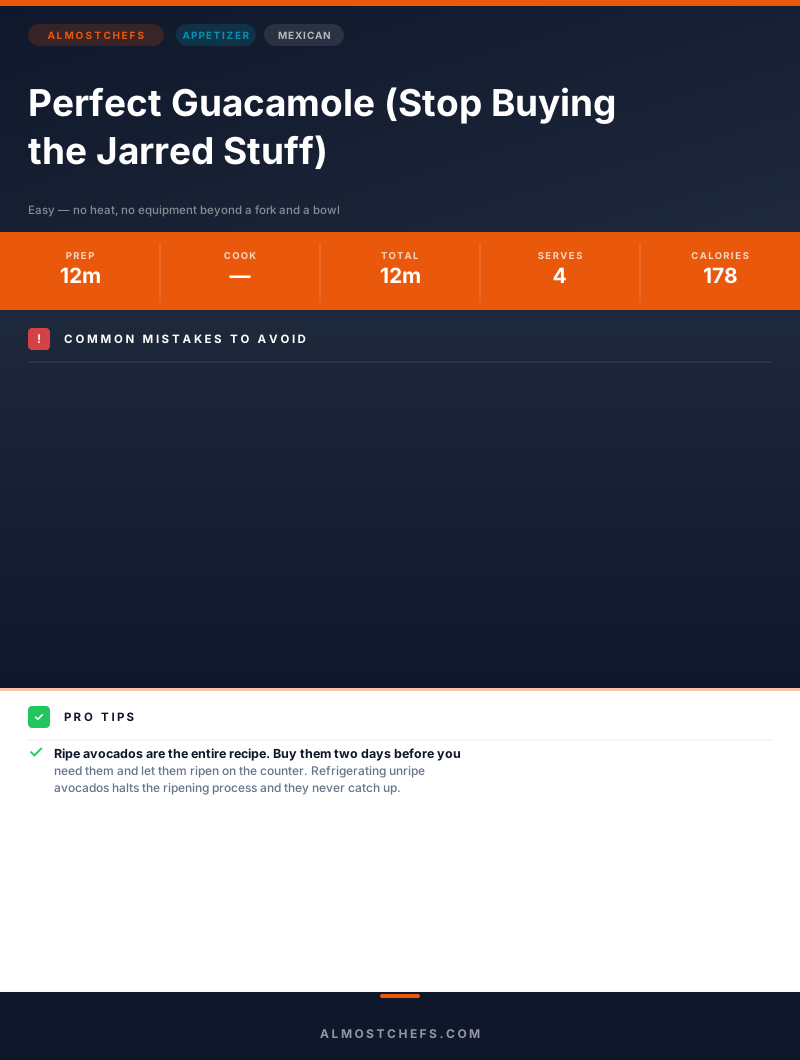
The store test: remove the small stem cap. Green underneath means ripe and ready. Brown means it's oxidized inside and already turning. Won't budge means two more days on the counter. If you find yourself in guacamole emergency with unripe avocados, the oven method — wrapping them in foil at 200°F for 10 minutes — softens the texture but does not replicate proper ripeness flavor. Manage your timeline.
Acid First
The oxidation clock starts the moment the avocado is cut. Polyphenol oxidase, an enzyme in avocado flesh, catalyzes a reaction between the fruit's phenolic compounds and atmospheric oxygen, producing the brown quinone pigments everyone hates. Lime juice's citric acid denatures this enzyme — but only on contact. Add half your lime juice to the empty bowl before the avocado goes in. This isn't an old wives' tale; it's straightforward food chemistry.
The corollary: the avocado pit does not prevent browning except in the immediate area it covers. Every guacamole bowl left with just a pit in the center still browns around the edges. Press plastic wrap directly against the entire surface, eliminating all air contact. That's the actual solution.
The Fold Order Is Architecture
Think of this recipe as having two phases: the base and the finish. The base — avocado, lime, salt, onion, jalapeño, garlic, cumin — can be made in advance, seasoned aggressively, and stored. The finish — cilantro and tomato — goes in last, right before serving, every time.
Tomatoes are 95% water. Diced tomatoes release that water continuously once cut, and the salt in the guacamole accelerates the process dramatically. Tomatoes folded in 10 minutes early turn a chunky dip into a soup. The cilantro wilts under the weight of the avocado if it sits too long and loses its bright color and volatile aromatic oils. Both components need to hit the bowl at the last moment to function correctly.
The Fork Doctrine
Use a chef's knife for prep and a fork for mashing. The fork is not a compromise tool — it is the correct tool. A potato masher creates too uniform a paste. A food processor or blender produces baby food. The fork gives you direct tactile feedback on texture at every stroke, letting you stop at exactly the right chunky consistency where some avocado pieces hold their shape against a creamy background.
Stop before it looks done. The folding motion when you add the tomatoes and cilantro will break down the chunks slightly further. Account for that.
Salt and Brightness
Avocado is high in fat, and fat suppresses salt perception. The guacamole will taste flat at first, and the natural response is to add more cumin or more jalapeño when the actual problem is almost always salt and acid. Taste after mixing the base. Add a pinch of salt. Taste again. Add a little more lime. Repeat until the avocado flavor becomes vivid — there's a distinct moment where it shifts from muted to bright. That's your target. Everything else is just distribution of ingredients.
The cumin is the one spice in this recipe, and a pinch is the right amount. Its earthiness provides bass note contrast to the lime's brightness without steering the guacamole away from freshness. Double the cumin and the dish tastes like taco seasoning. A pinch and it tastes like itself.
Where Beginners Mess This Up
Before we start, read this. These are the 4 reasons your perfect guacamole (stop buying the jarred stuff) will fail:
- 1
Using underripe avocados: An unripe avocado will not mash — it will chunk. Worse, it has almost no flavor. The fat content in a ripe Hass avocado is what gives guacamole its richness; an underripe avocado is mostly water and starch. Press the avocado gently at the stem end. It should yield with slight pressure. If it's rock solid, wait. If it collapses completely, it's overripe and oxidized inside.
- 2
Adding lime juice too late: Avocado flesh begins oxidizing the moment it hits air. Most people mash first, then add lime — which means 30–60 seconds of unprotected oxidation has already started. Add half the lime juice and a pinch of salt to the bowl before the avocado even goes in. The acid neutralizes the enzymatic browning reaction before it starts.
- 3
Folding tomatoes in too early: Tomatoes are 95% water. The moment they're diced and salted, they begin releasing liquid. If you fold them in early and let the bowl sit — even for five minutes — the guacamole turns watery and the texture collapses. Always add tomatoes last, just before serving.
- 4
Over-mashing the avocado: Guacamole is not a purée. The texture should be chunky — pieces of avocado that hold their shape alongside a creamy base. Over-processing destroys the textural contrast that makes a great guacamole interesting. Use a fork, not a blender, and stop when you still have visible chunks.
The Video Reference Library
Want to see it in action? Here are the exact videos we analyzed and combined to build this foolproof recipe translation:
The primary reference video. Demonstrates avocado ripeness testing, the fork-mash technique, and the correct folding order for tomatoes and cilantro.
🛠️ Core Equipment
- Medium mixing bowlWide enough to mash without avocado launching off the sides. Ceramic or glass won't react with the lime acid. Avoid reactive metal bowls.
- ForkThe only correct mashing tool. A potato masher creates too fine a texture. A blender destroys it entirely. A fork gives you control over exactly how chunky you go.
- Sharp chef's knifeFor safely removing the avocado pit and dicing the tomato and onion fine enough that they integrate without dominating. A dull knife makes avocado work dangerous — the blade slips.
- Citrus juicer or reamerFresh lime juice is non-negotiable. Bottled lime juice is preserved with ascorbic acid and tastes metallic. A simple handheld juicer gets you maximum yield from each lime without seeds.
Perfect Guacamole (Stop Buying the Jarred Stuff)
🛒 Ingredients
- ✦2 medium ripe avocados, halved lengthwise
- ✦2 tablespoons fresh lime juice, divided
- ✦1/2 teaspoon kosher salt, plus more to taste
- ✦1/4 cup red onion, finely diced
- ✦1/2 jalapeño pepper, minced
- ✦1 garlic clove, minced very finely
- ✦3 tablespoons fresh cilantro, chopped
- ✦1/2 cup tomato, diced into small pieces
- ✦1/4 teaspoon black pepper
- ✦Pinch of ground cumin
- ✦Tortilla chips or fresh vegetable sticks for serving
👨🍳 Instructions
01Step 1
Add half the lime juice and a pinch of salt to your mixing bowl before the avocado goes in.
02Step 2
Halve each avocado lengthwise by cutting around the pit, then twist the two halves apart.
03Step 3
Remove the pit by inserting a sharp knife into the center and rotating to dislodge it safely. Do not strike the pit with the knife blade — this is how people cut their hands.
04Step 4
Scoop the avocado flesh directly into the lime-prepared bowl using a large spoon.
05Step 5
Mash the avocado with a fork to your preferred consistency — leave it chunky for texture or mash more thoroughly for creamier results. Stop before it becomes smooth.
06Step 6
Fold in the diced red onion, minced jalapeño, and garlic until evenly distributed.
07Step 7
Taste and adjust: add more salt and the remaining lime juice as needed. The guacamole should taste bright and savory, not flat.
08Step 8
Sprinkle in the ground cumin and black pepper. Stir gently to incorporate.
09Step 9
Fold in the fresh cilantro and diced tomato last, using a light hand to preserve their texture.
10Step 10
Transfer to a serving bowl. If not serving immediately, press plastic wrap directly against the surface of the guacamole (no air gaps) and refrigerate. Serve within 30 minutes for best color.
11Step 11
Serve with tortilla chips or fresh vegetable crudités.
Nutrition Per Serving
Estimates based on standard preparation. Adjustments alter macros.
🔄 Substitutions
Instead of Jalapeño pepper...
Use Serrano pepper or fresh green chile
Serrano runs noticeably hotter — use half the amount and adjust up. Green chile offers deeper, earthier flavor with less direct heat.
Instead of Fresh cilantro...
Use Fresh parsley or chives
Parsley is milder and less polarizing for cilantro-averse guests. Chives add a subtle onion note without extra sharpness. Neither replicates cilantro's herbal brightness, but both work.
Instead of Tomato...
Use Diced cucumber or diced bell pepper
Cucumber contributes crunch and a cooling freshness with far less moisture than tomato. Bell pepper adds sweetness. Both reduce the watery texture risk significantly.
Instead of Lime juice...
Use Fresh lemon juice
Similar acidity with a slightly different citrus profile — a touch more floral, a touch less sharp. Works well. Bottled juice of any kind is not an acceptable substitute.
🧊 Storage & Reheating
In the Fridge
Press plastic wrap directly against the surface with no air gaps and refrigerate for up to 24 hours. The plastic-to-surface contact is what prevents browning — the avocado pit trick is a myth.
In the Freezer
Guacamole freezes poorly. The texture turns watery and grainy after thawing. Not recommended.
Reheating Rules
Guacamole is served cold or at room temperature. Remove from the fridge 10 minutes before serving. Stir gently and taste for seasoning — it may need a fresh squeeze of lime after refrigeration.
❓ Frequently Asked Questions
Why does my guacamole turn brown so fast?
Oxidation. The enzyme polyphenol oxidase in avocado flesh reacts with oxygen in the air and produces brown pigments. Lime juice's citric acid deactivates this enzyme — but only if it contacts the avocado flesh immediately. Add lime before you mash, and press plastic wrap directly against the surface when storing. No air gap means no oxidation.
Does the avocado pit actually prevent browning?
No. The pit only prevents browning in the small area directly underneath it. The rest of the bowl oxidizes normally. This is a persistent myth. Plastic wrap pressed against the entire surface is the actual solution.
How do I know if my avocado is ripe enough?
Press gently at the stem end. It should yield slightly without collapsing. Remove the small stem nub — green underneath means ripe, brown underneath means overripe. Rock-solid avocados need 1-2 days on the counter.
Can I make guacamole ahead of time?
You can make the avocado-lime-onion-jalapeño base up to 4 hours ahead and store it sealed with plastic wrap against the surface. Add the tomato and cilantro right before serving — they release water and lose texture if they sit mixed in.
Why does my guacamole taste flat?
Usually underseasoned. Avocado is rich and fatty, which mutes salt perception. Taste and add more salt and lime in small increments until the flavors pop — you'll know when it's right because the avocado flavor will suddenly become vivid instead of muted.
Is guacamole actually healthy?
Yes. Avocados are high in monounsaturated fat (the same type as olive oil), which is linked to reduced inflammation and improved cardiovascular markers. The fiber content (7g per serving) is exceptional for a dip. The sodium is moderate at 285mg. This is one of the few party foods that nutritionists eat without guilt.
The Science of
Perfect Guacamole (Stop Buying the Jarred Stuff)
We turned everything on this page into a beautiful, flour-proof PDF cheat sheet. Print it out, stick it to your fridge, and never mess up your perfect guacamole (stop buying the jarred stuff) again.
*We'll email you the high-res PDF instantly. No spam, just perfectly cooked meals.
AlmostChefs Editorial Team
We translate the internet's most popular cooking videos into foolproof, beginner-friendly written recipes. We analyze multiple methods, test them in our kitchen, and engineer a single "Master Recipe" that gives you the best possible result with the least possible stress.