Skillet Ground Beef and Cabbage (The 20-Minute Weeknight Weapon)
A high-heat skillet dish of seasoned ground beef, caramelized onions, and wilted cabbage cooked fast and hard until everything browns and melds. We broke down the most-watched YouTube methods to find the exact heat level, fat content, and seasoning sequence that makes this humble dish genuinely craveable.
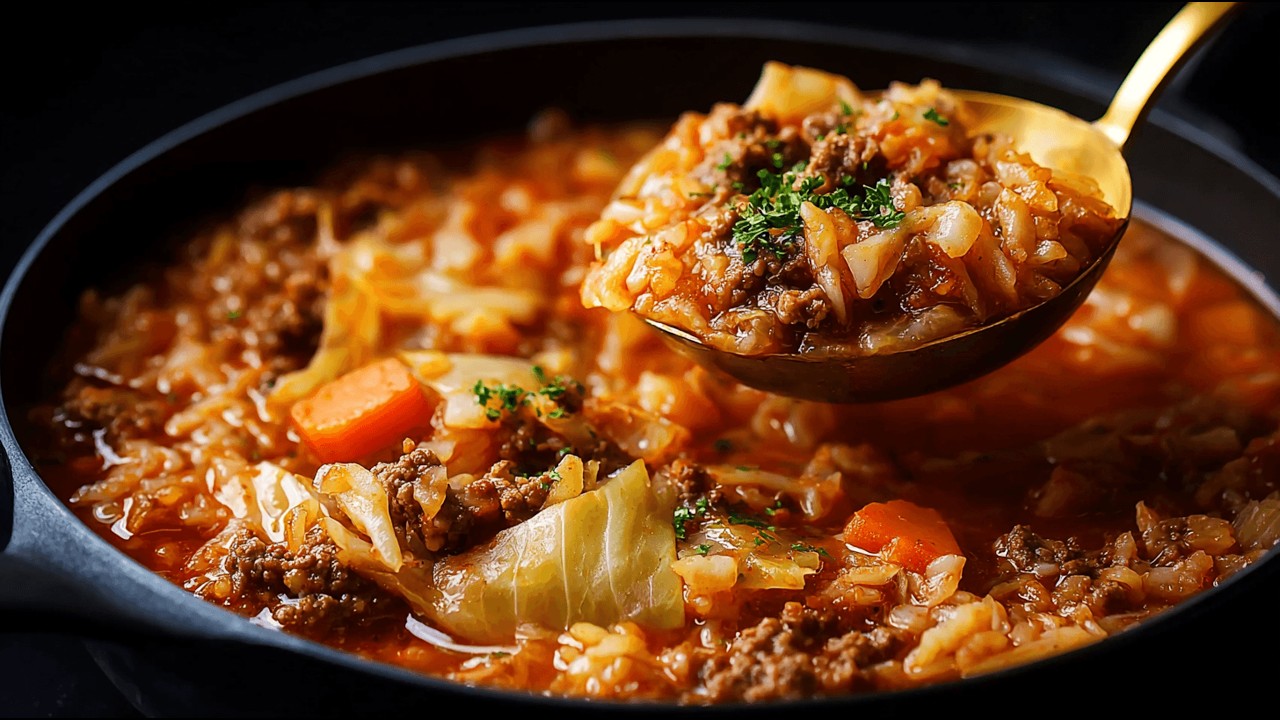
“Ground beef and cabbage is the kind of dish that gets dismissed before it hits the table. Wrong. Done correctly — high heat, the right fat ratio, and a two-stage cooking process that chars the cabbage edges without steaming it to mush — this is one of the most satisfying weeknight meals in the rotation. The problem isn't the ingredients. It's that most people treat a skillet dish like a braise and wonder why everything tastes steamed and grey.”
Why This Recipe Works
Ground beef and cabbage sits at the intersection of budget cooking and technique-dependent cooking, which makes it uniquely frustrating when it goes wrong. The ingredients cost almost nothing. The recipe looks simple. And yet the average home cook produces a grey, waterlogged pile of meat and vegetables that tastes like it was punished rather than cooked. The dish has a reputation problem that is entirely the fault of bad technique, not bad ingredients.
The Heat Is the Recipe
Everything in this dish depends on sustained high heat, and most people don't use it. They start on medium, crowd the pan, and spend twenty minutes watching steam escape from a lid they were never supposed to use. The result is braised cabbage with boiled beef — technically cooked, culinarily indefensible.
Ground beef browns through the Maillard reaction, which requires surface temperatures above 280°F. At medium heat, the moisture in the beef evaporates slowly, which keeps the surface temperature below the threshold needed for browning. By the time the moisture is gone and browning can begin, the beef is overcooked and dry. High heat evaporates that surface moisture fast, which means browning and cooking happen simultaneously. This is why a properly seared beef crumble tastes savory and complex while a steamed one tastes grey.
A cast iron skillet is the ideal tool for this reaction because it retains heat aggressively. When you add cold cabbage to a thin nonstick pan, the pan temperature drops immediately and you lose the sear. Cast iron barely notices. It holds its heat and keeps the cooking environment stable, which means the cabbage edges char while the centers wilt — exactly the texture contrast that makes this dish worth eating.
The Cabbage Chemistry
Cabbage is roughly 92% water by weight. That's not a problem — that water is carrying flavor compounds that will eventually concentrate into a rich, slightly sweet liquid that coats everything in the pan. The problem is the timing and rate at which that water is released. In a low-heat, crowded pan, all that water escapes at once and creates a steaming environment. In a hot, uncrowded pan, the water evaporates quickly at the point of contact with the cast iron, and the cabbage surface has a chance to caramelize before the next wave of moisture arrives.
This is why you add the cabbage in two batches. The first batch reduces in volume and releases its initial burst of moisture. By the time the second batch goes in, the pan has partially recovered its temperature and the new cabbage hits a hot surface rather than a cooling puddle. The result is layered texture — some pieces are deeply wilted and slightly caramelized, others still have a little bite. That variation is the goal, not a flaw.
The Seasoning Architecture
Soy sauce and Worcestershire are both umami delivery systems, and they work differently depending on when you add them. Added late, over finished food, they taste like condiments — flat and one-dimensional. Added mid-cook to a hot pan with rendered beef fat, they caramelize. The sugars in both sauces undergo the same Maillard reaction as the beef, creating new flavor compounds that integrate into the fat and coat every ingredient in the pan. The dish stops tasting "seasoned" and starts tasting like it was always supposed to taste this way.
The garlic and smoked paprika serve a different function. They bloom in the residual beef fat before any liquid is added, which means their fat-soluble flavor compounds extract into the cooking medium rather than sitting on the surface. A sharp chef's knife minces the garlic finely enough that it disperses evenly through the fat — unevenly minced garlic creates hot spots where some bites are overwhelming and others are bland. The smoked paprika adds a low-level char note that reinforces the browning happening in the pan, making the dish taste like it spent longer over the fire than it actually did.
Why This Is Actually a Complete Meal
The ratio of protein to vegetable in this dish is unusually well-balanced for a skillet recipe. Six cups of shredded cabbage sounds like an enormous amount going in, but it cooks down to roughly two cups of wilted, concentrated vegetable. Combined with the beef, one portion delivers nearly 30 grams of protein and 4 grams of fiber — enough to be genuinely filling without being heavy. The entire dish costs less than eight dollars to make and takes less time than waiting for delivery. That math is hard to argue with.
Where Beginners Mess This Up
Before we start, read this. These are the 4 reasons your skillet ground beef and cabbage (the 20-minute weeknight weapon) will fail:
- 1
Using lean ground beef: 80/20 ground beef is not negotiable for this dish. The fat renders out and becomes the cooking medium for the cabbage, carrying flavor into every layer. Lean beef produces dry crumbles and forces you to add oil, which lacks the depth of rendered beef fat. The 20% fat content is doing structural work, not just adding calories.
- 2
Overcrowding the pan: Cabbage releases a significant amount of water as it cooks. In a crowded pan, that water has nowhere to go and the entire dish steams instead of searing. Use a 12-inch skillet at minimum, cook in batches if needed, and resist the urge to add all the cabbage at once. Let each batch wilt down before adding the next.
- 3
Stirring the beef constantly: Let the ground beef sit undisturbed for 2-3 minutes after hitting the pan. You are building a crust, not cooking scrambled eggs. The fond that develops on the bottom of the pan is concentrated beef flavor — stirring constantly prevents it from forming and gives you grey, flavourless crumbles instead of browned, savory chunks.
- 4
Adding seasoning too late: Soy sauce and Worcestershire added at the end taste raw and sharp. Added mid-cook, they caramelize into the fat and beef, deepening in color and complexity. Timing the seasoning is not optional — it determines whether this dish tastes assembled or cooked.
The Video Reference Library
Want to see it in action? Here are the exact videos we analyzed and combined to build this foolproof recipe translation:
The source video for this recipe analysis. Demonstrates the two-stage cooking process and shows the color difference between properly seared beef and steamed grey crumbles.
Detailed breakdown of heat management and why cast iron outperforms nonstick for this specific dish. Good reference for understanding fond development.
Covers flavor variations across Asian, Eastern European, and American preparations. Useful for understanding the seasoning flexibility of the base technique.
🛠️ Core Equipment
- 12-inch cast iron skillet or heavy stainless panHigh heat retention is the entire game here. Thin pans drop temperature the moment cold cabbage hits the surface, which triggers steaming instead of searing. A cast iron skillet holds its heat and keeps the Maillard reaction running.
- Sharp chef's knifeCabbage needs to be shredded thin and evenly — roughly 1/4-inch strips. Thick uneven cuts cook at different rates, leaving you with some pieces overcooked and others still raw and tough. A sharp knife makes this a 3-minute task instead of a wrestling match.
- Wide wooden spatula or fish spatulaYou need to scrape the fond from the bottom of the pan as the dish cooks. A thin, flexible spatula gets under the caramelized bits without scraping the seasoning off the pan surface. Silicone spatulas are too soft for this kind of work.
Skillet Ground Beef and Cabbage (The 20-Minute Weeknight Weapon)
🛒 Ingredients
- ✦1.5 lbs ground beef (80/20 fat ratio)
- ✦1 small head green cabbage, cored and shredded into 1/4-inch strips (about 6 cups)
- ✦1 large yellow onion, diced
- ✦4 cloves garlic, minced
- ✦2 tablespoons soy sauce
- ✦1 tablespoon Worcestershire sauce
- ✦1 teaspoon smoked paprika
- ✦1/2 teaspoon red pepper flakes
- ✦1/2 teaspoon black pepper
- ✦1 teaspoon sea salt, plus more to taste
- ✦1 tablespoon vegetable oil
- ✦3 green onions, thinly sliced (for garnish)
👨🍳 Instructions
01Step 1
Shred the cabbage into 1/4-inch strips and set aside. Dice the onion and mince the garlic. Have all ingredients measured and ready before you heat the pan — this dish moves fast.
02Step 2
Heat a 12-inch cast iron skillet over high heat for 2 minutes until it begins to smoke slightly. Add the vegetable oil and swirl to coat.
03Step 3
Add the ground beef in one layer. Do not stir. Let it cook undisturbed for 2-3 minutes until a deep brown crust forms on the bottom.
04Step 4
Break the beef apart into large chunks using a spatula, scraping up any fond from the bottom. Continue cooking, stirring occasionally, for another 3-4 minutes until the beef is fully browned with no pink remaining.
05Step 5
Push the beef to one side of the pan. Add the diced onion to the empty side and cook for 3 minutes until softened and beginning to color. Then stir everything together.
06Step 6
Add the garlic, smoked paprika, red pepper flakes, and black pepper. Stir and cook for 60 seconds until the garlic is fragrant.
07Step 7
Add the soy sauce and Worcestershire sauce directly over the beef mixture. Stir to coat and let it caramelize for 1 minute — you should see the liquid reduce and darken against the bottom of the pan.
08Step 8
Add half the shredded cabbage to the pan. Stir to combine with the beef and let it wilt for 2-3 minutes, then add the remaining cabbage. Toss everything together.
09Step 9
Cook the cabbage and beef mixture together for 5-7 minutes, stirring every 90 seconds, until the cabbage is tender with slightly charred edges. Taste and adjust salt.
10Step 10
Remove from heat. Taste for seasoning. Plate and garnish with sliced green onions. Serve immediately.
Nutrition Per Serving
Estimates based on standard preparation. Adjustments alter macros.
🔄 Substitutions
Instead of Ground beef (80/20)...
Use Ground pork or a 50/50 beef-pork mix
Ground pork has a slightly sweeter fat profile and renders similarly. The pork-cabbage combination is a classic Eastern European pairing with its own distinct character.
Instead of Green cabbage...
Use Savoy cabbage or napa cabbage
Savoy has a more delicate texture and wilts faster — reduce cook time by 2 minutes. Napa cabbage is even more tender and works well for an Asian-style version.
Instead of Soy sauce...
Use Coconut aminos
Lower sodium and slightly sweeter. Use the same amount. Works well for those avoiding soy — the flavor difference is minor once everything is combined.
Instead of Smoked paprika...
Use Regular paprika plus 1/4 teaspoon chipotle powder
Replicates the smoky character. The chipotle adds heat as well, so reduce or eliminate the red pepper flakes if using.
🧊 Storage & Reheating
In the Fridge
Store in an airtight container for up to 4 days. The flavor improves significantly after 24 hours as the seasonings penetrate the cabbage.
In the Freezer
Freeze in portioned containers for up to 3 months. Thaw overnight in the refrigerator before reheating.
Reheating Rules
Reheat in a hot skillet over medium-high heat for 4-5 minutes, stirring occasionally. Add a teaspoon of water or soy sauce if the mixture looks dry. Avoid microwave reheating — it steams the cabbage into mush.
❓ Frequently Asked Questions
Why does my cabbage turn grey and watery?
The pan wasn't hot enough, or you added too much cabbage at once. Cabbage contains a large amount of water that must evaporate rapidly at high heat. A crowded, cool pan traps that steam and braises everything instead of searing it. Work in two batches and keep the heat high.
Can I use lean ground beef to make it healthier?
Technically yes, but you'll need to add 1-2 tablespoons of oil to compensate, and the dish will taste noticeably less rich. The fat in 80/20 beef isn't wasted — it renders out and becomes the cooking medium for the onions and cabbage, carrying flavor into every component. Trim calories elsewhere if needed.
What can I serve this with?
Steamed white rice is the classic pairing. Mashed potatoes work equally well and absorb the pan juices. For a low-carb option, serve over cauliflower rice or eat it straight from the skillet — it's a complete meal on its own.
Can I add other vegetables?
Yes. Diced carrots and bell peppers both work well — add them with the onion. Mushrooms can replace some of the beef for a meatier texture with lower fat content. Avoid vegetables with very high water content like zucchini, which will create the steaming problem you're already trying to avoid.
How do I know when the cabbage is done?
The cabbage should be tender when pierced with a fork but still have some structure — not limp and translucent. The edges should show some browning or char. If everything is uniformly pale and soft, you cooked it at too low a temperature.
Is this the same as haluski?
Related but not identical. Haluski is a Polish-American dish of cabbage and egg noodles with butter — no meat, very different texture profile. This skillet version is closer to a deconstructed stuffed cabbage without the rolling, and significantly faster.

The Science of
Skillet Ground Beef and Cabbage (The 20-Minute Weeknight Weapon)
We turned everything on this page into a beautiful, flour-proof PDF cheat sheet. Print it out, stick it to your fridge, and never mess up your skillet ground beef and cabbage (the 20-minute weeknight weapon) again.
*We'll email you the high-res PDF instantly. No spam, just perfectly cooked meals.
AlmostChefs Editorial Team
We translate the internet's most popular cooking videos into foolproof, beginner-friendly written recipes. We analyze multiple methods, test them in our kitchen, and engineer a single "Master Recipe" that gives you the best possible result with the least possible stress.