High-Protein Grilled Chicken Caesar Wrap (42g Protein, No Sad Desk Lunch)
A grilled chicken Caesar wrap rebuilt for real satiety — Greek yogurt Caesar dressing, homemade Parmesan crisps, and properly seared chicken breast that doesn't taste like cardboard. We stripped out the filler and engineered 42g of protein into a lunch you'll actually want to eat again.
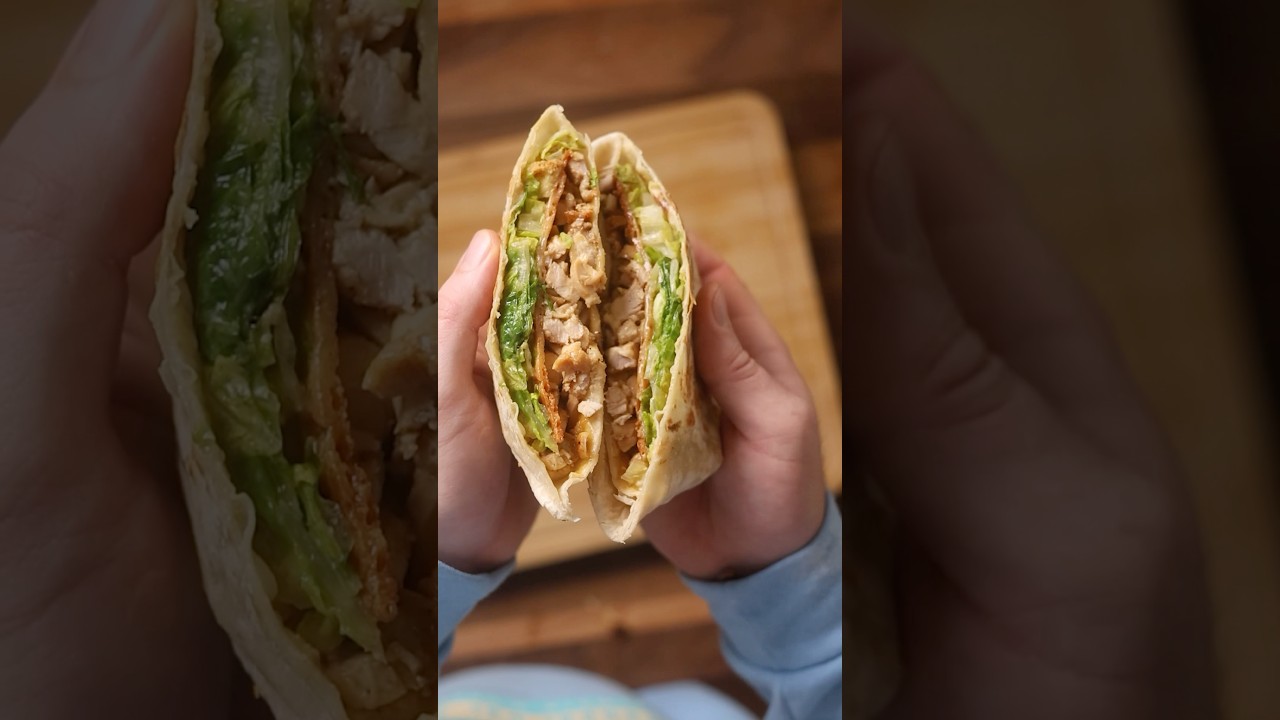
“Most Caesar wraps are a soggy tortilla problem dressed up in Parmesan. They look like lunch and taste like regret. This version fixes the actual issues: a Greek yogurt Caesar that clings instead of seeping, chicken that stays juicy because you let it rest, and Parmesan crisps that add crunch without cracking your back teeth. The result is 42g of protein in a wrap that eats like something from a restaurant that takes reservations.”
Why This Recipe Works
The Caesar wrap is the most lied-about item in the casual lunch category. On every menu it sounds like a reasonable choice — lean protein, fresh greens, classic dressing. What arrives is a flour tortilla gone translucent from moisture, pale chicken with the structural integrity of wet cardboard, and a Caesar dressing that tasted like it was made last Tuesday. The problem isn't the concept. The problem is that nobody applies any technique to it.
This version is built on three actual decisions.
The Chicken Problem
Chicken breast is the leanest, highest-protein option in this wrap, and it's also the easiest protein to ruin. The failure mode is always the same: too much moisture on the surface, not enough heat retention in the pan, pulled too early, cut too soon. The result is gray, steamed meat that tastes like it was designed by committee.
Fix one: dry the surface completely before it touches oil. Moisture on cold chicken creates steam when it hits a hot pan, and steam is the enemy of browning. The Maillard reaction — the chemical process that creates crust, color, and flavor — requires direct dry heat contact at high temperature. A wet surface drops the pan temperature before the reaction can start.
Fix two: rest the chicken. Five minutes feels like nothing, but internally the muscle fibers are unwinding and reabsorbing the juices that pressure forced toward the center during cooking. Cut at three minutes and those juices run out. Cut at five minutes and they stay in the meat where they belong. The slice you put in that wrap should be juicy enough to stand on its own, not just a protein vehicle for the dressing.
The Dressing Architecture
Traditional Caesar dressing is an emulsion of raw egg yolk, oil, anchovy paste, Worcestershire, lemon, and Parmesan. It's delicious and completely impractical for anything that needs to sit for more than twenty minutes without weeping. The oil separates. The tortilla absorbs it. You get a grease-stained wrap and a pile of undressed ingredients in the middle.
Greek yogurt Caesar is not a compromise — it's a structural upgrade for this specific application. The yogurt's protein matrix holds the dressing together without emulsification, which means it stays thick and cohesive against the tortilla instead of migrating into it. It also delivers a cleaner lactic tang that complements the lemon without competing with it. And it adds protein. The dressing itself is pulling macronutrient weight in this recipe, which is not something traditional Caesar dressing can claim.
The key is seasoning aggressively. Greek yogurt is mild. The garlic, Worcestershire, and Dijon need to be assertive enough to come through once the dressing is distributed across a 10-inch tortilla with chicken, lettuce, and tomatoes competing for your attention.
The Parmesan Crisp Logic
The crisp exists to solve a texture problem. Without it, this wrap is protein and soft — chicken, yogurt dressing, tortilla, lettuce. Nothing to chew against. The Parmesan crisp gives the bite structure and acts as a flavor amplifier since aged Parmesan has roughly three times the glutamate concentration of fresh cheese, which pushes the savory note of the entire wrap forward.
The technique is forgiving but requires patience at the cooling stage. In the oven, Parmesan melts before it crisps — the fats liquify and the protein network loosens. As it cools, that protein network tightens back into a rigid lattice. Move the crisps while warm and you break the structure before it sets. Two minutes of restraint produces the snap you want. A rimmed baking sheet and parchment are the only equipment that matters here.
The assembled wrap is the sum of three components executed correctly. None of them are complicated. All of them require you to stop improvising and follow the steps.
Where Beginners Mess This Up
Before we start, read this. These are the 4 reasons your high-protein grilled chicken caesar wrap (42g protein, no sad desk lunch) will fail:
- 1
Not drying the chicken before searing: Surface moisture is the enemy of a good sear. Wet chicken steams in the pan instead of browning, and you end up with gray, rubbery meat and no crust. Pat each breast thoroughly dry with paper towels before the oil goes anywhere near it.
- 2
Slicing the chicken too early: Cut into chicken straight off the heat and the juices run out onto your cutting board. Let it rest for a full 5 minutes. The internal temperature continues to rise slightly, the muscle fibers relax, and the juice redistributes through the meat instead of pooling under your knife.
- 3
Making the dressing too thin: Greek yogurt Caesar should be thick enough to coat the back of a spoon. If yours is runny, the dressing migrates into the tortilla during meal prep and you get a wet wrap with naked lettuce. Whisk until the mixture is uniformly thick before tasting for seasoning.
- 4
Pulling the Parmesan crisps too soon: The crisps look done when they're golden and bubbly in the oven, but they're still pliable. They firm up as they cool on the pan. Remove them at the first sign of golden edges and resist the urge to touch them for 2 full minutes. Patience produces the crunch.
The Video Reference Library
Want to see it in action? Here are the exact videos we analyzed and combined to build this foolproof recipe translation:
The source video for this recipe. Covers the full workflow from seasoning through rolling, with good close-up detail on the Parmesan crisp technique and dressing consistency.
🛠️ Core Equipment
- Cast iron or heavy stainless skilletEssential for getting a proper sear on the chicken. Thin non-stick pans can't hold enough heat when cold chicken hits the surface — the temperature drops and you get steamed meat instead of browned. A [cast iron skillet](/kitchen-gear/review/cast-iron-skillet) retains heat through the thermal shock.
- Rimmed baking sheet with parchmentThe Parmesan crisps need a flat, lined surface. Parchment prevents sticking and makes cleanup trivial. A warped or thin sheet creates uneven heat and some crisps burn while others stay pale.
- Instant-read thermometerChicken breast has a narrow window between undercooked and dry. Pull it at exactly 165°F internal temperature. An [instant-read thermometer](/kitchen-gear/review/instant-read-thermometer) removes all guesswork and protects against both outcomes.
- Small balloon whiskFor the Greek yogurt Caesar. A fork leaves lumps of unmixed garlic and mustard. A whisk emulsifies the dressing into a smooth, clingy consistency in under a minute.
High-Protein Grilled Chicken Caesar Wrap (42g Protein, No Sad Desk Lunch)
🛒 Ingredients
- ✦4 boneless, skinless chicken breasts (6 oz each)
- ✦2 tablespoons olive oil
- ✦1 teaspoon garlic powder
- ✦1 teaspoon smoked paprika
- ✦Salt and black pepper to taste
- ✦1 cup plain nonfat Greek yogurt
- ✦3 tablespoons grated Parmigiano-Reggiano
- ✦2 tablespoons fresh lemon juice
- ✦2 cloves garlic, minced
- ✦1 teaspoon Dijon mustard
- ✦1 teaspoon Worcestershire sauce
- ✦1 cup freshly grated Parmesan cheese (for crisps)
- ✦6 large whole wheat tortillas (10-inch)
- ✦4 cups romaine lettuce, chopped
- ✦1 cup cherry tomatoes, halved
- ✦½ cup diced red onion
- ✦2 tablespoons fresh parsley, chopped
👨🍳 Instructions
01Step 1
Pat the chicken breasts completely dry with paper towels. Season both sides generously with garlic powder, smoked paprika, salt, and black pepper.
02Step 2
Heat olive oil in a heavy skillet over medium-high heat until shimmering, about 2 minutes.
03Step 3
Place chicken in the skillet and sear for 6-7 minutes per side without moving it, until golden brown and cooked to an internal temperature of 165°F.
04Step 4
Transfer chicken to a cutting board and let rest for 5 full minutes, then slice into ½-inch strips against the grain.
05Step 5
While chicken rests, whisk together Greek yogurt, Parmigiano-Reggiano, lemon juice, minced garlic, Dijon mustard, and Worcestershire sauce until thick and smooth.
06Step 6
Preheat oven to 400°F and line a baking sheet with parchment paper.
07Step 7
Drop tablespoon-sized mounds of freshly grated Parmesan onto the parchment, spacing them 2 inches apart. Flatten each mound slightly.
08Step 8
Bake for 4-5 minutes until golden and bubbling at the edges. Remove from oven and cool undisturbed on the pan for 2 minutes.
09Step 9
Warm tortillas in a dry skillet over medium heat for 30 seconds per side, or microwave wrapped in a damp paper towel for 20 seconds.
10Step 10
Spread 3 tablespoons of Caesar dressing across the center of each tortilla, leaving a 2-inch border at the edges.
11Step 11
Layer romaine, sliced chicken, cherry tomatoes, and red onion down the center. Top with 2-3 Parmesan crisps and a scatter of fresh parsley.
12Step 12
Roll tightly: fold in the sides first, then roll from the bottom up, keeping even pressure throughout. Serve immediately or wrap tightly in foil for meal prep.
Nutrition Per Serving
Estimates based on standard preparation. Adjustments alter macros.
🔄 Substitutions
Instead of Plain nonfat Greek yogurt...
Use Full-fat Greek yogurt or plain Skyr
Richer dressing with slightly more creaminess. Skyr has marginally higher protein than Greek yogurt and an almost identical flavor profile. Both work without adjusting the recipe.
Instead of Whole wheat tortillas...
Use Large romaine leaves or low-carb tortillas
Romaine leaves drop carbs significantly and add crunch, but the wrap won't hold together as cleanly. Best for a knife-and-fork presentation. Low-carb tortillas behave identically to standard tortillas.
Instead of Boneless, skinless chicken breast...
Use Grilled chicken thighs or rotisserie chicken
Thighs are more forgiving to cook — the higher fat content makes them harder to dry out — and they add more flavor. Rotisserie chicken turns this into a 10-minute assembly job with no cooking required.
Instead of Cherry tomatoes and red onion...
Use Grilled zucchini, roasted bell peppers, cucumber
Lighter vegetable profile with more textural variety. Grilled vegetables complement the smoky paprika chicken. Cucumber adds a clean freshness that cuts through the rich dressing.
🧊 Storage & Reheating
In the Fridge
Store assembled wraps for up to 2 days, tightly wrapped in foil. For best results, store components separately and assemble fresh — the tortilla softens significantly overnight. Dressing keeps refrigerated for up to 4 days.
In the Freezer
Not recommended for assembled wraps — lettuce and tomatoes don't survive freezing. Grilled chicken strips freeze well for up to 2 months; thaw overnight and use in freshly assembled wraps.
Reheating Rules
If reheating chicken separately, use a dry skillet over medium heat for 2-3 minutes per side. Avoid the microwave — it turns sliced chicken breast rubbery. Assemble with room-temperature chicken if you prefer a cold wrap.
❓ Frequently Asked Questions
Why is my wrap falling apart when I roll it?
Two causes: cold tortilla or overloaded filling. Warm the tortilla until pliable before rolling — it should bend without cracking. For the filling, less is more. A tight roll with modest filling holds together. An overstuffed wrap splits at the seam.
Can I make the Parmesan crisps in advance?
Yes, up to 3 days ahead. Store in an airtight container at room temperature with parchment between layers. Do not refrigerate — moisture from the fridge turns them soft. Add them to the wrap at the last moment before eating.
Is the Greek yogurt Caesar significantly different from regular Caesar dressing?
Functionally, no — it delivers the same garlic, lemon, and umami profile. Nutritionally, yes — it cuts the fat roughly in half and adds 8-10g of protein per serving compared to mayo-based dressing. The texture is slightly thicker, which is actually better for wrap applications since it doesn't soak into the tortilla.
Can I use pre-shredded Parmesan for the crisps?
Technically yes, but the results are worse. Pre-shredded Parmesan contains cellulose anti-caking agents that interfere with melting. The crisps will be lacy and fragile instead of solid and crunchy. Freshly grated from a block is worth the 90 seconds it takes.
How do I keep the lettuce from wilting in meal prep?
Keep the dressing and lettuce separated until assembly. Dressed lettuce wilts within an hour. If you must pre-assemble, place the dressing on the bottom, then chicken, then lettuce on top — the protein layer acts as a buffer between the wet dressing and the greens.
What's the best way to get 165°F internal temperature without a thermometer?
Cut into the thickest part of the breast. The juices should run completely clear with no pink. The meat should be white throughout with no translucent areas. That said, a thermometer costs less than $15 and eliminates guesswork permanently. It's the single most useful tool for cooking chicken.
The Science of
High-Protein Grilled Chicken Caesar Wrap (42g Protein, No Sad Desk Lunch)
We turned everything on this page into a beautiful, flour-proof PDF cheat sheet. Print it out, stick it to your fridge, and never mess up your high-protein grilled chicken caesar wrap (42g protein, no sad desk lunch) again.
*We'll email you the high-res PDF instantly. No spam, just perfectly cooked meals.
AlmostChefs Editorial Team
We translate the internet's most popular cooking videos into foolproof, beginner-friendly written recipes. We analyze multiple methods, test them in our kitchen, and engineer a single "Master Recipe" that gives you the best possible result with the least possible stress.