The Perfect Grilled Cheese & Tomato Soup (The Combination That Actually Works)
A buttery, golden-crusted grilled cheese with a pull-apart melt paired with a velvety, slightly tangy tomato soup made from whole canned tomatoes. We broke down what actually makes the bread crisp without burning, which cheese blend melts cleanly, and why most tomato soups taste flat — then fixed all three.
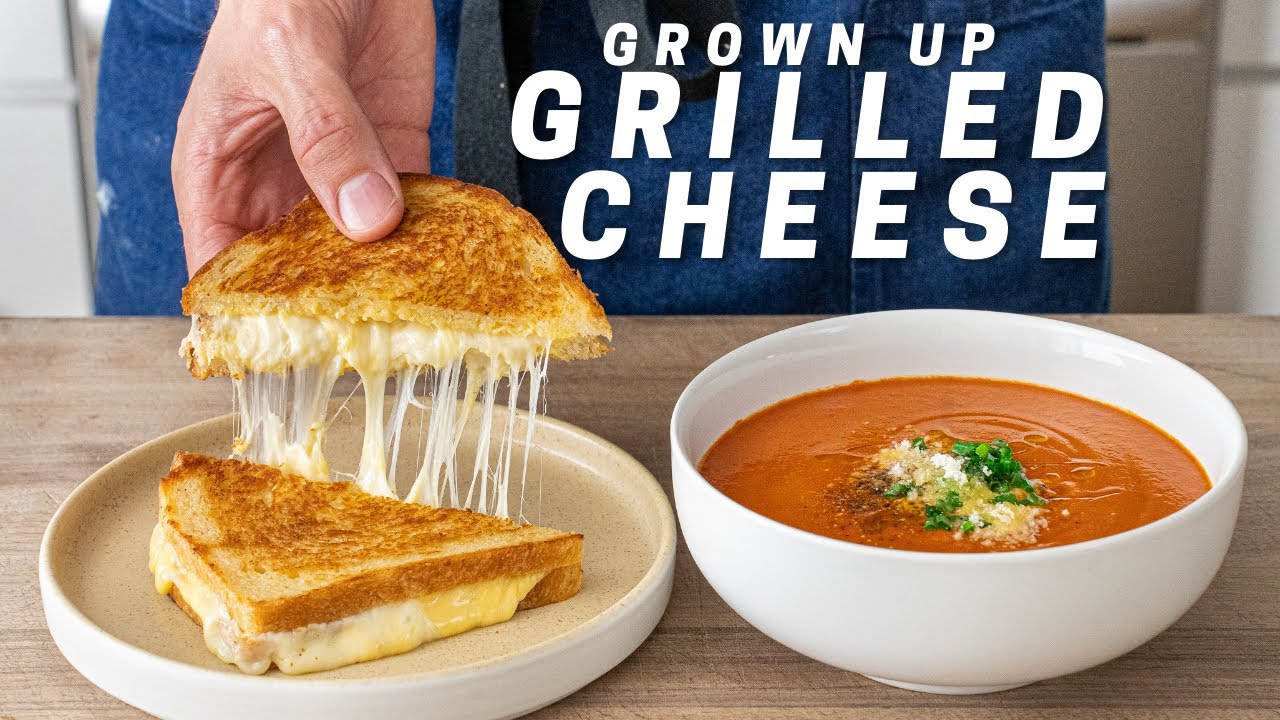
“Grilled cheese and tomato soup is the most ordered comfort food in America and the most consistently mediocre. Bread burns on the outside while cheese sits unmelted inside. Soup tastes like canned paste with a splash of cream. The fix for both is embarrassingly simple: low heat, a butter-mayo blend, and one extra ingredient in the soup that most recipes skip entirely. This is the version that actually delivers on the promise.”
Why This Recipe Works
Grilled cheese and tomato soup has been on diner menus since the 1920s, which means roughly a century of cooks have had time to figure out how to do it right. And yet the average version — bread that's scorched on the outside with a cold cheese brick in the middle, served next to a bowl of thin, acidic tomato liquid — suggests that most of that time was wasted. The problem is not complexity. It is the assumption that simple food requires no precision.
The Heat Problem
The single variable that determines whether grilled cheese succeeds or fails is temperature. Most cooks set the burner to medium or medium-high, watch the bread go golden in under two minutes, flip it too soon, and pull it off the heat before the cheese has done anything. What they're left with is a sandwich that looks correct and tastes like a hot butter cracker with a cold cheese insert.
The fix is counterintuitive: lower the heat and lengthen the cook. Medium-low — around 300°F — gives the radiant heat time to conduct through the bread's interior and reach the cheese layer before the Maillard reaction on the surface runs away from you. At this temperature, a properly built sandwich needs 3-4 full minutes per side. The cast iron skillet is the right tool here because it holds that temperature steadily after it's been preheated; a thin non-stick pan loses heat the moment the cold sandwich lands in it, then overcompensates by getting too hot.
The butter-mayo blend on the exterior is not a gimmick. Butter's milk solids begin burning around 250°F, which is below the optimal browning temperature for bread. Mayonnaise — which is primarily oil and egg yolk — has a significantly higher smoke point and spreads more evenly because it's already an emulsion. Mixed 50/50 with softened butter, you get the flavor of butter with the stability of oil. The result is uniform, deep-gold color across the entire surface without a single dark spot.
The Cheese Architecture
Not all melting cheeses are equal, and the choice of cheese determines both the flavor and the structural behavior of the filling. Sharp cheddar melts, but it melts oily — the fat separates from the protein matrix and you get puddles rather than pulls. Gruyère melts cleanly and elastically because of its lower moisture content and specific protein structure, but on its own it tastes mild to the point of anonymous. Together, the sharp cheddar delivers the flavor and the gruyère delivers the melt. You cannot substitute one for the other and get the same result.
The cheese must come to room temperature before assembly. Cold cheese straight from the refrigerator requires significantly more heat to melt, which means by the time the center is molten, the exterior has already crossed into burn territory. Fifteen minutes on the counter costs nothing.
The Tomato Soup Rebuild
Canned tomato soup's primary problem is that it tastes like canned tomato soup. The solution is not to abandon canned tomatoes — it's to select the right ones and treat them properly. Whole peeled San Marzano tomatoes are low-acid, naturally sweet, and collapse completely when simmered. Diced tomatoes are chemically treated with calcium chloride to hold their cube shape during canning; they resist breaking down, stay chunky, and carry a noticeably sharper acidity that no amount of cream fully neutralizes.
The bloom step — two minutes of tomato paste cooked in butter before any liquid is added — is the most important technique in this recipe and the most commonly skipped. Raw tomato paste tastes metallic and harsh. Thirty seconds in hot fat transforms it: the sugars caramelize, the harsh volatile acids cook off, and what's left is a deep, sweet, savory concentrate that forms the flavor backbone of the entire soup. Every proper tomato-based sauce in Italian and French cooking uses this technique. It works.
The immersion blender is the right finishing tool because it processes the soup directly in the pot at whatever temperature you choose. Countertop blenders require working in small batches with a vented lid because hot liquid expands under pressure — one full blender of hot tomato soup without a lid vent becomes a crimson ceiling installation. The immersion blender removes that risk entirely and produces a texture that is equally smooth when you hold technique steady.
These two dishes have been paired for a hundred years because they are genuinely better together — the richness of the cheese against the acidity of the tomato, the crunch of the crust against the silk of the soup. That combination is worth executing correctly.
Where Beginners Mess This Up
Before we start, read this. These are the 4 reasons your the perfect grilled cheese & tomato soup (the combination that actually works) will fail:
- 1
Heat too high on the sandwich: Medium-high heat browns the bread in under 2 minutes while leaving the cheese cold and solid in the center. The exterior looks done while the interior isn't close. Grilled cheese needs medium-low heat and 3-4 minutes per side so the heat has time to conduct through the bread and melt the cheese completely before the crust burns.
- 2
Using only butter on the bread: Butter alone burns easily and creates uneven browning because of its milk solids. A 50/50 blend of softened butter and mayonnaise gives you richer flavor, more even color, and a higher smoke point. The oil in mayo stabilizes the browning and produces that perfect golden crust every time.
- 3
Canned diced tomatoes in the soup: Diced tomatoes are treated with calcium chloride to hold their shape — they resist breaking down and leave your soup chunky and acidic. Whole peeled tomatoes (San Marzano preferred) crush easily, release more natural sweetness, and blend into a uniformly smooth consistency.
- 4
Skipping the bloom step for the aromatics: Adding garlic and tomato paste directly to tomatoes without cooking them first produces a sharp, raw flavor. Blooming both in butter for 2 minutes before the tomatoes go in caramelizes the sugars and eliminates the bitterness. This single step is what separates flat soup from complex soup.
The Video Reference Library
Want to see it in action? Here are the exact videos we analyzed and combined to build this foolproof recipe translation:
The source video that informed this recipe. Covers the butter-mayo technique, cheese selection, and the tomato soup build from scratch. Watch specifically for the heat management section — it explains the low-and-slow method better than any written instruction can.
A technique-focused breakdown of cheese melting science and how different cheese varieties behave under heat. Useful for understanding why a blend outperforms a single cheese.
Deep dive into tomato soup building blocks — bloom technique, when to add cream, and how to balance acidity with sweetness. Good companion reference for the soup half of this recipe.
🛠️ Core Equipment
- Heavy-bottomed skillet or cast iron panEven heat distribution is the entire game with grilled cheese. A thin non-stick pan creates hot spots that burn the center of the bread while leaving the edges pale. Cast iron holds temperature steadily and ensures uniform crust development from edge to edge.
- Immersion blenderBlends the soup directly in the pot without transferring hot liquid to a countertop blender. Safer, faster, and easier to control the final texture. A countertop blender works but requires working in batches with a vented lid to avoid pressure buildup.
- Small offset spatula or wide flat spatulaFor flipping the sandwich without squeezing out the cheese. A thin, wide blade slides under the bread cleanly. A standard slotted spatula can puncture the bread and cause cheese leakage.
- Dutch oven or heavy saucepanThe soup needs even, sustained heat during simmering. A heavy pot prevents scorching on the bottom, which would add a bitter, burnt note to an otherwise clean tomato flavor.
The Perfect Grilled Cheese & Tomato Soup (The Combination That Actually Works)
🛒 Ingredients
- ✦4 slices thick-cut white sandwich bread or sourdough
- ✦2 tablespoons unsalted butter, softened
- ✦2 tablespoons mayonnaise
- ✦3 ounces sharp cheddar cheese, thinly sliced
- ✦2 ounces gruyère cheese, shredded
- ✦1 can (28 ounces) whole peeled San Marzano tomatoes
- ✦1 tablespoon unsalted butter (for soup)
- ✦1 tablespoon olive oil
- ✦1 small yellow onion, roughly chopped
- ✦3 cloves garlic, minced
- ✦2 tablespoons tomato paste
- ✦1 teaspoon granulated sugar
- ✦1/2 teaspoon dried oregano
- ✦1/4 teaspoon red pepper flakes
- ✦1 cup chicken or vegetable broth
- ✦1/3 cup heavy cream
- ✦2 tablespoons fresh basil leaves, torn
- ✦Sea salt and freshly cracked black pepper to taste
👨🍳 Instructions
01Step 1
Start the soup first. Melt 1 tablespoon butter with olive oil in a Dutch oven over medium heat. Add the chopped onion and cook for 6-8 minutes, stirring occasionally, until softened and translucent.
02Step 2
Add the minced garlic and tomato paste. Stir constantly and cook for 2 minutes until the paste darkens slightly and smells sweet and caramelized.
03Step 3
Pour in the whole peeled tomatoes (with their juices), crush them with a wooden spoon as you add them. Add the broth, sugar, oregano, red pepper flakes, salt, and pepper.
04Step 4
Bring to a boil, then reduce heat to low and simmer uncovered for 15 minutes, stirring occasionally.
05Step 5
Remove from heat. Use an immersion blender to blend the soup until completely smooth. Stir in the heavy cream and return to low heat for 2-3 minutes. Taste and adjust salt.
06Step 6
While the soup simmers, mix the softened butter and mayonnaise together in a small bowl until fully combined. Spread the butter-mayo blend evenly on one side of each bread slice.
07Step 7
Layer the cheddar slices and shredded gruyère on the unbuttered side of two bread slices. Top with the remaining bread slices, buttered side out.
08Step 8
Heat a [cast iron skillet](/kitchen-gear/review/cast-iron-skillet) over medium-low heat for 2 minutes before adding the sandwiches. Place both sandwiches in the pan.
09Step 9
Cook for 3-4 minutes per side without pressing down. The crust should be deep golden brown — not pale, not dark. Flip once when the bottom is fully set.
10Step 10
Remove the sandwiches when both sides are golden and you can see cheese beginning to ooze at the edges. Rest for 1 minute before cutting diagonally.
11Step 11
Ladle the soup into bowls and finish with torn fresh basil. Serve immediately alongside the sandwiches.
Nutrition Per Serving
Estimates based on standard preparation. Adjustments alter macros.
🔄 Substitutions
Instead of White sandwich bread...
Use Sourdough or brioche
Sourdough adds tang that plays well against the rich cheese. Brioche is sweeter and more delicate — use slightly lower heat to prevent burning the sugary crust.
Instead of Heavy cream...
Use Full-fat coconut cream
Dairy-free alternative that adds richness and a subtle sweetness. Avoid light coconut milk — it lacks the fat content needed to give the soup body.
Instead of Gruyère...
Use Fontina or Havarti
Both melt cleanly and offer a mild, buttery flavor profile. Fontina is slightly more complex; Havarti is more neutral. Either works as a 1:1 swap.
Instead of San Marzano whole tomatoes...
Use Fire-roasted whole canned tomatoes
Fire-roasted tomatoes add a subtle smoky sweetness that plays well in this soup. Avoid diced tomatoes regardless of brand — the texture issue remains the same.
🧊 Storage & Reheating
In the Fridge
Soup stores well in an airtight container for up to 4 days. The grilled cheese does not store — make it fresh to order.
In the Freezer
Freeze the soup (without cream) for up to 3 months. Add the cream after reheating. Freezing with cream can cause separation.
Reheating Rules
Reheat soup on the stovetop over medium-low heat, stirring occasionally. Add a splash of broth if it has thickened. Avoid the microwave for the soup — it heats unevenly and can cause cream separation.
❓ Frequently Asked Questions
Why does my grilled cheese burn on the outside but stay cold inside?
Your heat is too high. Grilled cheese requires medium-low heat — around 300°F surface temperature — so the heat has time to conduct through the bread and melt the cheese before the crust scorches. If the pan is smoking before the sandwich goes in, it's already too hot.
Can I use pre-shredded cheese?
Technically yes, but anti-caking agents like cellulose coat pre-shredded cheese and actively resist melting. You'll get a grainier, less cohesive melt. Hand-slicing or shredding from a block takes 90 seconds and the difference in the final pull is immediately obvious.
Why does my tomato soup taste acidic and flat?
Two likely causes: you used diced tomatoes (which are treated to resist breaking down and releasing their natural sugars) or you skipped blooming the tomato paste. San Marzano whole tomatoes plus a 2-minute tomato paste bloom plus 1 teaspoon of sugar solves both problems simultaneously.
Do I need a Dutch oven for the soup?
No, but you need a heavy-bottomed pot of some kind. A thin saucepan creates hot spots at the base that scorch the tomato solids and introduce a bitter, burnt flavor that no amount of cream can mask. Any heavy stainless or enameled pot will work.
What's the best bread for grilled cheese?
Thick-cut (3/4-inch) white sandwich bread or sourdough. Thick slices provide structural integrity so the sandwich doesn't compress flat, create enough interior space for the cheese to pool properly, and don't burn before the center heats through. Thin sandwich bread is the second most common grilled cheese failure after too-high heat.
Can I make the soup ahead of time?
Yes — the soup is actually better the next day after the flavors meld. Make it up to 4 days in advance, store in the fridge without the cream, and stir in the heavy cream during the final reheat. Make the sandwich fresh when you're ready to eat.

The Science of
The Perfect Grilled Cheese & Tomato Soup (The Combination That Actually Works)
We turned everything on this page into a beautiful, flour-proof PDF cheat sheet. Print it out, stick it to your fridge, and never mess up your the perfect grilled cheese & tomato soup (the combination that actually works) again.
*We'll email you the high-res PDF instantly. No spam, just perfectly cooked meals.
AlmostChefs Editorial Team
We translate the internet's most popular cooking videos into foolproof, beginner-friendly written recipes. We analyze multiple methods, test them in our kitchen, and engineer a single "Master Recipe" that gives you the best possible result with the least possible stress.