The Perfect Grilled Cheese and Tomato Soup (Your Diner Nostalgia, Upgraded)
A golden, butter-crisped sandwich packed with a two-cheese blend paired with a silky, roasted tomato soup built from canned San Marzanos and finished with cream. We analyzed the most-watched YouTube methods to find the technique that nails the crunch-to-pull ratio every single time.
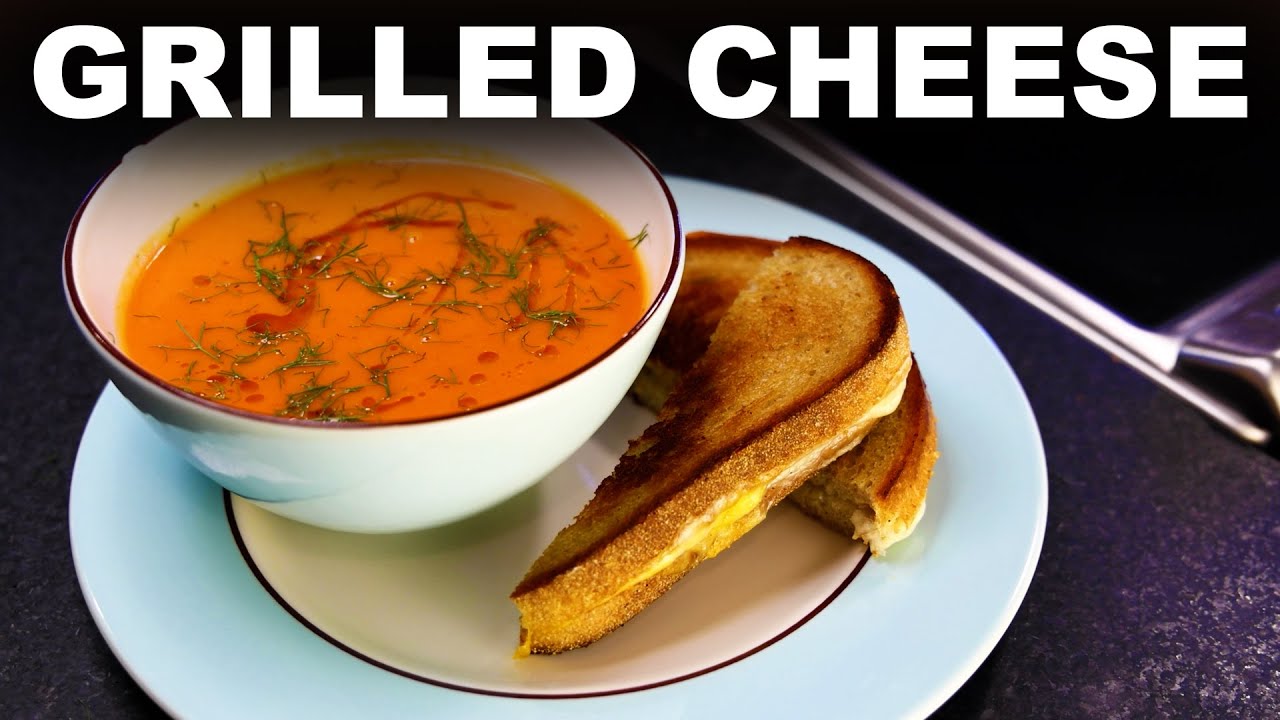
“Everyone thinks they know how to make grilled cheese. Butter bread, slap on a slice of American, press down on a hot pan, call it done. The result is usually a sandwich that's either burnt on the outside and cold in the middle, or pale and soft with cheese that never fully melted. The soup is an afterthought — opened from a can and heated on the back burner. This recipe treats both as the serious comfort food they deserve to be, and the gap between what you've been making and what's possible is smaller than you think.”
Why This Recipe Works
Grilled cheese and tomato soup is the most deceptive dish in American comfort food. It looks simple because it is simple — four or five ingredients, two pans, thirty minutes. But the gap between a mediocre version and a genuinely excellent one is enormous, and it is entirely a gap of technique rather than ingredients. The same bread, the same cheese, the same canned tomatoes — cooked correctly, they produce something far better than what most people grew up eating.
The Heat Problem
The single biggest mistake in grilled cheese is heat. Most people cook it too hot, reasoning that a hot pan means faster cooking. What it actually means is a sandwich that's charred on the outside with a cold, barely-melted slab of cheese in the middle. The bread surface carbonizes in two minutes while the cheese interior hasn't reached its melting point.
Medium-low heat is not a suggestion. At this temperature, the butter creates a slow, controlled Maillard reaction on the bread's surface — developing color and flavor over 4-5 minutes instead of 90 seconds. During that time, the heat conducts steadily inward, reaching the cheese and softening it uniformly from both sides. The result is a sandwich where the cheese is fully molten and the crust is a deep, even mahogany. A cast iron skillet makes this significantly easier by holding temperature steady when the cold sandwich hits the surface — thin pans drop temperature immediately and then overcorrect.
The Two-Cheese System
Using a single cheese is an optimization failure. American cheese — the highly processed kind — contains sodium citrate, an emulsifying salt that keeps cheese proteins and fats bound together at high heat instead of separating. This is why American melts into a smooth, cohesive pull instead of a greasy puddle. The problem is that American cheese tastes like sodium and not much else.
Sharp cheddar tastes excellent but lacks emulsifiers. At sandwich temperatures, aged cheddar proteins tighten and squeeze out their fat, producing a greasy, broken melt with rubbery protein solids. By combining a full slice of American with a generous portion of freshly grated sharp cheddar, you get the structural melt of American with the flavor depth of cheddar. The American acts as the foundation; the cheddar provides everything interesting. This is not a compromise — it's the correct answer.
The Soup Architecture
A properly made tomato soup requires patience in exactly one place: the aromatics. The onion and garlic base needs 8-10 full minutes over medium-low heat before a single tomato enters the pot. During this time, the onion's natural sugars caramelize slightly and its harsh sulfur compounds cook off, transforming sharp raw onion into something sweet and deeply savory. Rush this step and the sharpness carries through to the finished soup in a way that cream and seasoning cannot fully mask.
San Marzano tomatoes make a material difference here. Grown in the volcanic soil of Campania and regulated under a DOP designation, San Marzanos have thicker flesh, fewer seeds, lower water content, and significantly more natural sweetness than generic canned tomatoes. The difference is not subtle — you can taste it in the first spoonful of the finished soup. An immersion blender is the right tool for the final blend: it processes the soup directly in the heavy-bottomed saucepan without the dangerous hot-liquid transfer that countertop blenders require.
Why These Two Dishes Belong Together
The pairing isn't accidental. The soup provides acidity and warmth that cuts through the fat of the sandwich. The sandwich provides structure and chew that the liquid soup lacks. They are nutritional and textural complements — the kind of pairing that emerged from practical American diner logic rather than culinary theory. When both components are made correctly, the combination is one of the most satisfying lunches in the canon. When either is made carelessly, the whole thing collapses into cafeteria food. The margin between the two is narrower than you think, and it lives entirely in the details above.
Where Beginners Mess This Up
Before we start, read this. These are the 4 reasons your the perfect grilled cheese and tomato soup (your diner nostalgia, upgraded) will fail:
- 1
Cooking on heat that's too high: High heat toasts the exterior before the cheese has time to melt. You end up with a crunchy sandwich surrounding a slab of barely-softened cheese. Medium-low is the correct setting — it sounds frustratingly slow, but it gives the heat time to penetrate inward while the crust develops gradually. Patience here is the entire technique.
- 2
Using cold butter instead of softened: Cold butter tears the bread and creates uneven coverage with bald spots that burn while covered spots stay pale. Softened butter spreads like a thin, even coat of paint across every millimeter of the bread surface. This is the difference between patchy browning and the uniform mahogany crust you see in good diner photos.
- 3
Only using one type of cheese: American cheese melts perfectly but tastes flat. Sharp cheddar tastes great but seizes up and turns greasy at high heat. The combination solves both problems — American provides the smooth, cohesive melt while cheddar contributes sharpness and depth. Two cheeses isn't indulgence; it's engineering.
- 4
Under-cooking the tomato soup base: Raw onion and garlic need real time in the pot before the tomatoes go in. Rushing this step leaves a sharp, unintegrated flavor in the finished soup that no amount of cream or seasoning can fix. Cook the aromatics low and slow until they're completely translucent and beginning to turn golden — about 8 full minutes.
The Video Reference Library
Want to see it in action? Here are the exact videos we analyzed and combined to build this foolproof recipe translation:
The video that nails the medium-low heat approach and two-cheese strategy. Clear demonstration of the butter coverage technique and exactly what color the bread should be before flipping.
Deep dive into the San Marzano tomato method with a focus on aromatics and the cream finish. Useful for understanding the blending consistency you're targeting.
Covers advanced variations including cheese combinations, bread choices, and add-ins like caramelized onion and Gruyère. Good reference for building on the base technique.
🛠️ Core Equipment
- Cast iron skillet or heavy stainless panEven, consistent heat across the entire surface. Thin pans create hot spots — one corner of the sandwich burns while the rest stays pale. A [cast iron skillet](/kitchen-gear/review/cast-iron-skillet) holds temperature steadily even when the cold sandwich hits it, which thin pans cannot do.
- Immersion blenderFor blending the soup directly in the pot without transferring hot liquid to a countertop blender. Safer, faster, and produces a perfectly smooth consistency. An [immersion blender](/kitchen-gear/review/immersion-blender) is one of the most-used tools in any real home kitchen.
- Heavy-bottomed saucepanThe tomato soup needs sustained, even heat during the long simmer. Thin pans scorch the bottom where tomato solids settle. A [heavy-bottomed saucepan](/kitchen-gear/review/saucepan) distributes heat so the soup simmers uniformly without constant stirring.
- Flat spatula with a thin edgeFor flipping the sandwich cleanly without compressing it. A thin-edged spatula slides under the bread without tearing the crust or squeezing out the molten cheese.
The Perfect Grilled Cheese and Tomato Soup (Your Diner Nostalgia, Upgraded)
🛒 Ingredients
- ✦8 slices thick-cut white sandwich bread or sourdough
- ✦4 tablespoons unsalted butter, softened to room temperature
- ✦4 slices American cheese
- ✦1 cup sharp cheddar, freshly grated
- ✦2 cans (28 oz each) whole peeled San Marzano tomatoes
- ✦1 medium yellow onion, diced
- ✦4 cloves garlic, minced
- ✦2 tablespoons olive oil
- ✦1 tablespoon unsalted butter (for soup)
- ✦1/2 cup heavy cream
- ✦1 teaspoon granulated sugar
- ✦1/4 teaspoon red pepper flakes
- ✦1/2 cup fresh basil leaves, loosely packed
- ✦Sea salt and freshly ground black pepper to taste
👨🍳 Instructions
01Step 1
Start the soup: heat olive oil and butter in a heavy-bottomed saucepan over medium-low heat. Add the diced onion and a pinch of salt and cook, stirring occasionally, for 8 minutes until fully softened and beginning to turn golden.
02Step 2
Add the minced garlic and red pepper flakes to the onion mixture and cook for 2 more minutes, stirring constantly, until fragrant.
03Step 3
Pour in both cans of tomatoes, crushing the whole tomatoes with your hands as you add them. Bring to a simmer and cook uncovered for 20 minutes, stirring occasionally.
04Step 4
Remove from heat. Add the fresh basil leaves. Use an immersion blender to blend until completely smooth. Return to low heat.
05Step 5
Stir in the heavy cream and sugar. Taste and adjust salt and pepper. Keep warm on the lowest heat setting while you make the sandwiches.
06Step 6
Spread softened butter in a thin, even layer across one side of each bread slice, covering all the way to the edges.
07Step 7
Place a [cast iron skillet](/kitchen-gear/review/cast-iron-skillet) over medium-low heat. Let it preheat for 2 minutes — the pan should feel warm when you hold your hand 3 inches above it, but not hot.
08Step 8
Place two slices of bread butter-side-down in the pan. Immediately layer one slice of American cheese and a generous portion of grated sharp cheddar onto each. Top with the remaining bread slices, butter-side-up.
09Step 9
Cook for 4-5 minutes without pressing or moving the sandwiches, until the bottom is deep golden brown. Flip carefully with a thin spatula and cook another 3-4 minutes on the second side.
10Step 10
Remove from the pan and let rest for 60 seconds before cutting. The cheese needs a moment to set slightly or it will run out immediately when sliced.
11Step 11
Ladle the soup into bowls and serve immediately alongside the sandwiches.
Nutrition Per Serving
Estimates based on standard preparation. Adjustments alter macros.
🔄 Substitutions
Instead of American cheese...
Use Fontina or Havarti
Both melt nearly as smoothly as American with considerably more flavor. Fontina has a nutty, buttery quality; Havarti is milder and creamier. Either is a direct upgrade if you want to move past American.
Instead of Sharp cheddar...
Use Gruyère
Gruyère melts beautifully and brings a deeper, nuttier flavor than cheddar. It's the choice of French onion soup — use it here and the result is noticeably more complex.
Instead of Heavy cream...
Use Full-fat coconut cream
Dairy-free alternative that adds body and richness without significantly changing the texture. Adds a very subtle sweetness that actually works well with the tomato acidity.
Instead of White sandwich bread...
Use Sourdough or brioche
Sourdough adds tang and a sturdier crust that holds up better to the soup dunking. Brioche produces an almost French-toast-like richness. Both are upgrades in different directions.
🧊 Storage & Reheating
In the Fridge
Soup stores in an airtight container for up to 4 days and improves overnight as flavors meld. Grilled cheese sandwiches do not store well — make them fresh.
In the Freezer
Freeze soup in individual portions for up to 3 months. Thaw overnight in the refrigerator before reheating.
Reheating Rules
Reheat soup in a small saucepan over low heat, stirring occasionally, with a splash of water or broth if it has thickened. Avoid microwaving the sandwich — reheat in a dry pan over medium-low heat for 2 minutes per side to restore the crust.
❓ Frequently Asked Questions
Why does my grilled cheese burn on the outside before the cheese melts?
Your heat is too high. This is the most common grilled cheese mistake. Medium-low is the correct setting — it feels frustratingly slow but allows heat to penetrate to the cheese center while the crust develops gradually. If your bread is golden before the cheese has melted, drop the heat further and cover the pan with a lid for 30 seconds to trap steam and accelerate the melt.
Can I use a different type of canned tomato for the soup?
Yes, but the result will differ. Regular canned whole peeled tomatoes work fine but tend to be more acidic and watery than San Marzanos. If using generic tomatoes, reduce the soup for an extra 5-10 minutes to concentrate the flavor and be more generous with the sugar to balance acidity.
Do I need both American and cheddar cheese, or can I use just one?
You can use one, but you're giving something up either way. American alone melts perfectly but tastes flat and plasticky. Cheddar alone tastes great but can separate into a greasy puddle at heat. The combination is genuinely better than either alone — it's the foundational insight behind this recipe.
My soup tastes too acidic. How do I fix it?
Add sugar in small increments — a quarter teaspoon at a time — and taste after each addition. A pinch of baking soda also neutralizes acid quickly (use it sparingly — a tiny pinch — or it creates a soapy taste). More cream also softens acidity. The goal is balance, not sweetness.
Can I make the soup ahead of time?
Yes, and it's actually better the next day. Make the soup up to 3 days ahead, store in the fridge, and reheat gently before serving. The flavors meld and deepen significantly after a night of rest. Add the cream during reheating rather than before storing if possible.
What bread works best for grilled cheese?
Thick-cut white sandwich bread is the classic choice and remains excellent — the soft interior insulates the cheese while the crust crisps up evenly. Sourdough adds structural integrity and tang. Avoid thin-sliced supermarket bread — it doesn't provide enough insulation and the exterior burns before the cheese melts.

The Science of
The Perfect Grilled Cheese and Tomato Soup (Your Diner Nostalgia, Upgraded)
We turned everything on this page into a beautiful, flour-proof PDF cheat sheet. Print it out, stick it to your fridge, and never mess up your the perfect grilled cheese and tomato soup (your diner nostalgia, upgraded) again.
*We'll email you the high-res PDF instantly. No spam, just perfectly cooked meals.
AlmostChefs Editorial Team
We translate the internet's most popular cooking videos into foolproof, beginner-friendly written recipes. We analyze multiple methods, test them in our kitchen, and engineer a single "Master Recipe" that gives you the best possible result with the least possible stress.