Brilliant Green Juice (The Anti-Inflammatory Morning Reset)
A nutrient-dense blend of fresh spinach, cucumber, celery, green apple, and ginger that delivers concentrated vitamins and antioxidants in 15 minutes flat. We analyzed the most popular green juice methods to build one balanced formula that tastes good enough to actually drink every day.

“Most green juice recipes are either so bitter you choke them down out of obligation, or so loaded with apple and pineapple they're basically dessert with a vegetable alibi. The real formula is a ratio problem: two parts leafy greens, one part crunchy vegetables, one part fruit — and ginger to tie it together. Get the ratio right and you get something you'll actually look forward to drinking.”
Why This Recipe Works
Green juice has a credibility problem. On one end, you have the wellness influencer version — seventeen ingredients, a $600 cold-press juicer, and a recipe that costs $22 per serving and tastes like the compost bin after a farmers market. On the other end, you have the "health" versions sold at grocery chains, which are 80% apple juice with a leaf of kale for optics. Neither of these is useful.
This recipe is built around a different premise: green juice should be simple enough to make every morning and taste good enough that you don't need to psych yourself up to drink it.
The Ratio That Actually Works
The formula is not complicated. Three cups of leafy greens, two cups of crunchy neutral vegetables, one cup of fruit, one tablespoon of ginger. That's the architecture. The greens provide the nutrition — chlorophyll, folate, iron, vitamin K. The cucumber and celery provide hydration and dilute the bitterness without adding sugar. The fruit provides just enough sweetness to make the whole thing palatable. The ginger bridges every flavor and does the anti-inflammatory heavy lifting alongside the turmeric.
What ruins most green juice recipes is treating fruit as the lead ingredient. Green apple and pineapple are in this recipe because they work — but they work as seasoning, not as foundation. The moment you flip the ratio, you have a fruit juice with a green tinge and roughly the same nutritional profile as a Snapple.
Why Spinach Over Kale
Spinach is the right base green for everyday juice because it has almost no assertive flavor of its own. Raw kale tastes like ambition. Raw arugula tastes like someone dared you. Spinach disappears into the blend, delivering its nutrients without announcing itself. If you want to graduate to kale, go ahead — it's more nutrient-dense per gram — but be prepared to blend longer and accept a more challenging flavor profile.
Romaine adds volume and water content without bitterness. It also contributes vitamin A and folate. Think of it as the structural filler — not flashy, but essential for hitting the right quantity without concentrating the spinach flavor too aggressively.
Ginger Is Not Optional
A tablespoon of fresh ginger contains gingerols and shogaols — compounds with documented anti-inflammatory and anti-nausea properties. At this concentration, ginger does something no other ingredient in the recipe can do: it makes the whole drink taste intentional. Without it, you're drinking a vegetable blend. With it, you're drinking something that has a distinct flavor identity.
The key is using it fresh. Ground ginger has been heat-treated and loses most of its volatile oils during processing. Fresh ginger, sliced thin and blended at high speed, releases everything. It's the difference between ginger tea made from powder and ginger tea made from a knob of fresh root steeped for ten minutes — technically the same ingredient, completely different result.
The Blending Protocol
Use a high-powered blender at full speed for the full 90 seconds. This is not negotiable. Celery has long, tough fibers that run the length of each stalk. At low speed or short blend times, those fibers stay intact and you end up with stringy chunks that make the drink genuinely unpleasant. At high speed for 90 seconds, the fibers break down completely and the cell walls of the spinach and romaine rupture, releasing the chlorophyll and making the nutrients more bioavailable.
The order of ingredients matters slightly. Soft greens first, then harder vegetables on top. This protects the blade, creates a more even vortex, and prevents air pockets that cause the blender to stall on dense chunks of cucumber.
Drink it the moment it's made. Everything worth having in this glass starts degrading the second the blending stops.
Where Beginners Mess This Up
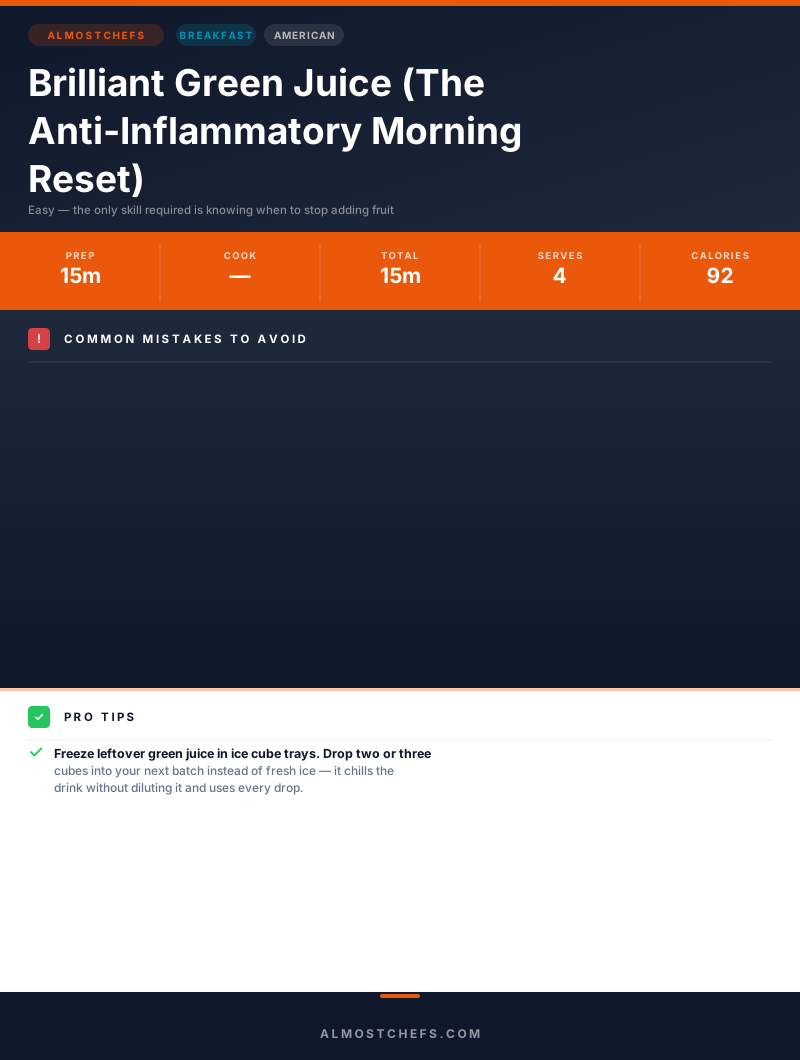
Before we start, read this. These are the 4 reasons your brilliant green juice (the anti-inflammatory morning reset) will fail:
- 1
Too much fruit, not enough greens: Green juice recipes that lean on apple, pineapple, and mango to mask the taste of vegetables are technically green smoothies with a marketing problem. The result is 30+ grams of sugar per serving with minimal nutrient benefit. The greens should dominate by volume — fruit is a supporting actor, not the lead.
- 2
Skipping the ginger: Ginger does two things no other ingredient can: it cuts through the grassy bitterness of raw spinach and romaine, and it actively reduces intestinal inflammation. Without it, green juice tastes like lawn clippings. A tablespoon of fresh ginger is not optional — it's structural.
- 3
Blending on low speed: Low-speed blending leaves fibrous chunks of celery and spinach stems intact. You end up drinking something with the texture of wet paper. High speed for a full 60-90 seconds breaks down the cell walls and releases the chlorophyll, turning the mixture genuinely smooth and increasing nutrient bioavailability.
- 4
Waiting to drink it: Green juice oxidizes fast. The moment you blend, the volatile nutrients — particularly vitamin C and the enzyme-activated antioxidants — begin degrading. Within 20 minutes of sitting at room temperature, you've lost a measurable percentage of the drink's nutritional value. Make it, pour it, drink it.
The Video Reference Library
Want to see it in action? Here are the exact videos we analyzed and combined to build this foolproof recipe translation:
The source video that informed this recipe's ratio balance and ginger quantity. Clear breakdown of why greens-to-fruit ratio determines whether green juice is a wellness drink or a disguised smoothie.
🛠️ Core Equipment
- High-powered blenderA standard blender won't break down celery fibers and spinach stems completely. You need at least 1000 watts to achieve a genuinely smooth result. A [high-powered blender](/kitchen-gear/review/high-powered-blender) is the single piece of equipment that separates drinkable green juice from chunky sludge.
- Fine-mesh sieve or nut milk bagIf you prefer a thinner, pulp-free juice, strain the blended mixture through a [fine-mesh sieve](/kitchen-gear/review/fine-mesh-sieve) and press with a spoon. Optional, but transforms the texture from smoothie to clean juice.
- Vegetable peelerFor removing the waxy skin from cucumber and the white pith from lemon efficiently. Lemon pith left on the flesh will make the entire batch bitter — a peeler is faster and more precise than a knife.
- Tall glass or wide-mouth mason jarGreen juice separates quickly. A wide-mouth vessel makes stirring before each sip easy, and the height gives you room to add ice without overflow.
Brilliant Green Juice (The Anti-Inflammatory Morning Reset)
🛒 Ingredients
- ✦3 cups fresh spinach leaves, loosely packed
- ✦2 cups chopped romaine lettuce
- ✦1 medium cucumber, roughly chopped
- ✦2 stalks celery, cut into 2-inch pieces
- ✦1 medium green apple, cored and quartered
- ✦1 cup fresh pineapple chunks
- ✦1/2 medium lemon, peeled
- ✦1 tablespoon fresh ginger root, peeled and sliced
- ✦1/2 cup fresh mint leaves
- ✦1/4 teaspoon ground turmeric
- ✦1 cup filtered water or coconut water
- ✦1/2 cup ice cubes
- ✦1 tablespoon raw almond butter (optional)
- ✦1 teaspoon raw honey or maple syrup (optional)
👨🍳 Instructions
01Step 1
Rinse all vegetables and greens thoroughly under cool running water, then gently pat them dry with a clean kitchen towel.
02Step 2
Chop the cucumber into rough 2-inch pieces, then cut the celery stalks into similar-sized segments.
03Step 3
Core the green apple by cutting it into quarters lengthwise and removing the seeds. Peel the lemon, removing all white pith, then cut the flesh into small chunks.
04Step 4
Peel the fresh ginger root using a small spoon or knife, then slice it into thin rounds.
05Step 5
Add half of the spinach and romaine to your blender first, then layer in the cucumber, celery, and chopped apple on top.
06Step 6
Add the pineapple chunks, lemon pieces, sliced ginger, and fresh mint leaves to the blender.
07Step 7
Pour the filtered water or coconut water over all ingredients, then sprinkle the turmeric over the liquid.
08Step 8
Secure the blender lid firmly, then blend on high speed for 60 to 90 seconds until completely smooth.
09Step 9
Pause and taste. Add almond butter for creaminess or honey for sweetness if desired, then blend for another 15 seconds.
10Step 10
Divide evenly into four tall glasses over ice cubes and serve immediately.
Nutrition Per Serving
Estimates based on standard preparation. Adjustments alter macros.
🔄 Substitutions
Instead of Spinach and romaine lettuce...
Use Kale and arugula
Flavor becomes more peppery and earthy. Nutritional density increases significantly — kale has roughly 3x the calcium of spinach. Blend longer to break down kale's tougher fibers.
Instead of Green apple...
Use Pear
Smoother, more subtle sweetness with less fructose. Better option for those managing blood sugar. Pears also contribute more fiber than apples at equal weight.
Instead of Pineapple chunks...
Use Green grapes
Less tropical, more refreshing. Drops sugar content by approximately 4 grams per serving. Grapes contain resveratrol — a compound with documented cardiovascular benefits.
Instead of Raw honey or maple syrup...
Use Stevia or monk fruit sweetener
Identical sweetness without the blood sugar spike. Reduces calories by approximately 15 per serving. Ideal for diabetics or anyone on a low-glycemic protocol.
🧊 Storage & Reheating
In the Fridge
Store in sealed mason jars with zero headspace for up to 24 hours. Shake before drinking — separation is normal. Nutrient loss is measurable beyond 24 hours.
In the Freezer
Freeze in ice cube trays, then transfer to a sealed bag for up to 1 month. Thaw overnight in the fridge or blend frozen cubes directly into your next batch.
Reheating Rules
Do not heat green juice. High temperatures destroy the heat-sensitive enzymes and vitamin C that make this drink nutritionally valuable. Serve cold or at room temperature only.
❓ Frequently Asked Questions
Do I need a juicer or will a blender work?
A high-powered blender works fine and is actually preferable for most people — it retains the fiber from the vegetables and greens, which slows sugar absorption and keeps you full longer. A traditional juicer strips the fiber out, delivering a more concentrated but faster-digesting result. Both are valid; the choice depends on your goals.
Why is my green juice bitter?
Three likely causes: you left the white pith on the lemon, you used too many greens relative to fruit, or you didn't add enough ginger. Ginger is the primary bitterness-balancer in this formula. Start by doubling the ginger before adjusting anything else.
Can I make this the night before?
You can, but quality degrades noticeably within 24 hours. Store in a mason jar filled to the absolute brim — any air gap accelerates oxidation. Shake vigorously before drinking. For best results, blend fresh in the morning.
Is green juice a meal replacement?
As written, no — 92 calories is a supplement, not a meal. Adding the optional almond butter brings it closer to 175 calories and adds enough fat and protein to qualify as a light breakfast alongside something more substantial. If you want a full meal replacement, add a full 2 tablespoons of almond butter and a scoop of unflavored protein powder.
Why does my green juice turn brown after a few hours?
Oxidation. The chlorophyll in spinach and romaine reacts with oxygen and degrades from vivid green to olive brown. This is purely aesthetic — the juice is still safe and nutritionally adequate for 24 hours — but it looks unappetizing. A squeeze of additional lemon juice slows the oxidation slightly due to vitamin C's antioxidant properties.
Can I use frozen spinach instead of fresh?
You can, but thaw it completely first and squeeze out all excess water, or your juice will be watered down and the flavor will be flat. Frozen spinach also has a slightly cooked quality that changes the flavor profile. Fresh is meaningfully better here, but frozen works in a pinch.
The Science of
Brilliant Green Juice (The Anti-Inflammatory Morning Reset)
We turned everything on this page into a beautiful, flour-proof PDF cheat sheet. Print it out, stick it to your fridge, and never mess up your brilliant green juice (the anti-inflammatory morning reset) again.
*We'll email you the high-res PDF instantly. No spam, just perfectly cooked meals.
AlmostChefs Editorial Team
We translate the internet's most popular cooking videos into foolproof, beginner-friendly written recipes. We analyze multiple methods, test them in our kitchen, and engineer a single "Master Recipe" that gives you the best possible result with the least possible stress.