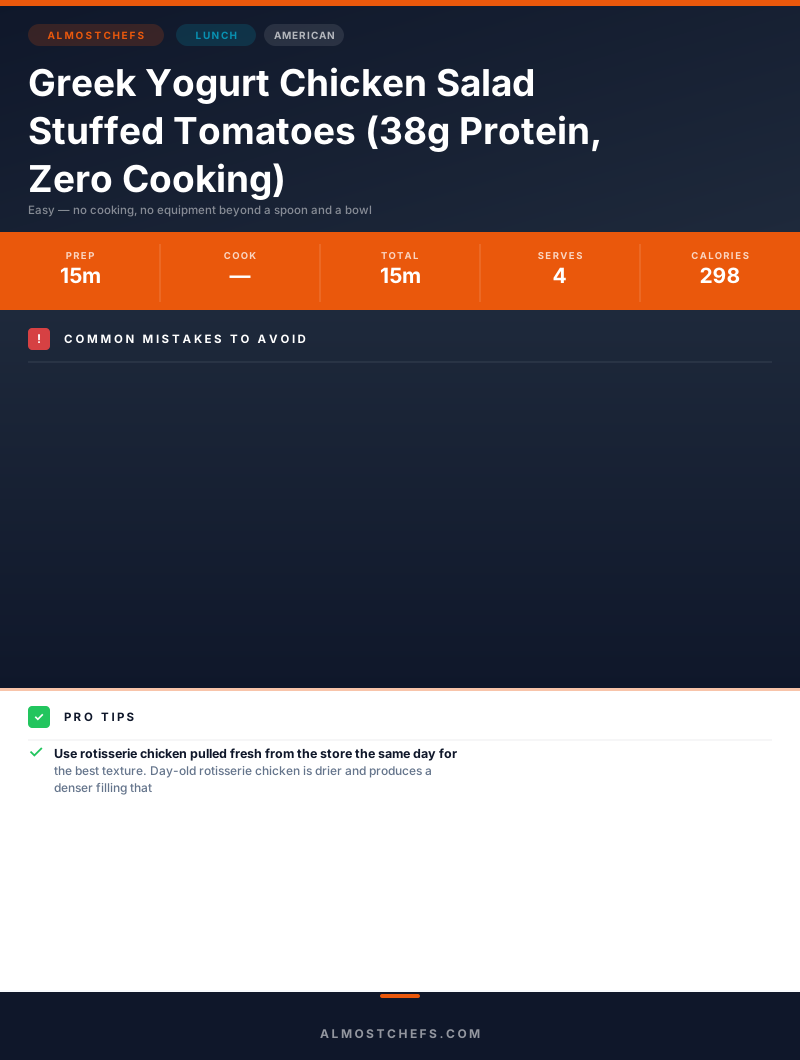
Greek Yogurt Chicken Salad Stuffed Tomatoes (38g Protein, Zero Cooking)
High-protein chicken salad stuffed tomatoes with Greek yogurt and cottage cheese — 38g protein per serving, perfect for meal prep. We combined rotisserie chicken, tangy yogurt, and cottage cheese into a creamy, no-cook filling that turns a humble tomato into a satisfying lunch that actually keeps you full.

“Most chicken salad is a vehicle for mayonnaise with a protein alibi. This version is the opposite: two serious protein sources — rotisserie chicken and cottage cheese — held together by thick Greek yogurt that pulls double duty as binder and flavor. The result is 38g of protein per serving with a texture that's creamy without being heavy, served inside a tomato that doubles as the bowl. Fifteen minutes. Zero heat. No excuses.”
Why This Recipe Works
Chicken salad is one of those dishes that has been systematically ruined by convenience. The standard version — mayo, chicken, maybe a stalk of celery if you're lucky — exists to deliver fat and calories in the most efficient format possible. It has nothing to do with flavor, texture, or actually feeding your body something useful.
This version starts from a different premise: what if the binding agent was also a primary protein source? Greek yogurt at 17g of protein per cup and cottage cheese at roughly 14g per half cup are not garnishes or substitutions — they are load-bearing structural members. Rotisserie chicken on top of that, and you're at 38g of protein per serving before you've added a single almond.
The Yogurt-Cottage Cheese Base
The ratio matters. One cup of yogurt to half a cup of cottage cheese gives you a base that's tangy without being mouth-puckering, thick enough to coat every shred of chicken without pooling at the bottom of the tomato. The cottage cheese adds body and a subtle savory depth that yogurt alone lacks — but only if you blend them together first until the curds disappear.
Visible cottage cheese curds in a finished dish are a presentation problem that signals a rushed cook. Thirty seconds of active stirring erases them entirely. Do the work upfront and the final texture reads as intentional, creamy, and restaurant-quality.
The Tomato as Architecture
Beefsteak tomatoes are not decorative here. They are the vessel, the plate, and a flavor component simultaneously — but only if you treat them with the same respect you'd give a pasta bowl. Salt the inside. Drain them upside down. This step pulls out the excess water that would otherwise dilute your filling into soup within ten minutes of serving.
The wall thickness matters too. A tomato with thick walls and a solid base can support a generous mound of filling without collapsing. If you press on the outside of the tomato before hollowing and it feels soft, buy different tomatoes. Peak-season beefsteaks are firm with some give — not hard like an apple, not squishy like overripe stone fruit.
The Dressing Architecture
Lemon juice and Dijon mustard together form an emulsified vinaigrette that cuts through the dairy richness of the yogurt base and lifts the entire filling. Without acid, Greek yogurt chicken salad tastes flat and heavy. With too much acid, it tastes like a lemon curd experiment. Two tablespoons of lemon juice balanced against a tablespoon of Dijon is the calibrated sweet spot — bright but not sharp, tangy but not citrusy.
The garlic powder, not fresh garlic, is deliberate. Raw garlic in a cold dish that sits for any length of time turns acrid and aggressive as it continues to break down without heat to mellow it. Garlic powder distributes evenly and stays in its lane.
The Almond Finish
Toasted almonds are structural, not aesthetic. Cold, creamy, soft filling inside a cold tomato needs textural contrast to be interesting past the third bite. A dry skillet over medium heat for three to four minutes is all it takes to transform a pale, bland nut into something with crunch, color, and a toasty depth that bridges the filling and the fresh greens underneath.
This is a fifteen-minute recipe that tastes like you thought about it. That's not an accident. It's the result of every component doing exactly one job, extremely well, without overlap or waste.
Where Beginners Mess This Up
Before we start, read this. These are the 4 reasons your greek yogurt chicken salad stuffed tomatoes (38g protein, zero cooking) will fail:
- 1
Using watery tomatoes: Beefsteak tomatoes vary wildly in water content. If you skip salting the inside of the hollowed shell and letting it drain for a few minutes, you end up with a puddle of pink liquid diluting your filling by the time it hits the table. Salt the inside, flip them upside down on a paper towel for five minutes, and drain what comes out.
- 2
Not blending the yogurt and cottage cheese first: Cottage cheese added directly to the mix without smoothing creates a lumpy, curd-visible texture that reads as unfinished. Stirring the yogurt and cottage cheese together first until the curds break down gives you a cohesive, creamy base that looks intentional instead of improvised.
- 3
Under-seasoning the filling: Greek yogurt and cottage cheese are both bland until pushed. The lemon juice, Dijon, garlic powder, and salt aren't optional enhancements — they're the entire flavor architecture. Taste the filling before stuffing and correct aggressively. It should taste slightly over-seasoned on its own because the tomato will dilute it.
- 4
Toasting the almonds and forgetting about them: Raw almonds on top contribute next to nothing — pale, soft, and tasteless. A dry pan over medium heat for 3-4 minutes until they smell nutty transforms them into something that adds actual crunch and a toasty depth that ties the whole dish together. Don't skip the toast.
The Video Reference Library
Want to see it in action? Here are the exact videos we analyzed and combined to build this foolproof recipe translation:

Full walkthrough of the stuffing technique, including how to hollow tomatoes without breaking them and how to layer the filling for presentation.
2. Greek Yogurt Chicken Salad — Meal Prep MethodCovers batch prep for the week, including how to store the filling separately from the tomatoes and assemble fresh each day.
3. High-Protein Lunch Ideas Under 300 CaloriesContext on how stuffed tomatoes fit into a high-protein meal plan alongside macros breakdown and pairing suggestions.
🛠️ Core Equipment
- Large mixing bowl ↗You need room to fold the chicken into the yogurt base without everything spilling over the edge. A bowl that's too small produces uneven coating and frustration.
- Small sharp paring knife ↗For slicing the tomato tops cleanly and scoring around the inner flesh before scooping. A dull or oversized knife crushes the tomato walls instead of cutting them.
- Small spoon or melon baller ↗For hollowing the tomatoes without punching through the base. A melon baller gives you more control than a spoon and removes the seed cavity cleanly in two passes.
- Dry skillet ↗For toasting the almonds. No oil needed — just a hot pan and attention. This is the one minute of active cooking this entire recipe requires.
Greek Yogurt Chicken Salad Stuffed Tomatoes (38g Protein, Zero Cooking)
🛒 Ingredients
- ✦3 cups shredded rotisserie chicken breast
- ✦1 cup plain nonfat Greek yogurt
- ✦½ cup low-fat cottage cheese
- ✦4 large beefsteak tomatoes
- ✦½ cup diced celery
- ✦¼ cup diced red onion
- ✦¼ cup fresh dill, chopped
- ✦2 tablespoons fresh lemon juice
- ✦1 tablespoon Dijon mustard
- ✦½ teaspoon garlic powder
- ✦¼ teaspoon black pepper
- ✦¼ teaspoon sea salt, plus more for draining tomatoes
- ✦2 tablespoons sliced almonds, toasted
- ✦2 cups mixed greens
- ✦1 tablespoon extra virgin olive oil
👨🍳 Instructions
01Step 1
Combine Greek yogurt and cottage cheese in a large mixing bowl, stirring vigorously until smooth and the cottage cheese curds are fully broken down.
02Step 2
Fold shredded rotisserie chicken into the yogurt mixture until every piece is evenly coated.
03Step 3
Stir in diced celery, red onion, and fresh dill until evenly distributed throughout the filling.
04Step 4
Whisk together lemon juice, Dijon mustard, garlic powder, black pepper, and sea salt in a small bowl until combined.
05Step 5
Pour the lemon-mustard dressing over the chicken mixture and fold gently until fully combined.
06Step 6
Taste and adjust seasoning — add more lemon juice for brightness or salt for depth. The filling should taste boldly seasoned before it meets the tomato.
07Step 7
Slice the tops off each tomato and carefully scoop out the seeds and inner flesh using a small spoon or melon baller, leaving a thick wall and solid base.
08Step 8
Sprinkle a pinch of sea salt inside each hollowed tomato and flip them upside down on a paper towel for 5 minutes to drain excess moisture.
09Step 9
Divide the chicken salad evenly among the four tomatoes, mounding it generously above the rim.
10Step 10
Scatter toasted almonds over the top of each stuffed tomato.
11Step 11
Arrange mixed greens on serving plates and drizzle lightly with extra virgin olive oil.
12Step 12
Place each stuffed tomato on the bed of greens and serve immediately, or store filling and tomatoes separately in the fridge for up to 2 days and assemble before eating.
Nutrition Per Serving
Estimates based on standard preparation. Adjustments alter macros.
🔄 Substitutions
Instead of Plain nonfat Greek yogurt...
Use 2% Greek yogurt or Icelandic-style skyr
Slightly more indulgent mouthfeel with negligible calorie increase. The higher fat content produces noticeably better texture and cling. Worth the swap if you're not tracking strict macros.
Instead of Low-fat cottage cheese...
Use Silken tofu or additional Greek yogurt
Silken tofu keeps it plant-adaptable and adds protein without dairy. Extra yogurt makes the filling creamier and more acidic. Both work — tofu needs a longer blend to get smooth.
Instead of Shredded rotisserie chicken breast...
Use Canned wild-caught salmon or grilled turkey breast
Salmon adds omega-3s and a subtle richness that works surprisingly well with dill and Dijon. Turkey breast keeps the mild poultry profile but requires 15 minutes of active prep.
Instead of Sliced almonds...
Use Chopped pecans, sunflower seeds, or hemp seeds
Pecans add buttery flavor and crunch. Sunflower seeds stay neutral. Hemp seeds add subtle nuttiness and additional plant protein without requiring toasting. All deliver 3-4g extra protein per serving.
🧊 Storage & Reheating
In the Fridge
Store the filling in an airtight container for up to 3 days. Keep hollowed tomatoes separate in the fridge, cut-side down on a paper towel, and assemble just before serving to prevent sogginess.
In the Freezer
Not recommended. Greek yogurt and cottage cheese separate and weep when frozen and thawed, producing a grainy, watery texture that cannot be corrected.
Reheating Rules
This dish is served cold — no reheating needed or recommended. If the filling has been refrigerated, let it sit at room temperature for 5 minutes before stuffing so it's easier to scoop and spreads more evenly.
❓ Frequently Asked Questions
Can I make this ahead for meal prep?
Yes, but keep the components separate. The filling stays good for up to 3 days in the fridge and actually improves overnight as the flavors meld. Hollow and salt the tomatoes the morning you plan to serve, drain for 5 minutes, then stuff. Pre-stuffed tomatoes sitting in the fridge for a day will become waterlogged.
Why use both Greek yogurt and cottage cheese instead of just one?
They do different things. Greek yogurt provides the tangy, creamy base and binds the filling like a dressing. Cottage cheese adds bulk protein and a subtle richness without the acidity — it's the difference between 28g and 38g of protein per serving. One without the other either lacks body or lacks protein density.
How do I keep the tomatoes from tipping over on the plate?
Slice a very thin piece off the bottom of each tomato to create a flat base before hollowing. Alternatively, nest each stuffed tomato in a small ring of greens to stabilize it. Don't slice too deep or you'll breach the bottom and the filling will leak.
Is this actually filling enough as a lunch?
At 38g of protein and roughly 300 calories, yes — particularly because Greek yogurt and cottage cheese both score high on the satiety index compared to fat- or carb-heavy meals. If you need more volume, serve with a second tomato or double the greens with extra olive oil.
Can I use canned chicken instead of rotisserie?
You can, but drain it extremely well and break it into small shreds. Canned chicken is wetter than rotisserie and will water down the filling if not thoroughly pressed. Rotisserie chicken has better texture and flavor — it's worth the minor extra effort.
What can I do with the scooped-out tomato flesh?
Chop it and fold it into a quick salsa with red onion, cilantro, and lime. Add it to scrambled eggs or a morning shakshuka. It freezes well for adding to soups or sauces. Don't throw it out — there's real flavor and lycopene in that flesh.
The Science of
Greek Yogurt Chicken Salad Stuffed Tomatoes (38g Protein, Zero Cooking)
We turned everything on this page into a beautiful, flour-proof PDF cheat sheet. Print it out, stick it to your fridge, and never mess up your greek yogurt chicken salad stuffed tomatoes (38g protein, zero cooking) again.
*We'll email you the high-res PDF instantly. No spam, just perfectly cooked meals.
AlmostChefs Editorial Team
We translate the internet's most popular cooking videos into foolproof, beginner-friendly written recipes. We analyze multiple methods, test them in our kitchen, and engineer a single "Master Recipe" that gives you the best possible result with the least possible stress.