The Only Greek Salad Recipe You Need (18-Minute Mediterranean Masterclass)
A classic Mediterranean salad combining crisp Roma tomatoes, cucumber, red onion, kalamata olives, and creamy feta in a herb-forward olive oil vinaigrette. We broke down the most-watched YouTube methods to build one technique that nails the texture and keeps everything from getting soggy.
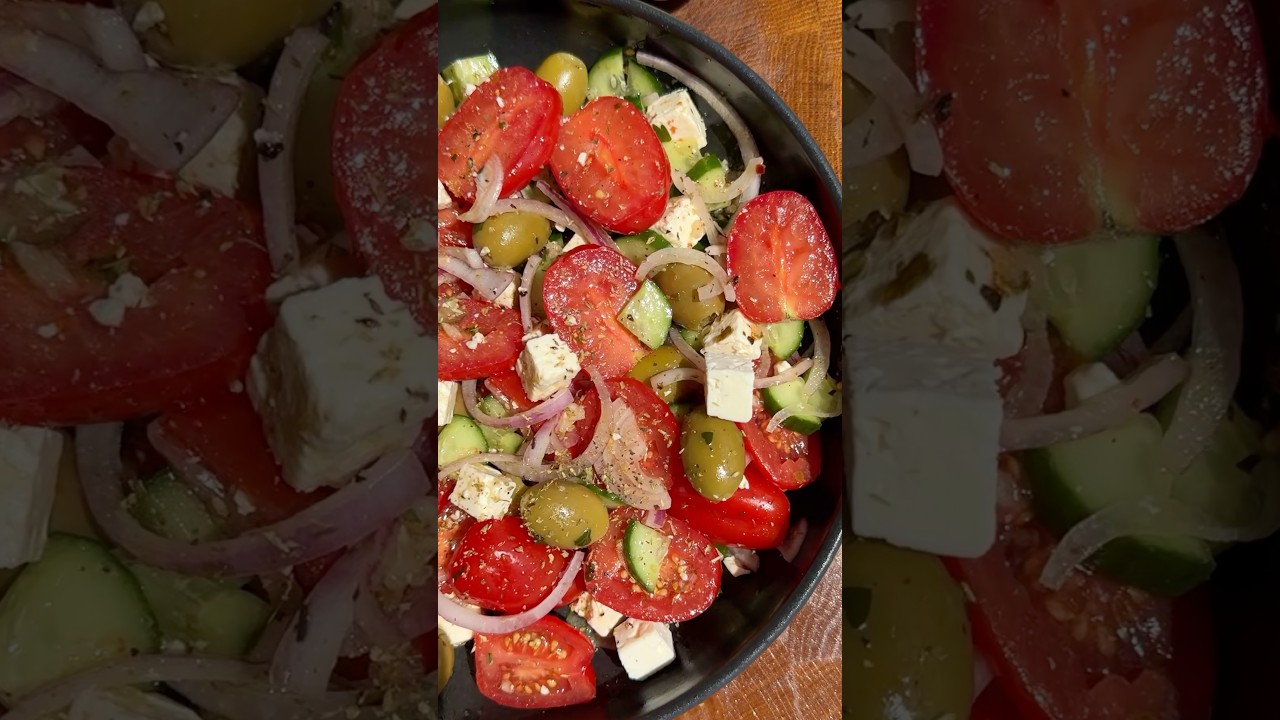
“Most Greek salads fail for the same reason: people treat it like a dump-and-toss. They skip draining the tomatoes, add the feta too early, and let the whole thing sit in a puddle of watery dressing before it hits the table. The result tastes like a salad bar accident. This recipe fixes all three problems in under 20 minutes.”
Why This Recipe Works
Greek salad is the easiest dish to make mediocre and the easiest dish to make exceptional. The gap between the two is not technique — it's understanding what each ingredient is actually doing and treating it accordingly.
The Tomato Problem
Roma tomatoes are roughly 93% water by weight. Cut them into chunks, toss them immediately into a bowl, and that water starts pooling at the bottom within minutes. By the time the salad reaches the table, you have diluted vinaigrette, softened vegetables, and feta dissolving into a pink liquid that nobody ordered.
The fix is two minutes in a colander. That's it. You're not salting them or squeezing them — just letting gravity do its job. The difference in the finished bowl is immediately visible: a clean, glossy vinaigrette that coats every vegetable rather than a cloudy puddle at the bottom.
The Feta Architecture
Feta is not a garnish. It's a structural element that provides the salt, the creaminess, and the dairy richness that balance the acid-forward vinaigrette. But it's fragile — press too hard or add it too early and it crumbles to dust, dispersing into the dressing rather than sitting as visible, textured chunks.
The rule is simple: feta goes in last. Everything else gets dressed, tossed, and settled. Then you fold in the feta with two or three gentle passes of a large spoon. You're looking for chunks that retain their shape but are coated in the herb-flecked dressing. If you buy block feta and crumble it yourself (rather than using pre-crumbled), you get more control over chunk size and significantly better flavor — pre-crumbled feta is noticeably drier and saltier.
The Vinaigrette Equation
A 3:2 ratio of oil to acid (here, 3 tablespoons olive oil to 2 tablespoons vinegar plus 1 tablespoon lemon juice) is more assertive than a standard French vinaigrette. That's intentional. Greek salad ingredients are robust — briny olives, sharp raw onion, dense cucumber — and a timid dressing disappears.
The resting period matters. Raw garlic in an acid environment undergoes a rapid chemical change in the first 5-10 minutes: the harsh sulfurous bite softens into a rounder, more integrated flavor. Dress the salad immediately out of the whisk and the garlic dominates. Let it rest and it becomes background. That 8-minute window is the difference between a dressing that tastes sharp and one that tastes complete.
A good chef's knife makes uniform cuts faster and cleaner — and in a raw salad, cut surface area directly affects moisture release. Ragged cuts from a dull blade mean more cell damage and more liquid. Clean cuts mean the vegetable holds its structure until it's in your mouth, not in the bowl.
Why No Lettuce
Traditional Greek salad — Horiatiki — contains no lettuce. This is not an oversight. Lettuce wilts on contact with dressing and contributes almost no flavor. The Greeks left it out because the tomato, cucumber, and pepper already provide all the crunch and freshness that lettuce pretends to add. If you want volume without lettuce, add more cucumber. It holds up better, tastes of something, and won't turn limp in fifteen minutes.
The entire dish is built on restraint: fewer ingredients, handled precisely. That's the architecture.
Where Beginners Mess This Up
Before we start, read this. These are the 4 reasons your the only greek salad recipe you need (18-minute mediterranean masterclass) will fail:
- 1
Not draining the tomatoes: Roma tomatoes release significant liquid after being cut. If you skip the 2-3 minute drain in a colander, that liquid dilutes your vinaigrette, turns the bottom of the bowl into a murky soup, and makes every bite taste flat. Drain them. Always.
- 2
Adding feta too early: Feta begins absorbing liquid the moment it touches the dressed vegetables. Add it too early and it softens into a chalky paste that disappears into the salad instead of providing textural contrast. Fold it in right before serving, never before.
- 3
Not letting the vinaigrette rest: Raw garlic in an oil-and-acid dressing needs 5-10 minutes to mellow. Dress the salad immediately after whisking and you get a sharp, aggressive garlic bite that overpowers everything. Let it rest and the flavor rounds out into something cohesive.
- 4
Cutting vegetables to inconsistent sizes: When tomatoes are ¾-inch and cucumbers are ¼-inch, every bite is different in a bad way — too much cucumber here, no tomato there. Uniform ¾-inch cuts mean every forkful has the full flavor profile of the dish.
The Video Reference Library
Want to see it in action? Here are the exact videos we analyzed and combined to build this foolproof recipe translation:
The primary reference video. Clear demonstration of proper vegetable sizing, tomato draining, and the feta-last technique that keeps the cheese intact through serving.
🛠️ Core Equipment
- Large mixing bowlYou need room to toss without launching kalamata olives across the kitchen. A wide, deep bowl lets you coat every piece of vegetable with dressing without overcrowding.
- ColanderNon-negotiable for draining the tomatoes. Skipping this step is the fastest path to a watery salad.
- Sharp chef's knifeUniform ¾-inch cuts require a knife that doesn't crush as it slices. A dull knife tears tomatoes and turns cucumber edges ragged, which accelerates moisture release.
- Small whisk or forkFor emulsifying the vinaigrette. Oil and vinegar do not combine on their own — you need mechanical agitation to create a temporary emulsion that coats the vegetables evenly.
The Only Greek Salad Recipe You Need (18-Minute Mediterranean Masterclass)
🛒 Ingredients
- ✦4 medium Roma tomatoes, chopped into ¾-inch pieces
- ✦1 large cucumber, diced into ¾-inch chunks
- ✦1 medium red bell pepper, chopped into ¾-inch pieces
- ✦½ medium red onion, thinly sliced into half-moons
- ✦¾ cup kalamata olives, pitted
- ✦8 ounces feta cheese, crumbled
- ✦3 tablespoons extra virgin olive oil
- ✦2 tablespoons red wine vinegar
- ✦1 tablespoon fresh lemon juice
- ✦1½ teaspoons dried oregano
- ✦1 to 2 cloves garlic, minced
- ✦½ teaspoon sea salt
- ✦¼ teaspoon freshly ground black pepper
👨🍳 Instructions
01Step 1
Rinse all vegetables under cool water and pat completely dry. Any surface moisture dilutes the vinaigrette before it even reaches the bowl.
02Step 2
Chop the Roma tomatoes into ¾-inch pieces and transfer to a colander. Let drain for 2-3 minutes.
03Step 3
Dice the cucumber into ¾-inch chunks, matching the tomato size. Uniform pieces are the entire point.
04Step 4
Slice the red onion into thin half-moons and separate the layers. Thin cuts mean less raw onion bite in each forkful.
05Step 5
Chop the red bell pepper into ¾-inch pieces, discarding stem, seeds, and white membrane.
06Step 6
Whisk together the olive oil, red wine vinegar, lemon juice, minced garlic, dried oregano, sea salt, and black pepper in a small bowl until combined. Let rest for 5-10 minutes.
07Step 7
Transfer the drained tomatoes to a large mixing bowl. Add cucumber, bell pepper, red onion, and kalamata olives.
08Step 8
Pour the vinaigrette over the vegetables and toss gently to coat everything evenly.
09Step 9
Add the crumbled feta immediately before serving. Fold it in gently — you want visible chunks, not feta paste.
10Step 10
Taste and adjust salt and pepper if needed. Serve immediately while the vegetables are still crisp.
Nutrition Per Serving
Estimates based on standard preparation. Adjustments alter macros.
🔄 Substitutions
Instead of Red wine vinegar...
Use Apple cider vinegar
Slightly sweeter and fruitier. Works well but changes the sharp Mediterranean edge of the dressing. Use the same quantity.
Instead of Kalamata olives...
Use Green Castelvetrano olives
Milder, buttery, less briny. Dramatically reduces the sodium contribution from the olives. Good option if the dish tastes too salty with kalamata.
Instead of Feta cheese...
Use Ricotta salata or goat cheese
Ricotta salata is drier and saltier, holds its shape better. Goat cheese is creamier and tangier, tends to dissolve slightly into the dressing. Both work — different results.
Instead of Red onion...
Use Sweet yellow onion
Milder and less sulfurous. Good for people who find raw red onion too aggressive. Sweet onion lacks the purple visual contrast but tastes significantly less sharp.
🧊 Storage & Reheating
In the Fridge
Store undressed vegetables and dressing separately for up to 2 days. Once dressed, the salad is best within 30 minutes. If you must store it dressed, expect softened vegetables by the next day — it's still edible but no longer crisp.
In the Freezer
Do not freeze. Raw vegetables and feta do not survive freezing — the texture becomes waterlogged and mealy on thaw.
Reheating Rules
This is a cold dish. No reheating required or recommended.
❓ Frequently Asked Questions
Why is my Greek salad watery?
Two causes: you didn't drain the tomatoes before adding them, or you dressed the salad too far in advance. Salt in the vinaigrette draws moisture out of the vegetables over time. Drain tomatoes every time, dress right before serving.
Do I need to peel the cucumber?
Depends on the cucumber. English cucumbers have thin, tender skin — no peeling needed. Standard American cucumbers have thick, waxy skin — peel them. The skin on a standard cucumber is bitter and chewy in a raw salad.
Can I make this ahead of time?
You can prep all the vegetables up to 24 hours ahead and store them separately, undressed. Make the vinaigrette up to 3 days ahead. Combine everything right before serving. Never dress it in advance.
Why does my feta disappear into the salad?
You either added it too early and it sat in the dressing, or you tossed too aggressively after adding it. Add feta last, fold gently, and serve immediately. Chunks should be visible in every serving.
Is Greek salad actually Greek?
Yes — the Horiatiki (village salad) is the original form, made with whole tomatoes, whole olives, sliced cucumber, and a single slab of feta on top. No lettuce, ever. The chopped version is a Western adaptation. Both are legitimate. Neither has romaine.
What protein can I add to make this a full meal?
Grilled chicken, canned tuna, or chickpeas all work well. Add them on top after dressing so they don't bruise the vegetables during tossing. Chickpeas are the cleanest option if you want to keep it vegetarian.

The Science of
The Only Greek Salad Recipe You Need (18-Minute Mediterranean Masterclass)
We turned everything on this page into a beautiful, flour-proof PDF cheat sheet. Print it out, stick it to your fridge, and never mess up your the only greek salad recipe you need (18-minute mediterranean masterclass) again.
*We'll email you the high-res PDF instantly. No spam, just perfectly cooked meals.
AlmostChefs Editorial Team
We translate the internet's most popular cooking videos into foolproof, beginner-friendly written recipes. We analyze multiple methods, test them in our kitchen, and engineer a single "Master Recipe" that gives you the best possible result with the least possible stress.