Meal-Prep Greek Chicken Bowl (42g Protein, 4-Day Proof)
A Mediterranean grain bowl built for the week — grilled oregano chicken, homemade tzatziki, quinoa, and crumbled feta packed into containers that actually taste better on day four than day one. We reverse-engineered the protein math so you don't have to.
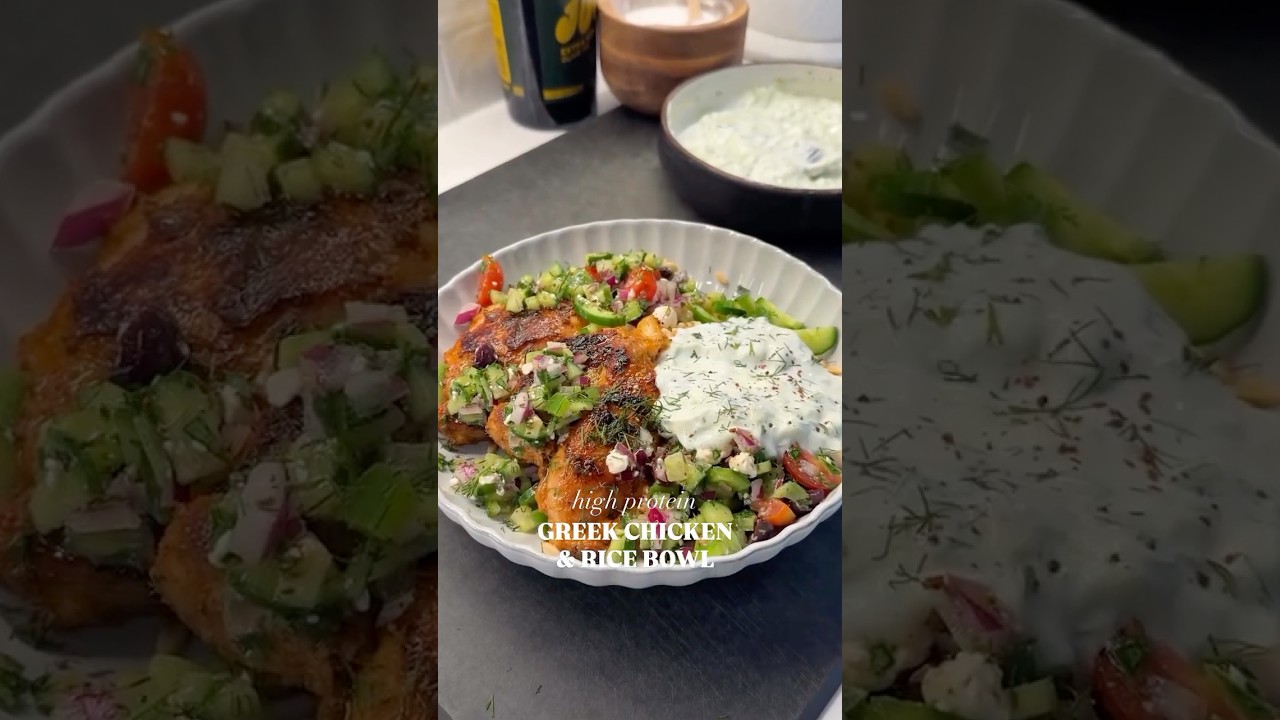
“Most meal-prep bowls taste like cardboard by Wednesday. This one gets better. The lemon-garlic marinade keeps the chicken moist through four days of refrigeration, the tzatziki thickens overnight into something closer to a sauce than a dressing, and the quinoa base holds its texture without turning mushy. At 42g of protein per container, it's not just a lunch — it's a recovery meal that happens to taste like a Greek restaurant.”
Why This Recipe Works
Meal prep has a texture problem. The dishes that work well freshly made — crisp vegetables, juicy seared protein, creamy sauces — all tend to collapse into a single wet, uniform texture after 48 hours in a sealed container. The Greek chicken bowl avoids this because every component was chosen with day-four in mind, not day-one.
The Marinade Does Double Duty
The lemon-garlic-oregano marinade is not decorative. Lemon juice's citric acid lightly denatures the outer protein layer of the chicken breast, creating a surface that browns faster and seals more completely when it hits a hot pan. The result is a crust that acts as a moisture barrier during storage — the Maillard reaction products on the surface are largely water-resistant, keeping the interior of each strip hydrated even after repeated refrigeration cycles.
Thirty minutes is the minimum. Four hours is the optimum. Beyond that, the acid begins breaking down the interior muscle fibers rather than just the surface, and you get a slightly mealy texture that no amount of searing will fix. Time the marinade correctly and you get chicken that holds moisture for four full days. Get it wrong and you get dry protein by Tuesday.
The Quinoa Protein Math
White rice tastes fine in bowls. Quinoa wins on every other metric that matters here. At 8g complete protein per cooked cup versus rice's 4g, the grain swap alone accounts for nearly a quarter of the 42g protein target per serving. More importantly for meal prep, quinoa's slightly firmer texture and lower starch content means it doesn't continue absorbing liquid in storage. Rice keeps swelling. Quinoa holds its shape.
Rinse the dry quinoa in a fine-mesh sieve before cooking. Quinoa is coated in saponins — bitter, soapy compounds the plant produces as a natural pesticide. Most commercial quinoa is pre-rinsed, but a 30-second cold water rinse before cooking eliminates any residual bitterness and prevents the grains from clumping into a solid mass in cold storage.
The Tzatziki Architecture
Standard tzatziki is yogurt, cucumber, garlic, and dill. This version adds tahini, and the addition is structural, not decorative. Tahini is an emulsifier — the sesame proteins bond to both the fat and water components of the yogurt, preventing the sauce from separating into a watery liquid-and-solid mess after 24 hours in a container. It also adds 2-3g protein per serving and a nutty, savory depth that plain yogurt alone cannot provide.
The critical rule: store the tzatziki separately. Every single time. A pool of tzatziki sitting on quinoa overnight turns the base into paste. The thirty seconds it takes to add a separate sauce container to each bowl pays back four days of intact texture.
The Sear Is the Preservation Method
A properly seared chicken breast has a Maillard crust that functions as a moisture seal. An improperly seared chicken breast — pulled too early, moved around the pan, cooked in an underheated skillet — has a grey, permeable surface that continues losing moisture into the container for the entire storage period. By day three, it tastes like compressed paper.
The principle is simple: get a heavy pan screaming hot, do not touch the chicken for six minutes, and pull it at 162°F. The pan does the work. Your only job is to stay out of the way.
Four meals. Forty-two grams of protein. Four days of textures worth eating. The architecture holds — if you follow the rules.
Where Beginners Mess This Up
Before we start, read this. These are the 4 reasons your meal-prep greek chicken bowl (42g protein, 4-day proof) will fail:
- 1
Not patting the chicken dry before marinating: Surface moisture on chicken breasts creates steam in the pan instead of a sear. You get grey, braised-looking chicken instead of the golden crust that makes these bowls visually and texturally worth eating. Pat thoroughly with paper towels before the marinade goes on.
- 2
Moving the chicken too early: The golden crust forms through sustained contact with a hot surface. If you try to flip before 6 minutes, the chicken will stick and tear. Leave it alone. When it's ready, it will release cleanly. The release is the signal — not the timer.
- 3
Storing tzatziki inside the bowl from the start: Tzatziki is mostly yogurt and cucumber. After 24 hours pressed against quinoa, it breaks down the grains and turns the base soggy. Store it in a separate small container nested alongside the bowl, then combine when eating. Two minutes of extra packaging saves four days of texture.
- 4
Using regular yogurt instead of full-fat Greek yogurt: Regular yogurt has too much whey content — the tzatziki will weep liquid overnight, diluting the entire bowl. Full-fat Greek yogurt has already been strained, so it stays thick through refrigeration. This is not an optional upgrade.
The Video Reference Library
Want to see it in action? Here are the exact videos we analyzed and combined to build this foolproof recipe translation:
The source video for this recipe. Covers the marinade technique, pan-searing method, and bowl assembly in real time. Best reference for understanding the correct sear color before flipping.
🛠️ Core Equipment
- Heavy grill pan or cast iron skilletThe ridged surface of a grill pan creates char marks and allows fat to drain away, mimicking outdoor grilling. A [cast iron skillet](/kitchen-gear/review/cast-iron-skillet) retains heat more evenly than thin stainless, preventing the temperature drop that happens when cold chicken hits the pan.
- Instant-read meat thermometerChicken breast has almost no fat buffer — the difference between 160°F and 175°F is the difference between juicy and chalky. A thermometer removes all guesswork and prevents the overcooking that ruins meal-prep chicken by day two.
- Meal-prep containers with dividersKeeping wet components (tomatoes, tzatziki) away from dry components (quinoa, spinach) is what separates meal prep that holds four days from meal prep that collapses by day two. Containers with built-in dividers or separate sauce cups are worth the investment.
- Fine-mesh sieveAfter cooking quinoa, draining and rinsing through a fine-mesh sieve removes the residual saponins that cause bitterness and prevents the grains from clumping together in storage.
Meal-Prep Greek Chicken Bowl (42g Protein, 4-Day Proof)
🛒 Ingredients
- ✦1.5 lbs boneless, skinless chicken breasts
- ✦3 tablespoons extra virgin olive oil, divided
- ✦2 tablespoons fresh lemon juice
- ✦3 cloves garlic, minced
- ✦1 tablespoon dried oregano
- ✦1 teaspoon smoked paprika
- ✦Sea salt and black pepper to taste
- ✦2 cups cooked quinoa (or brown rice)
- ✦1 cup full-fat Greek yogurt
- ✦1/2 cup crumbled feta cheese
- ✦2 medium cucumbers, diced
- ✦2 large Roma tomatoes, diced
- ✦1/2 red onion, thinly sliced
- ✦1 cup fresh spinach
- ✦1/4 cup fresh dill, chopped
- ✦1/4 cup fresh mint, chopped
- ✦2 tablespoons tahini
- ✦1 tablespoon red wine vinegar
👨🍳 Instructions
01Step 1
Pat the chicken breasts thoroughly dry with paper towels. Season both sides generously with sea salt, black pepper, dried oregano, and smoked paprika.
02Step 2
Whisk together 2 tablespoons olive oil, lemon juice, minced garlic, and an extra pinch of oregano. Coat the chicken completely, cover, and refrigerate for at least 30 minutes.
03Step 3
Heat a grill pan or heavy skillet over medium-high heat until very hot, then add the remaining 1 tablespoon olive oil.
04Step 4
Place the marinated chicken in the pan. Cook for 6-7 minutes without moving until a deep golden crust forms and the chicken releases cleanly from the surface.
05Step 5
Flip and cook another 6-7 minutes until internal temperature reaches 165°F on an instant-read thermometer.
06Step 6
Transfer chicken to a cutting board and rest for 5 full minutes. Slice against the grain into 1/2-inch strips.
07Step 7
Combine Greek yogurt, tahini, fresh dill, one clove of minced garlic, a squeeze of lemon juice, and a pinch of salt in a small bowl. Stir until smooth to make the tzatziki.
08Step 8
Divide the cooked quinoa evenly among four meal-prep containers as the base layer.
09Step 9
Layer fresh spinach on top of the quinoa in each container.
10Step 10
Arrange sliced chicken, diced cucumbers, diced tomatoes, and sliced red onion in separate sections over the greens.
11Step 11
Sprinkle crumbled feta and fresh mint over each bowl.
12Step 12
Store tzatziki in separate small sauce containers. Seal all containers and refrigerate for up to 4 days.
13Step 13
When ready to eat, let the bowl sit at room temperature for 5 minutes, or microwave for 90 seconds if you prefer warm chicken. Add tzatziki just before eating.
Nutrition Per Serving
Estimates based on standard preparation. Adjustments alter macros.
🔄 Substitutions
Instead of White rice base...
Use Quinoa or lentil-quinoa blend
Quinoa is a complete protein — all 9 essential amino acids — adding 8g protein per cooked cup versus rice's 4g. It also holds its texture better in cold storage without clumping.
Instead of Feta cheese only...
Use Feta plus 2 tablespoons cottage cheese blended into tzatziki
Virtually indistinguishable in taste. Adds 3g protein per serving and makes the tzatziki creamier. The cottage cheese blends completely smooth if you use a fork.
Instead of Olive oil drizzle...
Use Lemon-tahini vinaigrette
Whisk tahini, lemon juice, garlic, and water to thin. Adds 2-3g protein per serving, emulsifies better than straight olive oil, and coats vegetables more evenly without pooling at the bottom.
Instead of Chicken breast...
Use Boneless chicken thighs
Higher fat content means more forgiving cook times — thighs are nearly impossible to dry out. Pull at 175°F internal temperature. The trade-off is slightly lower protein per ounce and more calories.
🧊 Storage & Reheating
In the Fridge
Store assembled bowls (tzatziki separate) in airtight containers for up to 4 days. Flavors peak on day two as the lemon and oregano meld into the quinoa.
In the Freezer
Freeze the grilled chicken strips separately for up to 2 months. The vegetable components and tzatziki do not freeze well — assemble fresh from the frozen chicken base.
Reheating Rules
Microwave chicken-only for 90 seconds, then add cold vegetables and tzatziki. Reheating the entire bowl together steams the cucumbers and tomatoes into mush.
❓ Frequently Asked Questions
Why is my chicken dry by day three?
Two likely causes: overcooking past 165°F, or slicing with the grain. Pull the chicken at 162°F (carryover brings it to 165°F), rest it a full five minutes before slicing, and always cut against the grain. These three steps combined will keep the chicken moist through day four.
Can I use store-bought tzatziki?
You can, but most store-bought versions are heavily diluted with water to extend shelf life and contain stabilizers that give them a gummy texture. Homemade tzatziki takes four minutes and tastes dramatically better. The difference here is worth the effort.
Is quinoa actually necessary or can I use white rice?
White rice works fine on taste but contributes roughly half the protein of quinoa per cup. If the 42g protein target matters to you, quinoa is the right call. If you're making this primarily for flavor, rice is a valid swap — just expect the protein numbers to drop to around 35g per serving.
Why does my tzatziki get watery overnight?
You're using regular yogurt instead of strained Greek yogurt, or your cucumbers have too much moisture. Full-fat Greek yogurt is already strained — it won't weep. If you're adding diced cucumber to the tzatziki itself, salt the cucumber first and let it drain in a colander for 10 minutes, then squeeze out the excess water before mixing.
How do I keep the spinach from wilting?
Layer the spinach above the quinoa but below the chicken and vegetables. The quinoa acts as a heat buffer if you microwave the bowl, and the chicken acts as a lid that prevents the spinach from direct contact with moist tomatoes. Keeping the layers intact until you're ready to eat makes a significant difference.
Can I make this dairy-free?
Yes. Replace the Greek yogurt in the tzatziki with full-fat coconut yogurt (not light — it's too watery) and omit the feta or substitute with a small amount of brined olives for the salty, tangy element. The protein count will drop slightly, but the Mediterranean flavor profile holds.
The Science of
Meal-Prep Greek Chicken Bowl (42g Protein, 4-Day Proof)
We turned everything on this page into a beautiful, flour-proof PDF cheat sheet. Print it out, stick it to your fridge, and never mess up your meal-prep greek chicken bowl (42g protein, 4-day proof) again.
*We'll email you the high-res PDF instantly. No spam, just perfectly cooked meals.
AlmostChefs Editorial Team
We translate the internet's most popular cooking videos into foolproof, beginner-friendly written recipes. We analyze multiple methods, test them in our kitchen, and engineer a single "Master Recipe" that gives you the best possible result with the least possible stress.