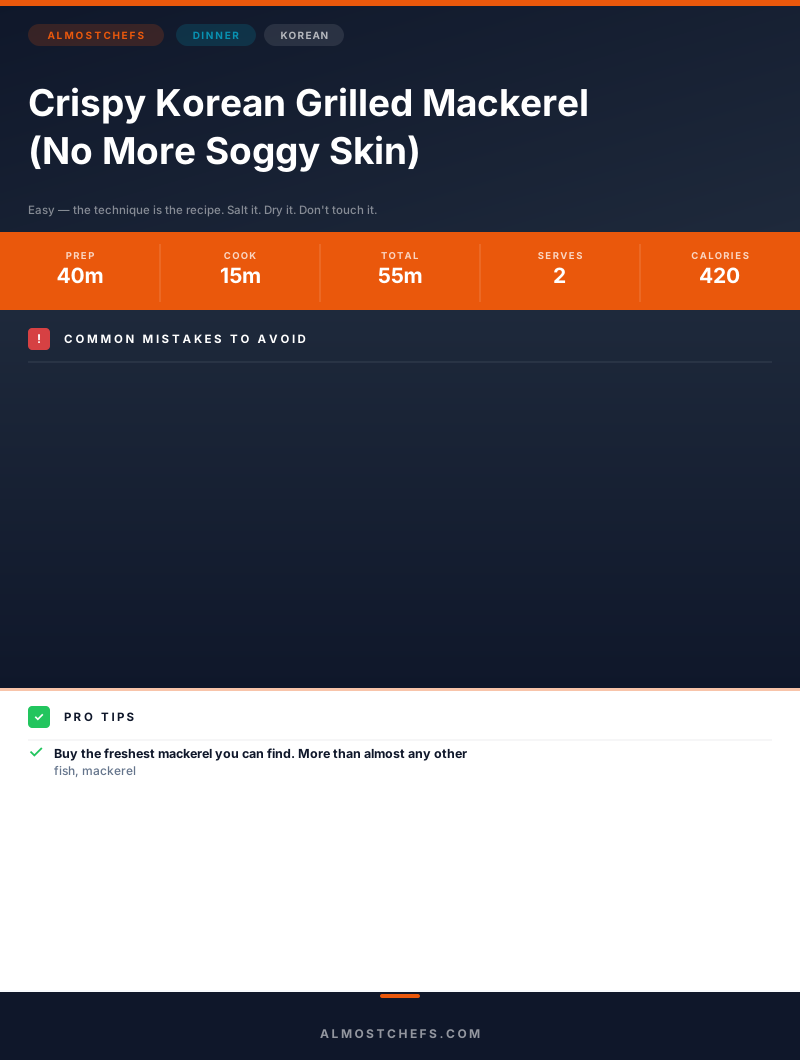
Crispy Korean Grilled Mackerel (No More Soggy Skin)
A classic Korean banchan and weeknight main — whole mackerel fillets aggressively salted, air-dried, then seared skin-side down until the skin shatters like glass. We reverse-engineered the technique to solve the most common home-cook failure: fish that steams instead of sears.

“Godeungeo gui is not a complicated dish. It is a fish, salt, and heat. And yet the version most home cooks produce is pale, soft-skinned, and smells like a wet dog. The difference between that and the crackling, bronzed mackerel you get at a Korean grill house comes down to two things nobody mentions: how long you salt it and how aggressively you leave it alone in the pan.”
Why This Recipe Works
Godeungeo gui is the kind of dish that tricks you into underestimating it. It is three ingredients. It takes under an hour. It has been on Korean dinner tables for centuries. And virtually everyone who makes it at home gets it wrong.
Not catastrophically wrong. Just wrong enough that the skin is soft instead of shattering, the flesh is a little pale, and the whole thing smells aggressive rather than appetizing. The gap between acceptable and excellent in this dish is almost entirely technique — and the technique is ruthlessly logical once you understand the physics.
Salt Is Not Seasoning Here — It's Infrastructure
Most recipes tell you to salt mackerel before cooking the way they tell you to salt pasta water: a general principle, loosely applied. This is wrong. The salt in godeungeo gui is doing structural engineering.
Mackerel is an oily, high-moisture fish. That surface moisture is the enemy of crust. When wet fish hits a hot pan, the water vaporizes before the Maillard reaction can begin — the fish essentially steams its own skin from the outside in. The result is gray, soft, stuck skin that tears when you try to flip it.
Coarse salt applied to the skin side draws that moisture out through osmosis over 30–60 minutes. You'll see it bead on the surface. Then the salt partially reabsorbs back into the flesh, seasoning it from the outside in rather than just coating the surface. After the rest, you blot every visible drop of moisture away with paper towels before the fish ever sees heat. Dry surface plus screaming-hot cast iron equals immediate, violent Maillard reaction — the brown crust that makes this dish what it is.
The Pan Stays in Charge
Home cooks are nervous around high heat. The instinct is to manage the pan, keep things from getting out of control, check and poke and lift and reposition. With mackerel, that instinct will ruin your dinner.
The mackerel needs to be placed down and left alone. The skin will stick aggressively for the first two minutes — this is correct. What's happening underneath is that proteins are denaturing and bonding to the cast iron, then gradually pulling free as the crust solidifies. The fish will release when it's ready. Trying to hurry it lifts the skin right off the flesh and you end up with a bare white fillet sitting on a shred of skin still welded to the pan.
Set it down. Step back. Give it four minutes. Use a fish spatula to check — slide the thin edge under an edge of the fillet. If it releases cleanly, flip it. If it resists at all, give it another 30 seconds.
Why Mackerel Specifically
Godeungeo gui works as well as it does because mackerel is an exceptionally forgiving fish for high-heat cooking. Its high fat content — roughly 16g per fillet, predominantly anti-inflammatory omega-3 fatty acids — acts as internal basting during the cook. As the heat renders the intramuscular fat, it bastes the flesh from the inside, keeping it moist even when the skin is getting aggressively charred.
This same fat content is why godeungeo gui is one of the most nutritionally dense quick-cook proteins you can put on a weeknight table. The omega-3 EPA and DHA content exceeds most salmon portions by weight — relevant context given that this is one of the more inflammation-focused preparations in the Korean culinary canon, served regularly for both its flavor and its functional properties.
The mackerel's strong flavor also holds up to the salt-forward preparation in a way that milder fish like cod or flounder cannot. What reads as aggressive on delicate fish reads as balanced and savory on mackerel. The fish can take it. Apply that same technique to tilapia and you've just made something inedible.
Serve It Immediately
Godeungeo gui is a right-now dish. The crust degrades in minutes as residual moisture migrates from the flesh into the skin. This is not a dish you hold under foil while you set the table. Rice should already be in the bowls. Kimchi should already be on the table. The fish finishes, it goes on the plate, it goes to the table. That sequencing is part of the recipe.
Where Beginners Mess This Up
Before we start, read this. These are the 4 reasons your crispy korean grilled mackerel (no more soggy skin) will fail:
- 1
Not salting long enough: A light sprinkle of salt right before cooking does almost nothing. You need at least 30 minutes — preferably an hour — for the salt to draw excess surface moisture out through osmosis, then partially reabsorb back into the flesh. That moisture-purging step is what makes the difference between a skin that shatters and a skin that steams.
- 2
Skipping the pat-dry step: Even after salting and resting, the surface of the fish will have visible moisture. This must be thoroughly blotted away with paper towels before the fish hits the pan. Wet surface plus hot pan equals steam. Steam equals no crust. Dry surface plus hot pan equals the Maillard reaction and crackling skin.
- 3
Using a cold or lightly heated pan: The pan must be genuinely, uncomfortably hot before the fish goes in. If you place the mackerel in a medium pan, the protein will stick, the skin will tear, and the fish will cook through before the surface has time to brown. Screaming hot. Smoke-wisping hot. Then the fish goes in.
- 4
Moving the fish too early: The fish will stick violently for the first 2-3 minutes, then release on its own once the crust forms. Trying to move it before that crust develops tears the skin. Set it down, step back, and wait for it to tell you it's ready.
🛠️ Core Equipment
- Cast iron skillet or heavy stainless steel panEven heat retention at high temperatures is non-negotiable for mackerel. Thin non-stick pans drop temperature the moment the fish hits them, killing the crust before it forms. Cast iron holds that heat through the shock.
- Fish spatulaA thin, flexible fish spatula slides under the crust without destroying it. A regular spatula will pry the skin off entirely. If you only have a wide flat spatula, use two — one to hold the fish steady while the other goes under.
- Wire rack set over a sheet panAfter salting, the mackerel needs to air-dry in the fridge on a rack, not in a bowl or on a plate. A plate traps the moisture the salt just pulled out. The rack lets air circulate and the underside dry completely.
Crispy Korean Grilled Mackerel (No More Soggy Skin)
🛒 Ingredients
- ✦2 large mackerel fillets, skin-on (about 10–12 oz each), or 1 whole mackerel butterflied
- ✦1.5 tablespoons coarse sea salt or kosher salt
- ✦1 tablespoon neutral oil (avocado or sunflower)
- ✦1 teaspoon toasted sesame oil
- ✦2 tablespoons rice vinegar (for soaking the pan, optional — reduces fishy smell)
- ✦4 green onion stalks, sliced thin on the bias
- ✦1 teaspoon gochugaru (Korean chili flakes), optional
- ✦1 lemon, cut into wedges for serving
- ✦Steamed white rice and kimchi, for serving
👨🍳 Instructions
01Step 1
Score the skin side of each mackerel fillet 3–4 times diagonally, cutting just through the skin and into the first millimeter of flesh. Cuts should be about 1 inch apart.
02Step 2
Rub the coarse salt generously over both sides of the fish, concentrating it on the skin side. Place on a wire rack set over a sheet pan and refrigerate uncovered for 30–60 minutes.
03Step 3
Remove fish from the fridge and thoroughly blot both sides dry with paper towels. Be aggressive — press firmly. You want the surface bone dry.
04Step 4
Heat a [cast iron skillet](/kitchen-gear/review/cast-iron-skillet) over high heat for 2 full minutes until wisps of smoke just begin to appear. Add the neutral oil and swirl to coat.
05Step 5
Place the mackerel skin-side down. Press gently with a spatula for the first 10 seconds to ensure full skin contact, then do not touch it.
06Step 6
Cook skin-side down for 4–5 minutes until the skin is deeply golden and the flesh has turned opaque about two-thirds of the way up the fillet.
07Step 7
Flip once using a [fish spatula](/kitchen-gear/review/fish-spatula). Cook flesh-side down for 2–3 minutes until cooked through.
08Step 8
Remove from heat. Drizzle with toasted sesame oil. Plate skin-side up to preserve the crust.
09Step 9
Garnish with sliced green onion and gochugaru if using. Serve immediately with steamed rice, kimchi, and lemon wedges.
Nutrition Per Serving
Estimates based on standard preparation. Adjustments alter macros.
🔄 Substitutions
Instead of Mackerel...
Use Saury (kkongchi) or sardines
Both are oily, skin-on fish with similar texture and fat content. Cook time shortens slightly for sardines. Kkongchi is the most common seasonal substitute in Korean home cooking.
Instead of Coarse sea salt...
Use Doenjang (fermented soybean paste) rub
Brush a thin layer of doenjang on the skin instead of salt. Pulls moisture similarly, adds fermented umami depth. Wipe most of it off before cooking or the sugars will burn.
Instead of Cast iron skillet...
Use Outdoor grill or grill pan
Traditional godeungeo gui is cooked over charcoal. If grilling outdoors, oil the grates well and preheat on high for 10 minutes. The char marks add smokiness the pan version can't fully replicate.
Instead of Gochugaru...
Use Shichimi togarashi
Japanese seven-spice blend that includes chili and sesame. Works as a finishing garnish with complementary flavor. Use a lighter hand — it's more aromatic and slightly less spicy than gochugaru.
🧊 Storage & Reheating
In the Fridge
Store cooked mackerel in an airtight container for up to 2 days. The crust softens in storage — it's delicious cold in a rice bowl but won't be crispy again without re-searing.
In the Freezer
Raw salted fillets can be frozen after the salt-rest step, before cooking. Wrap individually in plastic wrap, freeze for up to 1 month. Thaw overnight in the fridge and blot dry before cooking.
Reheating Rules
Re-sear in a dry cast iron pan over high heat for 2 minutes per side. Skip the microwave entirely — it steams the fish and destroys the texture. Cold leftover mackerel over room-temperature rice is also excellent as-is.
❓ Frequently Asked Questions
Why does my mackerel stick to the pan and tear?
Two reasons: the pan wasn't hot enough, or the fish was moved before the crust formed. A properly hot pan and 30 seconds of pressing at the start will create a crust that releases naturally after 3–4 minutes. If the fish is resisting, it's telling you it's not ready. Wait.
Does godeungeo gui have to be skin-on?
Yes. The skin is the whole point. The contrast between crackling, salty skin and rich oily flesh underneath is what defines the dish. Skinless mackerel fillet grilled the same way is just cooked fish — fine, but not godeungeo gui.
How do I know when it's done without cutting into it?
Watch the flesh on the side of the fillet. As it cooks from the bottom up, the opaque cooked zone will creep upward. When it reaches about 80% of the way up the side, flip it. Two minutes on the flesh side finishes it. The flesh should flake under light pressure from your finger.
Can I use frozen mackerel?
Yes — frozen mackerel is widely used and often fresher than 'fresh' fish at non-specialist markets, since it's frozen on the boat. Thaw completely in the fridge overnight, pat very thoroughly dry, then proceed with the salt-rest. Frozen fish releases more water, so the blotting step is even more important.
Why is my mackerel so fishy-smelling?
Mackerel has some of the highest trimethylamine levels of any common fish, which is the compound responsible for the strong smell. Salt-resting draws some of this out along with surface moisture. A splash of rice vinegar or lemon juice on the finished fish suppresses the remaining odor compounds. Freshness is the real solution — older mackerel compounds much faster than fish cooked within 24 hours of purchase.
Is there a low-sodium version?
You can reduce the salt and cut the rest time to 15 minutes, but you'll sacrifice crust quality. A better approach: use full salt, but serve with more rice and unsalted banchan to balance the meal's overall sodium. The salt primarily stays in the skin — the flesh absorbs less than you'd expect.
The Science of
Crispy Korean Grilled Mackerel (No More Soggy Skin)
We turned everything on this page into a beautiful, flour-proof PDF cheat sheet. Print it out, stick it to your fridge, and never mess up your crispy korean grilled mackerel (no more soggy skin) again.
*We'll email you the high-res PDF instantly. No spam, just perfectly cooked meals.
AlmostChefs Editorial Team
We translate the internet's most popular cooking videos into foolproof, beginner-friendly written recipes. We analyze multiple methods, test them in our kitchen, and engineer a single "Master Recipe" that gives you the best possible result with the least possible stress.