Pillowy Homemade Gnocchi (Stop Buying the Shelf-Stable Kind)
Classic Italian potato gnocchi made from scratch — russet potatoes, a single egg, and just enough flour to hold it together, finished in brown sage butter with Parmigiano and lemon zest. We broke down the most common failure points so you get cloud-like dumplings every time, not dense, rubbery little hockey pucks.

“Store-bought gnocchi is a lie. It's shelf-stable, gummy, and has nothing to do with the pillowy dumplings that made Italian grandmothers famous. Real gnocchi takes 55 minutes and four ingredients. The reason most people don't make it at home isn't skill — it's that nobody told them which three mistakes to avoid. We're fixing that.”
Why This Recipe Works
Gnocchi has a credibility problem. The shelf-stable version in the pasta aisle has conditioned an entire generation to think of gnocchi as chewy, dense little bullets that need a heavy sauce to be edible. That product is not gnocchi. It is an industrial simulation of gnocchi, engineered for a six-month shelf life, not for eating.
Real gnocchi is a different object entirely — tender, light, with a delicate potato flavor that disappears under a thick sauce but shines under a simple brown butter. Making it at home takes under an hour and requires no special skill. It requires understanding why the technique works.
Potato Selection Is Not Optional
Russet potatoes are not a preference. They are the only correct choice, and the reason is moisture. Russets are high-starch, low-moisture potatoes — approximately 20% starch by weight, compared to around 14% for Yukon Golds. That starch is structure. That lower moisture is freedom.
When you rice hot russets and fold in flour, the starch network binds the dough with minimal flour. Waxy potatoes carry more water into the dough, which forces you to add more flour to compensate, which develops more gluten, which produces a tougher dumpling. The flour is the enemy — every gram you add past the minimum is a gram of structural compromise. Use russets. Control your moisture. Use less flour.
Heat Is a Tool
The moment potatoes come out of the water, they begin releasing steam. This is not a problem — it is the technique. Ricing hot potatoes onto a work surface lets that steam escape into the air rather than into the dough. You're not just breaking up the potato; you're actively drying it.
This is also why you boil potatoes with the skins on. Skin-on boiling prevents the flesh from absorbing water through the surface. A skinless potato in boiling water is essentially a sponge. A skin-on potato stays dry. The two or three minutes of peeling and ricing while everything is still hot is the most important two or three minutes in the entire recipe.
The Flour Ceiling
There is a ceiling on how much flour good gnocchi can absorb before it crosses into bread territory. That ceiling is lower than most recipes acknowledge. Start with three-quarters of your flour, check the dough, and add the rest only if needed. The dough should feel like soft Play-Doh — tacky but not sticky, holding its shape when pressed without crumbling.
Two minutes of light kneading. That is the entire mechanical process. Gluten development in gnocchi dough is a bug, not a feature. The proteins in flour form elastic networks when worked with moisture and heat — and elastic means chewy. You want the flour to bind the potato, not to build structure of its own.
Brown Butter Is a Sauce Disguised as a Technique
The classic finish — butter, sage, garlic, Parmigiano — sounds simple because it is. What makes it exceptional is brown butter, which is chemically distinct from melted butter. As butter heats past its melting point, the milk solids undergo the Maillard reaction, producing hundreds of new flavor compounds that taste nutty, caramel-like, and deeply savory. The difference between pale melted butter and properly browned butter is the difference between a condiment and a sauce.
A wide skillet is essential here. You need surface area for even browning — in a small pan, the edges burn before the center catches up. Add the sage leaves at the end and swirl for no more than 30 seconds. They should go slightly crisp but not dark. Add the gnocchi, a splash of pasta water to emulsify the fat into a glossy coating, lemon zest to cut the richness, Parmigiano for salt and umami.
That's the whole dish. It doesn't need more. The restraint is the point.
Where Beginners Mess This Up
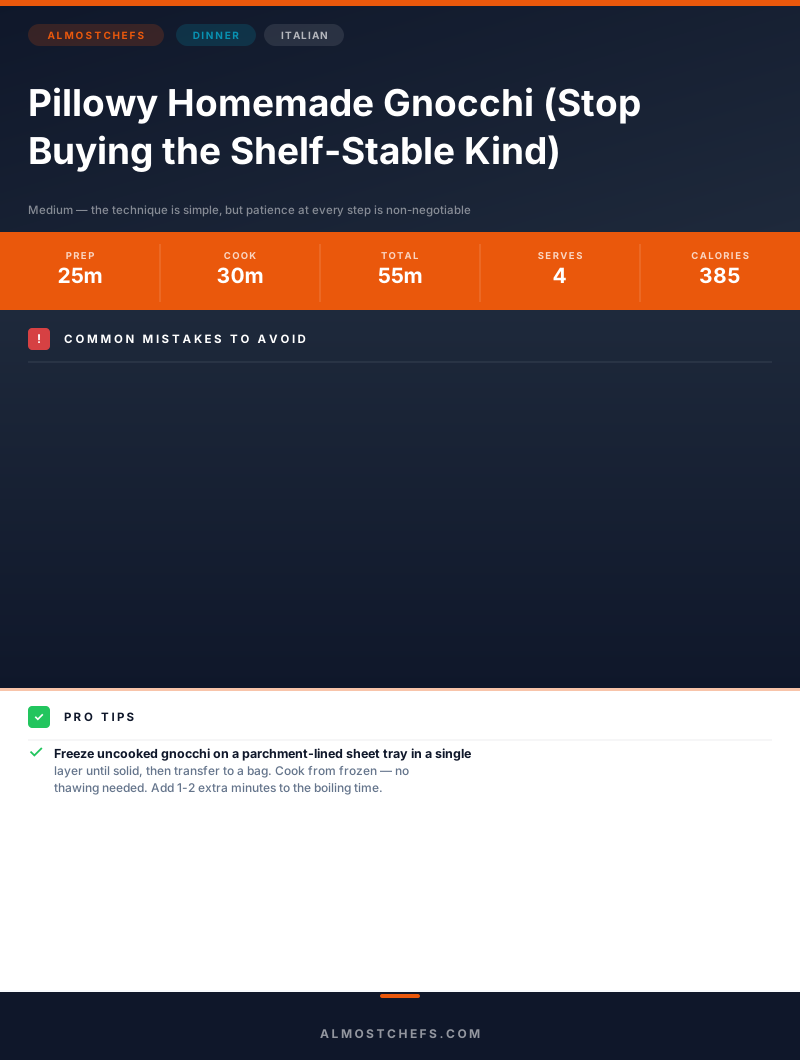
Before we start, read this. These are the 4 reasons your pillowy homemade gnocchi (stop buying the shelf-stable kind) will fail:
- 1
Using the wrong potato: Russet potatoes are the only correct choice. They're starchy and low in moisture, which means less flour needed to bind the dough — and less flour means lighter gnocchi. Waxy potatoes like Yukon Gold hold more water. That extra moisture forces you to add more flour to compensate, and more flour produces dense, chewy dumplings that bounce off your fork.
- 2
Letting the potatoes cool before ricing: Steam is your friend. Hot potatoes release moisture as steam when you rice them — cool potatoes trap that moisture inside, and it ends up in your dough. Rice the potatoes the moment you can handle them without burning yourself. The difference between hot-riced and cold-riced gnocchi is the difference between light and heavy.
- 3
Overworking the dough: Gnocchi dough is not bread dough. It does not improve with kneading. Every extra minute you work it develops more gluten in the flour and produces tougher dumplings. Fold the flour in until the dough just barely comes together — still slightly rough is fine. Two minutes of gentle kneading, stop.
- 4
Not testing a gnocchi before cooking the whole batch: Before you cut and cook everything, drop one gnocchi into boiling water. If it falls apart, the dough needs a small amount of additional flour. If it floats and holds its shape, you're done. This 30-second test saves an entire batch.
The Video Reference Library
Want to see it in action? Here are the exact videos we analyzed and combined to build this foolproof recipe translation:
The source video for this recipe. Clear breakdown of the ricing technique, dough consistency, and exactly what properly cooked gnocchi looks like when it floats.
🛠️ Core Equipment
- Potato ricerThe single most important tool for gnocchi. A ricer produces a fine, airy, uniform texture that no masher can replicate. Mashed potatoes have lumps and compressed starch — riced potatoes have neither. If you don't own one, this recipe is the justification to buy it.
- Large heavy-bottomed potGnocchi needs a full rolling boil with plenty of room. Crowding the pot drops the water temperature and causes the dumplings to stick together or cook unevenly. Go bigger than you think you need.
- Wide skilletYou need surface area for the brown butter sage sauce. A wide pan lets the butter foam and brown evenly without burning in the center. It also gives you room to toss the gnocchi without launching them off the stovetop.
- Bench scraperFor cutting the ropes cleanly and quickly without compressing the dough. A knife works but drags — a bench scraper gives you a clean, fast cut that keeps each piece light.
Pillowy Homemade Gnocchi (Stop Buying the Shelf-Stable Kind)
🛒 Ingredients
- ✦2 pounds russet potatoes, unpeeled
- ✦1 cup all-purpose flour, plus extra for dusting
- ✦1 large egg, room temperature
- ✦1 teaspoon fine sea salt
- ✦1/2 teaspoon freshly ground black pepper
- ✦1/4 teaspoon freshly grated nutmeg
- ✦3 tablespoons unsalted butter
- ✦8 fresh sage leaves, roughly torn
- ✦2 cloves garlic, thinly sliced
- ✦1/4 cup grated Parmigiano-Reggiano cheese
- ✦2 tablespoons extra virgin olive oil
- ✦1 teaspoon lemon zest, finely minced
- ✦Kosher salt for boiling water
- ✦1/4 cup reserved pasta water
👨🍳 Instructions
01Step 1
Boil unpeeled potatoes in salted water over medium-high heat for 15-18 minutes, until fork-tender throughout.
02Step 2
Drain the cooked potatoes and let them cool just enough to handle, about 3-4 minutes.
03Step 3
Peel away the warm potato skins using a clean kitchen towel or your fingers, then press the warm potatoes through a ricer onto a clean work surface.
04Step 4
Create a well in the center of the riced potatoes and crack the egg into it, then sprinkle salt, pepper, and nutmeg over the mixture.
05Step 5
Gently fold the flour into the potato mixture using a fork, working gradually to incorporate until a soft dough just begins to form.
06Step 6
Knead the dough lightly with your hands for about 2 minutes, until smooth and no longer sticky. Do not overwork it.
07Step 7
Divide the dough into 4 equal portions and roll each into a rope about 3/4 inch thick on a lightly floured surface.
08Step 8
Cut the ropes into 3/4-inch pieces and gently press each piece with the back of a fork to create ridges, which help sauce cling to the gnocchi.
09Step 9
Test one gnocchi first: drop it into a pot of rapidly boiling salted water. If it holds together and floats after 2-3 minutes, the batch is ready to cook.
10Step 10
Drop gnocchi into boiling water in batches, stirring gently to prevent sticking. Cook until they float to the surface, about 2-3 minutes.
11Step 11
Continue cooking for another 1-2 minutes after floating, then remove with a slotted spoon to a paper towel-lined plate. Reserve 1/4 cup of pasta water before draining.
12Step 12
Melt butter with sliced garlic in a large skillet over medium heat, stirring occasionally until the garlic is pale golden and the butter smells nutty, about 3 minutes.
13Step 13
Add torn sage leaves to the butter, swirling gently for about 30 seconds until fragrant and slightly crisp.
14Step 14
Toss the cooked gnocchi with the sage butter, adding reserved pasta water a splash at a time to create a silky sauce that coats each piece.
15Step 15
Finish with lemon zest and Parmigiano-Reggiano, drizzle with olive oil, and serve immediately in warm bowls.
Nutrition Per Serving
Estimates based on standard preparation. Adjustments alter macros.
🔄 Substitutions
Instead of All-purpose flour...
Use 3/4 cup whole wheat + 1/4 cup all-purpose flour
Slightly nuttier flavor and denser texture. Works well but produces a heartier dumpling. Don't go 100% whole wheat — too heavy.
Instead of Russet potatoes...
Use 1 pound cauliflower florets + 1 pound russet potatoes
Lower glycemic load, lighter texture. The cauliflower blends seamlessly in flavor. Steam the cauliflower rather than boiling to avoid excess water.
Instead of Unsalted butter and olive oil...
Use Ghee in equal amounts
Richer, nuttier brown butter flavor with higher smoke point. [Ghee](/kitchen-gear/review/ghee) is more forgiving than regular butter when browning — it won't burn as fast.
Instead of Egg...
Use 1 tablespoon aquafaba mixed with 1 teaspoon potato starch
Vegan binding alternative that holds the dough together effectively. The texture is slightly lighter. Works best with drier potatoes.
🧊 Storage & Reheating
In the Fridge
Cooked gnocchi stored in sauce keeps for up to 2 days. Store plain cooked gnocchi tossed in a little olive oil for up to 2 days — reheat in a hot skillet with butter.
In the Freezer
Freeze raw, uncooked gnocchi on a sheet tray until solid, then bag. Cook directly from frozen for up to 2 months. Quality is significantly better than freezing cooked.
Reheating Rules
Reheat cooked gnocchi in a skillet with a splash of water and a knob of butter over medium heat. Microwaving makes them gummy and rubbery — avoid.
❓ Frequently Asked Questions
Why did my gnocchi turn out dense and chewy?
Three possible causes: you used a waxy potato instead of russet, you let the potatoes cool too long before ricing so they retained moisture, or you overworked the dough and developed too much gluten. All three produce the same rubbery result. Starchy potato, hot ricing, minimal kneading — those are the three pillars.
Do I really need a potato ricer?
For genuinely light gnocchi, yes. A masher compresses the potato cells and creates a denser, stickier base that needs more flour to bind. A ricer or food mill produces an airy, fine texture that requires minimal flour. You can make gnocchi without one, but you'll notice the difference.
My gnocchi fell apart in the water. What happened?
Not enough flour to bind, or the dough was too wet from the potatoes. Always do the single-gnocchi test before cooking the whole batch. If it falls apart, work in another tablespoon of flour at a time until the test piece holds.
Can I make the dough ahead of time?
Don't refrigerate raw dough — it oxidizes and turns grayish. If you need to prep ahead, shape the gnocchi, freeze them on a sheet tray until solid, then bag. Cook directly from frozen when needed.
What other sauces work with this gnocchi?
Brown butter sage is the classic for a reason, but this dough handles almost anything: pesto, a simple tomato sauce, a cream and gorgonzola sauce, or just excellent olive oil and Parmigiano. The potato base is neutral enough to go either direction — rich or bright.
How do I know when gnocchi are cooked through?
They float when structurally set, but floating doesn't mean done. After they surface, give them another 1-2 minutes in the water. Cut one open — the center should be the same color all the way through with no gummy core.
The Science of
Pillowy Homemade Gnocchi (Stop Buying the Shelf-Stable Kind)
We turned everything on this page into a beautiful, flour-proof PDF cheat sheet. Print it out, stick it to your fridge, and never mess up your pillowy homemade gnocchi (stop buying the shelf-stable kind) again.
*We'll email you the high-res PDF instantly. No spam, just perfectly cooked meals.
AlmostChefs Editorial Team
We translate the internet's most popular cooking videos into foolproof, beginner-friendly written recipes. We analyze multiple methods, test them in our kitchen, and engineer a single "Master Recipe" that gives you the best possible result with the least possible stress.