Perfect Glazed Carrots (The Side Dish That Steals the Table)
Tender carrot batons coated in a glossy maple-ginger glaze with Dijon, honey, and warm spices. We broke down the technique behind building a glaze that actually clings instead of pooling at the bottom of the pan — and why the liquid-first method changes everything.

“Glazed carrots are on every holiday table and forgotten by dessert. The ones people actually remember — the ones that disappear before the main course does — are built on a specific sequence: liquid first to cook the carrot, glaze second to coat it, heat third to tighten everything into a lacquer. Skip the sequence and you get carrots floating in sweet liquid. Follow it and you get something worth fighting over.”
Why This Recipe Works
Glazed carrots are dismissed as easy. They are easy — but they're easy to do wrong in a specific, invisible way that makes the finished dish feel like an afterthought instead of a reason to reach across the table. The problem is sequencing.
The Liquid-First Method
Most glazed carrot recipes tell you to melt butter, add carrots, then add sweetener. This sounds logical and produces reliably mediocre results. The sugar hits a hot dry pan and begins to caramelize immediately — but the carrots are still raw and need 12–15 minutes of cooking time. By the time the carrots are tender, the sugars have either burned or cooked off entirely, leaving you with pale, lightly sweet carrots in a thin liquid that never set into anything worth eating.
The fix is structural: cook the carrots in broth first. The broth does two things — it provides enough liquid to gently simmer the carrots to tenderness without requiring constant attention, and it builds a savory, aromatic base that the glaze then reduces into. Only after the carrots are fork-tender does the sweet component enter the pan. At that point the sugars have 4–6 minutes to reduce and tighten around already-cooked vegetables, which is the exact amount of time needed to build a lacquer without burning anything.
Why Dijon is Non-Negotiable
The Dijon mustard in this glaze is doing structural work, not flavor work. Mustard contains natural emulsifying compounds — specifically allyl isothiocyanate and mucilage — that bind fat and liquid together into a cohesive coating. Without an emulsifier, butter and maple syrup separate in the pan: the butter pools on the surface and the syrup sinks to the bottom. The result is carrots coated in neither. A teaspoon of Dijon holds the glaze together and gives it the body to cling to each piece evenly.
The Ginger and Garlic Window
Aromatics in butter have a narrow window before they cross from golden and nutty to acrid and bitter. Garlic in particular burns quickly in hot fat — it goes from pale gold to dark brown in under 30 seconds. The technique here is to use the foam as your timer: butter foams when the water content has cooked off and the milk solids begin to brown. That's the moment to add the ginger and garlic. They go into a pan that's hot enough to soften and toast them, but with enough residual moisture to prevent immediate scorching. Keep them moving for 90 seconds, then add the broth immediately to stop the process.
Uniform Cuts Are Load-Bearing
The 2-inch baton cut is not aesthetic. Uniform pieces with equal diameter cook at the same rate — which means you can test doneness on one piece and trust that every other piece in the pan is at the same stage. Mixed cuts produce mixed results: some pieces turn to mush while you wait for the thick ones to finish. Use a sharp chef's knife and take 2 extra minutes during prep. Everything downstream depends on it.
The Glaze as a Finishing Tool
The final stage — pouring the pre-mixed glaze over tender carrots and reducing for 4–6 minutes — is where the dish either succeeds or stalls. The visual cue is more reliable than the timer: the glaze is ready when it coats the back of a spoon and holds a clean line when you drag your finger through it. At that point, every carrot piece is wearing a thin, glossy coat that tastes concentrated and complex rather than wet and sweet. Pull the pan 30 seconds before you think you need to. The residual heat continues the reduction off the flame, and the carrots go to the table looking lacquered rather than steamed.
This is a dish that rewards the 90 seconds of attention it asks for.
Where Beginners Mess This Up
Before we start, read this. These are the 4 reasons your perfect glazed carrots (the side dish that steals the table) will fail:
- 1
Adding the glaze before the carrots are tender: If you pour maple syrup and honey into the pan while the carrots are still raw, the sugars caramelize and burn before the vegetables have time to cook through. The carrots finish tough and the glaze turns bitter. Cook the carrots in broth first, glaze second — always.
- 2
Cutting carrots unevenly: A mix of thick chunks and thin coins means half the carrots are overcooked and mushy while the thick pieces are still firm. Uniform 2-inch batons of equal diameter cook at the same rate. If using pre-packaged baby carrots, sort by size or halve the larger ones.
- 3
Pulling the glaze too early: The glaze needs 4-6 minutes of sustained medium heat to reduce and tighten around the carrots. If you take the pan off heat while the glaze is still runny, it won't set — you'll have wet carrots instead of lacquered ones. The glaze is done when it coats the back of a spoon and the carrots look shiny, not wet.
- 4
Using cold butter: Cold butter dropped into a hot pan splatters and doesn't emulsify properly with the glaze. Start with room-temperature butter and let it melt slowly until it just begins to foam. That foam tells you the water has cooked off and you're browning the milk solids — that's where the nutty depth comes from.
The Video Reference Library
Want to see it in action? Here are the exact videos we analyzed and combined to build this foolproof recipe translation:
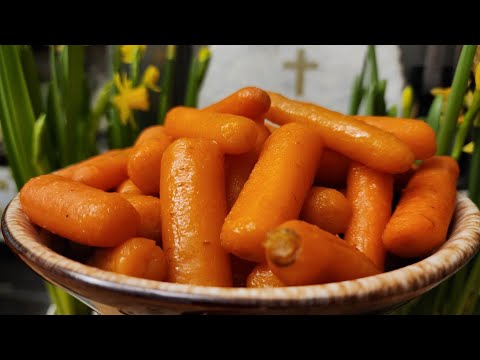
The source video for this technique. Covers the liquid-first method and shows exactly what the glaze reduction looks like at each stage — the visual cues are clearer here than in any written recipe.
2. How to Caramelize Vegetables Properly
A broader look at the Maillard reaction in vegetable cooking, with glaze reduction principles that apply directly to this recipe.
3. Holiday Side Dishes That Actually WorkContextualizes glazed carrots within a full side dish spread, with timing advice for cooking multiple vegetables simultaneously.
🛠️ Core Equipment
- Large skillet or wide sauté pan ↗The carrots need to sit in a single layer to cook evenly and allow the broth to reduce efficiently. A 12-inch skillet is the minimum for 2 pounds of carrots. Crowded pans steam instead of sauté.
- Whisk and small bowl ↗The glaze components — maple syrup, honey, Dijon, and lemon juice — need to be fully emulsified before they hit the hot pan. Adding them separately causes uneven coating and sugar scorching.
- Vegetable peeler and sharp knife ↗Even cuts require a sharp knife. A dull blade crushes carrot cells instead of slicing cleanly, which means ragged edges that cook unevenly and fall apart in the glaze.
Perfect Glazed Carrots (The Side Dish That Steals the Table)
🛒 Ingredients
- ✦2 pounds fresh carrots, peeled and cut into 2-inch batons
- ✦3 tablespoons unsalted butter, room temperature
- ✦2 tablespoons pure maple syrup
- ✦1 tablespoon raw honey
- ✦1 teaspoon fresh ginger, minced
- ✦2 cloves garlic, minced
- ✦1 teaspoon fresh thyme leaves
- ✦1/2 teaspoon sea salt
- ✦1/4 teaspoon black pepper
- ✦1/4 teaspoon ground cinnamon
- ✦1/8 teaspoon nutmeg
- ✦1/2 cup low-sodium vegetable broth
- ✦1 tablespoon fresh lemon juice
- ✦1 teaspoon Dijon mustard
- ✦1 tablespoon chopped fresh parsley, for garnish
- ✦1 teaspoon sesame seeds, for garnish
👨🍳 Instructions
01Step 1
Peel and cut carrots into uniform 2-inch batons. Match the diameter as closely as possible — halve any thick carrots lengthwise.
02Step 2
Melt butter in a large skillet over medium-high heat until it foams slightly, about 1 minute.
03Step 3
Add minced ginger and garlic to the foaming butter. Stir constantly for 90 seconds until fragrant and just beginning to turn golden.
04Step 4
Pour in the vegetable broth and bring to a gentle boil, scraping up any browned bits from the pan.
05Step 5
Add the carrot batons and reduce heat to medium. Simmer uncovered, stirring occasionally, until just fork-tender, 12–15 minutes.
06Step 6
While the carrots simmer, whisk together maple syrup, honey, Dijon mustard, and lemon juice in a small bowl until fully combined.
07Step 7
Pour the glaze over the carrots. Add thyme, cinnamon, nutmeg, salt, and pepper. Stir to coat evenly.
08Step 8
Cook over medium heat, stirring occasionally, until the glaze thickens and lacquers the carrots in a glossy coating, 4–6 minutes.
09Step 9
Transfer to a serving platter. Garnish with fresh parsley and sesame seeds. Serve immediately.
Nutrition Per Serving
Estimates based on standard preparation. Adjustments alter macros.
🔄 Substitutions
Instead of Unsalted butter...
Use Ghee or avocado oil
Ghee runs hotter and gives a slightly nuttier finish with less risk of burning. Avocado oil produces a lighter mouthfeel and is the best option for dairy-free cooking.
Instead of Maple syrup and honey...
Use Coconut sugar dissolved in 2 tablespoons warm water, or monk fruit sweetener
Coconut sugar adds subtle caramel notes and has a lower glycemic index. Monk fruit provides clean sweetness without any aftertaste and reduces sugar content by roughly 30 percent.
Instead of Vegetable broth...
Use Bone broth or unsweetened apple cider
Bone broth deepens the umami base and adds body to the final glaze. Apple cider brightens the whole dish and reduces the need for extra lemon juice — start with half the amount.
Instead of Fresh thyme...
Use Fresh rosemary or sage
Rosemary creates earthier, slightly piney notes that pair well with the cinnamon. Sage adds peppery complexity. Both are more assertive than thyme — use two-thirds the quantity.
🧊 Storage & Reheating
In the Fridge
Store in an airtight container for up to 4 days. The glaze firms into a coating when cold — this is normal and not a sign of anything wrong.
In the Freezer
Not recommended. Carrots become waterlogged and the glaze separates on thawing.
Reheating Rules
Reheat gently in a skillet over low heat with 1–2 tablespoons of water or broth, stirring until the glaze reactivates and becomes glossy again, about 3–4 minutes. Microwave reheating is acceptable but produces uneven results.
❓ Frequently Asked Questions
Why is my glaze watery instead of thick and glossy?
Two causes: either you added the glaze before the broth fully reduced, or you didn't cook the glazing phase long enough. The glaze needs 4–6 minutes of sustained medium heat to reduce. If it's still thin after 6 minutes, increase heat slightly and stir constantly until it thickens.
Can I make glazed carrots ahead of time?
Yes. Cook to the end of step 7 (glaze applied but not fully reduced), then refrigerate. When ready to serve, reheat in the skillet over medium heat and complete the reduction. The carrots won't overcook because they were slightly underdone going in.
Can I use baby carrots instead of whole carrots?
Yes, but sort them by size first. Baby carrots vary significantly in diameter. The thick ones will be underdone while the thin ones are mush. Halve anything wider than your thumb lengthwise.
Does the honey burn in the pan?
Only if you add it before the broth or on high heat. Adding the honey as part of the pre-mixed glaze — after the carrots are already tender and the pan is on medium — gives it enough liquid buffer to prevent scorching.
Why add Dijon mustard to a sweet glaze?
Dijon contains vinegar and emulsifying compounds that bind the fat and liquid components of the glaze together. Without it, the butter and maple syrup tend to separate. It also adds a subtle savory backbone that prevents the dish from tasting like candy.
Is this recipe actually gluten-free?
Yes, provided you use certified gluten-free Dijon mustard. Some commercial mustards include wheat-based thickeners. Check the label if cross-contamination is a concern.
The Science of
Perfect Glazed Carrots (The Side Dish That Steals the Table)
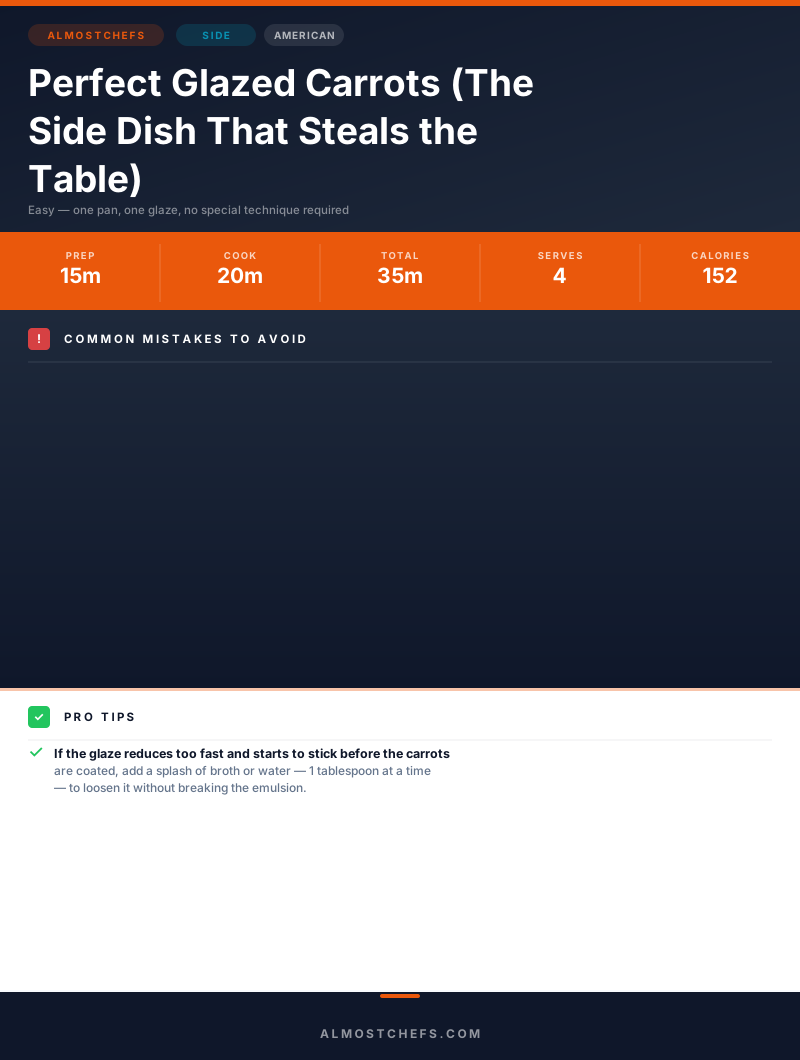
We turned everything on this page into a beautiful, flour-proof PDF cheat sheet. Print it out, stick it to your fridge, and never mess up your perfect glazed carrots (the side dish that steals the table) again.
*We'll email you the high-res PDF instantly. No spam, just perfectly cooked meals.
AlmostChefs Editorial Team
We translate the internet's most popular cooking videos into foolproof, beginner-friendly written recipes. We analyze multiple methods, test them in our kitchen, and engineer a single "Master Recipe" that gives you the best possible result with the least possible stress.