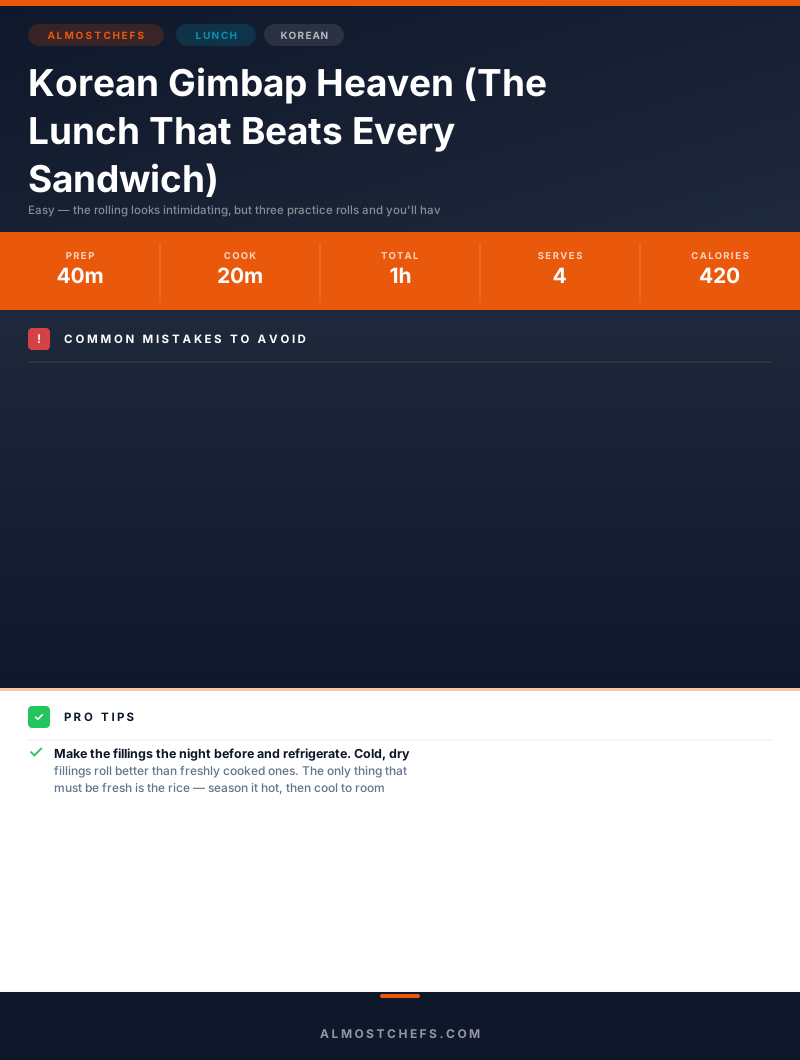
Korean Gimbap Heaven (The Lunch That Beats Every Sandwich)
Classic Korean gimbap — seasoned short-grain rice, crisp vegetables, savory fillings, and toasted sesame layered inside nori and sliced into perfect rounds. We broke down the technique behind Korea's most beloved lunchbox staple so your rolls stay tight, your rice stays fluffy, and nothing falls apart at the cut.

“Gimbap is the lunch that Koreans grew up eating at 김밥천국 (Gimbap Heaven) — the fast-casual chain that proved a perfect roll of seasoned rice and vegetables costs almost nothing and beats anything between two slices of bread. Most home attempts fail not from bad ingredients but from underseasoned rice, wet fillings, or a roll so loose it collapses at the knife. Three technical fixes and your gimbap will hold together, taste clean and bright, and slice into rounds that don't embarrass you.”
Why This Recipe Works
Gimbap is the lunch that requires no explanation in Korea. You walk into a 김밥천국, you point, you eat, and you understand immediately why this country does not feel the need to invent complicated sandwiches. It is rice, vegetables, a protein, and toasted sesame wrapped in dried seaweed — and it is exactly as good as it sounds when made correctly.
The Rice Is the Recipe
Every other component in gimbap is a supporting actor. The rice is the lead. And the single most important thing you can do to the rice happens in the first two minutes after it comes out of the cooker.
Sesame oil and salt go in while the rice is still steaming hot. Not warm. Hot. The heat opens the exterior of each grain and allows the fat to coat every surface, distributing flavor uniformly through the entire batch. Cold rice seasoned after the fact tastes dull — the oil sits on the surface and pools instead of absorbing. There is no recovery step. Season the rice hot or accept a mediocre result.
The second variable is the rice-to-water ratio. Gimbap rice should be slightly drier than the rice you'd serve in a bowl. A bowl of too-dry rice is unsatisfying; a gimbap made with too-wet rice is structurally unstable. Reduce your normal water quantity by two tablespoons and the rolls will hold their shape far better at the cut.
Dry Fillings Are Not Optional
Every filling in this roll must arrive at the assembly stage with as little residual moisture as possible. This is not a suggestion. Wet spinach turns the nori rubbery within twenty minutes. Warm egg creates steam inside the sealed roll that softens everything it touches. Under-drained tuna — if you go that route — will make the bottom nori sheet translucent and sticky before you've cut the first slice.
Blanch the spinach, rinse it cold, and then squeeze it with both hands until it looks like it has given up on being a vegetable. It should look almost dry. This is correct. It will rehydrate slightly inside the roll and that is fine.
The Rolling Is a Physics Problem
A bamboo mat is not a luxury. It is the tool that allows you to apply consistent horizontal compression across the full 18-centimeter width of the roll simultaneously — something human hands cannot do accurately. Cover the mat in plastic wrap before use, lay the nori matte-side up, spread a thin even layer of cooled rice leaving a two-centimeter gap at the far edge, and line your fillings across the lower third.
The roll itself requires steady, firm pressure — both hands, even weight — from the moment the near edge folds over the fillings to the moment you reach the bare border. Hold the completed roll inside the mat, applying gentle compression, for ten to fifteen seconds. This is what sets the shape. Skip it and the roll relaxes.
The chef's knife deserves as much attention as the bamboo rolling mat. Rub the blade lightly with sesame oil before the first cut, wipe it clean, re-oil before every subsequent slice. One clean downward stroke per round. If you saw, the nori tears and the cross-section collapses. The oil lubricates the cut; the sharp edge does the work.
Why the Danmuji Is Non-Negotiable
Yellow pickled radish provides the tartness that cuts through the sesame-forward rice. It provides the crunch that distinguishes a well-built roll from a soft, homogeneous cylinder. And it provides the color — bright yellow visible in every cross-section — that makes a plate of gimbap look like it was assembled with intention.
You can swap out nearly every other filling based on preference or availability. The danmuji is structural. Its flavor counterbalances the richness of the egg and sesame; its texture anchors the bite. Remove it and you have a competent rice roll. Keep it and you have gimbap.
Where Beginners Mess This Up
Before we start, read this. These are the 4 reasons your korean gimbap heaven (the lunch that beats every sandwich) will fail:
- 1
Underseasoned rice: Gimbap rice is not plain steamed rice. It must be seasoned while still hot with sesame oil and salt — the heat opens the grain and lets the fat coat every surface. Cold rice seasoned late produces a dull, starchy core. The difference is stark and unmistakable.
- 2
Wet fillings: Every filling must be drained, pressed, or cooled completely before rolling. Warm or wet ingredients create steam inside the roll, which softens the nori and turns the rice gummy within minutes. Blanched spinach must be squeezed dry by hand. Egg strips should be blotted. Imitation crab or ham should be at room temperature.
- 3
Rolling too loosely: A slack roll falls apart at the cut and the fillings slide out on the plate. You need firm, even pressure from both hands across the entire bamboo mat as you roll — think of it as pressing, not just shaping. The roll should feel dense and solid before you remove the mat.
- 4
Cutting with a dull or dry knife: Nori tears rather than cuts when the blade drags. Each slice requires a sharp knife lightly coated in sesame oil, and a single confident downward stroke — not sawing. Wipe and re-oil between every cut.
🛠️ Core Equipment
- Bamboo sushi rolling mat (makisu)Provides the structural leverage you need to compress the roll evenly. Hands alone cannot generate consistent pressure across the full length of the nori. Wrap it in plastic wrap to prevent rice from sticking in the weave.
- Rice paddle or wide wooden spoonFor folding the sesame oil seasoning into hot rice without smashing the grains. Metal utensils compress the rice into paste. A wide, flat paddle lets you cut and fold without breaking the texture.
- Sharp chef's knifeA dull blade drags through the nori instead of slicing it cleanly, crushing the roll at every cut. Keep it lightly oiled with sesame oil for clean rounds.
- Wide shallow pan or skilletFor cooking the egg strips flat and even. A thin, uniform omelet that can be cut into long strips is essential. A round skillet works; a rectangular tamagoyaki pan is ideal.
Korean Gimbap Heaven (The Lunch That Beats Every Sandwich)
🛒 Ingredients
- ✦3 cups short-grain white rice, cooked (about 1.5 cups dry)
- ✦2 tablespoons toasted sesame oil, divided
- ✦1 teaspoon fine sea salt
- ✦6 full sheets roasted nori (gim)
- ✦4 large eggs
- ✦1 teaspoon neutral oil (for egg)
- ✦1 medium carrot, julienned
- ✦6 ounces fresh spinach
- ✦1 teaspoon toasted sesame seeds (for spinach)
- ✦6 ounces imitation crab sticks or canned tuna, drained
- ✦4 sticks yellow pickled radish (danmuji), halved lengthwise
- ✦4 sticks burdock root (우엉조림), store-bought or braised
- ✦1 tablespoon soy sauce
- ✦1 teaspoon sugar
- ✦1 teaspoon sesame oil (for burdock)
- ✦Salt and white pepper to taste
👨🍳 Instructions
01Step 1
Cook the short-grain rice and let it rest covered for 10 minutes. Transfer to a wide bowl while still hot.
02Step 2
Season the hot rice immediately: drizzle 1.5 tablespoons sesame oil and 1 teaspoon salt over the rice, then fold gently with a rice paddle using a cut-and-turn motion. Fan the rice while folding to release steam. Do not mash.
03Step 3
Beat the eggs with a pinch of salt and white pepper. Heat a lightly oiled pan over medium-low heat and pour in the egg. Cook into a thin, flat omelet. Let it cool, then cut into long strips about 1cm wide.
04Step 4
Blanch the spinach in boiling salted water for 45 seconds. Drain, rinse under cold water, and squeeze dry by hand. Season with sesame seeds, a few drops of sesame oil, and a pinch of salt.
05Step 5
Sauté the julienned carrot in a dry pan over medium heat with a pinch of salt for 2-3 minutes until just tender but still with bite. Set aside to cool.
06Step 6
If using burdock root from scratch, simmer in water for 15 minutes, then braise in a small pan with soy sauce, sugar, sesame oil, and 3 tablespoons water over medium heat until the liquid is nearly absorbed. Cool completely.
07Step 7
Lay a bamboo mat (covered in plastic wrap) flat. Place one nori sheet shiny-side down on the mat.
08Step 8
Spread a thin, even layer of seasoned rice across the nori, leaving a 2cm border at the top edge. Press lightly to adhere — do not compact.
09Step 9
Arrange fillings in a horizontal line across the lower third of the rice: egg strips, spinach, carrot, pickled radish, burdock, and imitation crab, side by side.
10Step 10
Using both hands on the mat, roll the near edge of the nori up and over the fillings, pressing firmly and evenly across the entire width. Continue rolling, applying steady compression, until you reach the bare top border.
11Step 11
Rub the outside of the roll lightly with sesame oil. Repeat with remaining nori and fillings.
12Step 12
Cut each roll into 8 rounds with a sharp knife coated in sesame oil, using one clean downward stroke per slice. Wipe and re-oil between cuts.
Nutrition Per Serving
Estimates based on standard preparation. Adjustments alter macros.
🔄 Substitutions
Instead of Imitation crab sticks...
Use Canned tuna (drained and mixed with a tiny amount of sesame oil)
Tuna gimbap is a staple variation. Drain aggressively — any liquid will soften the nori within an hour.
Instead of Burdock root (우엉조림)...
Use Store-bought seasoned burdock or omit entirely
Burdock adds an earthy, slightly bitter depth that balances the sweet danmuji. If unavailable, add an extra strip of pickled radish to compensate for the crunch.
Instead of Short-grain white rice...
Use Short-grain brown rice
Brown rice gimbap is increasingly common for blood sugar management. Increase water by 2 tablespoons and extend cook time by 10 minutes. The texture is nuttier but rolls just as well.
Instead of Egg strips...
Use Thin-sliced firm tofu, pan-fried in sesame oil
Vegan option. Press the tofu dry before frying to prevent moisture issues inside the roll.
🧊 Storage & Reheating
In the Fridge
Do not refrigerate gimbap — cold temperatures firm the rice and make the nori leathery. Consume within 6 hours of rolling at room temperature.
In the Freezer
Not recommended. Freezing destroys the nori texture and the rice becomes crumbly on thawing.
Reheating Rules
Gimbap is not meant to be reheated. It is a room-temperature dish by design. If you must, a brief 15-second microwave on low with a damp paper towel covering the plate is the least damaging option — but the texture will suffer.
❓ Frequently Asked Questions
Why does my nori tear when I cut the roll?
Two reasons: your knife is dull, or it's dry. Nori needs a sharp blade lightly coated in sesame oil and a single confident downward stroke — not a sawing motion. Wipe and re-oil the blade between every slice.
Why is my gimbap falling apart after I cut it?
The roll was not compressed firmly enough during rolling, or the rice layer was too thick. Use steady, even pressure from both hands on the bamboo mat throughout the roll. The finished roll should feel dense and hold its shape when squeezed gently.
Can I make gimbap ahead of time?
Yes — up to 6 hours ahead at room temperature, wrapped tightly in plastic wrap. Do not refrigerate. The fillings should be made the day before and stored separately; assemble and roll on the day you plan to eat.
What is the difference between gimbap and sushi?
Sushi rice is seasoned with rice vinegar and sugar, giving it a bright acidic flavor. Gimbap rice is seasoned with sesame oil and salt, which is earthier and more savory. The rolling technique is similar, but the flavor profiles are entirely different.
Why does my gimbap taste bland?
The rice was either not seasoned while hot, or not seasoned enough. Season the rice aggressively — it needs to taste noticeably salty and savory on its own because the nori, rice volume, and unsalted fillings will dilute the flavor significantly once assembled.
Is 김밥천국 (Gimbap Cheonguk) a specific recipe?
Gimbap Cheonguk — literally 'Gimbap Heaven' — is a beloved South Korean fast-food chain known for affordable, no-frills Korean comfort food. Their gimbap is the cultural touchstone this recipe is based on: classic, clean, and focused on technique over novelty.
The Science of
Korean Gimbap Heaven (The Lunch That Beats Every Sandwich)
We turned everything on this page into a beautiful, flour-proof PDF cheat sheet. Print it out, stick it to your fridge, and never mess up your korean gimbap heaven (the lunch that beats every sandwich) again.
*We'll email you the high-res PDF instantly. No spam, just perfectly cooked meals.
AlmostChefs Editorial Team
We translate the internet's most popular cooking videos into foolproof, beginner-friendly written recipes. We analyze multiple methods, test them in our kitchen, and engineer a single "Master Recipe" that gives you the best possible result with the least possible stress.