Gim Bokkeum (Crispy Seasoned Seaweed)
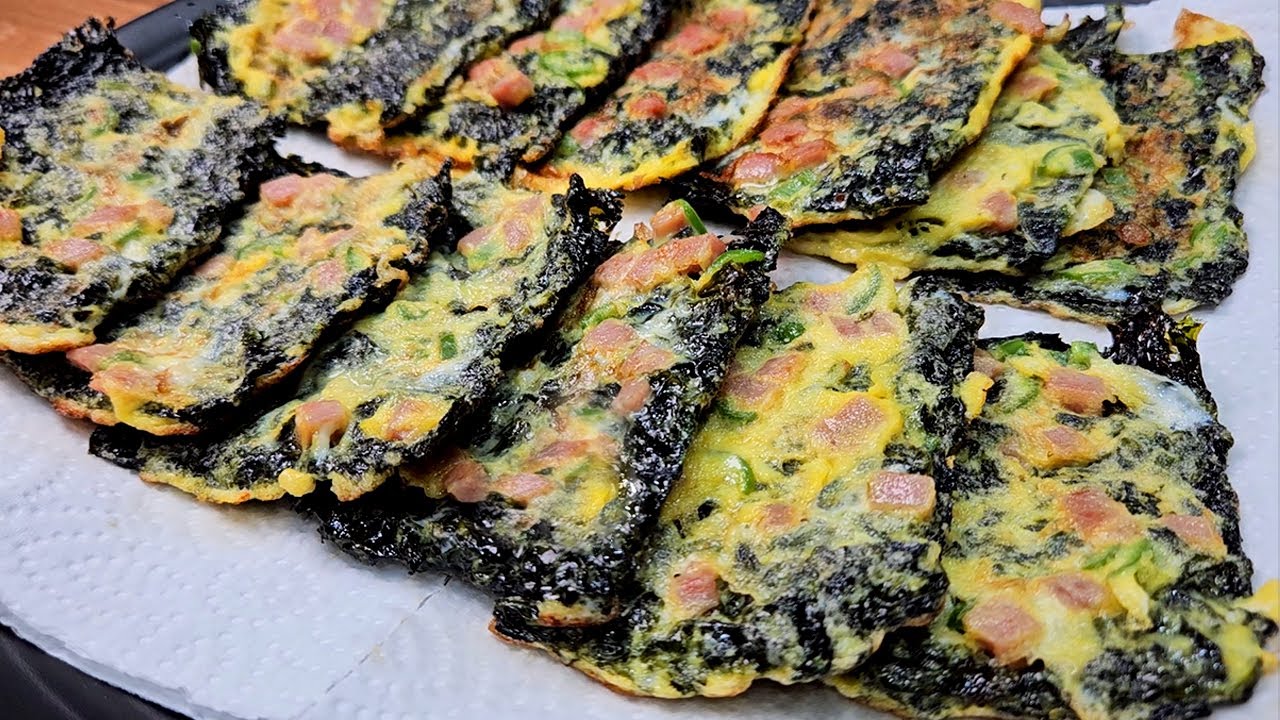
Roasted seaweed sheets crumbled and tossed with sesame oil, soy sauce, and sugar until crispy and addictive. The simplest banchan that vanishes first.
Why This Recipe Works
Most banchan recipes come wrapped in mythology — grandmother's hands, a secret fermentation vessel, years of intuition. Gim bokkeum insults all of that. It is ten sheets of seaweed, four condiments, and eight minutes of elapsed time. The fact that it consistently disappears from the table before anything else is not a miracle. It is chemistry, executed correctly. Let's be precise about what's actually happening.
The Seaweed Substrate
Korean roasted gim (김) begins its life as Pyropia yezoensis or Pyropia tenera — thin-blade red algae harvested from cold coastal waters, pressed into sheets, and dry-roasted until brittle. The roasting process drives off residual moisture and triggers Maillard-adjacent browning reactions in the algae's amino acids and sugars, producing the characteristic dark green-black color and that slightly smoky, oceanic umami. What you're buying from the store is already halfway cooked. Your job in this recipe is to finish it — and to season it in a way that makes it cling to rice with the enthusiasm of a barnacle.
Do not use the pre-seasoned snack packs. They're salted and oiled for direct consumption, and layering more oil and soy sauce on top of them produces something aggressively salty and texturally wrong. You want the large unseasoned sheets. You want to control every variable from here.
The Coating Architecture
The seasoning system in gim bokkeum is not random. It is a three-part adhesive matrix designed to coat a porous, hydrophobic surface with maximum efficiency.
First: the oils. Both vegetable oil and sesame oil are used in the pan together. The vegetable oil provides a neutral heat-transfer medium and prevents burning. The sesame oil provides flavor — specifically, the roasted nutty compounds produced by heating sesame seeds, primarily pyrazines and furans, that have become synonymous with Korean cooking at the aromatic level. Using sesame oil alone would be a mistake — its smoke point is low (around 177°C / 350°F for toasted varieties), and seaweed burns ruthlessly fast. The vegetable oil buffers the thermal environment.
Second: the glaze. Rice syrup is not interchangeable with plain sugar in this recipe, despite appearances. Rice syrup is a glucose-dominant sweetener — approximately 45% glucose, 3% maltose, 52% higher oligosaccharides — with a lower Maillard reactivity than sucrose. It creates a glaze that is sticky and translucent without browning aggressively. It functions as a film-former, coating each seaweed fragment and helping the soy sauce and sesame seeds adhere. Honey can substitute in a pinch, but its fructose content makes it more prone to burning. The small addition of granulated sugar on top of the syrup adjusts sweetness and texture — the fine crystals provide a slight crunch before they dissolve into the glaze on cooling.
Third: the salt. Soy sauce here is not about sodium delivery alone. Korean soy sauce (ganjang) contains free glutamate from the fermentation process — a direct source of umami that amplifies the seaweed's natural glutamate content. Seaweed is already one of the highest natural sources of glutamic acid on earth. You are not fighting that. You are stacking on top of it.
The Thermal Window
Low heat is not a preference in this recipe. It is a hard constraint. Seaweed at high heat goes from crispy to carbonized in under thirty seconds — the thin leaf structure has almost no thermal mass to buffer the temperature spike. Your nonstick pan over the lowest flame your burner will produce is the correct environment. You are not sautéing. You are warming, coating, and crisping — a process that takes ninety seconds to two minutes and requires your full attention and a gentle hand on the toss.
Remove from heat before you think it's done. Carryover heat in the pan will continue to toast the seaweed for another twenty to thirty seconds after the burner is off. If it looks finished in the pan, it is already slightly past finished. Err aggressively toward underdone.
Texture by Hand
Tear the sheets. Don't cut them. This is not sentimentality — it is surface area management. Scissor-cut edges are clean and uniform. Torn edges are ragged, irregular, and multiply the number of thin-point protrusions on each fragment. Those thin points crisp faster and harder than the centers, creating a piece with genuine textural range: some areas remain slightly yielding, others snap like glass. A bowl of identical rectangles is boring. A bowl of irregular shards has variation. Variation is what makes you keep reaching in.
The Cooling Phase
The seaweed firms dramatically as it cools. This is not optional — you cannot evaluate the final texture from a hot pan. Pull it off heat, spread loosely, and give it five full minutes before you taste it. The glaze sets. The oils redistribute into the cellular structure. The water activity drops. What you have at the end is a dry, crisp, deeply savory seasoned seaweed with a shelf life of two weeks in a proper airtight container. The airtight container is not optional either — humidity is the only thing that can kill this banchan, and it will, if you leave it exposed on the counter. Seal it. Keep it room temperature. Eat it by the fistful.
Rice's Best Friend
In Korean households, a jar of gim bokkeum lives on the kitchen table permanently. It is not a special-occasion item. It is infrastructure. Sprinkle it on plain steamed rice and you have a complete, satisfying meal that requires no other effort. Add it to bibimbap for crunch and salinity. Grind it fine in a blender and you have a Korean-style furikake that transforms rice from a side into a destination. Korean children learn banchan culture through this — it is the gateway drug to the broader logic of small dishes built to make rice worth eating. That logic, once internalized, never leaves.
Gim Bokkeum (Crispy Seasoned Seaweed)
🛒 Ingredients
- ✦10 sheets Korean roasted seaweed (gim)
- ✦1 tablespoon sesame oil
- ✦1 teaspoon soy sauce
- ✦1 teaspoon rice syrup or corn syrup
- ✦1 teaspoon sugar
- ✦1 teaspoon toasted sesame seeds
- ✦1 teaspoon vegetable oil
👨🍳 Instructions
01Step 1
Tear or crumble the roasted seaweed sheets into bite-sized pieces by hand. Don't cut with scissors — irregular pieces have better texture.
02Step 2
Heat vegetable oil and sesame oil in a pan over low heat. Add the seaweed pieces and gently toss for 1-2 minutes.
03Step 3
Drizzle soy sauce and rice syrup over the seaweed. Toss gently to coat. The syrup creates a slight sticky glaze.
04Step 4
Sprinkle with sugar and sesame seeds. Toss once more. Remove from heat immediately.
05Step 5
Let cool completely — it crisps up further as it cools. Store in an airtight container.
Nutrition Per Serving
Estimates based on standard preparation. Adjustments alter macros.
🔄 Substitutions
Instead of Korean roasted seaweed...
Use Japanese nori sheets
Thinner and more delicate — reduce cooking time and handle very gently
Instead of Rice syrup...
Use Honey
Slightly different flavor but provides the same sticky glaze
🧊 Storage & Reheating
In the Fridge
No refrigeration needed — store in an airtight container at room temperature.
In the Freezer
Not needed — keeps for 2+ weeks at room temperature.
Reheating Rules
No reheating needed. If it loses crispness from humidity, toast briefly in a dry pan for 30 seconds.
❓ Frequently Asked Questions
What is the difference between gim and nori?
Korean gim and Japanese nori are both seaweed, but gim is typically roasted with sesame oil and salt, making it more flavorful and crispier. Nori is often plain or lightly salted. For this recipe, Korean gim works best because it's already roasted.
How do I keep gim bokkeum crispy?
The enemies of crispy seaweed are moisture and air. Store in a completely airtight container with a small silica gel packet if you have one. Don't refrigerate — the humidity in the fridge makes it soft.

The Science of
Gim Bokkeum (Crispy Seasoned Seaweed)
We turned everything on this page into a beautiful, flour-proof PDF cheat sheet. Print it out, stick it to your fridge, and never mess up your gim bokkeum (crispy seasoned seaweed) again.
*We'll email you the high-res PDF instantly. No spam, just perfectly cooked meals.
AlmostChefs Editorial Team
We translate the internet's most popular cooking videos into foolproof, beginner-friendly written recipes. We analyze multiple methods, test them in our kitchen, and engineer a single "Master Recipe" that gives you the best possible result with the least possible stress.