The Real German Chocolate Cake (It's Not From Germany)
A towering American layer cake with deeply moist chocolate rounds, a gooey coconut-pecan caramel filling, and a glossy chocolate finish. We dissected the most-watched YouTube methods to isolate exactly where home bakers go wrong — and built one technique that nails the filling texture every time.
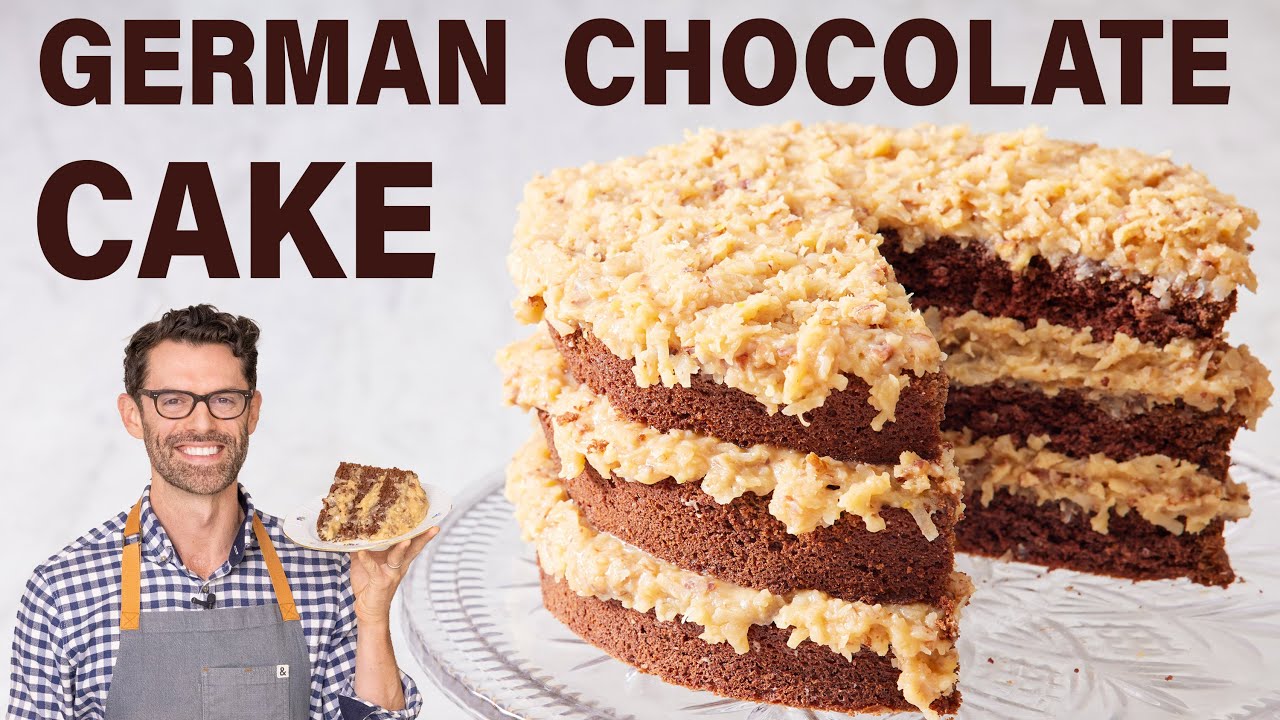
“German Chocolate Cake has nothing to do with Germany. It was named after Sam German, a baker who developed a sweet baking chocolate for Baker's in 1852. What it does have is the most misunderstood filling in American baking — a custard-thickened coconut-pecan layer that requires actual temperature discipline to get right. Most home bakers either undercook it into soup or scorch it into candy. There is a correct way. Here it is.”
Why This Recipe Works
German Chocolate Cake is not a chocolate cake. It is a coconut-pecan custard delivery system that happens to be held together by two rounds of moist chocolate sponge. The chocolate layers are almost secondary — pleasant, well-structured, reliably moist. The filling is the entire point, and it is where virtually every home baker fails.
The Name Problem (And Why It Matters)
Understanding the origin of this cake isn't trivia — it explains why the recipe behaves the way it does. Sam German's sweet baking chocolate was sweeter and milder than standard unsweetened baking chocolate. When the 1957 Dallas Morning News recipe specified "Baker's German's Sweet Chocolate," it created a cake with a softer, less bitter chocolate profile than a standard devil's food. Modern recipes that substitute Dutch-process cocoa or dark chocolate miss this entirely and end up with a filling that tastes too harsh against the coconut's sweetness.
This recipe uses cocoa powder with hot water, which achieves a similar balanced chocolate flavor while keeping the technique accessible. The hot water blooms the cocoa — a chemical process that converts certain bitter phenolic compounds and intensifies the chocolate color from brown to near-black. Batter that looks like thin chocolate soup before baking is correct. Trust it.
The Filling Is a Custard
This is the insight that changes everything. The coconut-pecan filling is not a sauce. It is not a paste. It is an egg yolk-thickened custard — the same scientific category as crème anglaise or pastry cream — that happens to have coconut and pecans stirred in at the end. This classification matters because custards have rules.
Rule one: you must temper the egg yolks. Adding raw cold yolks to a hot butter-milk mixture causes instant protein coagulation. The result is scrambled eggs in grease. Tempering — whisking a small amount of the hot liquid into the yolks first before combining — gradually raises the yolk temperature to the point where they can handle the heat without seizing. This step takes about 90 seconds and is non-negotiable.
Rule two: custards thicken at a specific temperature and not before. The magic number for egg yolk custards is 160°F. Below that, the proteins haven't bound enough starch molecules to create a stable gel. Above 185°F, they overcook and the custard breaks into a grainy mess. The window is narrow and a reliable thermometer is the only way to hit it consistently. Visual cues — "coats the back of a spoon," "holds a line" — are useful secondary signals but should not replace temperature verification.
The Cake Structure
The batter uses the "hot water method" — cocoa and dry ingredients combined with egg, milk, and oil, then thinned dramatically with boiling water at the end. The resulting batter is almost pourable, which alarms first-time bakers who expect something thicker. This is intentional. The high water content creates steam during baking that forces the crumb open, producing the characteristic tender, open texture that holds moisture for days without going stale.
Alternating the dry and wet additions matters more than most recipes admit. Adding all the flour at once develops gluten unevenly — the outside of the batter overworks while the center stays undermixed. Three additions create a uniform gluten network that holds the cake's structure without toughening it. Stop mixing the moment the last flour streak disappears.
The Chocolate Finish
The frosting is intentionally simple — chocolate chips and shortening, melted together. No powdered sugar, no butter, no heavy cream. This produces a thin, pourable frosting that sets into a glossy shell rather than a thick buttercream. It is designed to provide contrast in texture against the sticky, chewy filling, not to compete with it for sweetness.
Use a double boiler and keep the heat low. Chocolate scorches at temperatures home cooks consider "medium." Direct contact with a hot pan creates hot spots that seize the chocolate before you can stir them out. Indirect steam heat is forgiving, slow, and entirely controllable. Pull the bowl while a few chips remain and stir off heat — carryover finishes the job without the risk of overcooking.
The assembly sequence matters for one reason: temperature. Everything must be at room temperature before you stack. Cold filling tears warm cake. Warm filling slides off cold cake. Room temperature filling on a completely cooled cake holds its position, allows clean layering, and sets firmly enough to support the top layer without shifting. Two hours of cooling is the minimum. Three is better.
This cake rewards patience at every stage. The cooks who rush the filling, skip the temper, or assemble warm are the ones who claim the recipe doesn't work. The recipe works. The discipline is the variable.
Where Beginners Mess This Up
Before we start, read this. These are the 4 reasons your the real german chocolate cake (it's not from germany) will fail:
- 1
Skipping the egg yolk tempering step: If you dump cold egg yolks directly into hot butter and evaporated milk, you get scrambled eggs suspended in grease. Tempering — slowly whisking hot liquid into the yolks before combining — gradually raises their temperature without curdling. This step is not optional. It is the entire reason the filling is smooth.
- 2
Pulling the filling too early: The coconut-pecan filling needs 10-12 minutes over medium heat, stirring constantly, to reach 160°F and a spreadable consistency. Most people get bored and pull it at 6-7 minutes when it looks 'thick enough.' Undercooked filling stays liquid when it cools and slides off the cake. Use a thermometer.
- 3
Assembling on a warm cake: The cake layers must be completely cool — 2 full hours on a wire rack — before assembly. A warm cake melts the filling on contact, turning the coconut-pecan layer into a puddle that slides out from between the layers. Patience is not optional.
- 4
Rushing the chocolate frosting: Chocolate and shortening melted over high heat seizes and turns grainy. Use a double boiler on low heat, stir constantly, and pull it before it looks done — residual heat finishes the job. Glossy and smooth is the target, not thick and stiff.
The Video Reference Library
Want to see it in action? Here are the exact videos we analyzed and combined to build this foolproof recipe translation:
The primary video reference for this recipe. Covers the filling temper technique and the exact visual cues for when the coconut-pecan filling is correctly thickened.
🛠️ Core Equipment
- Two 9-inch round cake pansMatching pans ensure both layers bake at the same rate. Mismatched sizes throw off bake time and create uneven layers that won't stack straight.
- Instant-read thermometerThe filling is done at 160°F. Visual cues alone are unreliable — the filling can look thick while still being undercooked. A thermometer removes the guesswork entirely.
- Double boilerIndirect heat is the only safe way to melt chocolate without seizing. Direct pan heat creates hot spots that burn chocolate on contact. A heatproof bowl over a saucepan of simmering water is sufficient.
- Wire cooling racksAir circulation underneath the cake layers is essential for even cooling. Cooling in the pan traps steam on the bottom and creates a gummy crust. The rack is not optional.
The Real German Chocolate Cake (It's Not From Germany)
🛒 Ingredients
- ✦1 3/4 cups all-purpose flour
- ✦2 cups granulated sugar
- ✦3/4 cup unsweetened cocoa powder
- ✦2 teaspoons baking soda
- ✦1 teaspoon baking powder
- ✦1/2 teaspoon fine sea salt
- ✦2 large eggs
- ✦1 cup whole milk
- ✦1/2 cup vegetable oil
- ✦2 teaspoons vanilla extract
- ✦1 cup hot water
- ✦1 cup chopped pecans
- ✦1 1/2 cups shredded sweetened coconut
- ✦1/2 cup unsalted butter
- ✦1 cup evaporated milk
- ✦3 large egg yolks
- ✦1 1/2 cups semisweet chocolate chips
- ✦2 tablespoons shortening
👨🍳 Instructions
01Step 1
Preheat your oven to 350°F. Grease two 9-inch round cake pans with butter and line the bottom of each with parchment paper.
02Step 2
Whisk together the flour, cocoa powder, baking soda, baking powder, and salt in a large bowl until no lumps remain.
03Step 3
Beat the eggs with the granulated sugar on medium-high speed for about 3 minutes, until the mixture is light, fluffy, and pale.
04Step 4
Alternate adding the flour mixture and milk to the egg mixture in three additions, beating on low after each addition until just combined. Start and end with the flour mixture.
05Step 5
Stir in the vegetable oil and vanilla extract until the batter is smooth and uniform, about 1 minute.
06Step 6
Pour the hot water into the batter while stirring continuously until the batter looks like thick chocolate soup.
07Step 7
Divide the batter evenly between the prepared pans and bake for 30-35 minutes, until a toothpick inserted in the center comes out clean.
08Step 8
Cool the cakes in their pans for 15 minutes, then turn them out onto wire cooling racks and cool completely, about 2 hours.
09Step 9
Melt the butter in a medium saucepan over medium heat. Add the evaporated milk and stir until combined.
10Step 10
Whisk the egg yolks in a small bowl. Slowly pour about 1/4 cup of the hot butter mixture into the yolks while whisking constantly to temper them.
11Step 11
Pour the tempered yolk mixture back into the saucepan and stir constantly over medium heat for 10-12 minutes, until the filling thickens and reaches 160°F on an instant-read thermometer.
12Step 12
Remove from heat and immediately stir in the chopped pecans and shredded coconut. Cool to room temperature, about 30 minutes.
13Step 13
Melt the chocolate chips and shortening together in a double boiler over low heat, stirring frequently until completely smooth and glossy, about 5 minutes.
14Step 14
Place the first cooled cake layer on your serving plate. Spread the cooled coconut-pecan filling over the top. Place the second layer on top.
15Step 15
Pour or spread the chocolate frosting over the top and sides of the assembled cake. Work quickly before it sets. Let the frosting harden for at least 30 minutes before slicing.
Nutrition Per Serving
Estimates based on standard preparation. Adjustments alter macros.
🔄 Substitutions
Instead of Granulated sugar...
Use Coconut sugar or monk fruit sweetener (3/4 cup total)
Coconut sugar adds subtle caramel depth; monk fruit delivers near-identical sweetness without aftertaste when blended with a small amount of cane sugar. Both work in the cake batter and the filling.
Instead of Vegetable oil...
Use 1/4 cup oil plus 3/4 cup applesauce
The cake will be slightly denser but incredibly moist. Applesauce adds subtle sweetness. Mashed avocado also works and is virtually undetectable in flavor.
Instead of Evaporated milk in filling...
Use 1/2 cup heavy cream plus 1/2 cup Greek yogurt
The filling becomes slightly tangier with a better nutritional profile. Texture stays velvety and spreadable. Greek yogurt adds protein and keeps the custard from being cloying.
Instead of Semisweet chocolate chips...
Use 70% dark chocolate chips plus 2 tablespoons honey or maple syrup
Frosting develops deeper, more complex chocolate flavor with less sugar. The honey compensates for the reduced sweetness and adds shine.
🧊 Storage & Reheating
In the Fridge
Store covered in the refrigerator for up to 4 days. The filling firms up when cold — pull the cake out 20 minutes before serving to let it soften slightly.
In the Freezer
Freeze individual slices wrapped tightly in plastic wrap for up to 2 months. Thaw overnight in the refrigerator.
Reheating Rules
This cake is best served at room temperature, not reheated. Remove from refrigerator 30 minutes before serving. Microwaving melts the frosting and ruins the texture.
❓ Frequently Asked Questions
Why is it called German Chocolate Cake if it's not from Germany?
It's named after Sam German, an American baker who in 1852 developed a sweet baking chocolate bar for Baker's Chocolate Company. A 1957 recipe using his chocolate went viral in a Texas newspaper and the name stuck. The cake is entirely American.
Why did my coconut-pecan filling stay runny after it cooled?
You pulled it off the heat too early. The filling must reach 160°F and coat the back of a spoon before you remove it. At that temperature, the egg yolks are fully cooked and the custard is properly set. Under 155°F, it cools back to liquid.
Can I make the layers ahead of time?
Yes. Baked and fully cooled cake layers can be wrapped tightly in plastic wrap and stored at room temperature for up to 2 days, or frozen for up to 1 month. Assemble the day you plan to serve.
My chocolate frosting seized and turned grainy. What happened?
Either the heat was too high or water got into the chocolate. Even a drop of water causes chocolate to seize. Use a clean, completely dry bowl and keep the heat on low. If it seizes, add a tablespoon of vegetable oil and stir vigorously over low heat to recover it.
Do I have to use shortening in the frosting?
Shortening keeps the frosting glossy and gives it a slightly lower melting point so it stays smooth at room temperature. You can substitute coconut oil in equal measure — it behaves similarly and adds a very subtle coconut note that actually complements the filling.
Can I make this as a single-layer sheet cake instead?
Yes. Use a 9x13 inch pan, bake at 350°F for 35-40 minutes, and spread the filling and frosting directly on top once cooled. You'll have a slightly less dramatic presentation but identical flavor.
The Science of
The Real German Chocolate Cake (It's Not From Germany)
We turned everything on this page into a beautiful, flour-proof PDF cheat sheet. Print it out, stick it to your fridge, and never mess up your the real german chocolate cake (it's not from germany) again.
*We'll email you the high-res PDF instantly. No spam, just perfectly cooked meals.
AlmostChefs Editorial Team
We translate the internet's most popular cooking videos into foolproof, beginner-friendly written recipes. We analyze multiple methods, test them in our kitchen, and engineer a single "Master Recipe" that gives you the best possible result with the least possible stress.