Crispy Homemade Garlic Bread (Stop Using Garlic Powder)
A baguette split and loaded with freshly minced garlic, softened butter, Parmesan, and parsley — baked until the edges are golden and the interior stays pillowy. We broke down every shortcut people take with garlic bread and built the version that actually delivers restaurant-quality results at home.
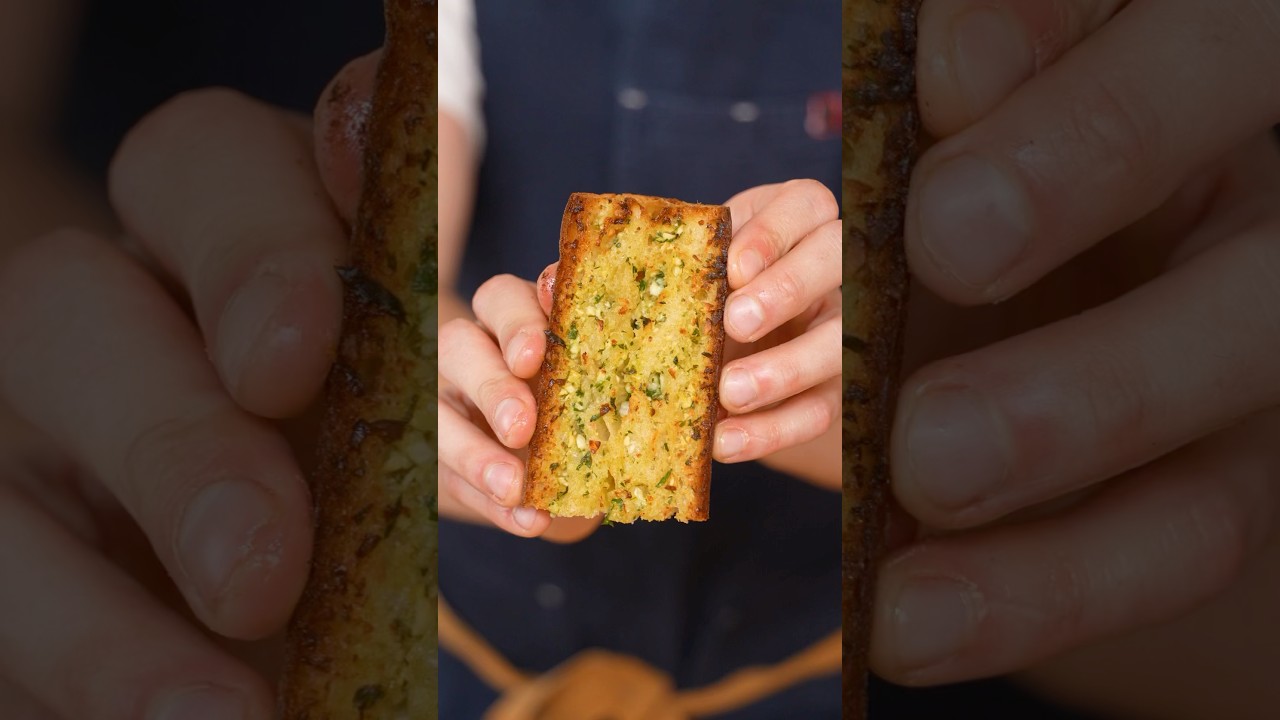
“Garlic bread has no business being as bad as it usually is. A few cloves of garlic, some butter, a baguette — and yet most versions come out either raw-tasting or burnt, either soaked in grease or bone dry. The failure is almost never the recipe. It's the garlic. Fresh versus powder is not a preference. It's the entire difference between garlic bread that makes people reach for a second piece and garlic bread that sits on the basket getting cold.”
Why This Recipe Works
Garlic bread sits at the intersection of two things people consistently overthink and underthink simultaneously. They overthink the bread — debating ciabatta versus sourdough versus baguette for twenty minutes — and underthink the garlic, reaching for the powder jar out of habit. The garlic is the recipe. Everything else is delivery infrastructure.
Fresh Garlic Is Not Negotiable
Raw garlic contains alliin, a sulfur compound that converts to allicin the moment a clove is cut or crushed. Allicin is responsible for the sharp, pungent, almost spicy character that makes garlic bread smell like garlic bread rather than seasoned toast. It's volatile, which means it releases into the air — and into the fat it's suspended in — during both the rest period and the bake.
Garlic powder contains none of this. The dehydration process destroys allicin, and the resulting powder is a pale approximation useful for background seasoning in a spice rub but incapable of carrying a dish where garlic is the entire point. This recipe uses both — fresh minced for flavor depth and a small amount of powder for uniform background heat — but the fresh garlic is doing the real work.
The Fat Infusion Window
Butter and garlic need time together before they see heat. The rest period — 5 to 10 minutes in the bowl — is not ceremonial. Allicin and the other aromatic compounds in garlic are fat-soluble, meaning they migrate into lipids more efficiently than into water. Room-temperature butter has enough fluidity to allow this transfer to begin before the oven finishes the job.
A pastry brush does more than distribute the mixture evenly — it forces the butter into the pores of the cut bread surface rather than letting it sit on top in thick pools. This is the difference between bread that tastes buttery throughout versus bread with saturated spots and dry patches.
The Parmesan Layer
Parmesan behaves differently from melting cheeses. Its low moisture content means it doesn't bubble and stretch — it dehydrates in the oven, concentrating its glutamate content and browning through the Maillard reaction into a thin, nutty crust that also incidentally shields the garlic beneath it from direct radiant heat. A byproduct of flavor is protection from burning. The cheese is doing two jobs.
The Herb Timing Problem
Fresh parsley is bright green because it contains chlorophyll. Chlorophyll degrades rapidly above 150°F, turning the herb from vivid to khaki in under four minutes of oven time. The volatile aromatic compounds that give fresh parsley its grassy, slightly peppery flavor are gone even faster. There is no scenario in which parsley benefits from being baked. It goes on immediately after the bread comes out, while the surface is still hot enough to wilt it slightly and release its oils on contact.
This is not a subtle distinction. Pre-baked parsley and post-baked parsley taste like different ingredients.
Bread Selection
The baguette is the standard for a reason: its thin, elongated shape means maximum crust-to-crumb ratio, and its relatively open crumb structure absorbs the garlic butter without becoming dense. A serrated bread knife is the only tool that splits it cleanly — any flat blade will compress the crumb and close the pores you need open to absorb the butter.
Ciabatta is the best substitute when baguettes aren't available. Its wide, flat profile and aggressively open crumb make it arguably superior for garlic bread — more surface area, more butter absorption, and a crust that crisps faster. Thick Italian loaves work but require longer baking times and tend to stay softer in the center, which is either a feature or a flaw depending on what you want.
The twenty minutes this recipe takes are not a ceiling on quality. They're just the floor.
Where Beginners Mess This Up
Before we start, read this. These are the 4 reasons your crispy homemade garlic bread (stop using garlic powder) will fail:
- 1
Using garlic powder instead of fresh garlic: Garlic powder is dehydrated, oxidized, and stripped of the volatile sulfur compounds that give fresh garlic its sharp, pungent bite. It produces a flat, one-dimensional flavor that reads as generic rather than garlicky. Fresh minced garlic blooms into the butter during the rest period and again in the oven, layering heat and aroma that powder cannot replicate.
- 2
Skipping the butter rest: Spreading garlic butter immediately after mixing produces uneven flavor — some bites taste like raw garlic, others like plain butter. Letting the mixture rest for 5-10 minutes at room temperature allows the garlic's aromatic compounds to fully infuse the fat. This is the step most people skip because it seems unnecessary. It is not.
- 3
Burning the garlic: Garlic contains natural sugars that caramelize quickly and turn bitter the moment they cross into burnt territory. At 375°F, you have a narrow window between golden and acrid. Watch the edges, not the center — when the perimeter of the bread turns light golden, the garlic is done. Two minutes past that and it's ruined.
- 4
Skipping the olive oil brush: Bare bread absorbs garlic butter unevenly, with the porous crumb soaking up all the fat and leaving the crust dry. A thin brush of olive oil before the butter goes on creates a barrier that distributes moisture more evenly and helps the crust crisp without turning greasy.
The Video Reference Library
Want to see it in action? Here are the exact videos we analyzed and combined to build this foolproof recipe translation:
The reference video that underpins this recipe. Clear technique on the butter-garlic infusion, proper browning cues, and the herb finish. Watch the final two minutes of baking closely — the color change happens fast.
🛠️ Core Equipment
- Serrated bread knifeEssential for splitting the baguette cleanly without crushing the interior crumb. A chef's knife compresses the loaf. A serrated blade cuts without pressure.
- Baking sheetProvides a stable, flat surface for even heat distribution underneath the bread. Placing the loaf directly on the oven rack works but can cause uneven browning on the underside.
- Pastry brushEnsures even coverage of both the olive oil barrier layer and the garlic butter. A knife spreads unevenly and builds up in the center. A brush coats every pore of the cut surface.
- Small mixing bowlFor combining and resting the garlic butter. The rest happens in the bowl — if you spread immediately off the cutting board, you lose the infusion window entirely.
Crispy Homemade Garlic Bread (Stop Using Garlic Powder)
🛒 Ingredients
- ✦1 Italian baguette or French bread loaf
- ✦5 tablespoons unsalted butter, softened to room temperature
- ✦6 cloves fresh garlic, minced finely
- ✦3 tablespoons fresh Italian parsley, chopped
- ✦2 tablespoons grated Parmesan cheese
- ✦1 tablespoon extra virgin olive oil
- ✦½ teaspoon kosher salt
- ✦¼ teaspoon freshly cracked black pepper
- ✦½ teaspoon garlic powder
- ✦½ teaspoon lemon zest, optional
👨🍳 Instructions
01Step 1
Preheat your oven to 375°F and position the rack in the upper-middle section for even browning.
02Step 2
Slice your baguette in half lengthwise to create two long, flat pieces ready for topping.
03Step 3
Combine the softened butter and minced garlic in a small bowl, stirring until thoroughly incorporated.
04Step 4
Add the kosher salt, black pepper, garlic powder, and lemon zest if using, mixing well to distribute seasonings evenly.
05Step 5
Let the garlic-butter mixture rest for 5 to 10 minutes at room temperature to allow flavors to meld and intensify.
06Step 6
Brush the cut sides of the bread lightly with olive oil to help prevent sogginess during baking.
07Step 7
Spread the garlic-butter mixture generously across both bread halves using a knife or pastry brush, ensuring even coverage all the way to the edges.
08Step 8
Sprinkle the grated Parmesan cheese evenly over the buttered bread surfaces.
09Step 9
Place the bread halves cut-side up on a baking sheet and bake for 8 to 10 minutes.
10Step 10
Watch carefully during the final 2 minutes. The edges should turn light golden brown but the garlic must never darken past amber.
11Step 11
Remove from the oven and immediately sprinkle the fresh chopped parsley over the warm bread.
12Step 12
Cool for 1 to 2 minutes before slicing crosswise into individual portions. Serve while still warm.
Nutrition Per Serving
Estimates based on standard preparation. Adjustments alter macros.
🔄 Substitutions
Instead of Unsalted butter...
Use Greek yogurt mixed with olive oil (3:2 ratio)
Tangier flavor with a lighter texture. Reduces saturated fat significantly. The yogurt won't brown the same way — expect a paler finish.
Instead of White Italian baguette...
Use Whole wheat or sprouted grain baguette
Nuttier, denser crumb. Increases fiber and lowers glycemic impact. Requires about 2 extra minutes of baking time due to denser structure.
Instead of Parmesan cheese...
Use Nutritional yeast
Dairy-free alternative with similar umami depth. Slightly milder and won't melt the same way. Add an extra tablespoon to compensate for the lower intensity.
Instead of Extra virgin olive oil...
Use Avocado oil
More neutral flavor and higher smoke point. Functionally identical in this recipe. Use if the olive oil flavor competes with your main dish.
🧊 Storage & Reheating
In the Fridge
Wrap leftover garlic bread tightly in foil and refrigerate for up to 2 days. The butter firms up but the flavor intensifies.
In the Freezer
Freeze assembled but unbaked garlic bread (butter already spread) wrapped in foil for up to 1 month. Bake directly from frozen at 375°F for 15-18 minutes.
Reheating Rules
Reheat in a 350°F oven, wrapped in foil, for 5-7 minutes. Unwrap for the last 2 minutes to re-crisp the edges. The microwave makes it soft and rubbery — avoid it.
❓ Frequently Asked Questions
Can I use garlic powder instead of fresh garlic?
Technically yes. In terms of results, you'll get something that tastes like garlic-flavored bread rather than garlic bread. Fresh garlic contains allicin and volatile sulfur compounds that bloom in fat and heat. Garlic powder is a dehydrated, oxidized shadow of that. Use both if you want — the powder adds background depth — but fresh is non-negotiable if the garlic is supposed to be the main event.
Why is my garlic bread soggy?
Two likely causes: butter that was too warm when applied (it soaks in rather than sitting on the surface), or covering the bread with foil for the entire bake. The olive oil barrier helps, but the most important fix is ensuring your butter is soft, not melted. Melted butter penetrates deeply and turns the crumb wet.
Can I make this ahead of time?
Yes — the garlic butter can be made up to 3 days ahead and refrigerated. You can also assemble the buttered bread, wrap it in foil, and refrigerate for up to 8 hours before baking. Bake directly from the fridge, adding 2-3 minutes to the total time.
How do I stop the garlic from burning?
Three things: mince finely so there are no large pieces that char faster than others, don't exceed 375°F, and watch the final 2 minutes actively. The Parmesan on top actually helps — it creates a slight insulating crust that slows direct heat exposure to the garlic underneath.
What bread works best if I can't find a baguette?
Ciabatta is the best substitute — wide, flat, and porous enough to absorb butter well with a crust that crisps beautifully. A standard Italian loaf works but is thicker, so increase baking time to 13-14 minutes. Avoid sandwich bread — it goes limp rather than crispy.
Should I add cheese before or after baking?
Parmesan goes on before baking. It needs heat to dehydrate and develop those nutty, browned notes that make it worthwhile. Mozzarella or provolone, if you're making a cheesier version, also go on before baking. Fresh parsley always goes on after — it turns gray and loses all aromatic value if it goes into the oven.
The Science of
Crispy Homemade Garlic Bread (Stop Using Garlic Powder)
We turned everything on this page into a beautiful, flour-proof PDF cheat sheet. Print it out, stick it to your fridge, and never mess up your crispy homemade garlic bread (stop using garlic powder) again.
*We'll email you the high-res PDF instantly. No spam, just perfectly cooked meals.
AlmostChefs Editorial Team
We translate the internet's most popular cooking videos into foolproof, beginner-friendly written recipes. We analyze multiple methods, test them in our kitchen, and engineer a single "Master Recipe" that gives you the best possible result with the least possible stress.