Gamjatang (Pork Bone Stew)
Massive pork spine bones simmered in a spicy, perilla-scented broth with potatoes and napa cabbage. Korea's most satisfying late-night stew.
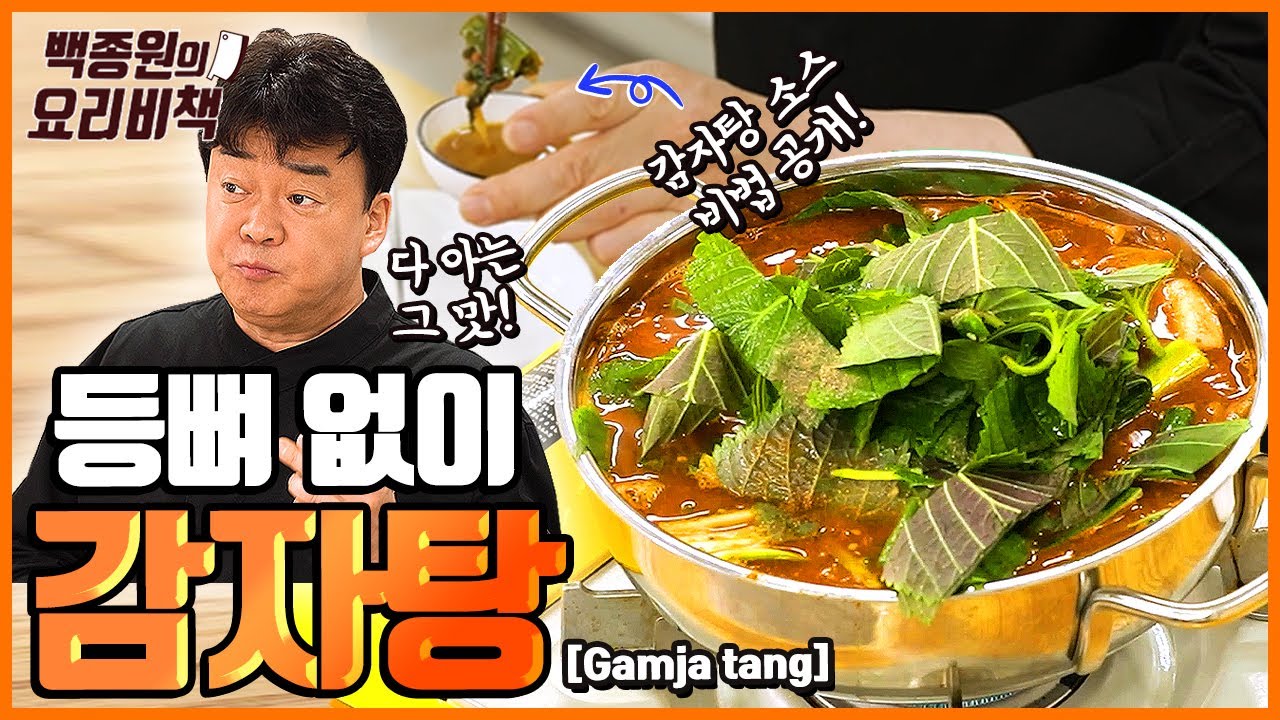
Why This Recipe Works
Most stews are lazy. They rely on one dimension of flavor — fat, or acid, or heat — and call it a day. Gamjatang does not have time for that. This is a stew that was engineered by necessity, built by generations of Korean cooks who understood that pork spine bones are cheap precisely because most people don't know what to do with them. Baek Jong Won does. And after you understand the physics of what's actually happening in that stockpot, you will too.
The Soak-Blanch Protocol Is Not Optional
Let's start with the part most home cooks skip because it looks like busywork. Soaking the pork spine bones in cold water for one to two hours, changing the water twice, is not a suggestion. Spine bones are riddled with crevices packed with blood and bone marrow fluid. That fluid, if left in the bone, will coagulate in hot water and turn your broth into a grey, funky, murky disappointment. The soak pulls it out passively.
Then you blanch. Cold water start — not boiling — because a cold water start allows the proteins to release gradually, pulling more impurities into the water before they seize and lock in. Bring it to a full boil, hold for ten minutes, then drain and rinse every single bone under cold running water. This is the step that separates gamjatang from pork bone soup. The stockpot you use for blanching goes straight into the sink. You start fresh.
Collagen Architecture
When you add the blanched bones to clean water and begin the long simmer, what you are doing is dissolving collagen. Pork spine bones — the vertebrae themselves — are structurally dense, laced with connective tissue and marrow channels. At a sustained medium simmer, that collagen hydrolyzes into gelatin, which suspends in the broth and gives it that characteristic body: thick without starch, rich without cream, glossy without reduction. The broth coats the back of a ladle in a way that thin broths never do. This is not accident. This is thirty minutes of deliberate low-and-slow extraction.
The potatoes enter at the forty-minute mark, not the beginning. This is precise. Potatoes that simmer for a full hour become structurally compromised — grainy, disintegrating, unable to absorb flavor because they've lost the cellular integrity to hold it. Added at fifteen minutes before the paste goes in, they par-cook to the edge of tender while maintaining their structure. When the spicy broth hits them in the final simmering phase, they act as sponges. Each halved potato becomes a vehicle for every layer of heat and fermented complexity in that broth. This is the whole point of the potato in gamjatang. Not texture. Not bulk. Flavor delivery.
The Triple Paste Mechanism
Here is where the chemistry gets interesting. The flavor base is not a single paste — it is three distinct fermented and dried chile products combined in a small bowl with broth before being introduced to the pot. Each does something specific.
Gochugaru — coarse Korean red pepper flakes — provides two things simultaneously: heat and color. The capsaicin delivers the slow, escalating burn that gamjatang is known for, and the natural pigments in the dried pepper turn the broth that deep, saturated red. Gochugaru alone, however, is flat. It has heat and color but almost no depth.
Gochujang — fermented red pepper paste — bridges the gap. The fermentation introduces lactic acid and a mild sweetness from the glutinous rice in the paste. The result is a rounded, complex heat that sits behind the direct fire of the gochugaru. This is the sweet-spicy dimension. Without it, the broth is aggressive but one-note.
Doenjang — Korean soybean paste — is the anchor. It is functionally similar to miso but fermented longer, more pungent, earthier. In the context of this broth, it contributes glutamates: free amino acids that activate umami receptors and create the sensation that the broth has been simmering for eight hours even when it hasn't. The doenjang doesn't taste like doenjang in the finished stew. It dissolves into the background and makes everything else taste more like itself.
Combining all three in the small bowl with a ladle of hot broth before adding to the pot is not just a mise en place habit. It tempers the pastes, prevents scorching on the bottom of the pot, and ensures even distribution through the broth rather than clumps of concentrated paste settling near the heat source.
Perilla Seed Powder: The Non-Negotiable
Deulkkae-garu — perilla seed powder — does two things that nothing else in this recipe does. First, it thickens the broth slightly, adding a faint viscosity that makes the liquid cling to the bone meat and potato surfaces rather than running off. Second, it introduces a flavor profile that is genuinely irreplaceable: nutty like sesame but more herbaceous, more complex, with a faint bitterness that cuts through the richness of the marrow and fat.
If you omit the perilla seed powder, you have made spicy pork bone soup. Technically competent. Possibly delicious. But not gamjatang. The name carries specific expectations, and perilla seed powder is part of what fulfills them.
Why This Is a 2 AM Dish
Gamjatang restaurants in Korea cluster near nightlife districts deliberately. The dish is restorative in a specific physiological way: high collagen broth replenishes glycine, the spice opens the sinuses and raises core temperature, the protein from bone-adjacent pork meat stabilizes blood sugar, and the potatoes deliver slow carbohydrates. It is, by design, recovery food. The fact that it happens to taste extraordinary is almost beside the point — though it doesn't hurt.
Baek Jong Won's version doesn't simplify any of this. It respects the process. The soak, the blanch, the triple paste, the perilla seed powder. Every step is load-bearing. Remove one and the structure collapses. Follow all of them and the stockpot on your stove produces something that tastes like it came from a restaurant that has been perfecting this dish for thirty years. Because it did. Baek Jong Won just gave you the blueprint.
Gamjatang (Pork Bone Stew)
🛒 Ingredients
- ✦2 lbs pork spine bones (or pork neck bones)
- ✦6 cups water
- ✦2 medium potatoes, peeled and halved
- ✦4 napa cabbage leaves, roughly chopped
- ✦2 tablespoons gochugaru (Korean red pepper flakes)
- ✦1 tablespoon gochujang (Korean red pepper paste)
- ✦1 tablespoon doenjang (Korean soybean paste)
- ✦2 tablespoons soy sauce
- ✦4 cloves garlic, minced
- ✦1 tablespoon perilla seed powder (deulkkae-garu)
- ✦1 teaspoon fresh ginger, grated
- ✦2 green onions, sliced
- ✦1 Korean green chili, sliced
- ✦Perilla leaves (kkaennip), 4-5 leaves (optional)
- ✦Salt and pepper to taste
👨🍳 Instructions
01Step 1
Soak pork spine bones in cold water for 1-2 hours, changing water twice. This removes blood and impurities.
02Step 2
Blanch bones: Place in a pot of cold water, bring to a boil, boil for 10 minutes. Drain, rinse each bone under cold water.
03Step 3
In a clean pot, add blanched bones and 6 cups fresh water. Add garlic, ginger, and soy sauce. Bring to a boil, then reduce to medium. Simmer for 30 minutes.
04Step 4
Add potatoes. Continue simmering for 15 minutes until potatoes are almost tender.
05Step 5
In a small bowl, mix gochugaru, gochujang, and doenjang with a ladle of broth to make a paste. Stir this paste into the pot.
06Step 6
Add napa cabbage, green chili, and perilla seed powder. Simmer for 10 more minutes.
07Step 7
Garnish with green onions and perilla leaves. Serve in the pot with steamed rice.
Nutrition Per Serving
Estimates based on standard preparation. Adjustments alter macros.
🔄 Substitutions
Instead of Pork spine bones...
Use Pork neck bones
More meat, slightly less collagen — equally delicious
Instead of Perilla seed powder...
Use Toasted sesame seeds, ground
Different flavor but adds nuttiness — perilla is more earthy and herbaceous
Instead of Napa cabbage...
Use Bok choy
Smaller, more tender — add in the last 5 minutes
🧊 Storage & Reheating
In the Fridge
Store for 3-4 days. Reheat with potatoes already in — they absorb more broth flavor.
In the Freezer
Freeze for up to 2 months. Potatoes may get slightly grainy after freezing.
Reheating Rules
Reheat in a pot until bubbling. Add water if the broth has thickened.
❓ Frequently Asked Questions
What are pork spine bones?
The vertebrae from the pig's backbone, cut into individual segments. Each piece has meat clinging to the bone, plus marrow inside the vertebra. Korean and Latin butcher shops sell them cheaply — ask for 'pork neck bones' or 'pork spine.' They're often under $2/lb, making gamjatang one of the most economical Korean stews.
What does perilla seed powder taste like?
Nutty, earthy, and slightly herbaceous — like sesame but deeper and more complex. It's ground from perilla seeds (same plant as perilla leaves/kkaennip). In gamjatang, it thickens the broth slightly and adds a distinctive aroma that's immediately recognizable to any Korean.

The Science of
Gamjatang (Pork Bone Stew)
We turned everything on this page into a beautiful, flour-proof PDF cheat sheet. Print it out, stick it to your fridge, and never mess up your gamjatang (pork bone stew) again.
*We'll email you the high-res PDF instantly. No spam, just perfectly cooked meals.
AlmostChefs Editorial Team
We translate the internet's most popular cooking videos into foolproof, beginner-friendly written recipes. We analyze multiple methods, test them in our kitchen, and engineer a single "Master Recipe" that gives you the best possible result with the least possible stress.