Galbi Jjim (Korean Braised Short Ribs That Actually Go Tender)
Traditional Korean braised short ribs in a sweet-savory soy sauce with radish, carrots, and peppers. We analyzed the most popular Korean YouTube methods — including the kkotchu 'divine move' — to build one foolproof technique that nails tender, glossy ribs every time.

“Most galbi jjim fails for the same two reasons: ribs that weren't soaked long enough still taste like blood and iron underneath all that sauce, and vegetables added too early turn into mush that collapses before the ribs are even tender. The fix for both is pure timing. We broke down the most-viewed Korean YouTube methods to give you the exact sequence — when to add what, how long to soak, when to skim — so your ribs come out glossy, fall-off-the-bone tender, and worthy of a holiday table.”
Why This Recipe Works
Galbi jjim is Korea's answer to the question every culture eventually asks: what do you do with the toughest, most collagen-dense cut of beef to make it worthy of a celebration table? The answer, arrived at over centuries, is patience. But patience without technique is just waiting. The technique is what separates the galbi jjim that makes guests go quiet from the one that's merely adequate.
The Soak Is Non-Negotiable
Short ribs are cut through the bone, which means every piece has exposed bone cavities — and those cavities are full of blood. This is not a hygiene issue. It's a flavor issue. Blood that stays inside the bone during braising cooks at the same temperature as everything else and leaches directly into your sauce. The result is a metallic undertone that hides underneath all that soy sauce and sugar until you sit with it for a moment and realize something's off.
The fix is cold water and time. Blood moves out of the bone through osmotic pressure when submerged in fresh water. Change the water when it turns pink — usually two or three times over the course of an hour. The ribs are ready to cook when the water stays mostly clear. This is the step most recipes mention in passing and most home cooks abbreviate. Don't.
The Kkotchu Secret
The original video calls this a "divine move" — and it is. Small Korean peppers added to the braise don't just provide color. They release capsaicin-adjacent compounds that interact with the collagen in the ribs, and they introduce just enough heat to cut through the sweetness of the soy-sugar sauce without making the dish spicy. The result tastes more complex and less one-dimensional than galbi jjim made without them. If you can't find kkotchu, a small amount of red bell pepper gets you the color. It doesn't get you the effect. Worth sourcing.
The Vegetable Sequencing Problem
Every ingredient in galbi jjim has a different cook time, and the window between "perfectly tender" and "collapsed mush" is narrow for each of them. Korean radish (mu) is the slowest — it needs almost as much time as the ribs themselves. A good heavy Dutch oven is your friend here: even heat means the radish sitting on the bottom cooks at the same rate as the pieces on top.
Carrots are deceptive. They look like they'll take forever and then turn tender faster than you expect. Onions should keep their shape entirely — they go in only when the ribs are about 90% done, roughly 15-20 minutes from the end. Peppers are last, with just 5 minutes of residual heat to soften them slightly while keeping their color and bite.
Get this sequence wrong and you'll have ribs that are perfectly tender surrounded by disintegrated vegetables — which is both a textural failure and a presentation failure, since galbi jjim is a dish you're supposed to be proud to put on the table.
The Sauce Is Made by Time, Not Technique
There is no roux in galbi jjim. No cornstarch slurry. The glossy, lightly thickened sauce that coats a properly made version comes entirely from the collagen in the bones, which converts to gelatin over the course of the braise and binds the liquid into something that clings. This only happens if you give it enough time and enough heat — a tepid simmer doesn't do it.
The practical implication: don't panic if the sauce looks thin at the 60-minute mark. It thickens as it reduces. If it's still too thin when the ribs are done, pull the ribs out, raise the heat, and reduce the sauce for 5-10 minutes uncovered until it coats a spoon. Pour it back over. It will be right.
Presentation Is Part of the Recipe
This dish is made for holidays and guests. The original video spends time on plating — and that's not vanity. Arranging the ribs with intention, placing the vegetables by color, and adding a scatter of sesame seeds signals to the people you're feeding that this meal was made for them specifically. That signal matters. It changes how food tastes.
Where Beginners Mess This Up
Before we start, read this. These are the 4 reasons your galbi jjim (korean braised short ribs that actually go tender) will fail:
- 1
Skipping or rushing the blood soak: Short ribs contain trapped blood inside the bone cavities that won't release in a quick rinse. If you don't soak the ribs in cold water until the water runs clear — changing it at least twice — that iron-heavy liquid cooks into the sauce and leaves a metallic undertone no amount of soy sauce can cover. Minimum soak: 1 hour. Frozen ribs need longer.
- 2
Adding onions and peppers too early: Onions added at the start dissolve into the braising liquid and disappear. They should go in only when the ribs are about 90% tender — roughly 15-20 minutes before the end. Peppers and any bell peppers go in even later, in the final 5 minutes. They're meant to retain texture and color, not cook down.
- 3
Not adjusting water as it reduces: Galbi jjim braising time varies significantly by pot depth, width, and heat source. A wide pan on a gas burner loses liquid fast. A deep narrow pot on an induction cooktop holds it longer. Watch the liquid level and add small amounts of water if it reduces below the halfway mark before the ribs are tender.
- 4
Adding mu (radish) and carrots at the same time: Radish takes nearly as long as the ribs to become properly tender — it goes in early. Carrots cook faster than you expect and go in about 20 minutes later. Add them together and one will be mush while the other is still hard.
The Video Reference Library
Want to see it in action? Here are the exact videos we analyzed and combined to build this foolproof recipe translation:
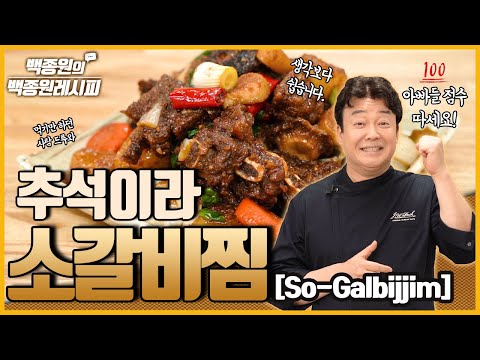
The source video for this recipe, with meticulous attention to soaking technique, the kkotchu timing tip, and vegetable sequencing. Essential watch for understanding why the order of additions matters.
2. Korean Braised Short Ribs Holiday Version
Focused on the sauce balance and achieving the deep mahogany glaze that signals proper reduction. Good reference for sauce-to-rib ratios.
3. Galbi Jjim for BeginnersStrips the recipe to its essentials and explains the vegetable timing sequence clearly. Best for first-timers who want to understand the logic before attempting the full method.
🛠️ Core Equipment
- Heavy-bottomed braising pot or Dutch ovenEven heat distribution across the base prevents the bottom layer of ribs from scorching while the top stays underdone. A thin pot creates hot spots that burn the sauce before the ribs are tender.
- Fine-mesh skimmer or ladleBecause these ribs are rinsed rather than pre-boiled, significant foam and blood rise to the surface in the first 10 minutes of cooking. You must skim it off or it clouds the sauce and adds a bitter undertone.
- Large bowl for soakingYou need enough water volume to actually dilute and draw out the blood from the bone cavities. A small bowl concentrates the bloody water back against the meat. Go large.
Galbi Jjim (Korean Braised Short Ribs That Actually Go Tender)
🛒 Ingredients
- ✦3 pounds (1.4 kg) bone-in beef short ribs, cut into 2-inch pieces (galbi jjim-yong / 갈비찜용)
- ✦1/3 cup (80ml) soy sauce (ganjang / 간장)
- ✦3 tablespoons sugar (any type — white, brown, or raw all work)
- ✦2 tablespoons sesame oil (chamgireum / 참기름)
- ✦5 cloves garlic, minced (maneul / 마늘)
- ✦3 stalks green onion, cut into 2-inch pieces (pa / 파)
- ✦1 medium Korean radish (mu / 무), about 1 pound, cut into 1.5-inch cubes
- ✦2 medium carrots, cut into 1-inch chunks
- ✦1 medium yellow onion, cut into large wedges (yangpa / 양파)
- ✦4-6 small Korean peppers (kkotchu / 꼬추), or substitute 1/2 red bell pepper
- ✦4 jujubes (daechu / 대추), optional
- ✦1/2 Korean pear or Asian pear, grated (optional, for tenderizing)
- ✦2 cups (480ml) water, plus more as needed
- ✦Sesame seeds and sliced green onion for garnish
👨🍳 Instructions
01Step 1
Place the short ribs in a large bowl of cold water and soak for at least 1 hour, changing the water 2-3 times until it runs mostly clear. If the ribs are frozen, soak until fully thawed.
02Step 2
Drain the ribs and pat dry. In a large bowl, combine soy sauce, sugar, sesame oil, garlic, green onions, and grated pear (if using). Add the ribs and toss to coat thoroughly.
03Step 3
Transfer the ribs and all marinade to a heavy-bottomed pot. Add 2 cups of water. Bring to a boil over high heat.
04Step 4
As soon as the liquid boils, significant gray-brown foam will rise. Skim it off continuously for the first 5-8 minutes with a ladle or skimmer until the foam stops forming. Reduce heat to medium.
05Step 5
Add the Korean radish pieces. Cover partially and cook at a steady simmer for 20 minutes.
06Step 6
Add the carrot pieces. Continue simmering, partially covered, for another 20 minutes. Check the liquid level — if it has reduced below the halfway point, add water in 1/4 cup increments.
07Step 7
Add the jujubes if using. Continue simmering until the ribs are about 90% tender — the meat should be pulling away from the bone but still holding its shape, about 15-20 more minutes.
08Step 8
Add the onion wedges. Cook for 10 minutes — the onions should soften but keep their structure.
09Step 9
Add the kkotchu or bell pepper strips. Cook for a final 5 minutes. The sauce should now be reduced to a glossy, lightly thickened consistency that coats the ribs.
10Step 10
Taste and adjust seasoning with soy sauce or a pinch of sugar if needed.
11Step 11
Plate by placing the ribs first, then arranging the vegetables over and around them by color. Garnish with sesame seeds and sliced green onion. Serve immediately with steamed rice.
Nutrition Per Serving
Estimates based on standard preparation. Adjustments alter macros.
🔄 Substitutions
Instead of Korean radish (mu)...
Use Daikon radish
Nearly identical. Daikon is the Japanese variety of the same vegetable — same texture, same behavior in braises. Use 1:1.
Instead of Kkotchu (small Korean peppers)...
Use Red or green bell pepper
Loses the subtle heat but keeps the color. Add bell pepper even later than kkotchu — just the final 3-4 minutes — since it softens faster.
Instead of Korean pear...
Use Asian pear or a small amount of kiwi
Both contain tenderizing enzymes. Kiwi is significantly more aggressive — use only 2 tablespoons of grated kiwi and limit marinating time to 30 minutes or the meat texture becomes mealy.
Instead of Jujubes (daechu)...
Use Medjool dates (halved, pitted)
Dates are sweeter and softer than jujubes. Use 2 dates instead of 4 jujubes and add them later in cooking so they don't dissolve entirely.
🧊 Storage & Reheating
In the Fridge
Store in an airtight container for up to 4 days. Galbi jjim is one of the rare dishes that genuinely improves overnight as the collagen sets into a light gel that coats the ribs.
In the Freezer
Freeze in portions for up to 3 months. The braising liquid freezes beautifully and protects the meat from freezer burn. Thaw overnight in the refrigerator.
Reheating Rules
Reheat covered in a pot over low heat with 2-3 tablespoons of water. Stir gently and let it come up slowly — high heat tightens the meat. Microwave works but dries out the exterior of the ribs.
❓ Frequently Asked Questions
Why do I need to soak the ribs at all? Can't I just rinse them?
A quick rinse removes surface blood but not the blood trapped inside the bone cavities. That internal blood only releases through the osmotic pressure of a long cold water soak. If you skip it, the trapped blood cooks into the sauce during braising and adds a metallic, iron-heavy undertone that soy sauce and sugar can mask but not eliminate.
What's the difference between galbi jjim and other braised rib dishes?
Galbi jjim uses a soy-based sauce with a significant sugar component and sesame oil, producing a sweet-savory glaze rather than a wine or tomato-forward braise. The vegetables — radish, carrots, jujubes — are also characteristic. The dish is intentionally sweeter and more aromatic than Western braises, and the bone-in cut is essential to the flavor.
My ribs are tough after 90 minutes. What went wrong?
Either the heat was too low (a gentle simmer, not a real simmer — look for steady small bubbles), or the ribs were too large and needed more time. Short ribs vary significantly in thickness. Add water if needed and keep going — collagen conversion from tough to tender is not reversible, but it does take time. Don't rush by raising the heat, which tightens the muscle fibers.
Can I make this in a pressure cooker or Instant Pot?
Yes. After skimming the foam (do this in sauté mode first), pressure cook on high for 35 minutes with a natural release. Add onions, peppers, and any quick-cooking vegetables after pressure cooking, then simmer uncovered on sauté mode for 10 minutes to reduce the sauce.
Why does the recipe call for adding vegetables in stages?
Each vegetable has a different cook time. Radish needs the most time — close to as long as the ribs. Carrots are faster. Onions should retain some bite and go in near the end. Peppers are meant to be barely cooked and go in last. Add them all at once and you get some that are perfect and others that are mush or still raw.
Is galbi jjim supposed to be spicy?
Traditional galbi jjim is sweet and savory, not spicy. The kkotchu peppers add a very mild warmth — more aromatic than hot. If you want heat, add gochugaru (Korean red pepper flakes) to the marinade, starting with 1 tablespoon and adjusting to taste.

The Science of
Galbi Jjim (Korean Braised Short Ribs That Actually Go Tender)
We turned everything on this page into a beautiful, flour-proof PDF cheat sheet. Print it out, stick it to your fridge, and never mess up your galbi jjim (korean braised short ribs that actually go tender) again.
*We'll email you the high-res PDF instantly. No spam, just perfectly cooked meals.
AlmostChefs Editorial Team
We translate the internet's most popular cooking videos into foolproof, beginner-friendly written recipes. We analyze multiple methods, test them in our kitchen, and engineer a single "Master Recipe" that gives you the best possible result with the least possible stress.