The Real LA Galbi (Why Your Marinade Tastes Flat)
LA-style Korean short ribs marinated in a deep soy-based sauce with garlic, sesame, and optional pear for restaurant-level complexity. We extracted the technique from a Korean BBQ veteran's transcript to fix every step home cooks skip — including the one that causes the marinade to burn.

“LA galbi is a holiday dish in Korea for a reason — when it's right, it's one of the most satisfying things you can cook on a stovetop. When it's wrong, you get burned marinade, rubbery ribs, and a pan full of acrid smoke. The difference comes down to three things almost no recipe talks about: removing bone fragments from machine-cut ribs, understanding when to add water during cooking, and knowing what separates a home marinade from a restaurant one.”
Why This Recipe Works
LA galbi is not a forgiving dish — it is a precision calibration between fat, sugar, salt, and heat. Get one variable wrong and you have burned meat, bland meat, or both. The reason most homemade versions fall short of what you'd eat at a Korean BBQ restaurant isn't the marinade recipe. It's the preparation steps that every recipe assumes you already know.
The Machine Cut Problem
Regular galbi is cut parallel to the bone by hand. LA galbi is cut perpendicular to the bone by machine — a band saw moving through the entire rack horizontally. This creates the distinctive wide, thin flanken slices with multiple small bone cross-sections, and it produces something no recipe mentions: bone dust. The machine doesn't cut cleanly through bone the way a knife does. It grinds. That grinding leaves calcium particles and bone fragments embedded in the meat surface, particularly at the bone ends.
Run your thumb along the bone ends of uncleaned LA galbi. You'll feel something like coarse sand. That's what you're removing with the cold water rinse and surface rub. The tactile test is the only reliable way to know you've done it thoroughly enough — the surface goes from gritty to smooth and clean. Skip this step and you're adding a mineral, chalky texture to every bite that you'll blame on the beef quality rather than the prep.
Blood and Marinade Chemistry
Myoglobin — the protein that gives red meat its color — is water-soluble. That means the 30-minute cold water soak draws it out of the meat before the marinade goes on. Why does this matter? Because when blood-laden meat hits soy sauce, the proteins in the blood interact with the salt and begin to coagulate at the surface, creating a thin barrier that actually slows marinade penetration. The visual sign: soaking water turns pink, then clears. Clear water means the myoglobin has been extracted and the meat is ready to absorb rather than repel the marinade.
The Marinade Architecture
Korean BBQ marinades follow a specific flavor logic: soy sauce provides salt and umami, sugar or corn syrup provides sweetness and glaze, garlic provides pungency, sesame adds nuttiness, and the liquid ratio determines how far the salt migrates into the meat over time. The doenjang (fermented soybean paste) is a subtle addition — just a teaspoon — but it contributes a background fermented depth that anchors the other flavors without being identifiable on its own.
The restaurant upgrade isn't complicated. Freshly grated Korean pear contains proteolytic enzymes — the same class of compounds used in commercial meat tenderizers — that gently break down muscle fibers at the surface. The effect is subtle but real: the exterior of properly pear-marinated galbi has a silkier texture than plain soy marinade. The critical constraint is freshness. The enzymes denature quickly once the pear is cut and exposed to air. Pre-made pear juice has been heat-processed, killing the enzymes entirely — it adds sweetness but no tenderizing. Grate the pear directly into the marinade at mixing time.
Acacia honey matters because it's mild. Other honey varieties — clover, wildflower, buckwheat — introduce floral or bitter notes that compete with the soy-sesame base. Acacia honey has the most neutral profile of any widely available variety, adding sweetness and gloss without layering competing flavors on top.
The Fat Rendering Principle
This is the technique that separates passable stovetop galbi from the real thing. LA galbi has visible white fat interlaced through the flanken cut. That fat needs to melt out into the pan before the sugar in the marinade caramelizes into a glaze — if the sugar hits dry heat first, it burns while the fat is still solid underneath the surface, producing black, bitter edges and an acrid smell.
The fix is three tablespoons of water in a hot cast iron skillet before the ribs go in. The water lowers the immediate surface temperature just enough to allow the fat to begin rendering. As the water evaporates — which happens fast — the fat has already started melting out and is now acting as the cooking medium. The marinade then caramelizes in fat rather than direct pan heat, producing the deep mahogany glaze you're after. Add small water splashes if the pan looks dry before the fat is fully rendered.
The final color is your signal. You're looking for a glossy, deep brown-black glaze on the edges with no raw marinade remaining in the pan and clean separation at the bone cut points. That's when it's done.
Where Beginners Mess This Up
Before we start, read this. These are the 4 reasons your the real la galbi (why your marinade tastes flat) will fail:
- 1
Skipping the bone fragment rinse: LA galbi is cut horizontally across the bone by machine, not knife. This process grinds the bone ends and leaves microscopic calcium shards and bone dust embedded in the meat surface. Rinsing under cold water and rubbing the surface removes this grit. You'll feel the difference — the surface goes from faintly rough to clean and smooth. Skipping this step means you're eating bone dust with every bite.
- 2
Not soaking out the blood: After rinsing, the ribs need at least 30 minutes in cold water to draw out the blood. Blood mixes into the marinade and makes the final flavor muddy and slightly metallic. The water will turn pink — that's what you're removing. Change it once if you have time. This step is why properly prepared galbi tastes cleaner and more complex than the version you make when you're in a hurry.
- 3
Cooking without water in the pan: LA galbi has significant white fat embedded in the flanken cut. That fat needs time to render before the marinade caramelizes — otherwise the marinade burns before the fat has released, and you end up with blackened, bitter edges and raw fat underneath. Adding a splash of water to the pan at the start slows the surface caramelization just enough to let the fat melt out first. The fat then becomes your cooking medium.
- 4
Under-marinating and adjusting for timing: The marinade intensity needs to match when you plan to eat. Cooking immediately after marinating requires a stronger brine because the salt hasn't had time to penetrate. Cooking after overnight rest requires a lighter hand because the salt has fully migrated into the meat. Most people make galbi the same way regardless of timing and wonder why it's too salty or too bland depending on the day.
The Video Reference Library
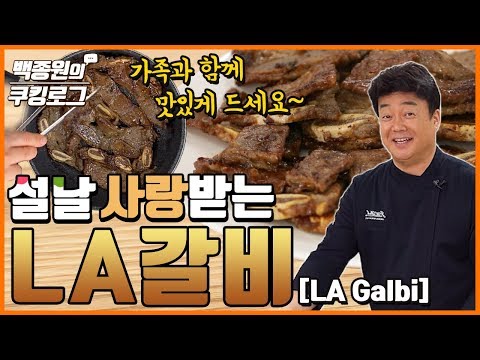
Want to see it in action? Here are the exact videos we analyzed and combined to build this foolproof recipe translation:
🛠️ Core Equipment
- Heavy-bottomed skillet or cast iron panEven heat distribution is critical for LA galbi. The marinade is high in sugar and will burn in hot spots before the center pieces cook through. A [cast iron skillet](/kitchen-gear/review/cast-iron-skillet) handles the fat rendering and caramelization without scorching.
- Large container with lid for marinatingLA galbi pieces are wide and flat. They need to be arranged standing upright or in a single layer so the marinade coats every surface. A shallow container works better than a bowl — the ribs stay submerged rather than floating.
- Fine-mesh sieve or colanderFor draining the blood-soaking water and patting the ribs dry before marinating. Wet ribs dilute the marinade on contact and prevent proper penetration.
- Box grater or microplaneFor grating fresh pear if using the restaurant-quality upgrade. The pear must be freshly grated at the time of marinade mixing — pre-made pear juice behaves differently and doesn't provide the same enzymatic tenderizing effect.
The Real LA Galbi (Why Your Marinade Tastes Flat)
🛒 Ingredients
- ✦2 pounds LA galbi (flanken-cut short ribs, machine-cut horizontally)
- ✦3 cups ganjang (Korean soy sauce)
- ✦1 tablespoon guk-ganjang (soup soy sauce)
- ✦1 teaspoon doenjang (fermented soybean paste)
- ✦6 cloves garlic, minced (about 1/4 the volume of soy sauce)
- ✦1/2 cup mirin (미향 brand) or Chungha rice wine
- ✦3 tablespoons white sugar
- ✦3 tablespoons corn syrup or oligo syrup (물엿)
- ✦1 teaspoon fresh ginger, grated
- ✦2 tablespoons sesame oil
- ✦1 tablespoon toasted sesame seeds
- ✦6 scallions, finely chopped (use generously)
- ✦3 cups water
- ✦1 teaspoon ground black pepper
- ✦1/2 small Korean pear, freshly grated (optional, for restaurant-level upgrade)
- ✦1 tablespoon acacia honey (optional, for restaurant-level upgrade)
- ✦1 teaspoon small-batch onion juice (optional)
👨🍳 Instructions
01Step 1
Rinse the LA galbi pieces under cold running water, rubbing each piece firmly with your fingers to remove bone dust and fragments from the machine cut. The surface should feel smooth and clean, not gritty.
02Step 2
Place rinsed ribs in a large container and cover completely with cold water. Soak for at least 30 minutes to draw out the blood. Change the water once halfway through if the water runs very pink.
03Step 3
Drain the ribs, rinse once more, and pat dry with paper towels. Check the surface one more time for remaining fragments.
04Step 4
Finely chop the scallions. Use more than feels right — the scallions are a primary flavor component, not a garnish.
05Step 5
In a large bowl, combine soy sauce, soup soy sauce, doenjang, minced garlic, mirin, sugar, corn syrup, grated ginger, sesame oil, sesame seeds, black pepper, and water. Add scallions. If using the restaurant upgrade, add freshly grated pear, acacia honey, and onion juice now.
06Step 6
Stir the marinade well until the sugar and corn syrup are fully dissolved. The liquid should be uniform in color with no sugar crystals visible at the bottom.
07Step 7
Stand the galbi pieces upright in a deep container or layer them flat in a single layer. Pour marinade over until all surfaces are thoroughly coated. Press down to submerge.
08Step 8
Cover and refrigerate for a minimum of 2-3 hours. Overnight is better. The ribs will turn a deep brown-black color — this is correct and expected.
09Step 9
When ready to cook, heat a heavy-bottomed skillet or cast iron pan over medium-high heat. Before adding the ribs, add 3-4 tablespoons of water directly to the hot pan.
10Step 10
Place marinated ribs in the pan. Cook over medium heat, adding small splashes of water as needed when the pan looks dry. Move pieces around and stack finished pieces to one side as you work through batches.
11Step 11
Continue cooking until the liquid reduces completely, the fat has rendered and become the cooking medium, and the ribs develop deep caramelized edges with a glossy mahogany glaze. The bones should separate cleanly at the cut points.
12Step 12
Remove from heat and serve immediately. The bones are meant to be gnawed — that's the point.
Nutrition Per Serving
Estimates based on standard preparation. Adjustments alter macros.
🔄 Substitutions
Instead of Mirin (맛술)...
Use Chungha Korean rice wine (청하) or omit entirely
Some mirin brands have strong sour or alcoholic notes that destabilize the marinade's sweet-savory balance. If you're not using a 미향 (mihyang) labeled product, Chungha is the cleaner substitute. Omitting mirin entirely produces a slightly less complex marinade but doesn't ruin it.
Instead of White sugar...
Use 1:1 ratio of sugar and corn syrup (물엿)
The corn syrup adds a glossy finish and deeper sweetness that plain sugar can't replicate. The 1:1 ratio produces a noticeably richer glaze during cooking. Oligo syrup works identically.
Instead of Korean pear (배)...
Use Ripe Bosc or Asian pear
Must be freshly grated at marinade time — not pear juice, not pre-grated pear that's been sitting. The enzymatic activity that tenderizes the meat degrades quickly once the pear is cut. Freshly grated pear also adds subtle floral flavor that juice cannot.
Instead of Doenjang (된장)...
Use Omit if unavailable
Doenjang adds fermented depth and umami to the background of the marinade. It's a subtle note, not a dominant one. Omitting it produces a slightly less complex marinade but the dish remains recognizable and delicious.
🧊 Storage & Reheating
In the Fridge
Cooked galbi keeps in an airtight container for up to 3 days. The glaze firms up in the fridge — this is normal. Raw ribs can be kept in the marinade for up to 5 days before cooking.
In the Freezer
Freeze raw marinated ribs in the marinade for up to 2 months. They cook directly from thawed state with no quality loss. Cooked galbi can also be frozen for up to 1 month.
Reheating Rules
Reheat cooked galbi in a covered pan with a tablespoon of water over medium-low heat for 5-7 minutes. The moisture reconstitutes the glaze. Microwave reheating works in a pinch but dries the edges.
❓ Frequently Asked Questions
Why is my galbi marinade burning before the meat cooks through?
You're cooking without water. LA galbi has significant white fat that needs to render before the marinade sugar caramelizes. Add 3-4 tablespoons of water to the hot pan before the ribs go in. The water delays surface caramelization just long enough for the fat to melt out. That fat then becomes the cooking medium and the marinade caramelizes properly on top of it.
Why does LA galbi have small bone fragments in it?
LA galbi is cut horizontally across the bone using a machine saw, not a knife. This creates the characteristic thin, flanken-style slices — but it also grinds the bone ends and leaves bone dust and microscopic fragments embedded in the meat surface. Thorough rinsing under cold water and rubbing the surface removes them. This is not a quality issue with the meat; it's inherent to the cutting method.
How long should I marinate the ribs?
Minimum 2-3 hours. Overnight is better. The key variable is when you plan to eat: if cooking within 5 hours of marinating, make the marinade slightly saltier because the salt hasn't fully penetrated yet. If cooking after overnight rest, the salt has fully migrated into the meat and a lighter marinade hand is appropriate. Most marinade failures trace back to ignoring this timing relationship.
What makes restaurant galbi taste different from homemade?
Three things: freshly grated Korean pear for enzymatic tenderizing and subtle floral flavor, acacia honey specifically (not general honey), and usually a small amount of MSG for depth and roundness. The chef in the source recipe is transparent about this — restaurant kitchens almost universally use MSG in galbi, and acknowledging it demystifies the flavor gap.
Can I grill LA galbi instead of pan-cooking it?
Yes, but the water technique doesn't apply on a grill. On a charcoal or gas grill, the fat drips away rather than rendering into a cooking medium. The result is delicious but drier — compensate by basting with reserved marinade during cooking. Grill over medium heat, not high, to avoid scorching the sugar.
What's the difference between LA galbi and regular galbi?
The cut. Regular galbi (English-cut short ribs) is cut parallel to the bone, producing thick individual rib pieces. LA galbi is cut perpendicular to the bone — horizontally across the rack — producing thin, wide strips with three to four small bone cross-sections visible. The LA cut exposes more meat surface to marinade and cooks faster. The name comes from the cutting technique popularized in the Korean-American community in Los Angeles, not the city itself.
The Science of
The Real LA Galbi (Why Your Marinade Tastes Flat)
We turned everything on this page into a beautiful, flour-proof PDF cheat sheet. Print it out, stick it to your fridge, and never mess up your the real la galbi (why your marinade tastes flat) again.
*We'll email you the high-res PDF instantly. No spam, just perfectly cooked meals.
AlmostChefs Editorial Team
We translate the internet's most popular cooking videos into foolproof, beginner-friendly written recipes. We analyze multiple methods, test them in our kitchen, and engineer a single "Master Recipe" that gives you the best possible result with the least possible stress.