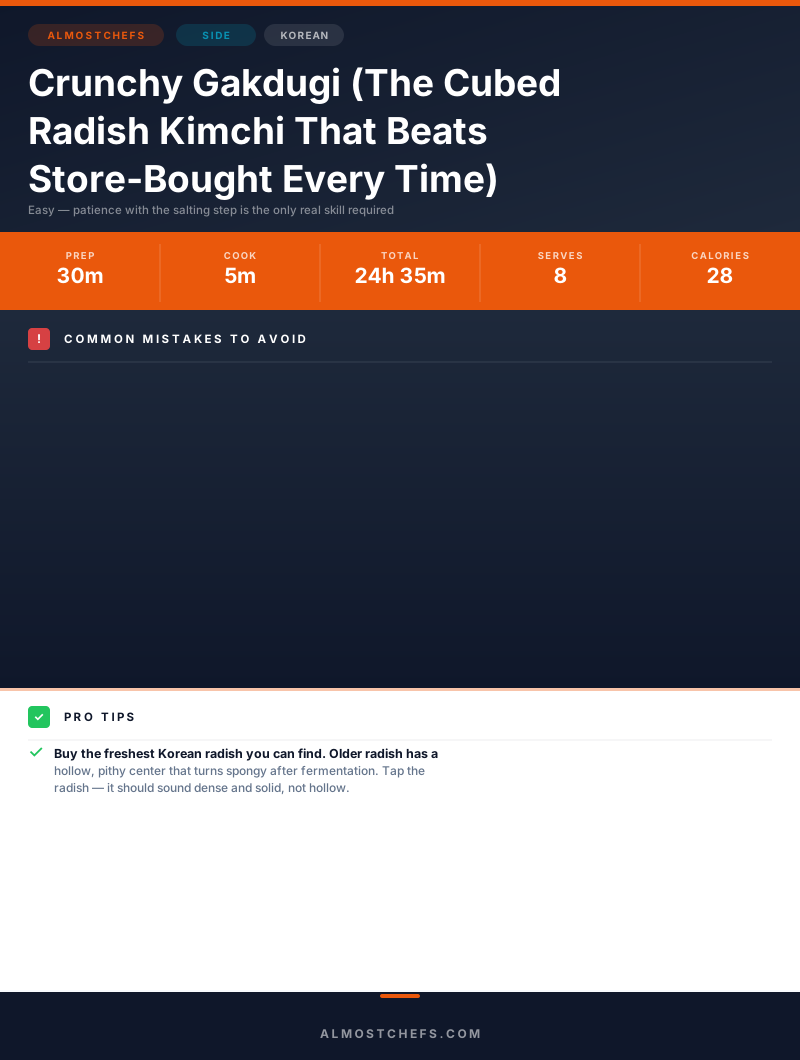
Crunchy Gakdugi (The Cubed Radish Kimchi That Beats Store-Bought Every Time)
A punchy, fermented Korean side dish made from cubed Korean radish seasoned with gochugaru, garlic, and ginger. Unlike cabbage kimchi, gakdugi is ready in 24 hours, stays crisp for weeks, and delivers the kind of clean, fiery crunch that makes every bowl of rice better. We broke down the technique so you get the fermentation right on the first try.

“Cabbage kimchi gets all the press, but serious Korean home cooks know that gakdugi — radish kimchi cut into thick, satisfying cubes — is the workhorse of the banchan lineup. It ferments faster, lasts longer, and has a textural snap that cabbage can never replicate. The recipe is five ingredients and thirty minutes of active work. The reason most people get it wrong is the salt draw step: they rush it, dilute it, or skip it entirely. Get that right and everything else is automatic.”
Why This Recipe Works
Gakdugi is the most honest kimchi there is. No cabbage to massage for forty-five minutes, no complex spice blends, no week-long wait to know whether you did it right. Cube the radish, salt it, season it, pack it, wait a day. The fermentation biology does the rest.
The reason it works starts with the vegetable itself. Korean radish — mu — has a cellular architecture that is perfectly suited to lacto-fermentation. Its high water content and dense cell walls mean that when you salt it correctly, the osmosis is fast and aggressive. Water exits the cells, the radish firms up slightly rather than wilting the way cabbage does, and the newly emptied cell spaces become reservoirs for the seasoning paste to penetrate during fermentation. The result is a kimchi that carries flavor all the way through the cube, not just on the surface.
The Salt Draw Is the Whole Game
Every fermented vegetable dish has one irreversible step — the step that, if mishandled, cannot be recovered. For gakdugi, it's the salt draw. You have a thirty-to-forty-minute window where the kosher salt is pulling liquid from the radish cells at the right rate. Too little time and the interior is still fully hydrated; the seasoning paste sits on the outside like a coat of paint rather than becoming part of the radish. Too much time and the radish over-softens, losing the structural integrity that makes gakdugi gakdugi.
The visual cue is unmistakable when you get it right: a visible puddle of liquid at the bottom of the bowl, and radish cubes that have a slight give when you press them without being soft. If you poke a cube and it springs back hard like raw vegetable, wait another ten minutes. If it dents and stays dented, you've gone too far. You're aiming for something in between — yielding but resilient.
Why This Version Is Vegetarian Without Compromise
Traditional gakdugi relies on salted fermented shrimp (saeujeot) or fish sauce for its umami backbone. These are powerful fermentation accelerators — the enzymes in fermented seafood products dramatically speed up the bacterial activity and add a funky, oceanic depth that is genuinely difficult to replicate.
The solution here is not a compromise — it's a recalibration. Soy sauce provides glutamate-driven umami at a different frequency than fermented seafood: cleaner, less funky, more direct. The rice flour paste, which is frequently omitted in shortcut recipes, makes up some of the fermentation-depth difference by feeding the lactic acid bacteria more aggressively during that first room-temperature window. The result ferments on schedule and develops genuine complexity by day three. What it lacks in oceanic funk, it compensates with a cleaner, sharper radish flavor that lets the gochugaru and garlic come through more clearly.
Fermentation Is Not a Mystery
The process happening inside your jar over those twenty-four hours at room temperature is Lactobacillus bacteria converting the natural sugars in the radish into lactic acid. The same process makes yogurt sour, sourdough bread tangy, and sauerkraut shelf-stable. You are not doing anything exotic. You are providing the right conditions — salt to suppress harmful bacteria, a sealed environment, ambient warmth — and then getting out of the way.
The refrigerator does not stop fermentation. It slows it to a near-crawl, which is exactly what you want. The gakdugi continues developing flavor in the cold over days and weeks, the acids mellowing slightly while the umami compounds deepen. A fermentation jar with an airlock extends the life of your batch by preventing surface oxidation, but a standard mason jar sealed tight works nearly as well.
Serve gakdugi cold, straight from the jar, alongside rice and whatever protein is on the table. It cuts through rich, fatty dishes — samgyeopsal, braised short ribs, a bowl of dak-bokkeum — with exactly the acidity the meal needs. It is, in every sense, designed to make other food taste better.
That is a useful thing to know how to make.
Where Beginners Mess This Up
Before we start, read this. These are the 4 reasons your crunchy gakdugi (the cubed radish kimchi that beats store-bought every time) will fail:
- 1
Under-salting the radish: The salt draw is non-negotiable. Radish is about 94% water, and if you don't pull that liquid out before seasoning, your gakdugi will be waterlogged and bland within two days. The cubes need to sit with salt for at least 30 minutes until they weep noticeably and feel slightly pliable — not crunchy-raw.
- 2
Rinsing too aggressively: After salting, you rinse the radish once — lightly — to remove the surface salt. Over-rinsing strips the salt that has already penetrated the flesh, which means the radish won't continue drawing moisture during fermentation. One gentle rinse, then squeeze gently and drain.
- 3
Fermenting at the wrong temperature: Gakdugi ferments at room temperature for the first 24 hours before moving to the refrigerator. If your kitchen is cold (below 65°F), it may need 36-48 hours at room temp. If your kitchen runs hot, 12 hours may be enough. Taste it. You're looking for mild tang with a sharp, clean bite.
- 4
Cutting the radish too small: Half-inch cubes look appealing but turn mushy fast. Three-quarter to one-inch cubes have enough mass to hold their structure through fermentation and weeks of cold storage. This is a texture dish. Protect the texture.
🛠️ Core Equipment
- Large mixing bowlYou need room to toss the cubed radish thoroughly with salt and later with the seasoning paste. A cramped bowl means uneven distribution and inconsistent fermentation.
- Quart-sized glass jar with lidGlass is non-reactive and won't absorb the gochugaru stain or fermentation odors. Pack the gakdugi tightly to minimize air pockets, which cause surface discoloration. A [fermentation jar](/kitchen-gear/review/fermentation-jar) with an airlock valve is ideal but not required.
- Latex or nitrile glovesGochugaru stains skin, nails, and cutting boards a deep orange-red that lasts for days. Gloves are not optional if you value your hands.
- Fine-mesh sieve or colanderFor draining the salted radish quickly and evenly. Spread the cubes across the sieve and let gravity do the work rather than squeezing all the liquid out manually.
Crunchy Gakdugi (The Cubed Radish Kimchi That Beats Store-Bought Every Time)
🛒 Ingredients
- ✦2 pounds Korean radish (mu), peeled and cut into 3/4-inch cubes
- ✦2 tablespoons kosher salt
- ✦1 teaspoon granulated sugar (for salting)
- ✦3 tablespoons gochugaru (Korean red pepper flakes)
- ✦4 cloves garlic, finely minced
- ✦1 teaspoon fresh ginger, grated
- ✦2 tablespoons soy sauce
- ✦1 teaspoon toasted sesame oil
- ✦1 teaspoon sugar (for seasoning paste)
- ✦4 green onions, cut into 1-inch pieces
- ✦1 tablespoon rice flour paste (1 tsp rice flour simmered with 3 tbsp water, cooled)
👨🍳 Instructions
01Step 1
Peel the Korean radish and cut into 3/4-inch cubes. Aim for uniformity so they ferment evenly.
02Step 2
In a large bowl, toss the radish cubes with kosher salt and 1 teaspoon sugar. Mix thoroughly so every cube is coated. Let sit for 30-40 minutes at room temperature.
03Step 3
While the radish draws, make the rice flour paste: whisk 1 teaspoon rice flour into 3 tablespoons cold water, then heat in a small saucepan over medium heat, stirring constantly, until the mixture thickens to a loose paste, about 2 minutes. Let cool completely.
04Step 4
Drain the salted radish in a fine-mesh sieve. Rinse once, lightly, under cold water. Do not soak. Gently pat dry with a clean towel and let drain for 5 minutes.
05Step 5
In a small bowl, combine gochugaru, minced garlic, grated ginger, soy sauce, sesame oil, remaining teaspoon of sugar, and the cooled rice flour paste. Mix into a uniform paste.
06Step 6
Put on your gloves. Add the drained radish cubes and green onion pieces to the bowl. Using your hands, massage the seasoning paste thoroughly into the radish until every cube is evenly coated.
07Step 7
Pack the gakdugi tightly into a clean glass jar, pressing down firmly to eliminate air pockets. Leave 1 inch of headspace at the top — the gakdugi will expand slightly as it ferments.
08Step 8
Leave the jar at room temperature (68-72°F) for 24 hours. After 24 hours, taste it: it should have a mild tang and clean fermented bite. If it tastes flat, leave it out for another 12 hours.
09Step 9
Transfer to the refrigerator. The gakdugi is ready to eat immediately but improves significantly after 2-3 days of cold fermentation. It peaks at about one week.
Nutrition Per Serving
Estimates based on standard preparation. Adjustments alter macros.
🔄 Substitutions
Instead of Korean radish (mu)...
Use Daikon radish
Works well structurally but daikon is more peppery and less sweet than mu. Reduce gochugaru by half a tablespoon to compensate for the sharper base flavor.
Instead of Soy sauce...
Use Soup soy sauce (guk ganjang)
Traditional choice. Lighter in color and saltier in taste. Use 1.5 tablespoons instead of 2 to avoid over-salting.
Instead of Gochugaru...
Use Gochujang (fermented pepper paste)
Changes the texture significantly — gochujang makes the coating thicker and stickier. Use 1.5 tablespoons and reduce soy sauce by half. The flavor profile is richer and less clean.
Instead of Rice flour paste...
Use Skip it entirely
The gakdugi will still ferment and taste good but the seasoning paste won't adhere as evenly. The depth of fermentation flavor will be slightly flatter at the two-week mark.
🧊 Storage & Reheating
In the Fridge
Store tightly sealed in the refrigerator for up to 4 weeks. Press the radish down against the brine before sealing each time to minimize air exposure.
In the Freezer
Not recommended. Freezing destroys the cell structure of the radish and eliminates the crunch entirely.
Reheating Rules
Gakdugi is served cold. If using in a cooked dish like gakdugi jjigae, add it directly from the fridge to the soup pot — no reheating required.
❓ Frequently Asked Questions
Why is my gakdugi soft instead of crunchy?
Two likely causes. First, your radish was old — fresh, dense mu is essential. Second, you over-salted and left it too long, drawing too much liquid and breaking down the cell walls. Thirty to forty minutes with the correct salt ratio is the window. Beyond that, you're tenderizing, not seasoning.
Is gakdugi the same as kkakdugi?
Yes — 깍두기 (kkakdugi) is the standard spelling in romanized Korean; 각두기 (gakdugi) is an older variant. Same dish, same technique. You'll see both spellings in recipes and restaurant menus interchangeably.
Can I make this vegan?
This recipe is already vegan. Traditionally, gakdugi uses salted fermented shrimp (saeujeot) or fish sauce as the umami base. This version uses soy sauce instead, which delivers comparable depth without any animal products.
Why does my gakdugi taste bitter?
Bitter gakdugi usually means the radish was cut unevenly and some pieces over-fermented while others under-fermented. It can also come from overly mature radish with a pithy core. Uniform cutting and fresh radish eliminate both problems.
How do I know when fermentation is complete?
Taste it. Ready gakdugi has a clean, bright tang — like a mild pickle — with the heat of the gochugaru and the sweetness of the radish still distinct underneath. If it tastes flat and just salty, it needs more time. If it smells sharp and alcoholic, it's gone too far.
Can I eat gakdugi immediately without fermenting?
Yes — fresh gakdugi (geotjeori style) is eaten the day it's made and tastes like a spicy radish salad. It lacks the depth and tang of fermented gakdugi but it's crunchy, bright, and excellent with grilled meat. Some Korean home cooks make it both ways depending on the meal.
The Science of
Crunchy Gakdugi (The Cubed Radish Kimchi That Beats Store-Bought Every Time)
We turned everything on this page into a beautiful, flour-proof PDF cheat sheet. Print it out, stick it to your fridge, and never mess up your crunchy gakdugi (the cubed radish kimchi that beats store-bought every time) again.
*We'll email you the high-res PDF instantly. No spam, just perfectly cooked meals.
AlmostChefs Editorial Team
We translate the internet's most popular cooking videos into foolproof, beginner-friendly written recipes. We analyze multiple methods, test them in our kitchen, and engineer a single "Master Recipe" that gives you the best possible result with the least possible stress.