Classic French Fruit Tart (Pastry Cream Done Right)
A buttery pastry shell filled with creamy yogurt custard and topped with vibrant fresh berries. We broke down the most common home-baker failures — soggy crust, weeping filling, sliding fruit — and built a foolproof method that delivers a showstopping tart every single time.
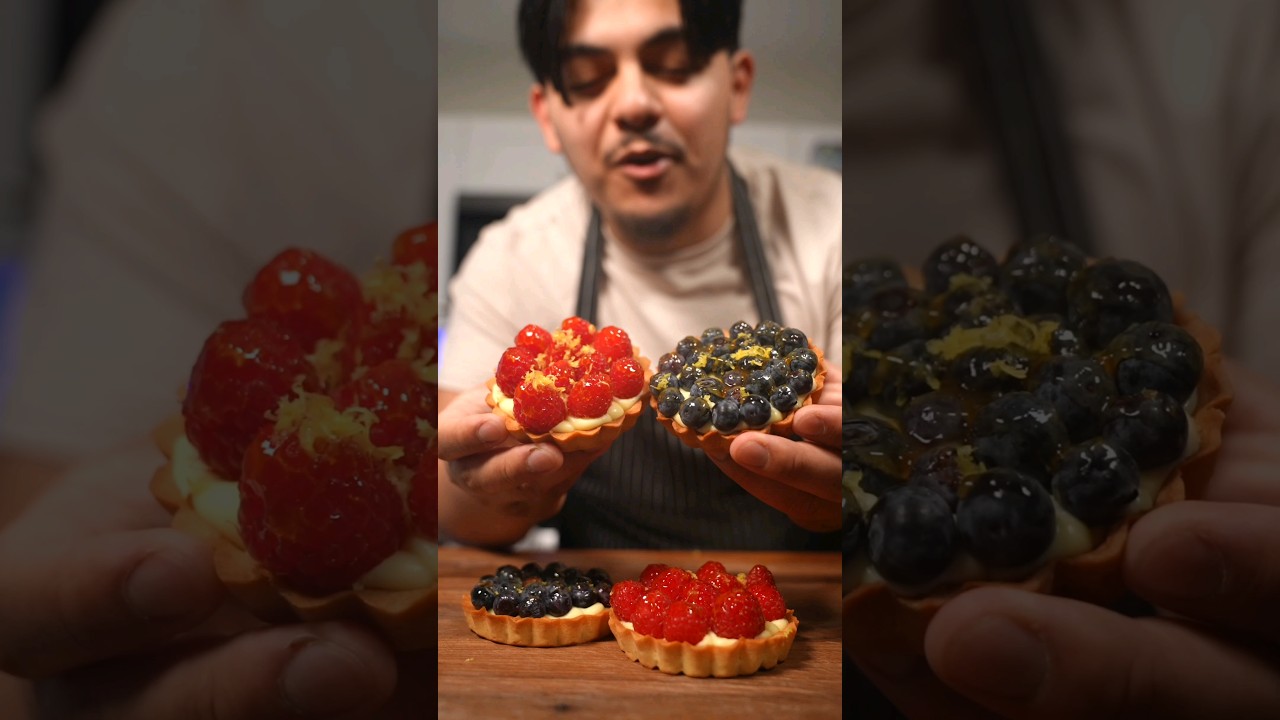
“A fruit tart looks like it came from a patisserie window. Most home versions taste like they came from a gas station. The gap between those two outcomes is not talent — it's three decisions: how cold your butter is when you work it into the dough, how completely you cool the shell before filling, and whether you let the finished tart rest before cutting. Get those three things right and you get a tart that holds its shape, has a crisp bottom, and makes people reach for a second slice.”
Why This Recipe Works
A fruit tart is deceptively simple. Four components: a pastry shell, a custard filling, fresh fruit, a glaze. No complex techniques, no obscure equipment. And yet most home versions fail in the same two or three places, every single time. The shell is soggy. The filling slides out when you cut a slice. The fruit looks tired. Understanding why those failures happen is the difference between a tart that impresses and one that embarrasses.
The Physics of a Flaky Crust
Pastry dough works on a single mechanical principle: cold butter, coated in flour, melts in the oven and releases steam that separates the dough into distinct layers. This only works if the butter stays cold and solid right up until it hits the oven. The moment butter warms and starts merging with the flour, you're making a cracker, not a pastry.
This is why cold hands matter. This is why ice water instead of tap water matters. This is why the 45-minute refrigerator rest matters — the rest re-chills any butter that warmed during handling and lets the gluten network relax so the dough doesn't snap back when rolled. Every instruction in this section exists to keep the butter cold until the oven does what the oven is supposed to do.
Overworking is the second failure mode. Once you add water, gluten development begins immediately. Each mix, fold, or knead builds more gluten — which is exactly what you want in bread and exactly what you don't want in pastry. The dough should look barely combined when you press it into a disk. Shaggy edges are fine. Visible butter flakes are good. A perfectly smooth, elastic ball means you went too far.
The Custard Architecture
Traditional French fruit tarts use pastry cream — a cooked mixture of milk, eggs, sugar, and starch that sets into a dense, sliceable layer. This recipe uses a yogurt-based custard that achieves similar stability with less cooking. The trade-off is that the filling depends entirely on cornstarch and refrigerator cold to set, which means the rest period before slicing is not optional.
Greek yogurt brings its own structural advantages. Its higher protein content compared to regular yogurt creates a thicker base that holds shape under the weight of the fruit. The residual tartness cuts the sweetness of the honey and creates a cleaner flavor than pastry cream, which can taste one-dimensional alongside acidic berries. The lemon zest amplifies this contrast — citrus aromatics sit on top of the palate while the custard richness sits underneath, and the two layers don't compete.
The Glaze Function
Apricot jam glaze does three things simultaneously. It creates the mirror-like shine that makes fruit tarts look professional. It seals the cut surfaces of the fruit, slowing oxidation and browning. And it anchors the fruit to the custard so pieces don't slide when you cut a slice. Using a pastry brush with light upward strokes — not pressing down — is what separates a professional-looking finish from a smeared one.
The lemon juice in the glaze thins the jam's viscosity and adds brightness that prevents the glaze from tasting like candy. Without it, the apricot flavor is muted and the sweetness is cloying.
Assembly Order
Everything in this recipe is sequential for a reason. Cold dough goes into the oven, the baked shell cools completely, cold custard goes on the cool shell, room-temperature fruit goes on the set custard, the glaze seals everything, then the whole assembly goes back into the refrigerator. Any step out of order — filling a warm shell, glazing before the custard has set, cutting before the rest period — triggers a cascade of textural failures.
Follow the sequence. The tart rewards patience with a clean slice on the first cut and a crust that stays crisp through the last bite.
Where Beginners Mess This Up
Before we start, read this. These are the 4 reasons your classic french fruit tart (pastry cream done right) will fail:
- 1
Warm butter in the dough: Butter must be cold — refrigerator cold, not room temperature — when you cut it into the flour. Warm butter melts into the flour and creates a dense, bread-like crust instead of a flaky, crumbly shell. If your kitchen is warm or your hands are hot, cube the butter and freeze it for 10 minutes before starting.
- 2
Overworking the dough: The moment gluten develops, your crust becomes tough. You are not kneading bread — you are barely touching flour. Add ice water one tablespoon at a time and stop mixing the instant the dough holds together when pinched. Visible butter flakes in the dough are a good sign, not a problem.
- 3
Filling a warm shell: A pastry shell that hasn't cooled completely will melt the yogurt custard on contact, turning your filling from thick and creamy to thin and runny. The shell must be fully cool — room temperature all the way through — before you spread a single spoonful of filling. This takes about 20 minutes on a wire rack.
- 4
Skipping the rest before serving: The cornstarch in the filling needs refrigerator time to set into a sliceable, stable layer. Cut a tart that hasn't rested and the filling slides out of the shell onto the plate. Thirty minutes minimum. An hour is better.
The Video Reference Library
Want to see it in action? Here are the exact videos we analyzed and combined to build this foolproof recipe translation:
The primary reference for this recipe. Clear demonstration of the cold-butter technique, blind baking method, and fruit arrangement approach.
🛠️ Core Equipment
- 9-inch tart pan with removable bottomThe removable bottom is non-negotiable — it's how you unmold the tart without destroying the shell. Standard pie pans trap the crust and force you to serve it in the pan.
- Pastry cutterCuts cold butter into flour without warming it. Your fingertips transfer body heat and can warm the butter faster than you'd expect, especially in a warm kitchen. A [pastry cutter](/kitchen-gear/review/pastry-cutter) keeps everything cold.
- Wire cooling rackElevates the baked shell so air circulates underneath. Setting the pan directly on the counter traps steam and makes the bottom soft. The rack keeps it crisp.
- Pastry brushApplies the apricot glaze evenly without dragging or dislodging the fruit. A [pastry brush](/kitchen-gear/review/pastry-brush) with silicone bristles is easier to clean and won't leave bristles on your fruit.
Classic French Fruit Tart (Pastry Cream Done Right)
🛒 Ingredients
- ✦1 1/2 cups all-purpose flour
- ✦1/2 teaspoon kosher salt
- ✦1 tablespoon granulated sugar
- ✦8 tablespoons cold unsalted butter, cubed
- ✦3 to 4 tablespoons ice water
- ✦1 cup whole milk Greek yogurt
- ✦1/3 cup honey
- ✦1 teaspoon pure vanilla extract
- ✦2 tablespoons cornstarch
- ✦2 cups fresh blueberries
- ✦1 1/2 cups fresh strawberries, hulled and halved
- ✦1 cup fresh raspberries
- ✦2 tablespoons apricot jam, warmed
- ✦1 tablespoon fresh lemon juice
- ✦2 tablespoons powdered sugar for dusting
- ✦Zest of 1 medium lemon
👨🍳 Instructions
01Step 1
Combine flour, salt, and granulated sugar in a large mixing bowl, whisking together until evenly distributed.
02Step 2
Cut the cold butter cubes into the flour mixture using a pastry cutter or your fingertips until the texture resembles coarse breadcrumbs with pea-sized pieces remaining.
03Step 3
Sprinkle ice water over the mixture one tablespoon at a time, gently tossing with a fork until the dough just comes together without overworking.
04Step 4
Form the dough into a flat disk, wrap in plastic wrap, and refrigerate for at least 45 minutes until firm.
05Step 5
Preheat your oven to 400°F and roll out the chilled dough on a floured surface to fit a 9-inch tart pan with a removable bottom.
06Step 6
Press the dough evenly into the tart pan, prick the bottom with a fork, and bake for 12 to 15 minutes until the edges turn light golden brown.
07Step 7
Cool the pastry shell completely on a wire rack at room temperature for about 20 minutes.
08Step 8
Whisk together Greek yogurt, honey, vanilla extract, and cornstarch in a medium bowl until completely smooth and free of lumps.
09Step 9
Spread the yogurt custard evenly across the cooled pastry shell, smoothing the surface with a spatula.
10Step 10
Arrange the fresh blueberries, strawberries, and raspberries across the top of the tart in an attractive pattern.
11Step 11
Combine the warmed apricot jam with fresh lemon juice, then brush this glaze gently over the fruit to create shine and seal in moisture.
12Step 12
Dust the finished tart lightly with powdered sugar and sprinkle with fresh lemon zest for brightness.
13Step 13
Refrigerate the completed tart for at least 30 minutes before serving to allow flavors to meld and filling to set.
Nutrition Per Serving
Estimates based on standard preparation. Adjustments alter macros.
🔄 Substitutions
Instead of All-purpose flour in crust...
Use Whole wheat pastry flour or spelt flour
Slightly nuttier flavor and improved nutritional profile with similar texture if using pastry varieties. Avoid regular whole wheat flour — it's too heavy and makes the crust dense.
Instead of Unsalted butter in crust...
Use Coconut oil or ghee
Coconut oil adds subtle sweetness while ghee provides clarified butter richness without lactose. Both create flaky pastry. Keep either option fully chilled before using.
Instead of Greek yogurt custard filling...
Use Silken tofu blended with vanilla and honey
Slightly more delicate flavor but equally rich texture. Blend until completely smooth — any remaining granularity from the tofu will be obvious in the finished tart. Dairy-free and higher in plant-based protein.
Instead of Apricot jam glaze...
Use Pure fruit reduction or honey-lemon glaze
More intense fruit flavor with a cleaner ingredient list. Simmer 2 tablespoons of honey with 1 tablespoon lemon juice until slightly reduced, then use as a direct swap.
🧊 Storage & Reheating
In the Fridge
Store covered in the refrigerator for up to 2 days. The crust softens slightly after the first day as it absorbs moisture from the filling — this is unavoidable. Still delicious, just less crisp.
In the Freezer
The unfilled, baked shell freezes well for up to 1 month. Wrap tightly in plastic wrap and freeze. Thaw at room temperature for 30 minutes before filling. Do not freeze the assembled tart — the fruit weeps on thawing and the filling turns watery.
Reheating Rules
This tart is served cold or at room temperature. Do not reheat.
❓ Frequently Asked Questions
Why did my crust shrink when I baked it?
The dough wasn't rested long enough. When you work butter into flour and add water, the gluten network is tense. Without at least 45 minutes of refrigerator rest, that tension pulls the dough back toward the center during baking. Rest it fully and the shrinkage becomes minimal.
Can I make the crust ahead of time?
Yes — and you should. The unbaked dough disk keeps in the refrigerator for up to 3 days and in the freezer for 2 months. The baked, unfilled shell keeps at room temperature for 1 day or frozen for 1 month. Make the components ahead and assemble the morning you serve it.
Why is my filling runny?
Two likely causes: the shell was still warm when you added the filling, which melted the yogurt, or the tart didn't rest long enough in the refrigerator after assembly. The cornstarch needs cold temperature and time to set. Refrigerate for at least 30 minutes — preferably an hour.
Can I use frozen fruit?
Not on top of the tart. Frozen fruit releases too much liquid as it thaws and turns your filling into soup. Fresh fruit only for the topping. You can use frozen fruit in the glaze reduction if you're making your own.
What's the difference between a tart and a pie?
A pie is baked in a deep dish with sloped sides and usually has a top crust. A tart is baked in a shallow pan with straight sides and has no top crust. The straight sides give a tart its clean, architectural look when unmolded. The removable-bottom pan is what makes unmolding possible.
Do I have to use a tart pan with a removable bottom?
Technically no, but practically yes. Without the removable bottom you can't unmold the tart, which means you serve it directly from the pan and lose the clean presentation. If you don't have a tart pan, use a springform pan as a substitute — it achieves the same unmolding effect.
The Science of
Classic French Fruit Tart (Pastry Cream Done Right)
We turned everything on this page into a beautiful, flour-proof PDF cheat sheet. Print it out, stick it to your fridge, and never mess up your classic french fruit tart (pastry cream done right) again.
*We'll email you the high-res PDF instantly. No spam, just perfectly cooked meals.
AlmostChefs Editorial Team
We translate the internet's most popular cooking videos into foolproof, beginner-friendly written recipes. We analyze multiple methods, test them in our kitchen, and engineer a single "Master Recipe" that gives you the best possible result with the least possible stress.