Easy Fried Sweet Plantains (Very Ripe, Caramelized Edges)
Fried sweet plantains built on one non-negotiable variable: ripeness. Very ripe plantains with heavy black spotting have converted their starches to sugars and fry into caramelized, tender slices. The technique is secondary to selecting the correct fruit.
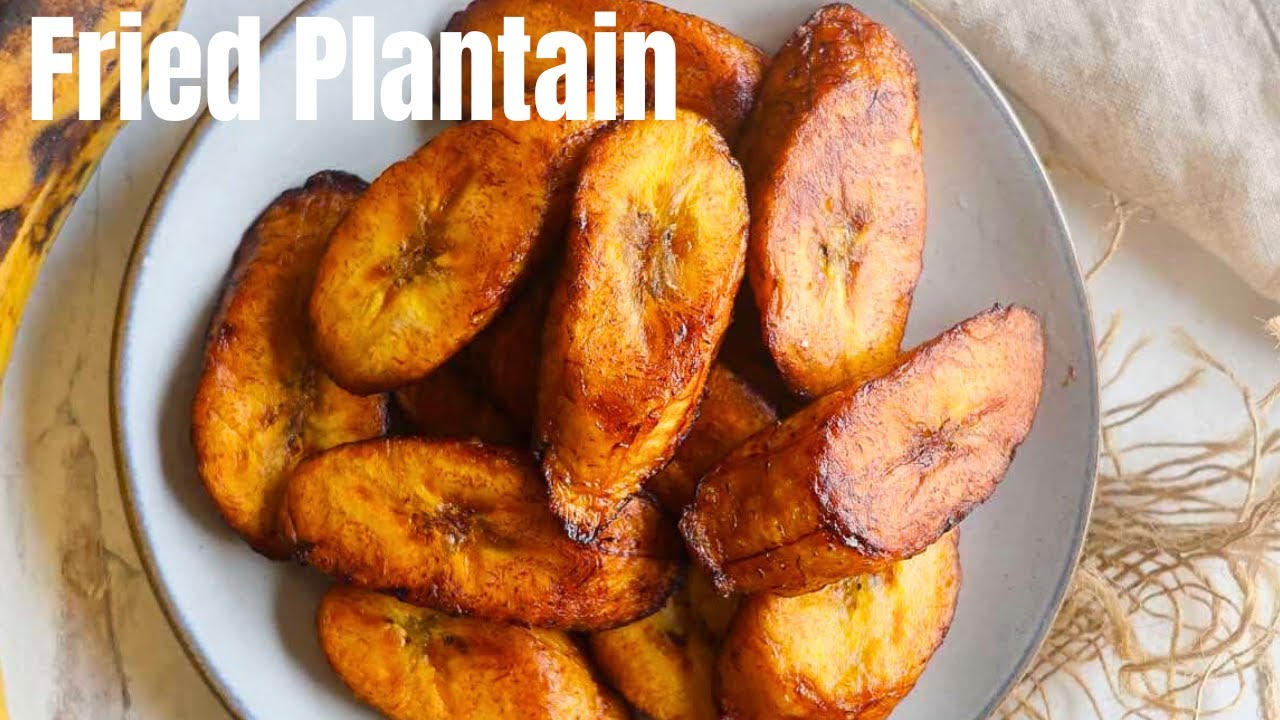
“The number one reason fried plantains fail is that someone bought yellow plantains at the grocery store and fried them the same day. Yellow plantains are still starchy. They fry into pale, stiff, flavorless slices that resist caramelization because there is no sugar to caramelize. The dish is called sweet plantains for a reason: the sweetness is not from added sugar. It is converted from starch by ripening, and that ripening process cannot be rushed by any amount of oil temperature management or technique.”
Why This Recipe Works
Fried sweet plantains — maduros in Cuban and Dominican cooking, plátanos maduros fritos across much of Latin America and the Caribbean — are one of the most misunderstood recipes in terms of the ratio of technique difficulty to result quality. The dish is simple. The single critical variable is biological, not culinary: the ripeness of the plantain at the time of cooking. Get that right and the technique is straightforward. Get it wrong and no technique adjustment produces the correct result.
Understanding the recipe requires understanding what ripening does to the plantain on a biochemical level and why that transformation is the entire premise of the dish.
Starch-to-Sugar Conversion: Why Ripeness Is Not Preference
A green plantain is approximately 60–65% starch by dry weight and contains less than 5% free sugar. A fully ripe plantain with heavy black skin spotting has converted most of that starch to simple sugars through the enzymatic action of amylases — enzymes naturally present in the fruit that progressively cleave the long starch chains (amylose and amylopectin) into shorter maltose and glucose units as the fruit ripens. By the time the skin is heavily spotted, the free sugar content has risen to approximately 35–40% of dry weight.
This transformation matters for frying because caramelization — the browning reaction responsible for the characteristic flavor and texture of maduros — requires free sugar. Caramelization begins at approximately 320°F for fructose and 338°F for sucrose, the predominant sugars in ripe plantain. In a hot skillet with 340–360°F oil temperature, these sugars at the exposed surface of each slice contact the heat and undergo caramelization chemistry: dehydration, cyclization, and polymerization into hundreds of new flavor compounds. These compounds produce the complex sweet-bitter-nutty-caramel flavor of properly fried maduros.
A slice cut from an insufficiently ripe plantain has insufficient free sugar to drive this chemistry. The surface heats but does not caramelize — it dries and firms slightly but remains pale and starchy. The interior becomes soft but unremarkable. The dish is cooked but not caramelized, which means it is technically correct but texturally and aromatically wrong. There is no technique in the subsequent steps that recovers this.
The Caramelization Mechanism on the Pan Surface
When a ripe plantain slice contacts hot oil in a heavy skillet, the sequence of surface events is rapid. In the first 30–45 seconds, the surface moisture evaporates. The oil film between the pan surface and the plantain's cut face reaches 340–360°F at the contact points. The free sugars at those contact points — fructose and sucrose primarily — begin dehydrating and forming the first caramelization products: 5-hydroxymethylfurfural and other furans that produce the characteristic caramel aroma. Over the next 90–120 seconds, these initial products polymerize into larger, more complex caramelen and caramelin polymers — the brown, slightly bitter high-molecular-weight compounds that form the crisp, dark surface on a properly fried maduro.
This process requires a dry, stable, high-temperature contact surface. Any factor that introduces moisture or lowers temperature at the contact point interrupts it. Overcrowding produces steam. An underpowered burner fails to maintain temperature after cold plantains are added. A thin-gauge pan loses temperature rapidly and cannot recover. A cast iron skillet addresses the temperature-drop problem directly: its thermal mass — the stored heat in the cast iron itself — buffers the temperature drop when cold plantain slices are added and the oil returns to caramelization temperature within 60–90 seconds. A thin pan takes 3–5 minutes to recover the same temperature, during which time the plantains are cooking in sub-caramelization-temperature oil.
The Wire Rack Imperative
Caramelized sugar is hygroscopic — it absorbs water from the environment readily, including from steam. A fried plantain slice fresh from the oil has a dry, concentrated caramelized surface. The interior is still hot and releasing steam through the cut faces of the slice. If that slice is placed on paper towels, the steam releases from the bottom face and immediately contacts the paper, which reflects it back against the caramelized surfaces. Within 90 seconds, the caramelized crust has absorbed enough moisture to convert from crisp to soft. The visual change is subtle — the surface loses its glossy sheen. The textural change is significant.
A wire rack allows steam to travel downward and away from the slice surface. The caramelized surfaces remain in contact with ambient air rather than the slice's own released steam. The crust stays dry. The textural contrast between the crisp caramelized exterior and the soft, sweet interior — which is the entire point of the dish — remains intact through serving. This is the same principle that applies to fried chicken, fried fish, and any other fried food where a crust has been developed: paper towels are the enemy of everything you just built.
Seasoning Timing and Fat as Carrier
The instruction to season immediately after the slices come off the oil — while still hot and with a surface film of cooking oil still present — is not incidental. Salt applied to the hot, oil-coated surface of a just-fried plantain slice dissolves partially in the surface oil and adheres uniformly to the caramelized crust. Salt applied to a cooled, dry surface sits as discrete crystals on top of the food rather than integrating with it. The same principle applies to the paprika and garlic powder in the seasoning mix — the warm oil film carries these fat-soluble compounds against the crust surface and holds them there. Season the moment the slices hit the rack, before the surface oil cools.
The Diagonal Cut and Surface Area
The instruction to cut at a 45-degree angle rather than perpendicular to the axis of the fruit increases the surface area of each slice's cut face by approximately 40% relative to a straight crosscut at the same thickness. More cut face surface area means more area in direct contact with the oil in the pan, which means more caramelization per slice. The diagonal cut also produces an oval rather than a circular cross-section, which sits more stably flat in the pan and is easier to remove with a wide spatula without cracking the caramelized face. It is both an aesthetic and functional choice.
The Difference Between Maduros and Tostones
Both dishes use the same fruit. That is where the similarity ends. Tostones use green plantains — starchy, firm, almost entirely savory, with no meaningful sugar content. They are sliced, fried once to soften, then smashed flat and fried again to crisp. The double-fry creates a thin, structurally complex crust by creating an increased surface-area-to-volume ratio in the smashed slice. The result is a savory, starchy fritter more analogous to a potato chip than a sweet preparation. Maduros use very ripe plantains — soft, sweet, with significant converted sugar. They are sliced and fried once, relying entirely on caramelization chemistry for their flavor and texture. The two dishes require different fruits, different techniques, and produce categorically different results. Choosing between them is not a preference choice. It is a ripeness decision made at the grocery store.
Where Beginners Mess This Up
Before we start, read this. These are the 4 reasons your easy fried sweet plantains (very ripe, caramelized edges) will fail:
- 1
Using unripe or insufficiently ripe plantains: A yellow plantain with no black spotting is at approximately 40–50% of its sugar conversion potential. At this ripeness level, the flesh is starchy, firm, and will not caramelize under frying conditions because there is insufficient free sugar to undergo Maillard browning or caramelization. A plantain with significant black spotting — at least 50% of the skin surface covered — has converted 70–80% of its starch to simple sugars and will caramelize readily in hot oil. A plantain that is almost entirely black, with the skin yielding to slight finger pressure, has completed its conversion and is at peak sweetness for this preparation. If your plantains are not adequately spotted, leave them on the counter for 2–5 days. Do not cook them before they are ready.
- 2
Draining on paper towels: Paper towels trap steam against the fried surface and reverse the caramelization. The caramelized exterior of a fried plantain slice is a dry, concentrated sugar surface. Contact with a paper towel transfers moisture from the towel's absorbed oil and from the plantain's own released steam back to that surface, softening and dissolving the caramelized layer within 60–90 seconds of contact. A wire rack allows the steam to escape downward and air to circulate on all sides. The caramelized surface remains dry and intact. This is a minor equipment detail with a major textural consequence.
- 3
Overcrowding the pan: Fried plantains release steam as they cook. In a crowded pan, that steam has nowhere to go and creates a humid environment at the cooking surface that dramatically slows caramelization — caramelization requires a dry, high-heat contact surface, not a steamy one. Cook in batches that give each slice at least one inch of clearance on all sides. The pan should look underfilled to a home cook accustomed to cooking in volume. That underfilling is correct technique.
- 4
Cooking at too low a temperature: Caramelization of simple sugars begins at approximately 320°F. Maillard browning of the trace amino acids in plantain flesh begins at a slightly lower temperature but requires a dry contact surface to proceed. If the oil is below 340°F when the plantain slices go in, the heat is insufficient to drive off surface moisture before the interior begins to cook. The result is a slice that is cooked through but not caramelized — soft and sweet but without the browned, slightly bittersweet edges that make maduros texturally interesting. Medium heat is the correct setting; if your burner runs low, medium-high.
The Video Reference Library
Want to see it in action? Here are the exact videos we analyzed and combined to build this foolproof recipe translation:
Primary technique reference for this recipe. Demonstrates the visual target for correct plantain ripeness, the oil temperature management, and the visual cues for correct caramelization — what deep golden-brown with slightly darker edges looks like versus underdone or overdone.
🛠️ Core Equipment
- Large heavy skillet — cast iron or stainless steelA [cast iron skillet](/kitchen-gear/review/cast-iron-skillet) is the ideal pan for this preparation because its high thermal mass maintains oil temperature consistently as cool plantain slices are added. Cast iron also distributes heat evenly across the cooking surface, ensuring that slices at the edges receive the same heat as slices at the center. Thin non-stick pans lose temperature rapidly when plantains are added and do not recover quickly — the result is lower-temperature frying that steams rather than caramelizes.
- Wire rack set over a rimmed baking sheetThe draining vessel matters as much as the cooking vessel. A wire rack allows steam to escape from all surfaces of the finished slices simultaneously. Stacking or flat draining concentrates steam against the contact surfaces and softens the caramelization within minutes. Set up the wire rack before frying begins — plantain slices should move from oil to rack in 10 seconds.
- Slotted spatula or spiderPlantain slices are fragile when hot — the caramelized exterior is firm but the interior is very soft at frying temperature. A wide, slotted spatula supports the full base of each slice on removal from the oil. A spider works for multiple slices at once. Tongs, which grip the edges, can crack the caramelized surface of a perfectly fried slice.
Easy Fried Sweet Plantains (Very Ripe, Caramelized Edges)
🛒 Ingredients
- ✦3 medium plantains — yellow with heavy brown/black spotting (minimum 50% spotted; ideally 70–100%)
- ✦3 tablespoons coconut oil or vegetable oil (for pan-frying) OR 2 cups vegetable oil (for shallow frying)
- ✦1 teaspoon fine sea salt
- ✦0.5 teaspoon black pepper
- ✦0.25 teaspoon garlic powder
- ✦0.25 teaspoon smoked paprika
- ✦Pinch cayenne pepper (optional, for sweet-heat contrast)
- ✦1 lime, cut into wedges
- ✦Fresh cilantro, roughly chopped (optional garnish)
👨🍳 Instructions
01Step 1
Assess the plantains before you begin. The skin should be yellow with at minimum 50% brown-black spotting. If they are mostly yellow with only a few spots, leave them on the counter for 2–5 more days. Cooking under-ripe plantains is a technical error that cannot be corrected by any technique adjustment.
02Step 2
Peel the plantains. Unlike a banana, plantain skin does not peel easily by hand — score the skin lengthwise with a knife on both sides and pull the peel away from the flesh. The flesh should be soft, fragrant, and deeply yellow-orange on a fully ripe plantain.
03Step 3
Slice diagonally at a 45-degree angle into 3/4-inch pieces. The diagonal cut increases the surface area of each slice exposed to the oil, which increases caramelization contact area. Uniform thickness ensures even cooking times across the batch.
04Step 4
For pan-frying: heat coconut oil or vegetable oil in a large heavy skillet over medium heat until shimmering. The oil should be visibly fluid but not smoking. For shallow frying: heat 2 cups vegetable oil in a deep skillet to 350°F.
05Step 5
Add plantain slices to the oil in a single layer without crowding. Leave at least 1 inch of clearance between slices. Fry undisturbed for 2–3 minutes until the bottom face develops a deep golden-brown color with slightly darker edges.
06Step 6
Flip each slice carefully with a wide spatula. Fry the second side for 2–3 minutes until deep golden. The second side caramelizes more quickly than the first because the interior is already hot from the first side — monitor closely.
07Step 7
Transfer immediately to a wire rack. Season with salt, black pepper, garlic powder, smoked paprika, and cayenne if using while still hot — the surface oil carries the seasoning into the caramelized crust.
08Step 8
Serve immediately with lime wedges on the side.
Nutrition Per Serving
Estimates based on standard preparation. Adjustments alter macros.
🔄 Substitutions
Instead of Coconut oil...
Use Neutral vegetable oil, avocado oil, or clarified butter
Neutral vegetable oil is the most common substitute and produces clean results. Clarified butter (ghee) adds a rich, slightly nutty flavor that complements the sweetness of ripe plantain. Regular butter burns before reaching frying temperature — use ghee or clarified butter only.
Instead of Fresh plantains...
Use Frozen ripe plantains, thawed
Frozen ripe plantains are pre-peeled and flash-frozen at peak ripeness. They work in this recipe but release more surface moisture on thawing, which must be patted dry before frying or the initial contact with the oil will cause violent splattering and steam instead of sear.
Instead of Smoked paprika in the seasoning...
Use Ground cinnamon plus a pinch of cayenne
Cinnamon with cayenne is a common seasoning variation in Cuban maduros — the sweet-spicy-warm combination is a deliberate contrast with the caramelized plantain sweetness. Use sparingly: 1/8 teaspoon cinnamon and a pinch of cayenne.
🧊 Storage & Reheating
In the Fridge
Store in an airtight container for up to 3 days. The caramelized surface softens significantly on refrigeration. The flavor is fully intact.
In the Freezer
Freeze in a single layer on a sheet pan until solid, then transfer to a freezer bag for up to 2 months. Freeze in single layers — the caramelized surfaces will stick together if frozen in contact.
Reheating Rules
Reheat in a dry skillet over medium heat for 1–2 minutes per side. This restores some of the caramelized surface. Microwave reheating produces a soft, steamed texture with no surface crispness.
❓ Frequently Asked Questions
What is the difference between a plantain and a banana?
Plantains are a cooking banana — a starchier, lower-sugar variety of the Musa genus that is almost always cooked before eating. Raw ripe plantains are edible but unpleasant — they are dense, starchy, and lack the familiar banana flavor. Cooking converts the residual starch to more sugar and develops caramelization on the exterior. Standard dessert bananas have far more sugar and much less starch at any ripeness level — frying a ripe banana produces a result that disintegrates into a sugary paste rather than holding the firm-inside, crisp-outside structure of a maduro.
Can I use green plantains for this recipe?
No. Green plantains are for tostones — a completely different preparation involving double-frying and salting for a savory, starchy chip-like result. Green plantains have minimal sugar and will not caramelize. If you attempt to fry green plantains using this recipe's method, you will get a pale, hard, flavorless slice. Maduros and tostones are not interchangeable preparations — they use the same fruit at categorically different ripeness stages with entirely different intended results.
My plantains turned out soggy rather than caramelized. What went wrong?
Two likely causes. First: the plantains were not ripe enough — insufficient sugar means no caramelization regardless of technique. Second: the oil temperature was too low. If oil is below 340°F when the plantains go in, the surface moisture from the plantain flesh steams away slowly rather than instantly, keeping the contact surface damp and preventing caramelization. Check ripeness first (heavy black spotting), then verify oil temperature with an instant-read thermometer before the first batch goes in.
How do I know when the caramelization is right and when it's burned?
Correct caramelization on maduros: deep golden-amber on the main body of the slice with slightly darker reddish-brown at the thinnest edges. The smell is sweet and caramel-adjacent. Burned: black or very dark brown across the whole face, with a bitter, acrid smell. The distinction is color gradient — correct maduros have a center-to-edge gradient from golden to dark. Burned maduros are uniformly very dark. If the edges go black before the centers are golden, reduce heat slightly for the next batch.
Can these be made in an air fryer?
Yes, with some trade-offs. Air-fry ripe plantain slices at 400°F for 8–10 minutes, flipping once at 5 minutes. The result lacks the full surface caramelization that direct oil contact produces — the hot air cooks the interior well but produces less of the concentrated caramelized crust. Brush the slices with coconut oil or melted butter before air frying to approximate the fat-contact caramelization. The result is good, not identical.
The Science of
Easy Fried Sweet Plantains (Very Ripe, Caramelized Edges)
We turned everything on this page into a beautiful, flour-proof PDF cheat sheet. Print it out, stick it to your fridge, and never mess up your easy fried sweet plantains (very ripe, caramelized edges) again.
*We'll email you the high-res PDF instantly. No spam, just perfectly cooked meals.
AlmostChefs Editorial Team
We translate the internet's most popular cooking videos into foolproof, beginner-friendly written recipes. We analyze multiple methods, test them in our kitchen, and engineer a single "Master Recipe" that gives you the best possible result with the least possible stress.