Easy Crispy Buttermilk Fried Chicken (Tested & Perfected)
A double-dredged, buttermilk-brined fried chicken with a shattering golden crust and juicy interior. We broke down the most-watched YouTube techniques to isolate the three moves that actually matter: overnight brine, baking powder in the dredge, and precise oil temperature control.
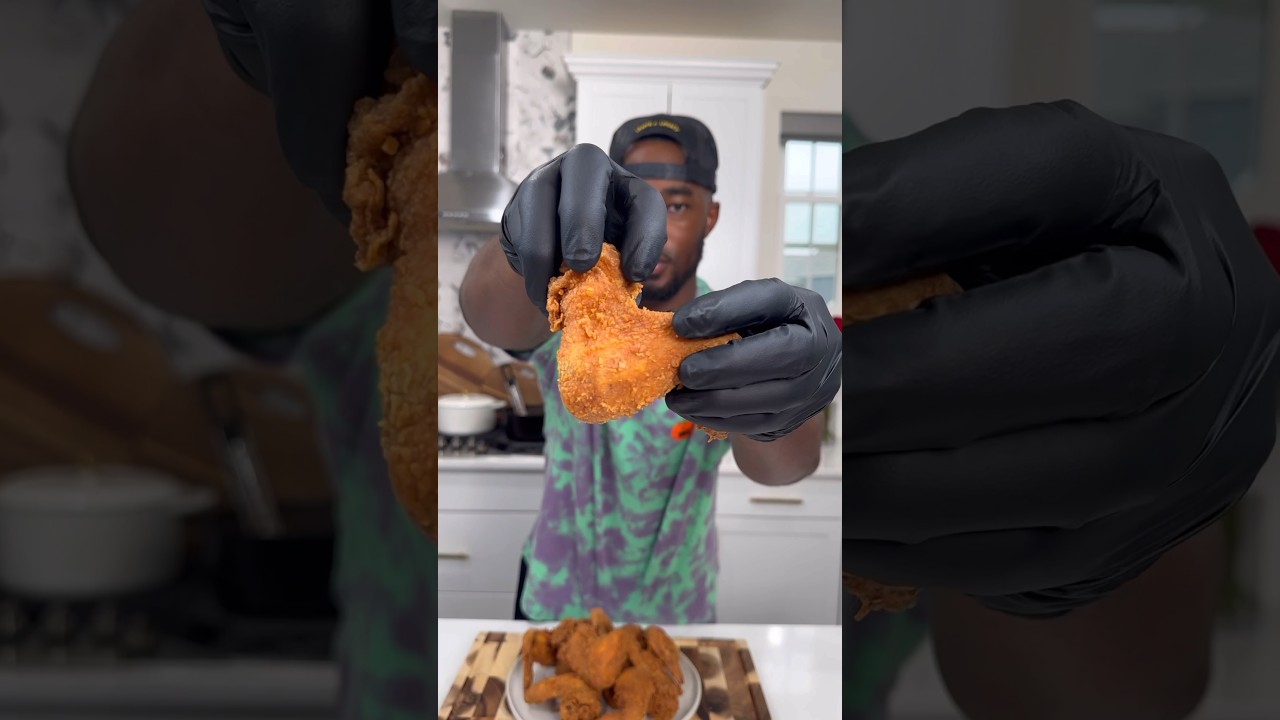
“Most fried chicken fails at the same two points: the crust slides off, or the inside is raw while the outside is burnt. Both failures trace back to the same root cause — rushing the brine and guessing on oil temperature. This recipe eliminates the guesswork. Overnight buttermilk, a baking powder trick nobody in your family taught you, and a thermometer you actually trust. That's the whole system.”
Why This Recipe Works
Fried chicken is one of those dishes that looks simple until you make it badly twice in a row. The crust turns to leather. The meat stays pink at the bone. The oil smokes, the temperature swings, and somehow the chicken that took you an hour to brine tastes like the kind you buy pre-made at a gas station. The problem is almost never the recipe. It's the sequence — and specifically which steps people decide to shortcut.
The Brine Is Structural Work, Not Flavoring
Buttermilk's lactic acid does something citrus marinades cannot: it tenderizes gently. Acid unravels surface proteins by breaking peptide bonds, which softens the outer muscle fibers without turning the interior to paste. The key word is slowly. Lactic acid works over 8–12 hours. At 2 hours, you've added tang. At 8 hours, you've fundamentally changed the meat's texture.
This matters because fried chicken sits in 325°F oil for 12–16 minutes. Without the brine, that sustained heat tightens the muscle fibers aggressively, squeezing out moisture. Brined chicken has pre-weakened fibers that hold onto their juices under heat. The difference is not subtle.
The Baking Powder Trick
Most home cooks have never heard of it. Most restaurant cooks use it without thinking twice. A teaspoon and a half of baking powder mixed into the dredging flour reacts with the acidic buttermilk coating on the chicken surface, producing CO2 bubbles during frying. Those bubbles create microscopic air pockets in the crust — the physical explanation for the craggly, uneven surface that shatters when you bite through it.
Smooth fried chicken crust means no baking powder. Craggy, uneven, properly dramatic crust means someone knew what they were doing.
Temperature Is the Only Variable That Matters in the Oil
Everything else about frying is downstream of oil temperature. At 350°F with a Dutch oven holding thermal mass, you have a 30-degree buffer — cold chicken drops the oil to 320°F and it recovers within 3–4 minutes. That window is where the crust sets, the coating dehydrates, and the interior starts cooking through.
Below 310°F, the chicken sits in warm oil instead of hot oil. The crust absorbs rather than repels. You get grease-soaked breading and pale, sad chicken. Above 375°F, the exterior burns in 8 minutes while the bone-in thigh is still raw at the center. Neither failure is recoverable mid-cook.
A clip-on thermometer is not optional equipment. It is the recipe.
The Wire Rack Principle
Two minutes on paper towels and you've undone 12 minutes of careful frying. The crust is still releasing steam when it comes out of the oil — set it on paper and that steam reflects back into the crust, converting crunch into soft. A wire rack lets steam escape downward and air circulate on all sides. The crust firms up as it cools rather than softening.
Same logic applies before frying. After the double dredge, resting the coated chicken on a wire rack for 5–10 minutes lets the outer flour layer hydrate and bond. It's the difference between a crust that stays on the chicken and one that abandons it the moment it hits resistance.
Why Double Dredge
One coat of seasoned flour gives you a translucent, paper-thin layer that cooks to a uniform pale gold. Edible. Forgettable. The double dredge — flour, buttermilk, flour again — builds two distinct layers with an adhesive interface between them. The inner layer bonds to the brined chicken surface. The outer layer develops the rough, irregular texture that makes fried chicken look and sound like fried chicken. Every extra press of flour into the surface creates another peak and valley that will crisp independently in the oil.
Pressed firmly, rested on the rack, fried at temperature, drained on wire: this is the whole system. None of the four steps is optional. All four together make the dish.
Where Beginners Mess This Up
Before we start, read this. These are the 4 reasons your easy crispy buttermilk fried chicken (tested & perfected) will fail:
- 1
Skipping the overnight brine: Eight hours is not a suggestion. The lactic acid in buttermilk works slowly — it denatures surface proteins gently, which means tender meat without that mushy texture you get from citrus marinades. Less than 4 hours and you're getting surface flavor without the textural benefit. The brine is doing invisible structural work. Let it finish.
- 2
Not doing the double dredge: A single coat of seasoned flour gives you a thin, fragile crust that peels away from the meat the moment it hits oil. The double dredge — flour, back into buttermilk, flour again — builds two distinct adhesion layers. The inner layer bonds to the chicken. The outer layer creates the craggy, shattering surface everyone wants. One dredge is not the same as two.
- 3
Frying at the wrong temperature: Too hot (above 375°F) and the crust goes dark before the interior reaches safe temperature. Too cool (below 325°F) and the chicken absorbs oil instead of repelling it, turning greasy and soft. The window is 325–350°F. Use a thermometer. Every time. Not once to check, but continuously throughout each batch.
- 4
Draining on paper towels: Paper towels trap steam against the crust and soften everything you just worked to make crispy. A wire rack set over a baking sheet lets air circulate on all sides, keeping the crust intact while the juices redistribute. It's a two-dollar fix for a common failure.
The Video Reference Library
Want to see it in action? Here are the exact videos we analyzed and combined to build this foolproof recipe translation:
The primary reference for this recipe. Clear breakdown of the double-dredge method, oil temperature management, and wire rack draining technique.
🛠️ Core Equipment
- Heavy-bottomed pot or Dutch ovenMaintains oil temperature stability between batches. Thin pans drop 30–40 degrees the moment cold chicken hits the oil and can't recover fast enough. A [Dutch oven](/kitchen-gear/review/dutch-oven) holds thermal mass that buffers the temperature swing.
- Instant-read or clip-on thermometerNon-negotiable for both oil and internal chicken temperature. Oil temperature is the single most important variable in fried chicken. Clip-on models free up your hands; instant-read works if you check every 2 minutes.
- Wire rack and rimmed baking sheetUsed twice — once for resting the coated chicken before frying, once for draining after. Elevating the chicken on both ends of the process keeps the crust dry and intact.
- Shallow dish for dredgingWide and low. A deep bowl makes it impossible to coat the chicken evenly — corners stay bare and corners burn. Use a [9x13 baking dish](/kitchen-gear/review/baking-dish) or a wide skillet.
Easy Crispy Buttermilk Fried Chicken (Tested & Perfected)
🛒 Ingredients
- ✦3.5 pounds chicken pieces (drumsticks, thighs, breasts, wings)
- ✦1.5 cups buttermilk
- ✦2.5 cups all-purpose flour
- ✦1.5 teaspoons salt
- ✦1 teaspoon freshly ground black pepper
- ✦1.5 teaspoons paprika
- ✦1 teaspoon garlic powder
- ✦1 teaspoon onion powder
- ✦0.75 teaspoon cayenne pepper
- ✦1.5 teaspoons baking powder
- ✦2.5 quarts vegetable oil for frying
- ✦Paper towels for initial drying only
👨🍳 Instructions
01Step 1
Pat all chicken pieces thoroughly dry with paper towels. Every drop of surface moisture you remove now means less splattering later and better crust adhesion.
02Step 2
Submerge the chicken pieces in buttermilk in a large bowl or resealable bag, ensuring full coverage. Cover and refrigerate for at least 8 hours, preferably overnight.
03Step 3
Combine flour, salt, black pepper, paprika, garlic powder, onion powder, cayenne, and baking powder in a wide shallow dish. Mix thoroughly until the spices are fully distributed — no pockets of pure flour.
04Step 4
Remove chicken from buttermilk, letting excess drip off. Dredge each piece in the seasoned flour, pressing firmly on all sides.
05Step 5
Return each flour-coated piece to the buttermilk for 3–5 seconds, then dredge again in the seasoned flour. Press firmly. This double coat is what creates the thick, shattering crust.
06Step 6
Set the coated chicken on a wire rack and rest for 5–10 minutes. This allows the coating to hydrate and bond to the surface before frying.
07Step 7
Heat vegetable oil in a large heavy-bottomed pot to 325–350°F. Use a thermometer. Do not guess.
08Step 8
Fry in batches, placing chicken in a single layer without crowding. Dark meat pieces (thighs, drumsticks) fry for 12–16 minutes; white meat (breasts, wings) for 10–12 minutes, turning occasionally.
09Step 9
Verify doneness with a meat thermometer inserted into the thickest part without touching bone. Dark meat should reach 165°F; white meat 160–165°F.
10Step 10
Transfer finished pieces to a wire rack set over a rimmed baking sheet. Do not stack. Do not use paper towels for draining.
11Step 11
Allow oil to recover to 350°F before starting the next batch. This takes 3–5 minutes. Don't skip it.
12Step 12
Rest completed chicken for 5–10 minutes before serving. The juices need time to redistribute.
13Step 13
Serve with coleslaw, biscuits, or roasted vegetables.
Nutrition Per Serving
Estimates based on standard preparation. Adjustments alter macros.
🔄 Substitutions
Instead of Buttermilk...
Use Greek yogurt mixed with 2 tablespoons lemon juice
Thicker consistency that clings more aggressively. Adds about 5–7g protein per serving. Tangier flavor profile. Works identically for tenderizing — the acid is what matters, not the form it comes in.
Instead of Vegetable oil...
Use Peanut oil
Higher smoke point (450°F vs 400°F) and a subtle nutty flavor. More stable under sustained high heat. If anyone at the table has a peanut allergy, use avocado oil instead.
Instead of All-purpose flour...
Use Half all-purpose, half cornstarch
Cornstarch accelerates moisture evaporation during frying, producing a slightly lighter, crispier crust. The trade-off is marginally less structural integrity — the crust is thinner. Worth it if crunch is your priority.
Instead of Deep-frying in 2.5 quarts oil...
Use Shallow pan-frying in 1 cup oil at 325°F, 8–10 minutes per side
Uses 60% less oil and produces comparable crispness if you manage the heat carefully. Requires more attention — you need to turn pieces more frequently and monitor temperature constantly. Not easier, just less oil.
🧊 Storage & Reheating
In the Fridge
Store uncovered on a wire rack for the first hour to let residual steam escape, then transfer to an airtight container for up to 3 days. Storing warm chicken in a sealed container immediately traps steam and softens the crust.
In the Freezer
Freeze fully cooled pieces in a single layer on a baking sheet, then transfer to a freezer bag for up to 2 months. Freeze in a single layer first — stacking unfrozen chicken causes the pieces to fuse together.
Reheating Rules
Reheat in a 375°F oven on a wire rack for 12–15 minutes until the crust re-crisps and the internal temperature hits 165°F. The microwave is not an option — it steams the crust into mush in 90 seconds flat.
❓ Frequently Asked Questions
Why does my crust fall off the chicken?
Two causes. First, you didn't dry the chicken before brining — surface moisture prevents the buttermilk from bonding properly. Second, you skipped the rest period after dredging. Those 5–10 minutes let the coating hydrate and adhere before it hits the oil. No rest means the crust peels off the moment it contacts heat.
Can I brine for less than 8 hours?
Four hours is the workable minimum. Below that, the lactic acid hasn't had time to do structural work on the meat — you're getting surface seasoning only. Overnight (8–12 hours) is the target. Beyond 18 hours, the texture can turn mealy, particularly on breasts.
What oil temperature should I fry at?
Start with oil at 350°F. The cold chicken will drop it to 325–330°F immediately, which is your target frying temperature. Monitor continuously — if it drops below 310°F, the chicken starts absorbing oil rather than repelling it. If it climbs above 375°F, the crust burns before the interior cooks through.
How do I know when the chicken is done without cutting into it?
Use a meat thermometer. Dark meat is done at 165°F; white meat at 160–165°F. The crust color is a useful secondary signal — deep mahogany, not pale gold — but it can't tell you what's happening at the bone. The thermometer can.
Why add baking powder to the dredge?
Baking powder reacts with the buttermilk residue on the chicken's surface to produce small CO2 bubbles during frying. Those bubbles create the irregular, craggly texture that gives fried chicken its distinctive crunch. Without it, the crust is smooth and less structurally interesting. It's a small addition with a significant textural payoff.
Can I make this ahead for a party?
Yes. Fry the chicken, rest it on a wire rack, then hold it in a 200°F oven uncovered for up to 45 minutes before serving. The low oven maintains temperature and keeps the crust dry without continuing to cook the meat. Do not cover it — trapped steam destroys the crust.
The Science of
Easy Crispy Buttermilk Fried Chicken (Tested & Perfected)
We turned everything on this page into a beautiful, flour-proof PDF cheat sheet. Print it out, stick it to your fridge, and never mess up your easy crispy buttermilk fried chicken (tested & perfected) again.
*We'll email you the high-res PDF instantly. No spam, just perfectly cooked meals.
AlmostChefs Editorial Team
We translate the internet's most popular cooking videos into foolproof, beginner-friendly written recipes. We analyze multiple methods, test them in our kitchen, and engineer a single "Master Recipe" that gives you the best possible result with the least possible stress.