Fresh Tomato Sauce (The Only Recipe You'll Ever Need)
A bright, deeply flavored tomato sauce made from real tomatoes — not a can — cooked low and slow until the water cooks off and pure sweetness remains. We broke down the most-watched YouTube methods to find the technique that builds the most flavor without babysitting a pot for hours.
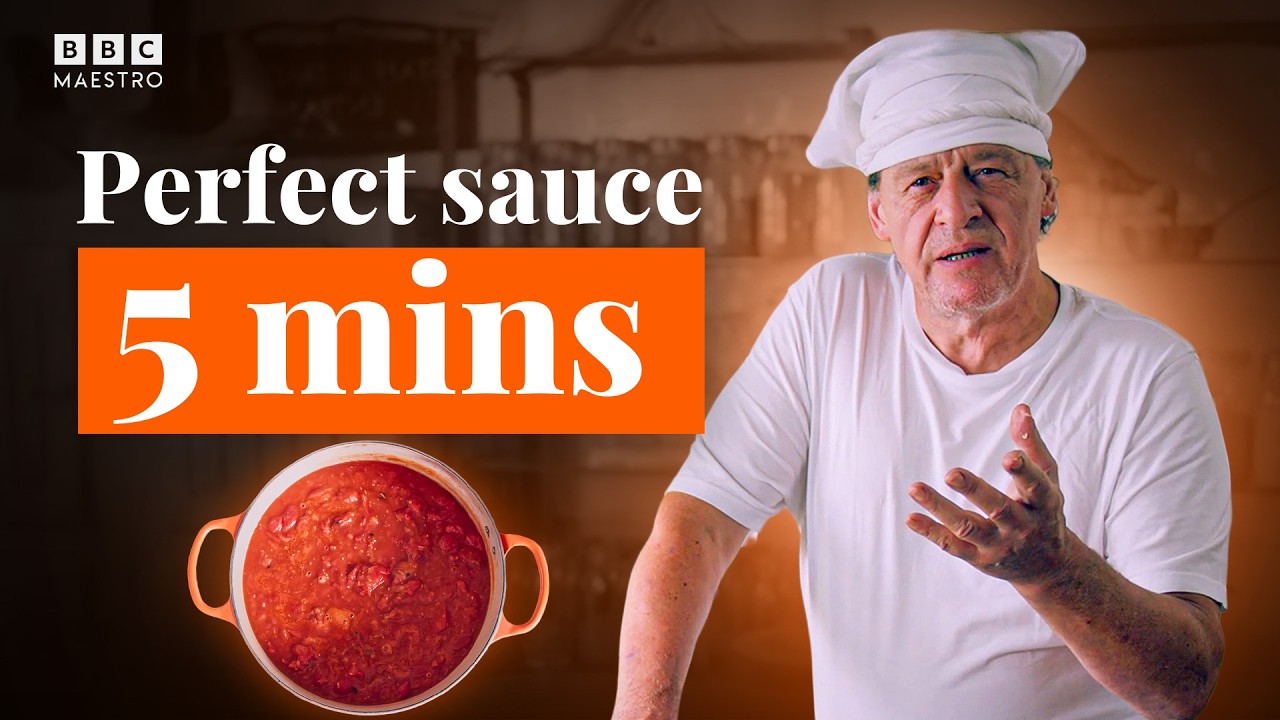
“Every jar of tomato sauce in your cabinet is an apology for not making this. Fresh tomato sauce takes 45 minutes, costs almost nothing, and tastes like something a grandmother in Campania would recognize. The canned stuff tastes like what it is: processed tomatoes with added salt and sugar trying to approximate what happens naturally when you cook the real thing. The only thing standing between you and the best pasta of your life is a pound of ripe tomatoes and a wide pan.”
Why This Recipe Works
Fresh tomato sauce is one of those recipes that sounds too simple to be worth learning — until you eat it. Then you understand immediately why Italian nonnas refuse to use jars, why restaurants charge fifteen dollars for pasta that costs forty cents to produce, and why professional cooks list it on their résumés as a foundational skill. The difference between fresh and processed tomato sauce is not a matter of taste preference. It is a matter of chemistry, and once you understand the chemistry, you will never go back.
The Tomato Is the Recipe
Most home cooks treat tomatoes as a neutral base that spices and aromatics transform into something worth eating. This is exactly backwards. A perfectly ripe Roma tomato at peak season contains around 4 grams of sugar per 100 grams of fruit, dozens of volatile aromatic compounds that create its characteristic perfume, and high concentrations of glutamic acid — the same compound responsible for the savory depth in aged parmesan and miso paste. The entire job of the cooking process is to concentrate and protect what's already there. You are not adding flavor to the tomatoes. You are removing water from them.
This is why underripe tomatoes produce bad sauce no matter how long you cook them or how many spices you add. There is no sugar to concentrate. There are no aromatic compounds to protect. You are reducing an already-thin flavor base into an even thinner one, then desperately trying to paper over the gap with dried herbs and salt. Use ripe tomatoes. This is not negotiable.
The Grating Technique
The fastest, most underrated technique in Italian home cooking is grating whole tomatoes on a box grater directly over a bowl. You halve the tomato, press the cut side against the coarse holes, and push. The soft flesh falls through as pure pulp. The skin stays in your hand, intact, like a red glove. No blanching, no ice bath, no peeling, no blender. Thirty seconds per tomato, zero waste, and the texture of the resulting pulp is perfectly irregular — not blended smooth, not chunky and uneven, but somewhere in between that coats pasta in exactly the right way.
A food mill achieves the same result at scale and is worth owning if you make sauce regularly. For smaller batches, the grater is faster and produces less cleanup.
The Reduction Is the Work
Fresh tomatoes are 94% water. Your job for the next 35 minutes is to respectfully evict most of that water from the pan. Low-and-slow heat does this without scorching the sugars. The sauce will pass through several visual stages: first it looks like diluted tomato juice, then it begins to thicken and darken, and finally the oil separates and pools visibly on the surface. That oil separation is your signal — it means the water content has dropped below the threshold where oil and water stay emulsified, and the sauce has become concentrated enough to taste like something.
Resist the urge to rush this with high heat. The sugars need time to caramelize gently. Aggressive heat drives the water off faster but also scorches the bottom and turns the natural sweetness bitter. Use a wide stainless steel skillet with enough surface area to let steam escape freely, keep the heat at a lazy bubble, and trust the process.
Garlic Timing and the Basil Rule
Garlic added early and cooked long becomes sweet and nutty. Garlic added late stays sharp and pungent. Neither is wrong — they produce genuinely different sauces. This recipe adds the garlic to the softened onion before the tomatoes, giving it time to mellow into the base without burning. The key is keeping the heat at medium-low during the garlic step and stirring constantly. Thirty seconds of inattention can take garlic from golden to bitter, and bitter garlic cannot be fixed.
Basil, by contrast, goes in last — off the heat, torn by hand, stirred into the hot sauce as it rests. Heat destroys the volatile compounds that make fresh basil smell the way it does. Cooked basil tastes muted and slightly medicinal. Basil added off-heat blooms instantly in the residual warmth, perfuming the entire sauce without losing a single top note. This is not a minor detail. It changes the character of the finished dish completely.
What the Oil Is Doing
Olive oil in this sauce performs two separate functions that require two separate additions. The cooking oil at the start carries the fat-soluble aromatics from the garlic and onion into the tomato base — flavor compounds that water alone cannot dissolve or distribute. The finishing drizzle at the end provides raw, fruity, peppery notes that cooked oil has long since lost. Skip the finish and the sauce tastes complete but flat. Add both and the dish has a brightness and complexity that tastes like significantly more effort than it actually was.
Where Beginners Mess This Up
Before we start, read this. These are the 4 reasons your fresh tomato sauce (the only recipe you'll ever need) will fail:
- 1
Using underripe tomatoes: Pale, firm tomatoes pulled from cold storage have almost no sugar and almost no flavor. The natural sweetness that makes tomato sauce great comes from lycopene and fructose compounds that only develop during full ripening on the vine. Underripe tomatoes produce thin, acidic sauce no matter how long you cook them. Use deeply colored, slightly soft tomatoes that smell like summer.
- 2
Cooking on too high heat: High heat drives off water fast but it also scorches the sugars before they caramelize properly, creating bitter, flat-tasting sauce. Medium-low heat gives the sugars time to concentrate without burning. The sauce should bubble lazily, not aggressively. If it's spitting, turn it down.
- 3
Adding too much water or stock: Fresh tomatoes contain 94% water by weight. Your entire job is to cook that water off — not add more liquid to replace it. Adding stock, wine, or pasta water too early dilutes the sauce and extends cooking time without improving flavor. Let the tomatoes reduce first. Add liquid at the end only if texture correction is needed.
- 4
Under-salting the base: Salt is not seasoning in tomato sauce. It is a flavor activator that binds to the glutamates in the tomatoes and makes them taste more intensely of themselves. Under-salted sauce tastes flat even if everything else is perfect. Season aggressively at the start, taste halfway through, and adjust again at the end.
The Video Reference Library
Want to see it in action? Here are the exact videos we analyzed and combined to build this foolproof recipe translation:
The foundational walkthrough that demonstrates the grating technique for skinless tomato pulp and explains exactly what the sauce should look like at each stage of reduction. Essential viewing before your first attempt.
Deep dive into the aromatics question — when to add garlic, whether to use onion, and how basil timing changes the final flavor profile. Strong opinions, useful context.
Minimal ingredient version that proves the point: great tomatoes plus olive oil plus salt is already a complete sauce. Watch this if you're tempted to over-complicate the recipe.
🛠️ Core Equipment
- Wide, heavy-bottomed skillet or sauté panMore surface area means faster, more even water evaporation. A narrow pot traps steam and extends cooking time. Stainless steel or cast iron builds better fond than nonstick, contributing extra depth to the sauce.
- Box grater or food millGrating whole tomatoes over a bowl is the fastest way to get smooth, skinless pulp without blanching. The skin stays in your hand while pure tomato flesh falls through the holes. A food mill achieves the same result for larger batches.
- Wooden spoonFor scraping the bottom of the pan as the sauce reduces. Silicone works too. Metal spoons scratch stainless steel and shred the tomato flesh unevenly.
- Microplane or fine graterFor the final parmesan pass over the finished sauce. The difference between pre-grated and freshly grated parmesan is the difference between sawdust and actual cheese.
Fresh Tomato Sauce (The Only Recipe You'll Ever Need)
🛒 Ingredients
- ✦2 pounds ripe Roma or San Marzano tomatoes
- ✦3 tablespoons extra-virgin olive oil, plus more for finishing
- ✦4 cloves garlic, thinly sliced
- ✦1/2 medium yellow onion, finely diced
- ✦1 teaspoon kosher salt, plus more to taste
- ✦1/4 teaspoon red pepper flakes
- ✦1 teaspoon granulated sugar (optional, to balance acidity)
- ✦6–8 fresh basil leaves, torn
- ✦1/4 teaspoon dried oregano
- ✦Freshly ground black pepper to taste
- ✦1/4 cup freshly grated Parmigiano-Reggiano, for serving
👨🍳 Instructions
01Step 1
Halve each tomato crosswise. Working over a bowl, grate the cut side of each tomato against the large holes of a box grater until only the skin remains in your hand. Discard skins. You should have approximately 2.5 cups of fresh tomato pulp.
02Step 2
Heat 3 tablespoons olive oil in a wide, heavy-bottomed skillet over medium heat. Add the diced onion and cook for 6–8 minutes, stirring occasionally, until softened and just beginning to turn translucent.
03Step 3
Add the sliced garlic and red pepper flakes. Reduce heat to medium-low and cook for 2 minutes, stirring constantly, until the garlic is fragrant and just barely golden at the edges.
04Step 4
Pour the tomato pulp into the pan along with 1 teaspoon kosher salt and the dried oregano. Stir to combine and raise heat to medium.
05Step 5
Cook uncovered, stirring occasionally, for 25–35 minutes until the sauce has reduced by about a third and the oil has separated and floats visibly on the surface. This separation is the sign the sauce is done.
06Step 6
Taste the sauce. If the tomatoes were slightly underripe or the sauce tastes sharp, stir in 1 teaspoon of sugar to balance. Adjust salt. Add freshly ground black pepper.
07Step 7
Remove from heat. Tear the fresh basil leaves and stir them into the hot sauce. Drizzle with a final tablespoon of olive oil.
08Step 8
Toss immediately with hot pasta, spoon over polenta, or use as a pizza base. Finish each plate with freshly grated Parmigiano-Reggiano.
Nutrition Per Serving
Estimates based on standard preparation. Adjustments alter macros.
🔄 Substitutions
Instead of Fresh tomatoes...
Use Whole canned San Marzano tomatoes (DOP certified)
Crush by hand before adding. The flavor will be more uniform and slightly sweeter than fresh. Reduce cooking time to 20 minutes since canned tomatoes are already partially cooked. A legitimate substitute, not a compromise.
Instead of Extra-virgin olive oil...
Use Avocado oil
Higher smoke point, very neutral flavor. The sauce will taste cleaner but less complex. Use for high-heat applications where olive oil's lower smoke point is a concern.
Instead of Fresh basil...
Use Fresh oregano or flat-leaf parsley
Oregano is more assertive and slightly medicinal — use half the quantity. Parsley is bright and grassy, a good neutral option when basil isn't in season. Dried basil added at the end is not a substitute — it has no aroma.
Instead of Yellow onion...
Use Shallots
Sweeter, more delicate. Use 2 shallots in place of the half onion. The sauce will have a subtly more refined base note. Works especially well if you're serving with seafood pasta.
🧊 Storage & Reheating
In the Fridge
Store in an airtight container for up to 5 days. The flavor deepens noticeably after 24 hours as the oil fully infuses the tomatoes.
In the Freezer
Freeze in 1-cup portions for up to 3 months. Silicone ice cube trays are ideal for sauce cubes you can pull individually as needed.
Reheating Rules
Warm gently in a saucepan over low heat with a splash of water or pasta cooking water to restore consistency. Do not boil — it drives off the fresh basil aroma added at the finish.
❓ Frequently Asked Questions
Why does my tomato sauce taste bitter?
Three likely causes: garlic that cooked past golden into brown, basil that was added too early and cooked throughout, or tomatoes that were underripe. Burnt garlic is the most common culprit — it goes from fragrant to bitter in under 30 seconds once it starts coloring. Start over with lower heat.
Should I peel the tomatoes before cooking?
Not if you use the grating method — the skin stays in your hand while the pulp falls through the grater. If you're cooking the tomatoes whole, you'll need to blanch and peel them. Unpeeled tomatoes cooked directly into sauce leave behind tough, papery skin fragments that never fully break down.
Can I use cherry tomatoes instead of Roma?
Yes, and the result is often sweeter. Halve them and cook them whole in the oil, pressing gently with a wooden spoon as they blister and burst. Skip the grating step. Cherry tomato sauce has a slightly brighter, more acidic profile than Roma-based sauce.
Do I need to add sugar?
Only if the tomatoes were underripe or the sauce tastes sharp after full reduction. Perfectly ripe summer tomatoes have enough natural sugar to balance their own acidity without help. Sugar is a correction tool, not a standard ingredient.
What's the difference between marinara and fresh tomato sauce?
Marinara is a specific Neapolitan preparation: tomatoes, garlic, olive oil, oregano — cooked very fast over high heat to preserve brightness. Fresh tomato sauce is a broader category that includes slow-cooked versions with onion and basil. This recipe falls in between: low-and-slow technique, marinara-adjacent ingredients.
How do I know when the sauce is done reducing?
Look for three signs simultaneously: the sauce has darkened from bright red to a deeper brick red, the oil has visibly separated and pools on the surface, and a spoon dragged across the bottom of the pan leaves a clean trail that holds for 2–3 seconds before filling back in. Any one of these signals is promising. All three together means you're done.

The Science of
Fresh Tomato Sauce (The Only Recipe You'll Ever Need)
We turned everything on this page into a beautiful, flour-proof PDF cheat sheet. Print it out, stick it to your fridge, and never mess up your fresh tomato sauce (the only recipe you'll ever need) again.
*We'll email you the high-res PDF instantly. No spam, just perfectly cooked meals.
AlmostChefs Editorial Team
We translate the internet's most popular cooking videos into foolproof, beginner-friendly written recipes. We analyze multiple methods, test them in our kitchen, and engineer a single "Master Recipe" that gives you the best possible result with the least possible stress.