Fresh Spring Rolls (The No-Tear Rice Paper Method)
Crisp vegetables, tender rice noodles, herbs, and shrimp or tofu wrapped in translucent rice paper — served cold with a peanut or hoisin dipping sauce. We broke down the most-watched YouTube tutorials to solve the one problem that stops people from making these at home: rice paper that tears, sticks, or turns gummy before it even reaches the plate.
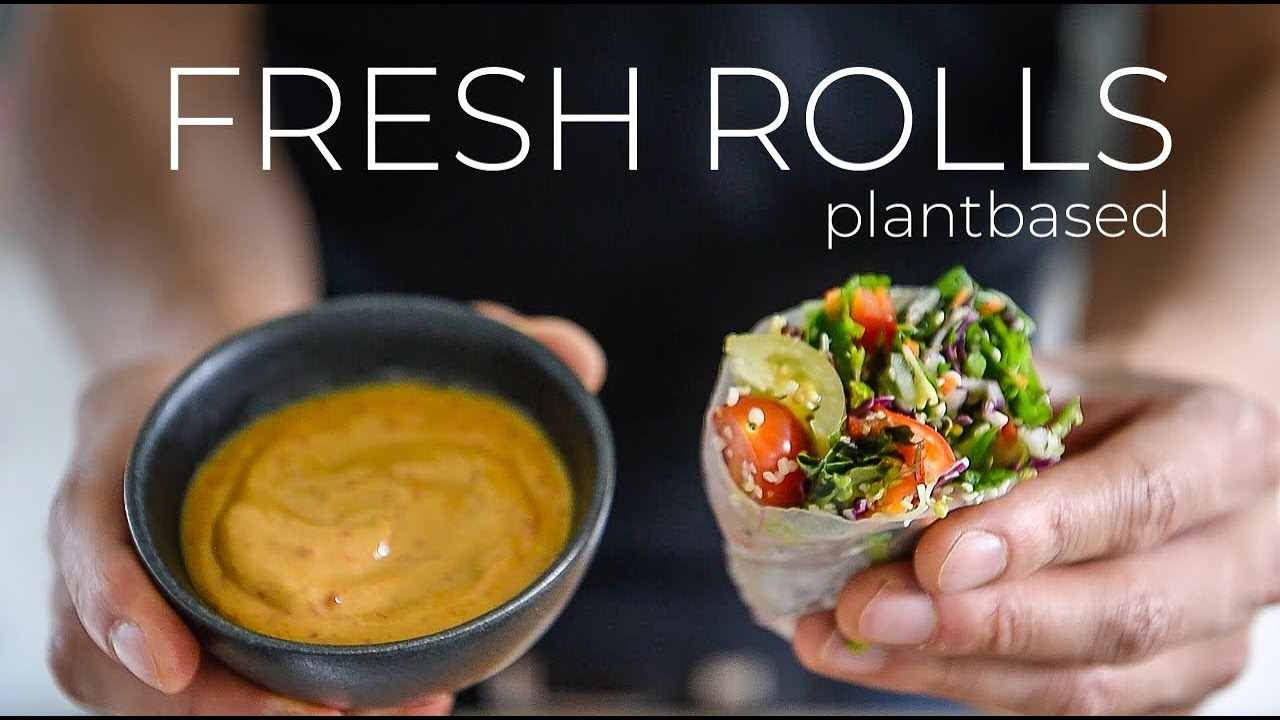
“Fresh spring rolls have a reputation for being fiddly. They tear. They stick to the plate. They look nothing like the ones at the restaurant. The difference is almost never the ingredients — it's the water temperature and wrap speed. Soak the rice paper too long and it disintegrates. Too short and it cracks. Get that two-second window right once and you'll never struggle with this dish again.”
Why This Recipe Works
Fresh spring rolls occupy a paradoxical position in the home cooking imagination. They look simple — vegetables, herbs, a clear wrapper — yet they defeat people more reliably than dishes with double the components and triple the technique. The failure is almost never about flavor. It's about physics. Specifically, the physics of a sheet of dried starch that has a 45-second window between "not ready" and "structurally compromised." Once you understand that window, the entire dish clicks into place.
The Rice Paper Problem
Rice paper is essentially a dehydrated starch film — made from rice flour, tapioca starch, and water — pressed into thin rounds and dried. When you submerge it in water, the starch begins absorbing moisture rapidly and uniformly. The trap is that this process doesn't stop when you remove the paper from the water. It continues on the surface, in the air, and especially once warm filling hits the center.
This is why the standard instruction — "soak until soft" — produces so many failures. By the time the paper feels soft in the bowl, it's actually 30 seconds past the point of safe handling. What you want is a paper that still feels stiff and faintly crackly when you pull it from the water. Lay it on a damp surface, place your fillings, and by the time you're ready to fold, the paper will have reached exactly the right pliability. The sequence is: soak two to three seconds, transfer, fill, roll. No pausing. No adjusting. One continuous motion.
Water temperature is the other variable that nobody talks about. Hot water hydrates rice paper nearly instantly and gives you almost no reaction time — the paper goes from "not ready" to "too fragile" in the span of a second. Cold water under-hydrates the paper unevenly, leaving dry spots that crack under tension. The right temperature is warm enough to hydrate in two to three seconds: roughly the temperature of a comfortable bath. A small saucepan filled with hot tap water and left to cool for two minutes usually lands in the right zone.
The Filling Architecture
The composition of the filling isn't decoration — it's structural engineering. The butter lettuce leaf goes down first as a moisture barrier, preventing the noodles and vegetables from direct contact with the rice paper and delaying sogginess. The noodles form a stable base layer that cushions the protein above. The shrimp or tofu goes on top of the noodles so their weight presses downward evenly rather than creating lumps that pierce the paper from above. The herbs go last, face-down against the paper, so they're visible through the translucent wrapper once the roll is sealed.
This is not pedantry — put the herbs under the noodles and they get crushed and invisible. Put the shrimp on the bottom and their flat cut surface creates an uneven ridge that stretches the paper during rolling. Every element has a position because every position has a consequence.
The filling quantity is where most people learn humility. A proper fresh spring roll looks almost underfilled when you begin rolling it — a tablespoon of noodles, three small shrimp halves, a few vegetable sticks, four or five herb leaves. This is correct and intentional. Rice paper has a fixed circumference. Excess filling doesn't compress; it transfers tension to the paper, which is already at the edge of its hydrated strength. The roll that looks generous going in becomes the roll that explodes coming out.
The Peanut Sauce Equation
The dipping sauce for fresh spring rolls is often treated as an afterthought — mix some peanut butter and hoisin and call it done. The problem with this approach is that freshly combined peanut butter and hoisin taste exactly like freshly combined peanut butter and hoisin: separate, raw, and sweet without complexity. The sauce needs at least ten minutes of resting time for the flavors to integrate, which is why making it first before you touch the rice paper is not optional. After ten minutes, the garlic mellows, the lime acid softens, and the hoisin's fermented sweetness threads through the peanut butter into something cohesive.
The texture of the sauce should be thick enough to coat a spoon — not so thick it clumps, not so thin it pools at the bottom of the dipping bowl. Add warm water, not cold, to thin it: cold water causes peanut butter to seize and the sauce to turn grainy. One tablespoon at a time, whisking between additions, until you hit the right consistency.
Why Cold Assembly Works
Unlike nearly every other protein-based dish, fresh spring rolls benefit from cold, rested ingredients. Warm shrimp steam the paper from the inside; warm noodles carry residual starch that glues the layers together. Everything — shrimp, noodles, cooked proteins — must be fully cooled before rolling. This isn't about food safety. It's about giving the rice paper a fighting chance against its natural enemies: heat and moisture, applied too fast.
A sharp chef's knife for slicing finished rolls is the final piece of the puzzle. A dull blade drags against the paper's surface friction and compresses the filling before cutting through it, collapsing the roll's cross-section from a clean circle into a flattened oval. One firm, decisive pass with a sharp blade produces the clean, restaurant-quality cut that makes the herbs and shrimp visible in that iconic side profile. It's a ten-second step that accounts for roughly half of the visual impression.
Where Beginners Mess This Up
Before we start, read this. These are the 4 reasons your fresh spring rolls (the no-tear rice paper method) will fail:
- 1
Soaking rice paper too long: Rice paper continues hydrating after it leaves the water. If it feels soft and pliable in the bowl, it's already overhydrated and will tear the moment you try to fold it. Pull it out when it still feels slightly stiff — it will finish softening on the damp work surface as you fill and roll.
- 2
Overfilling the roll: This is the single most common failure. Too much filling makes the paper stretch beyond its tensile limit and split at the seam. A tablespoon of noodles, two or three pieces of protein, and a small bundle of herbs is the maximum. It should look like not enough — and that's correct.
- 3
Dry work surface: Rice paper sticks violently to dry surfaces. Your work mat, cutting board, or plate must be damp — not wet, not dripping, just uniformly moist. Keep a wet towel nearby and re-dampen the surface between each roll.
- 4
Rolling too slowly: The window between pliable and over-soft is roughly 30-60 seconds. If you pause mid-roll to adjust an herb leaf or reposition the shrimp, the paper relaxes and loses its structural integrity. Prep your fillings in organized stations before you touch the water.
The Video Reference Library
Want to see it in action? Here are the exact videos we analyzed and combined to build this foolproof recipe translation:
The definitive walkthrough on rice paper handling — covers water temperature, soaking time, and the exact moment to pull the paper from the bowl. Essential viewing before your first attempt.
Detailed breakdown of both peanut and hoisin-based dipping sauces, with ratios and the balancing act between sweet, salty, and acid that makes the sauce addictive.
Focuses on storage and advance prep — how to keep made-ahead rolls from sticking together and drying out in the fridge. Critical if you're making these for lunch the next day.
🛠️ Core Equipment
- Large shallow bowl or wide pie dishMust be wider than the rice paper sheets — typically 10-12 inches. A deep bowl forces the paper to curl unevenly. A wide, flat vessel lets the entire sheet hydrate in one dip.
- Damp cutting board or silicone matThe rolling surface needs to be consistently moist but not wet. Silicone mats are ideal because they hold a thin film of water and don't warp. A wooden cutting board works if you keep a damp cloth beside it.
- Sharp chef's knifeCutting finished rolls requires a clean, single pass. A dull blade drags and tears the rice paper, collapsing the roll. A sharp knife cuts through without compressing the filling.
- Small saucepanFor quickly blanching the shrimp and cooking the rice noodles. Both need only two to three minutes in barely simmering water — boiling violently ruins the shrimp's texture.
Fresh Spring Rolls (The No-Tear Rice Paper Method)
🛒 Ingredients
- ✦12 rice paper sheets (22cm / 8.5-inch rounds)
- ✦3.5 oz thin rice vermicelli noodles
- ✦12 large shrimp, peeled, deveined, and halved lengthwise
- ✦1 medium carrot, cut into matchsticks
- ✦1 English cucumber, seeds removed, cut into matchsticks
- ✦1 cup red cabbage, very thinly shredded
- ✦1 ripe avocado, thinly sliced
- ✦1 cup fresh mint leaves
- ✦1 cup fresh Thai basil leaves
- ✦1/2 cup fresh cilantro sprigs
- ✦4 butter lettuce leaves, halved
- ✦2 tablespoons toasted sesame seeds
- ✦For peanut dipping sauce:
- ✦3 tablespoons creamy peanut butter
- ✦2 tablespoons hoisin sauce
- ✦1 tablespoon fresh lime juice
- ✦1 tablespoon soy sauce or tamari
- ✦1 teaspoon sesame oil
- ✦1 teaspoon rice vinegar
- ✦1-2 tablespoons warm water to thin
- ✦1 small clove garlic, finely grated
- ✦Pinch of chili flakes
👨🍳 Instructions
01Step 1
Cook the rice vermicelli according to package directions — usually 3-4 minutes in boiling water. Drain, rinse immediately under cold water to stop cooking, and toss with a tiny drizzle of sesame oil to prevent clumping. Set aside.
02Step 2
Bring a small saucepan of lightly salted water to a bare simmer (not a rolling boil). Add shrimp and cook for 1.5-2 minutes until just pink and curled. Drain immediately and transfer to an ice bath for 2 minutes to halt cooking. Pat dry and slice each shrimp in half lengthwise.
03Step 3
Make the peanut dipping sauce by whisking together peanut butter, hoisin, lime juice, soy sauce, sesame oil, rice vinegar, garlic, and chili flakes. Add warm water one tablespoon at a time until the sauce is thin enough to coat a spoon but not watery. Taste and adjust acid (lime) and salt (soy). Set aside.
04Step 4
Set up your rolling station: all fillings in organized bowls within arm's reach, a wide shallow dish filled with warm (not hot) water, and a damp cutting board or silicone mat as your work surface.
05Step 5
Submerge one rice paper sheet in the warm water for exactly 2-3 seconds — just long enough to wet it completely. It will still feel stiff and slightly crackly. Lay it flat on the damp work surface.
06Step 6
In the lower third of the rice paper, place a piece of butter lettuce, then a small bundle of noodles (about 1 tablespoon), 2-3 shrimp halves laid flat, a few matchsticks each of carrot and cucumber, a small pinch of cabbage, and two or three slices of avocado.
07Step 7
Lay a few mint leaves, Thai basil leaves, and cilantro sprigs along the top edge of the filling. These will be visible through the paper once rolled, so arrange them face-down if you want a clean presentation.
08Step 8
Fold the bottom edge of the rice paper up and over the filling, tucking it snugly underneath. Fold in both sides like a burrito, then roll firmly away from you to seal. The paper should adhere to itself — no need for water or pressure.
09Step 9
Place finished rolls seam-side down on a lightly oiled or damp plate. Do not let rolls touch each other — they will stick and tear when you try to separate them.
10Step 10
Repeat with remaining sheets and filling. Sprinkle finished rolls with toasted sesame seeds. Serve immediately with peanut dipping sauce on the side.
Nutrition Per Serving
Estimates based on standard preparation. Adjustments alter macros.
🔄 Substitutions
Instead of Shrimp...
Use Baked tofu or poached chicken breast
Tofu needs to be pressed dry for at least 30 minutes and pan-fried before using — raw tofu releases water inside the roll and makes the paper soggy. Poached chicken should be pulled into thin strips, not chunks.
Instead of Rice vermicelli...
Use Kelp noodles or zucchini noodles
Both work for a lower-carb version. Kelp noodles have a crunchier bite and zero prep. Zucchini noodles add moisture — pat them dry before rolling or they'll make the paper slip.
Instead of Peanut butter (in sauce)...
Use Sunflower seed butter or tahini
Tahini produces a slightly more bitter, earthier sauce — balance it with an extra teaspoon of hoisin. Sunflower seed butter is the closest peanut-free analog in both texture and flavor.
Instead of Avocado...
Use Mango strips or blanched asparagus
Mango adds sweetness and plays well against the herbs and shrimp. Asparagus provides crunch but needs 60 seconds in boiling water first — raw asparagus is too fibrous and will puncture the paper.
🧊 Storage & Reheating
In the Fridge
Wrap each roll individually in a lightly damp paper towel and store in an airtight container for up to 24 hours. Beyond that, the rice paper toughens and the vegetables go limp.
In the Freezer
Not recommended. Rice paper becomes brittle and shatters when frozen, and the vegetables lose all texture upon thawing.
Reheating Rules
These are served cold — no reheating needed. If the rolls have stiffened in the fridge, let them sit at room temperature for 5 minutes before serving. Do not microwave.
❓ Frequently Asked Questions
Why does my rice paper tear when I roll it?
Almost always one of two causes: the paper was over-soaked (pull it from the water while still slightly stiff), or you overfilled it (use less filling than you think you need). Occasionally, old or low-quality rice paper with micro-cracks is the culprit — buy from an Asian grocery store rather than a generic supermarket for better quality.
Can I make fresh spring rolls ahead of time?
Yes, up to 24 hours ahead. Wrap each roll individually in a damp paper towel, then place them in an airtight container. Do not stack them unwrapped — they will bond together and tear. The damp towel keeps the surface pliable and prevents the dreaded dry crack.
What's the difference between fresh spring rolls and fried spring rolls?
Completely different dish. Fresh spring rolls (gỏi cuốn in Vietnamese) use uncooked rice paper and are served cold. Fried spring rolls use wheat or rice wrappers that are deep-fried until crispy. The fillings and sauces are different too. Confusingly, both are sometimes called 'spring rolls' on restaurant menus — look for 'summer rolls' as an alternative name for the fresh version.
My rolls are sticking to each other on the plate. How do I prevent this?
Never let finished rolls touch. Either serve them spaced apart on a lightly oiled plate, or place a small piece of plastic wrap between each one if stacking is unavoidable. Rice paper is essentially a wet starch sheet — it will fuse to anything with the same composition if given the chance.
Can I use hot water to soak the rice paper faster?
Technically yes, but you lose control of the process. Hot water hydrates rice paper in under a second and gives you almost no working time before it becomes fragile. Warm water — roughly 100-110°F — gives you the 2-3 second window you need to soak evenly and lay the paper flat before it goes limp.
What dipping sauce goes best with fresh spring rolls?
The two classics are peanut-hoisin (creamy, rich, slightly sweet) and nước chấm (fish sauce-lime-sugar-garlic-chili — bright, punchy, acidic). Both are correct. Peanut sauce is more crowd-pleasing and forgiving to make; nước chấm is more traditional and cuts through the richness of avocado better. Make both if serving a group.

The Science of
Fresh Spring Rolls (The No-Tear Rice Paper Method)
We turned everything on this page into a beautiful, flour-proof PDF cheat sheet. Print it out, stick it to your fridge, and never mess up your fresh spring rolls (the no-tear rice paper method) again.
*We'll email you the high-res PDF instantly. No spam, just perfectly cooked meals.
AlmostChefs Editorial Team
We translate the internet's most popular cooking videos into foolproof, beginner-friendly written recipes. We analyze multiple methods, test them in our kitchen, and engineer a single "Master Recipe" that gives you the best possible result with the least possible stress.