Classic French Toast (Stop Soaking It Wrong)
Golden-brown, custardy French toast made with brioche or challah, a spiced egg-cream custard, and proper heat control. We broke down the technique that delivers a crispy exterior and fully set interior every time — no soggy centers, no rubbery eggs.
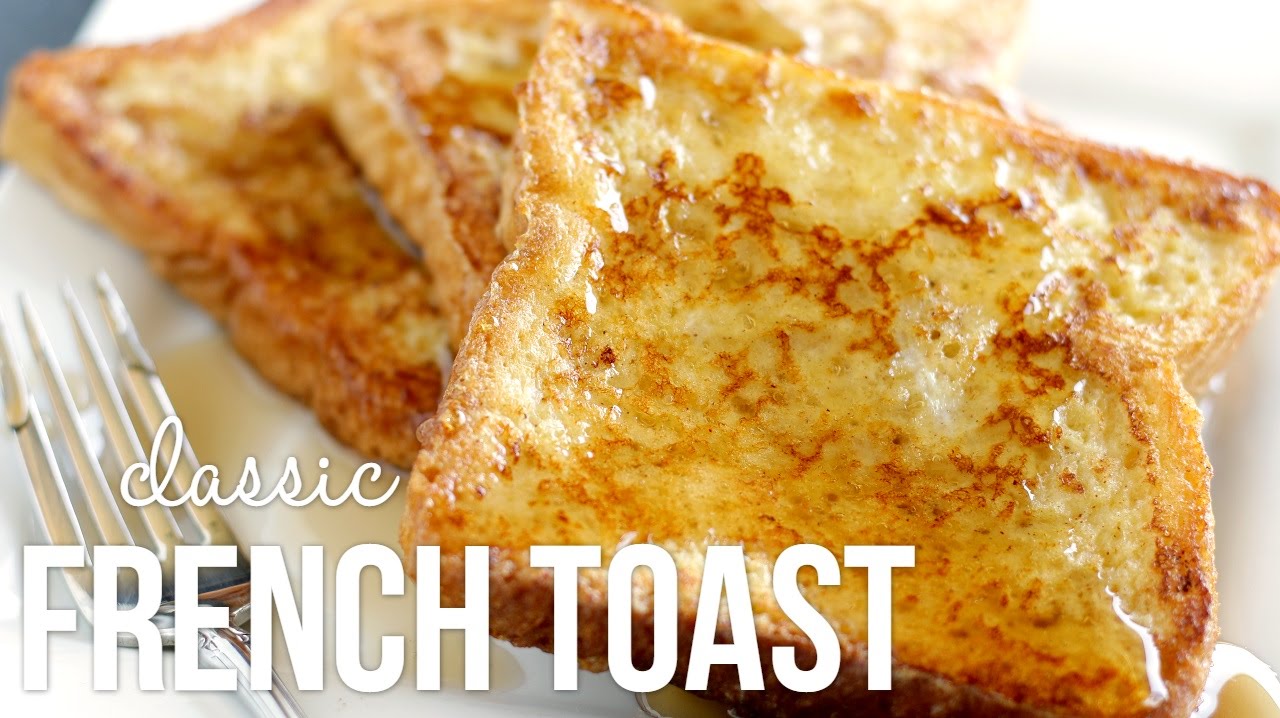
“French toast has a reputation for being foolproof. It isn't. Most versions come out either soggy in the middle, rubbery on the outside, or so aggressively dipped that the bread disintegrates before it hits the pan. The difference between diner mediocrity and the kind of French toast that makes a Tuesday morning feel like a decision comes down to three things: the bread you use, how long you dip it, and whether your butter is actually hot before the bread goes in.”
Why This Recipe Works
French toast is a rescue operation. It exists because someone, centuries ago, had stale bread and eggs and not enough sense to throw either away. The genius of the original technique — soaking bread in an egg-milk mixture and frying it — is that it turns two deteriorating ingredients into something greater than either deserves to be. The fact that most modern versions fail despite having access to better bread, better eggs, and better equipment says something unflattering about how little attention people pay to a fifteen-minute recipe.
The Bread Question
Everything else is downstream of this decision. Brioche and challah are enriched breads — they contain eggs, butter, and sugar in the dough itself. This fat content does two things: it creates a tender interior that finishes soft and custardy rather than rubbery, and it gives the exterior enough sugar to caramelize into a deep golden crust under medium-high heat. Sandwich bread contains neither. Sourdough's open, irregular crumb absorbs the custard in aggressive pockets rather than evenly, producing bites that alternate between eggy and dry.
The day-old requirement is structural, not aesthetic. Fresh bread retains approximately 35% more internal moisture than bread baked the previous day. When you dip fresh bread in custard, you're adding liquid to an already-saturated matrix — the bread can't absorb the custard efficiently, so the exterior gets wet while the center stays doughy. Day-old bread, having dried somewhat, creates a gradient that allows the custard to penetrate evenly from crust to crumb. If your bread is fresh, a short stint in a low oven dries it out sufficiently.
The Custard Ratio
The ratio here — 3 eggs to 3/4 cup liquid — sits at the precise point where the custard is rich enough to coat the bread but not so thick that the exterior sets before the interior has a chance to follow. Too many eggs and you get scrambled-egg toast: rubbery, pale, and sulfurous. Too much milk and the custard is watery, resulting in a soggy center and no crust development.
The spices are not decorative. Cinnamon and freshly grated nutmeg are fat-soluble aromatic compounds — they bind to the cream and egg yolks in the mixture and distribute evenly throughout every bite rather than sitting on the surface. The orange zest works differently: its volatile citrus oils cut through the richness and prevent the dish from feeling heavy. It registers less as "I taste orange" and more as "this tastes cleaner than French toast usually does." That's the point.
The Heat Architecture
A cast iron skillet is the correct tool here. Cast iron's thermal mass means the pan temperature recovers quickly after a cold slice of bread hits the surface — a thin non-stick pan drops temperature on contact and takes 45 seconds to recover, during which the bread is sweating rather than browning. The Maillard reaction that creates the crust requires sustained, consistent surface heat. Cast iron provides that. Nothing else in a typical kitchen comes close.
The butter-foaming cue is not a nicety — it's the thermometer you don't need to own. When butter melts in a pan, it first foams as the water content evaporates. The foam subsides when the water is gone and the temperature climbs. That's your signal: no foam, right temperature, bread goes in. Too early and you're poaching. Too late, past the foam's second rise, and the butter solids have already started to burn.
The Dip Discipline
Three to five seconds per side. This number is not negotiable. The interior of day-old brioche has a specific absorption capacity — it can hold a defined amount of custard before the gluten network saturates and the bread begins to disintegrate structurally. At five seconds per side, the bread is at 85% capacity, which is exactly where you want it: enough custard to set into a tender interior during cooking, not so much that the center stays liquid.
This is also why you shake off the excess before the bread hits the pan. Pooled custard doesn't cook evenly — it creates a wet moat around the slice that steams the edges rather than browning them. A two-second drip over the bowl eliminates this entirely.
Breakfast doesn't have to be an afterthought. Fifteen minutes, the right bread, and enough attention to not crowd the pan — that's all this recipe asks.
Where Beginners Mess This Up
Before we start, read this. These are the 4 reasons your classic french toast (stop soaking it wrong) will fail:
- 1
Using fresh bread: Fresh bread is too moist to absorb the custard without falling apart. Day-old bread has lost enough internal moisture that it can soak up the egg mixture without becoming structurally compromised. If your bread is fresh, dry it in a 300°F oven for 8 minutes first. This is not optional — it's the foundation the whole recipe stands on.
- 2
Over-dipping the bread: Three to five seconds per side. That's it. Any longer and the bread absorbs so much custard that the interior never fully sets during cooking — you get a wet, eggy core surrounded by a browned exterior that lies to you about being done. The goal is surface saturation, not full penetration.
- 3
Cooking in cold butter: If the butter isn't foaming when the bread hits the pan, you're not cooking — you're soaking. The initial high heat creates the Maillard reaction that forms the caramelized crust. Cold pan, no crust. No crust, just sad eggy bread.
- 4
Overcrowding the pan: Each slice needs clearance. Crowded slices trap steam between them, which prevents browning and lowers the pan temperature. Cook in batches of four maximum, and never let slices touch.
The Video Reference Library
Want to see it in action? Here are the exact videos we analyzed and combined to build this foolproof recipe translation:
A focused walkthrough of the custard ratio and dip timing that separates crispy-outside, custardy-inside results from the soggy versions most people settle for.
🛠️ Core Equipment
- Large heavy-bottomed skillet or cast iron griddleEven heat distribution across the entire surface is essential. Thin pans create hot spots that burn the edges while leaving the center undercooked. A [cast iron skillet](/kitchen-gear/review/cast-iron-skillet) retains and distributes heat better than anything else on the market.
- Shallow wide bowlThe dipping vessel needs to be wide enough to lay a full slice flat and shallow enough that you control the dip depth. A deep bowl forces you to tilt the bread, creating uneven absorption.
- Fine microplane or zesterFor the orange zest and fresh nutmeg. Pre-ground nutmeg from a jar that's been open for six months smells like cardboard. Fresh-grated nutmeg smells like the reason nutmeg was worth a ship war in the 1600s.
- Flat spatulaA wide, thin spatula lets you flip without compressing the bread. Tongs and forks pierce the crust and let the custard escape. Use a [fish spatula](/kitchen-gear/review/fish-spatula) if you have one — the flexibility gives you a clean flip every time.
Classic French Toast (Stop Soaking It Wrong)
🛒 Ingredients
- ✦8 slices day-old brioche or challah bread
- ✦3 large eggs, room temperature
- ✦1/2 cup whole milk
- ✦1/4 cup heavy cream
- ✦1 teaspoon pure vanilla extract
- ✦1/2 teaspoon ground cinnamon
- ✦1/4 teaspoon freshly grated nutmeg
- ✦1 tablespoon honey or coconut sugar
- ✦Pinch of fine sea salt
- ✦3 tablespoons unsalted butter, divided
- ✦1/2 teaspoon orange zest (optional, for brightness)
- ✦Pure maple syrup for serving
- ✦Fresh berries for topping (optional)
- ✦Confectioners' sugar for dusting (optional)
👨🍳 Instructions
01Step 1
Whisk together eggs, whole milk, heavy cream, vanilla extract, cinnamon, nutmeg, honey, salt, and orange zest in a shallow bowl until completely smooth and well blended.
02Step 2
Heat a large skillet or griddle over medium-high heat. Add 1.5 tablespoons of butter and allow it to melt and foam slightly, about 1 minute.
03Step 3
Working one slice at a time, dip each piece of bread into the custard for exactly 3-5 seconds per side. Do not let it sit.
04Step 4
Place dipped slices into the hot buttered skillet in a single layer, cooking 4 pieces at a time maximum. Do not let slices touch.
05Step 5
Cook for 3-4 minutes until the bottom edges are deep golden brown with visible caramelization.
06Step 6
Flip each slice carefully and cook for another 2-3 minutes until the second side is evenly golden and the custard is fully set throughout.
07Step 7
Transfer to a warmed plate and cover loosely with foil to hold heat while cooking the remaining slices.
08Step 8
Add remaining butter to the pan and repeat with the second batch. Serve immediately with warm maple syrup, fresh berries, and a dusting of confectioners' sugar.
Nutrition Per Serving
Estimates based on standard preparation. Adjustments alter macros.
🔄 Substitutions
Instead of Heavy cream...
Use Plain Greek yogurt (1/4 cup, non-fat)
Adds a slight tang and boosts protein content. The custard stays rich because Greek yogurt's thickness compensates for the missing fat. Texture remains custardy and satisfying.
Instead of Whole milk...
Use Unsweetened oat milk or almond milk
Oat milk performs best here — its natural starch gives it more body than almond milk, which can make the custard thin and watery. Flavor is slightly more delicate.
Instead of Unsalted butter...
Use Ghee or coconut oil (2.5 tablespoons)
Ghee has a higher smoke point and a nuttier flavor that holds up well at medium-high heat. Coconut oil works but adds a subtle tropical note that some people notice. Both are better choices if you want more heat stability.
Instead of Brioche or challah...
Use Whole grain or sprouted bread
Nuttier, denser, and more filling. The texture is slightly less pillowy but the increased fiber meaningfully slows the glucose spike. Use thicker slices to compensate for the denser crumb.
🧊 Storage & Reheating
In the Fridge
Store cooled slices in an airtight container for up to 2 days. Separate layers with parchment paper to prevent sticking.
In the Freezer
Freeze in a single layer on a baking sheet first, then transfer to a zip bag for up to 1 month. Reheat directly from frozen.
Reheating Rules
Reheat in a dry skillet over medium heat for 2 minutes per side, or in a toaster oven at 350°F for 5 minutes. The microwave turns the crust soft and defeats the entire point — avoid it.
❓ Frequently Asked Questions
Why is my French toast soggy in the middle?
You either used fresh bread or dipped for too long. Fresh bread holds too much moisture to absorb the custard without becoming structurally compromised. Day-old bread is essential. On dip time: 3-5 seconds per side, maximum. Any longer and the interior never fully sets during the short cook time.
Can I make the custard mixture the night before?
Yes. Whisk the eggs, milk, cream, and spices and store covered in the fridge overnight. Give it a quick re-whisk before dipping — the spices settle. Do not add the orange zest until right before cooking or the oils turn bitter.
What's the best bread for French toast?
Brioche or challah, day-old. Both are enriched breads with high egg and fat content, which means they brown beautifully and hold their structure during dipping. Sandwich bread becomes paste. Sourdough's open crumb absorbs too aggressively and tears. Stick to the enriched doughs.
Why does my second batch always come out darker than the first?
Residual butter from the first batch burns and darkens the base of the pan. Between batches, wipe the pan with a paper towel folded into a thick pad, then add fresh butter. The pan will already be at temperature so the second batch will cook faster — watch it closely.
Do I need to use both milk and cream?
Not strictly. The cream adds fat that contributes to custard richness and browning, but if you only have milk, use 3/4 cup total and add an extra egg yolk to compensate for the missing fat. Pure milk custard is thinner but still works.
How do I know when the French toast is actually done inside?
Press the center of the slice lightly with your spatula. A done slice springs back slightly — it has structure. An underdone slice feels soft and gives without resistance, which means the custard is still wet inside. If in doubt, cut into one piece from the first batch before plating the rest.

The Science of
Classic French Toast (Stop Soaking It Wrong)
We turned everything on this page into a beautiful, flour-proof PDF cheat sheet. Print it out, stick it to your fridge, and never mess up your classic french toast (stop soaking it wrong) again.
*We'll email you the high-res PDF instantly. No spam, just perfectly cooked meals.
AlmostChefs Editorial Team
We translate the internet's most popular cooking videos into foolproof, beginner-friendly written recipes. We analyze multiple methods, test them in our kitchen, and engineer a single "Master Recipe" that gives you the best possible result with the least possible stress.