The Real French Onion Soup (Most Recipes Rush the Only Part That Matters)
A classic French bistro soup built on slowly caramelized yellow onions, rich beef stock, and a broiled crown of molten Gruyère. We broke down the most popular YouTube methods to isolate the one technique failure that ruins 90% of home attempts — and built a foolproof version around fixing it.
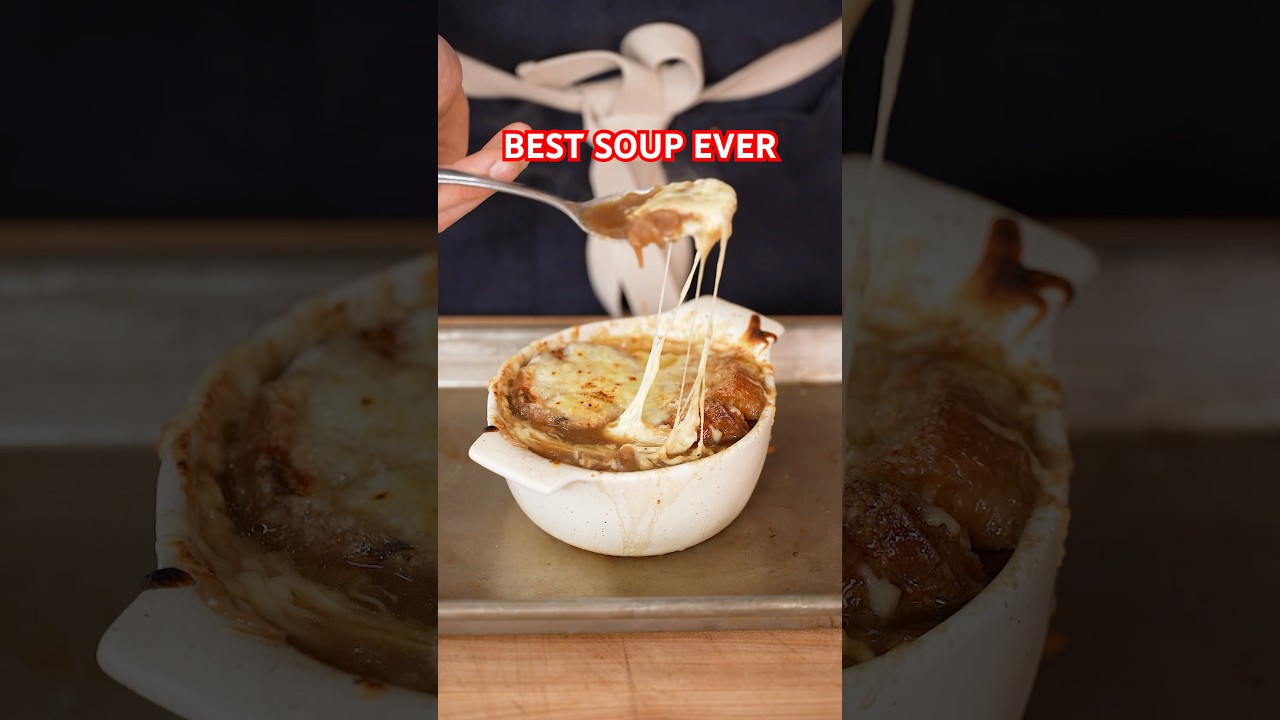
“French onion soup looks like a one-move recipe. Caramelize onions, add broth, top with bread and cheese, broil. That's it. So why does almost every home version taste thin, sharp, and vaguely disappointing? Because the onions weren't actually caramelized. They were browned. Those are not the same thing, and the difference is about 30 minutes of heat that most recipes tell you to skip.”
Why This Recipe Works
French onion soup is the recipe that exposes everything wrong with how people approach cooking. It has almost no ingredients. The technique is not complicated. There is no specialized equipment. And yet restaurant versions taste completely different from most home versions — richer, deeper, with a sweetness that reads almost like meat stock even though it comes entirely from onions. The gap is not secret ingredients. The gap is time, and specifically, the refusal to give the onions the time they require.
The Caramelization Lie
Every French onion soup recipe tells you to caramelize the onions. Most of them also tell you it takes 20-25 minutes. These two statements cannot both be true. Real caramelization — the full conversion of onion sugars through Maillard reactions and pyrolysis — takes 45-60 minutes at medium heat in a heavy-bottomed Dutch oven. What happens at 20 minutes is moisture evaporation. The onions turn translucent, they shrink, they soften. That's it. The flavor compounds that make French onion soup taste like French onion soup have not yet formed.
The target color is deep mahogany — not golden, not light brown. If you held up a spoonful of properly caramelized onions next to a tablespoon of dark soy sauce, they should be close in color. The texture becomes almost jam-like; the onions lose all structure and collapse into a soft, sweet, intensely fragrant mass. This takes patience and nothing else. There is no shortcut, no baking soda trick, no added sugar that replicates what time and heat do to a raw onion.
The Fond Is the Flavor
By the time the onions are done, the bottom of your pot is coated in a dark, nearly black crust. This is fond — concentrated caramelized sugars and protein compounds that have bonded to the metal through sustained heat. Most home cooks see this and worry they've burned something. What they've actually done is accidentally created the most flavorful thing in the entire recipe.
White wine deglazes the pot and dissolves every molecule of that crust into the liquid. Scraping hard with a wooden spoon is not aggressive — it's mandatory. The fond is a significant fraction of the soup's total flavor. Adding broth directly without deglazing means leaving the best part stuck to the pot and washing it down the drain afterward.
Why the Cheese Needs to Cover the Bowl
The broiled cheese layer is not a garnish. It's structural. The cheese needs to make contact with the rim of oven-safe bowls on all sides so that when it bubbles and sets, it creates a sealed crust that traps steam from the soup below. This keeps the bread from sinking and creates the signature moment when you break through the crust with a spoon and the steam hits your face.
Coverage matters for another reason: under the broiler, exposed soup surface reduces rapidly and the top layer concentrates into an intensely salty, unbalanced bite. The cheese acts as a protective blanket. Anywhere you can see soup surface, you'll get a problem under the broiler. Cover it completely.
Stock Quality Is Non-Negotiable
Six cups of beef stock is the single largest volume ingredient in this recipe, and it's mostly what you taste between spoonfuls of the caramelized onion and cheese. Use the best beef stock you can find or make. The difference between a good stock and a poor one is not subtle here — it's the difference between a soup that tastes like it came from a bistro kitchen and one that tastes like it came from a can.
Bone broth is worth the upgrade if you can find it. The collagen content gives the soup a slight body and mouthfeel that regular stock lacks — not gelatinous, just present. Combined with the full hour of caramelized onion, a good bone broth makes the soup taste like it simmered for twice as long as it did.
Everything else in this recipe supports those two foundations: properly caramelized onions and quality beef stock. Get those right and the rest is assembly.
Where Beginners Mess This Up
Before we start, read this. These are the 4 reasons your the real french onion soup (most recipes rush the only part that matters) will fail:
- 1
Pulling the onions too early: The single failure point behind nearly every bad French onion soup. Properly caramelized onions take 45-60 minutes over medium heat. They should be deep mahogany — almost jam-like — not golden yellow. If your onions are golden at 20 minutes, you've only removed the water. The Maillard reaction and sugar conversion haven't happened yet. This is the whole soup.
- 2
Using the wrong pot: A wide, thin-bottomed pan distributes too much surface area with not enough heat retention. The onions steam instead of brown. You need a heavy-bottomed Dutch oven or deep pot where the onions stack several inches high initially, then slowly collapse and concentrate. The depth forces moisture to evaporate upward while the base stays in constant contact with controlled heat.
- 3
Skipping the deglazing step: After the onions caramelize, the bottom of your pot will be coated in dark fond — concentrated sugar and protein compounds. Adding wine and scraping this up is not optional. That fond is a significant percentage of the soup's flavor. Skipping it means throwing away the most valuable thing in the pot.
- 4
Under-cheesing the broil: The cheese layer needs to extend from bread to bowl edge. If it only covers the bread, the edges of the bowl stay wet and the cheese slides. Pile the Gruyère and Parmesan generously — more than you think is reasonable — so it contacts the soup on all sides and creates a sealed, bubbling crust.
The Video Reference Library
Want to see it in action? Here are the exact videos we analyzed and combined to build this foolproof recipe translation:
The primary reference video for this recipe. Clear breakdown of the caramelization stages and what the onions should look like at each milestone.
🛠️ Core Equipment
- Heavy-bottomed Dutch oven or deep potEven heat distribution over the full hour of onion caramelization. A thin pot creates hot spots that burn the onion contact points while leaving the rest undercooked. Cast iron or enameled cast iron is ideal.
- Oven-safe bowls or crocksThey go directly under the broiler. Standard bowls will crack. Traditional French onion soup crocks with straight sides and thick walls are purpose-built for this — they also hold heat at the table long after serving.
- Wooden spoon or silicone spatulaFor scraping up the fond during deglazing. Metal utensils can scratch enameled interiors. You want to aggressively work the bottom of the pot to dissolve all of those caramelized bits into the wine.
- Broiler-capable oven or kitchen torchThe cheese crust must be formed under direct high heat. A regular bake cycle won't brown the top aggressively enough. If your broiler runs uneven, rotate the bowls halfway through.
The Real French Onion Soup (Most Recipes Rush the Only Part That Matters)
🛒 Ingredients
- ✦3 pounds yellow onions, thinly sliced (about 1/4-inch)
- ✦3 tablespoons unsalted butter
- ✦2 tablespoons olive oil
- ✦6 cups beef stock or broth
- ✦1 cup dry white wine
- ✦2 sprigs fresh thyme (or 1 teaspoon dried)
- ✦1 bay leaf
- ✦1 teaspoon Worcestershire sauce
- ✦1 beef bouillon cube
- ✦1/4 cup cognac or dry sherry (optional)
- ✦8 baguette slices, cut on the diagonal
- ✦2 cloves garlic, halved
- ✦2 cups shredded Gruyère cheese
- ✦1/2 cup grated Parmesan cheese
- ✦Salt and freshly ground black pepper to taste
👨🍳 Instructions
01Step 1
Slice the yellow onions into thin, even pieces approximately 1/4-inch thick.
02Step 2
Heat a heavy-bottomed Dutch oven over medium heat. Add the butter and olive oil together and let the butter melt fully.
03Step 3
Add all the sliced onions and stir to coat evenly in the fat. Cook uncovered, stirring every 5-10 minutes, for 45-60 minutes until deep mahogany brown with a jam-like consistency.
04Step 4
Pour the white wine into the pot. Scrape the bottom aggressively with a wooden spoon to dissolve all the browned fond into the liquid. Let it reduce by half, about 3-4 minutes.
05Step 5
If using cognac or dry sherry, add it now and let it cook off for 1-2 minutes.
06Step 6
Add the beef stock, thyme, bay leaf, Worcestershire sauce, and bouillon cube. Bring to a gentle simmer.
07Step 7
Reduce heat to low and simmer uncovered for 15-20 minutes to meld the flavors. Taste and season with salt and pepper. Remove the thyme sprigs and bay leaf.
08Step 8
Preheat your broiler to high. Arrange baguette slices on a baking sheet and toast under the broiler 2-3 minutes per side until golden and firm.
09Step 9
Rub each toasted baguette slice on both sides with the cut face of a halved garlic clove.
10Step 10
Ladle hot soup into oven-safe bowls, filling about three-quarters full. Place one or two garlic-rubbed toast slices on top.
11Step 11
Mix the shredded Gruyère and grated Parmesan. Pile generously onto each bread slice, extending the cheese to the edges of the bowl so it contacts the soup on all sides.
12Step 12
Place bowls under the broiler for 3-5 minutes until the cheese bubbles vigorously and turns light golden brown at the edges. Watch continuously — it goes from perfect to burnt fast.
13Step 13
Remove bowls with oven mitts and rest for 5 minutes before serving. The soup underneath holds heat for a long time.
Nutrition Per Serving
Estimates based on standard preparation. Adjustments alter macros.
🔄 Substitutions
Instead of Butter and olive oil...
Use Extra virgin olive oil only (3-4 tablespoons)
Loses the nutty dairy background note but still provides good browning. Slightly more Mediterranean character. Reduces saturated fat if that's a concern.
Instead of Dry white wine...
Use Low-sodium beef broth or vegetable broth
Eliminates the tangy acidity and some complexity. The fond still deglazes — you just lose the wine's contribution to the flavor base. Workable, not ideal.
Instead of Gruyère and Parmesan...
Use Sharp aged cheddar or 50/50 Swiss and sharp cheddar
More accessible cheeses that still melt under the broiler. Flavor is bolder and sharper rather than nutty and complex. Still makes a legitimate crust.
Instead of Beef stock...
Use Organic low-sodium beef bone broth
Richer umami and improved mouthfeel from the collagen content. Cleaner taste. Reduces sodium significantly — adjust seasoning accordingly.
Instead of Baguette slices...
Use Sourdough or whole wheat bread
Denser texture holds up better to extended broiling. Sourdough's tang complements the soup's savory depth. Slice slightly thicker than baguette to compensate for the weight.
🧊 Storage & Reheating
In the Fridge
Store the soup base (without bread or cheese) in an airtight container for up to 4 days. Assemble and broil fresh each time you serve.
In the Freezer
Freeze the soup base for up to 3 months. The caramelized onion flavor holds extremely well. Thaw overnight in the fridge and reheat on the stovetop.
Reheating Rules
Reheat soup base gently on the stovetop over medium-low heat. Do not microwave assembled bowls — the bread will disintegrate and the cheese won't re-brown. Always broil fresh.
❓ Frequently Asked Questions
Why are my onions not caramelizing after 20 minutes?
They're not supposed to be. Properly caramelized onions take 45-60 minutes at medium heat. What happens at 20 minutes is moisture evaporation. The actual Maillard reaction and sugar conversion that create the deep sweetness and color don't happen until most of the water is gone, which is around the 30-40 minute mark. Turn up the heat slightly if the pot seems dry, but don't rush it — you'll just burn the exterior while the interior stays raw.
Can I make this vegetarian?
Yes, but the flavor changes substantially. Replace the beef stock with a very deeply flavored mushroom or roasted vegetable broth. Add a tablespoon of soy sauce or tamari and a teaspoon of miso paste for umami depth. The caramelized onion base is strong enough that a good vegetarian broth can carry the soup — just don't use a light, watery broth and expect it to work.
My cheese slid off the bread into the soup. What went wrong?
Two possible causes. First, the bread wasn't toasted dry enough — soft bread can't anchor the cheese. Second, the cheese didn't extend to the bowl edges, so it had no ledge to grip. Toast the baguette slices until genuinely firm and dry, and pile the cheese so it contacts the rim of the bowl on all sides.
Do I need oven-safe bowls or can I use regular bowls?
You need oven-safe bowls. Standard ceramic or glass bowls can crack under direct broiler heat, especially with the thermal shock of hot soup inside and broiler heat above. Look for bowls explicitly labeled oven-safe or broiler-safe, or use traditional French onion soup crocks, which are purpose-built for this.
Why is my soup too salty?
Most likely the combination of beef stock, bouillon cube, and Worcestershire sauce without taste-testing at each stage. Bouillon cubes are very high sodium. If your stock is also salted, the combination can easily oversalt the finished soup. Always use low-sodium stock when adding a bouillon cube, and taste before seasoning.
Can I make a big batch and assemble individual servings throughout the week?
Yes — this is actually the ideal way to handle French onion soup. Make a large batch of the soup base, refrigerate it, and assemble individual portions to order. Toast fresh bread, ladle hot soup, cheese, broil. Each serving takes about 10 minutes once the base is made. The soup base improves over 2-3 days in the fridge.
The Science of
The Real French Onion Soup (Most Recipes Rush the Only Part That Matters)
We turned everything on this page into a beautiful, flour-proof PDF cheat sheet. Print it out, stick it to your fridge, and never mess up your the real french onion soup (most recipes rush the only part that matters) again.
*We'll email you the high-res PDF instantly. No spam, just perfectly cooked meals.
AlmostChefs Editorial Team
We translate the internet's most popular cooking videos into foolproof, beginner-friendly written recipes. We analyze multiple methods, test them in our kitchen, and engineer a single "Master Recipe" that gives you the best possible result with the least possible stress.