Creamy Scrambled Eggs (Stop Overcooking Them)
Soft, custard-like scrambled eggs cooked low and slow with butter, fresh herbs, and sharp cheddar. We broke down the most common failures to build one foolproof technique that delivers restaurant-quality curds every time — in under 10 minutes.
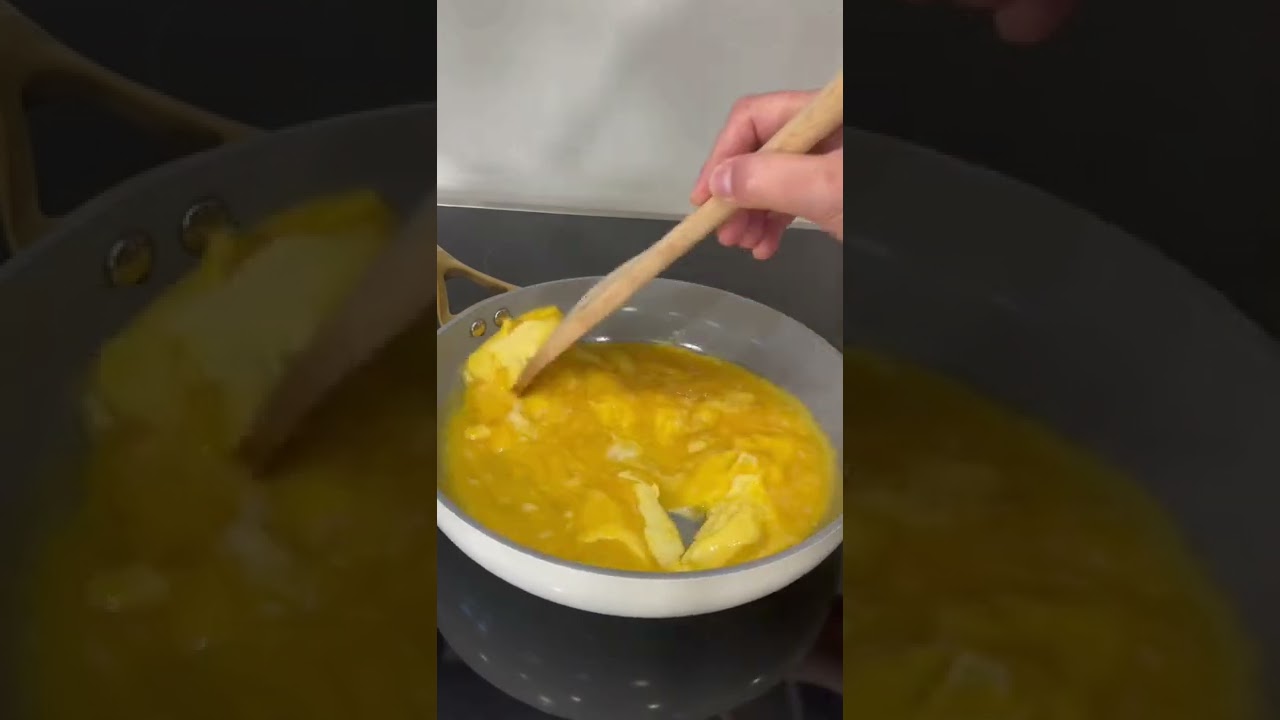
“Scrambled eggs are the most cooked and most ruined breakfast in existence. Every diner short-order cook, every rushed morning, every overconfident home cook has produced the same result: dry, rubbery, overcooked curds that taste like regret. The difference between those eggs and the kind you get at a good restaurant is not a secret ingredient. It's heat control and one rule about when to pull the pan.”
Why This Recipe Works
Scrambled eggs are four ingredients. They take eight minutes. They are also wrong approximately 90% of the time. Not raw, not unsafe — just wrong. Tight, rubbery, grey-tinged, waterlogged, or completely flavorless. The technique failures that produce bad scrambled eggs are simple, consistent, and almost entirely about one variable: heat.
The Heat Problem
Eggs are made of protein. Protein, when exposed to heat, denatures — it unfolds, then re-bonds into new structures. At low heat, this happens slowly, allowing proteins to form loose, tender networks that trap moisture and fat between them. These are the soft, glossy curds you're after. At high heat, the proteins contract violently, squeezing moisture out and bonding tightly together. These are rubber.
The entire scrambled egg technique is an exercise in temperature management. Medium-low heat. Non-stick skillet or seasoned cast iron to distribute heat evenly. Butter that foams lazily, not browns. If your butter browns in the first 30 seconds, you have already lost.
The Fold, Not the Stir
The second most common failure is mechanical. People stir scrambled eggs like they're making risotto — constantly, frantically, with the goal of preventing anything from sticking. The result is a pan full of tiny egg fragments with the texture of wet sand.
What you want is large, pillowy folds. Push from the outer edge toward the center. Wait 15-20 seconds. Repeat. The curd needs time between strokes to build structure. A rubber spatula with a flexible edge is the right tool — it follows the curve of the pan without cutting through the forming curd.
The Residual Heat Rule
This is the most counterintuitive step in all of egg cookery, and it is why restaurant scrambled eggs look the way they do. Eggs continue to cook after the pan leaves the burner. The residual heat stored in the metal, in the butter, in the eggs themselves — it keeps driving protein denaturation for 30-60 seconds after you remove the heat source.
Which means: if your eggs look done in the pan, they are overcooked on the plate. You must pull them when they still appear wet and glossy on the surface. This requires trust, and it is the one step where most home cooks lose their nerve at the critical moment. Set the rule in advance — pull when underdone, always — and follow it mechanically until it becomes instinct.
The Herb Finish
Fresh chives and parsley go on after plating, not during cooking. This is not a suggestion. The aromatic compounds responsible for the bright, grassy flavor of fresh herbs are volatile — they evaporate in under a minute of sustained heat. Cooked herbs taste flat and slightly bitter. Raw herbs taste like the thing you're actually trying to taste. The lemon wedge on the side follows the same logic: a small squeeze of citrus acid at the table brightens the entire dish and lifts the richness of butter and cheese without cooking off in the pan.
The Cheese Decision
Finely grated cheese melts into the eggs in a matter of seconds and integrates fully into the curd structure. Pre-shredded cheese — coated in potato starch or cellulose to prevent clumping in the bag — resists melting and produces grainy, uneven pockets. Grate it fresh from the block immediately before you start cooking. Sharp cheddar is the standard here: enough sharpness to register against the butter and egg richness, enough fat content to melt smoothly. Feta or goat cheese are sharper, tangier alternatives that work equally well for a different flavor profile.
Eight minutes. Four ingredients plus seasoning. The entire gap between forgettable and excellent is heat discipline and the nerve to pull the pan ten seconds too early.
Where Beginners Mess This Up
Before we start, read this. These are the 4 reasons your creamy scrambled eggs (stop overcooking them) will fail:
- 1
Cooking on high heat: High heat seizes egg proteins instantly, squeezing out moisture and producing tight, rubbery curds. Low heat lets the proteins set slowly, trapping moisture inside each curd. The difference is five minutes of patience — that's the entire technique.
- 2
Stirring too aggressively or too constantly: Constant stirring breaks the forming curds into tiny fragments before they can develop structure. You want large, pillowy folds — not scrambled egg paste. Push from the edges toward the center every 15-20 seconds and let the curds build between strokes.
- 3
Leaving the pan on heat too long: Eggs continue cooking from residual heat for 30-60 seconds after you pull the pan. If they look done in the pan, they're already overdone on the plate. Pull them when they still appear slightly wet and glossy. This is non-negotiable.
- 4
Using cold eggs straight from the fridge: Cold eggs hit a hot pan unevenly — the outside sets before the inside has warmed through. Room-temperature eggs cook uniformly from edge to center. Take them out 10-15 minutes before you start.
The Video Reference Library
Want to see it in action? Here are the exact videos we analyzed and combined to build this foolproof recipe translation:
The definitive walkthrough on low-heat scrambled eggs. Demonstrates the exact moment to pull the pan and shows what properly glossy, underdone-looking eggs look like before they finish on residual heat.
🛠️ Core Equipment
- Non-stick skillet or well-seasoned cast iron panEven heat distribution and easy release are both essential. Thin stainless pans create hot spots that cook eggs unevenly. A [cast iron skillet](/kitchen-gear/review/cast-iron-skillet) holds heat steadily at low temperatures where non-stick pans can falter.
- Rubber or silicone spatulaThe flexible edge lets you make long, sweeping folds from the outer edge to the center without shredding the curds. A metal spatula cuts through forming curds and produces fragments instead of folds.
- Medium mixing bowlYou need enough volume to whisk vigorously. A small bowl limits your range of motion and produces under-whisked eggs where yolk and white aren't fully integrated.
- Fine grater or box graterFinely grated cheddar melts into the eggs in seconds. Pre-shredded cheese is coated in anti-caking powder that resists melting and creates grainy texture. Grate fresh.
Creamy Scrambled Eggs (Stop Overcooking Them)
🛒 Ingredients
- ✦3 large eggs, room temperature
- ✦1½ tablespoons unsalted butter
- ✦1 tablespoon whole milk or heavy cream
- ✦¼ teaspoon fine sea salt
- ✦Pinch of freshly ground black pepper
- ✦1 tablespoon fresh chives, finely chopped
- ✦½ tablespoon fresh parsley, chopped
- ✦¼ cup sharp cheddar cheese, finely grated
- ✦½ tablespoon water, if needed for extra creaminess
- ✦2 slices whole grain bread for serving
- ✦Fresh lemon wedge for garnish
👨🍳 Instructions
01Step 1
Crack the three room-temperature eggs into a medium mixing bowl. Add the milk, salt, and black pepper.
02Step 2
Whisk vigorously for 30-45 seconds until yolks and whites are completely combined and the mixture is a uniform pale yellow.
03Step 3
Place a non-stick skillet or well-seasoned cast iron pan over medium-low heat. Let it warm for 30 seconds.
04Step 4
Add the butter and swirl until it foams gently and coats the entire pan surface, about 45 seconds. The foam should be lazy — if the butter browns immediately, the pan is too hot.
05Step 5
Pour the whisked eggs into the center of the pan. Let them sit undisturbed for 10-15 seconds so the edges can begin to set.
06Step 6
Using a rubber spatula, push the cooked egg curds from the outer edges toward the center with slow, deliberate strokes. Pause 15-20 seconds between each fold.
07Step 7
Continue the edge-to-center folding motion for about 3-4 minutes total. The eggs should be forming large, soft, pillowy curds with visibly wet surface.
08Step 8
When the eggs are still glossy and slightly underdone on top, sprinkle the grated cheddar across the surface.
09Step 9
Fold the cheese in with one or two gentle sweeps of the spatula to distribute evenly.
10Step 10
Remove the skillet from heat while the eggs still look slightly underdone and wet. They will continue cooking on residual heat for 30-60 seconds.
11Step 11
Immediately transfer to a serving plate or bowl while still warm and soft.
12Step 12
Garnish with the chopped chives and parsley, a final grind of black pepper, and serve alongside whole grain toast and a lemon wedge.
Nutrition Per Serving
Estimates based on standard preparation. Adjustments alter macros.
🔄 Substitutions
Instead of Whole milk...
Use Unsweetened oat milk or almond milk
Slightly less rich but maintains creaminess. Oat milk adds subtle sweetness. Use the same quantity.
Instead of Unsalted butter...
Use Extra virgin olive oil or ghee
Olive oil produces a lighter texture and eliminates dairy. Ghee adds nutty depth and has better heat stability. Both work at the same quantity.
Instead of Sharp cheddar...
Use Crumbled feta or fresh goat cheese
Tangier, more complex flavor. Feta and goat cheese have lower lactose content and won't overwhelm the egg flavor the way aged cheddar can.
Instead of Standard eggs...
Use Pasture-raised or omega-3 enriched eggs
Noticeably richer yolk color, better flavor, and improved nutritional profile. Worth the price difference for a dish where the egg is the entire point.
🧊 Storage & Reheating
In the Fridge
Scrambled eggs are best eaten immediately. If you must store them, keep in an airtight container for up to 1 day. The texture degrades significantly.
In the Freezer
Not recommended. Egg proteins break down on freezing and thawing, producing watery, grainy results.
Reheating Rules
Reheat gently in a non-stick pan over the lowest possible heat with a small knob of butter, stirring constantly for 60-90 seconds. Microwave reheating produces rubbery eggs — avoid.
❓ Frequently Asked Questions
Why are my scrambled eggs watery?
Two possible causes: you added too much liquid to the egg mixture, or you cooked them too fast on high heat, which causes the proteins to contract and expel moisture. Use no more than 1 tablespoon of milk per 3 eggs, and keep the heat firmly on medium-low.
Do I really need to pull the eggs before they look done?
Yes. Egg proteins continue to set from residual pan heat for 30-60 seconds after you remove the pan from the burner. By the time they reach the plate, they've cooked further. Eggs that look perfect in the pan will be overcooked on the plate.
What's the difference between using milk versus cream?
Milk adds volume and a slight lightness. Heavy cream adds richness and produces a more custard-like texture. Neither is objectively better — it's a texture preference. Water produces the lightest, fluffiest curds of all three options.
Why do my eggs stick even in a non-stick pan?
Either the heat was too high (causing proteins to bond with the pan surface before the fat could protect them) or the butter wasn't fully coating the pan before you added the eggs. Let the butter foam completely and cover every part of the pan before pouring in the eggs.
Can I add vegetables or other mix-ins?
Yes, but cook them separately first. Raw vegetables release water as they heat, which dilutes the egg mixture and produces wet, steamed curds instead of soft, dry folds. Sauté or roast any additions and fold them in during the last 30 seconds of cooking.
Why room temperature eggs specifically?
Cold eggs create an immediate temperature drop in the pan when they hit the butter, which disrupts the gradual heat build-up you need for even curd development. Room-temperature eggs enter an already-warm environment and begin cooking evenly from edge to center from the first second.
The Science of
Creamy Scrambled Eggs (Stop Overcooking Them)
We turned everything on this page into a beautiful, flour-proof PDF cheat sheet. Print it out, stick it to your fridge, and never mess up your creamy scrambled eggs (stop overcooking them) again.
*We'll email you the high-res PDF instantly. No spam, just perfectly cooked meals.
AlmostChefs Editorial Team
We translate the internet's most popular cooking videos into foolproof, beginner-friendly written recipes. We analyze multiple methods, test them in our kitchen, and engineer a single "Master Recipe" that gives you the best possible result with the least possible stress.