Fluffy Ricotta Pancakes (Whipped Egg Whites, Custardy Interior, 1.5-Inch Tall)
Ricotta pancakes built around whipped egg whites and whole milk ricotta — thick, custardy, almost cheesecake-like interior. The whipped whites are what makes them tall. Everything else is just technique.

“Ricotta pancakes are the version you make when you want pancakes to actually be extraordinary. The technique has two unusual elements: whole milk ricotta folded into the batter for a custardy, dense-tender interior, and separately whipped egg whites folded in for structural lift. The result is a pancake that's about 1.5 inches thick, with a golden exterior and an interior that's closer to a set custard than a traditional flapjack. This is why they appear on every brunch menu that's trying to be serious about pancakes.”
Why This Recipe Works
Ricotta pancakes are an enriched pancake — the ricotta cheese is not just a flavor addition, it's a structural ingredient that fundamentally changes the batter's protein, fat, and moisture profile. Understanding what ricotta does to pancake batter explains why this technique produces results that standard buttermilk pancakes can't match in terms of texture.
Ricotta contributes three things: fat, protein, and moisture. Whole milk ricotta is approximately 12% fat and 11% protein by weight. When folded into pancake batter, the fat coats flour particles and limits gluten development, producing a tender, almost silky crumb. The protein adds body — the ricotta's casein and whey proteins set during cooking alongside the egg proteins, creating a custardy, dense-tender interior rather than the airy, bread-like interior of a buttermilk pancake. The moisture contributes to the soft texture and also to the weight, which is why whipped egg whites are necessary to prevent the pancakes from being dense.
The whipped egg whites are a mechanical leavener. Chemical leaveners (baking powder, baking soda) work by producing carbon dioxide gas. Mechanical leaveners work by incorporating air into a structure that expands when heated. When egg whites are whipped to stiff peaks, the proteins denature and unfold, forming a stable foam of air bubbles trapped in a protein matrix. When folded into the batter and heated in the nonstick skillet, this air expands, lifting the heavy ricotta batter. The result is a pancake that's approximately 1.5 inches tall — nearly triple the height of a standard pancake of the same volume.
Stiff peaks are a specific structural state. "Whipped egg whites" covers a range of states from soft foam to stiff peaks. Soft peaks collapse when the beater is lifted and fold back on themselves. Stiff peaks stand upright without collapsing. The difference matters because softer peaks contain less air and deflate more easily when folded into heavy batter. Stiff peaks have a denser, more stable foam structure that can survive the folding process. The test is lifting the beater: the peak should stand straight up without curling over at the tip.
The folding sequence has a specific logic. Adding all the whipped whites to the ricotta batter in one addition would require extensive folding to incorporate fully — which deflates the whites. The standard technique is to sacrifice one-third of the whites by stirring them in aggressively, which lightens the heavy ricotta batter to roughly the same density as the remaining whites. Then the remaining whites are folded in with minimal strokes. Each fold should bring batter from the bottom of the bowl over the whites — not circular stirring. Stop when just incorporated. Small white streaks in the batter mean very little lost air; a completely uniform batter means the whites are gone.
Medium-low heat is required for even cooking. The combination of ricotta fat and sugar produces a pancake that browns quickly on the exterior — faster than a standard buttermilk pancake. At medium or medium-high heat, the outside can reach deep golden-brown while the center is still liquid. Medium-low heat slows the exterior browning enough to allow the interior to cook through. The 3-4 minute first-side cook time at medium-low is approximately twice as long as a standard pancake, and that time is necessary. Use a wide offset spatula for flipping — these pancakes are heavier and don't flex as easily as thinner pancakes.
Serve immediately. Ricotta pancakes lose height over time as the air in the whipped whites gradually deflates. They're best within 5 minutes of leaving the pan, topped with fresh berries and real maple syrup.
Where Beginners Mess This Up
Before we start, read this. These are the 3 reasons your fluffy ricotta pancakes (whipped egg whites, custardy interior, 1.5-inch tall) will fail:
- 1
Pancakes are flat and dense: The egg whites weren't whipped to stiff peaks, or they were deflated during folding. Whites must reach stiff peaks — they should stand up straight when the beater is lifted and the bowl can be inverted briefly without them sliding. Fold with large, sweeping motions from the bottom up, stopping the moment whites are incorporated. Any vigorous stirring collapses the air structure.
- 2
Raw in the middle before the exterior burns: Heat is too high. Ricotta pancakes are thick — 1.5 inches — and require medium-low heat to cook through. The ricotta's fat and protein brown quickly; the interior takes longer. Use medium-low throughout and cook 3-4 minutes per side. A slight jiggle in the center when you lift the spatula is acceptable — the ricotta stays custardy rather than setting like regular batter.
- 3
Whites deflated when folded — flat batter: Whites added all at once and stirred in. Add one-third of the whites first and stir somewhat firmly — this 'sacrificial' addition lightens the dense ricotta batter without worrying about deflation. Then fold the remaining whites in two additions with minimal strokes. The batter will look slightly streaky; that's fine.
The Video Reference Library
Want to see it in action? Here are the exact videos we analyzed and combined to build this foolproof recipe translation:
Weissman's full build showing the whites-whipping technique, the fold-in sequence, and the visual cues for when to flip a thick ricotta pancake.
Systematic comparison of pancake techniques, including ricotta vs. buttermilk vs. whipped-white methods, with height and texture comparisons.
Babish's technique demonstration focusing on the folding sequence and heat management for thick pancakes.
🛠️ Core Equipment
- Stand mixer or hand mixerFor whipping egg whites to stiff peaks. By hand is possible but takes 8-10 minutes of sustained whisking. A mixer reaches stiff peaks in 3-4 minutes.
- Nonstick skillet or griddleRicotta pancakes are heavier than regular pancakes and more prone to sticking without a nonstick surface. A well-seasoned cast iron works but requires more butter.
- Flexible offset spatulaRicotta pancakes are thicker and heavier than standard pancakes. A wide, rigid spatula supports the full diameter during flipping. A thin offset spatula prevents tearing.
Fluffy Ricotta Pancakes (Whipped Egg Whites, Custardy Interior, 1.5-Inch Tall)
🛒 Ingredients
- ✦1 cup whole milk ricotta cheese
- ✦3/4 cup all-purpose flour
- ✦2 large eggs, separated
- ✦1/4 cup whole milk
- ✦2 tablespoons granulated sugar
- ✦1 teaspoon baking powder
- ✦1/2 teaspoon vanilla extract
- ✦Pinch of salt
- ✦Butter for the griddle
- ✦Fresh berries for serving
- ✦Maple syrup for serving
- ✦Powdered sugar for serving
👨🍳 Instructions
01Step 1
In a large bowl, whisk together ricotta, egg yolks, milk, sugar, and vanilla until smooth and creamy.
02Step 2
Add flour, baking powder, and salt to the ricotta mixture. Fold gently until just combined — small lumps from the ricotta are expected and fine.
03Step 3
In a separate, clean, dry bowl, whip the egg whites to stiff peaks using an electric mixer — about 3-4 minutes on medium-high speed.
04Step 4
Add one-third of the whipped whites to the ricotta batter and stir somewhat vigorously to lighten it. Then gently fold in the remaining whites in two additions with sweeping motions from the bottom of the bowl. Stop when just incorporated.
05Step 5
Heat a nonstick skillet or griddle over medium-low heat. Brush with butter.
06Step 6
Scoop generous 1/3-cup portions onto the pan. These won't spread much — that's correct. Cook for 3-4 minutes until the bottom is deep golden and the edges look set.
07Step 7
Flip carefully with a wide spatula. Cook another 2-3 minutes until golden on both sides. A slight jiggle in the center is fine — ricotta stays custardy.
08Step 8
Serve immediately topped with fresh berries, powdered sugar, and warm maple syrup.
Nutrition Per Serving
Estimates based on standard preparation. Adjustments alter macros.
🔄 Substitutions
Instead of Whole milk ricotta...
Use Cottage cheese, blended smooth
Similar tang and moisture content. Blend until completely smooth before using — lumpy cottage cheese creates uneven batter.
Instead of All-purpose flour...
Use Oat flour
Gluten-free option. Produces slightly denser, nuttier pancakes. Same quantity.
Instead of Whole milk...
Use Oat milk
Oat milk is closest to whole milk in richness. Almond milk works but produces slightly thinner batter.
Instead of Granulated sugar...
Use Maple syrup (2 tablespoons)
More depth of flavor, slightly softer crumb. Add to the ricotta mixture with the wet ingredients.
🧊 Storage & Reheating
In the Fridge
Store cooked pancakes in an airtight container for 2 days. They lose some height but the custardy interior holds up.
In the Freezer
Freeze in a single layer first, then bag. Good for 1 month. Thaw overnight in fridge.
Reheating Rules
Oven at 350°F for 5-7 minutes to refresh the exterior. Microwave makes them rubbery — avoid. Toaster works if they fit the slot.
❓ Frequently Asked Questions
What makes ricotta pancakes different from regular pancakes?
Ricotta adds protein, fat, and moisture that creates a custardy, almost cheesecake-like interior. Combined with whipped egg whites for lift, you get pancakes that are thicker and more tender than buttermilk-based recipes. The texture is closer to a soufflé than a traditional flapjack.
Why do I need to whip the egg whites separately?
Whipped egg whites act as a mechanical leavener — they trap air in a protein matrix that expands when heated. This is the same principle behind soufflé pancakes. Without whipped whites, the heavy ricotta would make dense, flat pancakes. The baking powder provides some rise; the whites provide most of the height.
My pancakes are raw in the middle. What went wrong?
Heat is too high. Ricotta pancakes are thick and need medium-low heat to cook through. The exterior browns fast because of the fat and sugar in ricotta. Drop the temperature and cook longer. A slight jiggle in the center when pressed is acceptable — fully raw, sticky batter in the center is not.
Can I use low-fat ricotta?
You can, but the texture will be drier and less custardy. Whole milk ricotta has the fat content needed for that creamy, luxurious interior. The calorie difference per serving is approximately 20 calories — the tradeoff is significant texture.
How is this different from Japanese soufflé pancakes?
Japanese soufflé pancakes use very little flour and cook in ring molds, sometimes with steam to help them set. Ricotta pancakes use a more traditional enriched batter and cook directly on the griddle. Soufflé pancakes are airier, more delicate, and collapse quickly. Ricotta pancakes are richer, more custardy, and structurally stable for longer after cooking.
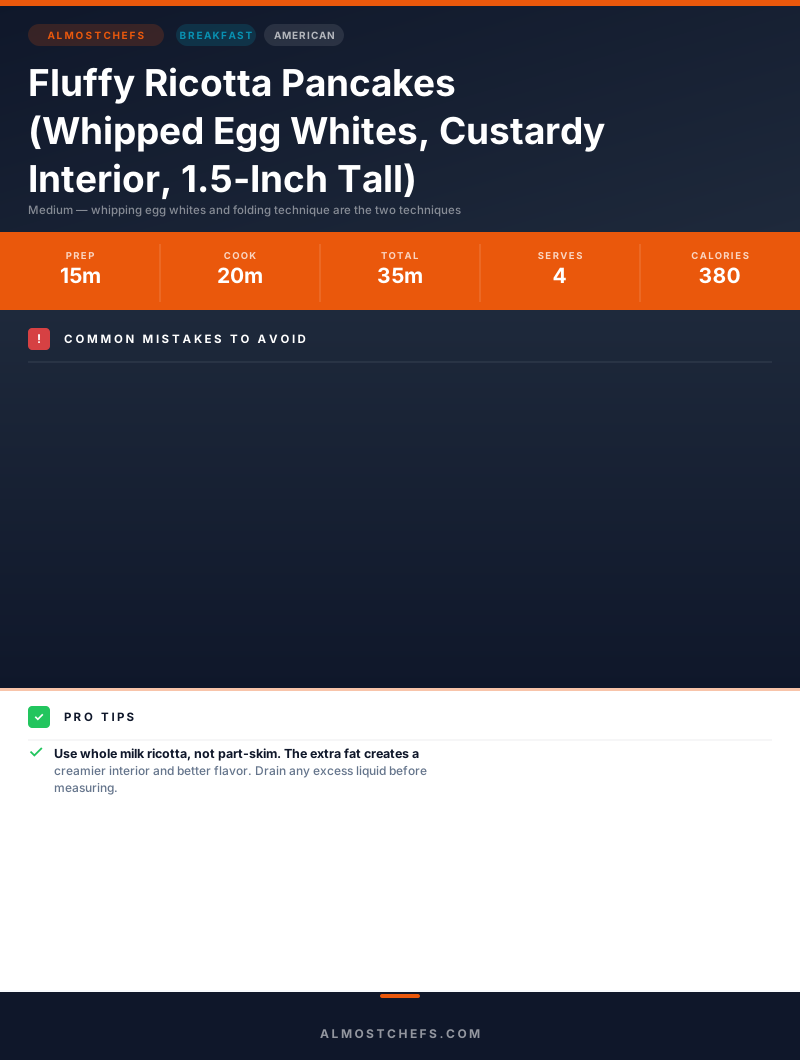
The Science of
Fluffy Ricotta Pancakes (Whipped Egg Whites, Custardy Interior, 1.5-Inch Tall)
We turned everything on this page into a beautiful, flour-proof PDF cheat sheet. Print it out, stick it to your fridge, and never mess up your fluffy ricotta pancakes (whipped egg whites, custardy interior, 1.5-inch tall) again.
*We'll email you the high-res PDF instantly. No spam, just perfectly cooked meals.
AlmostChefs Editorial Team
We translate the internet's most popular cooking videos into foolproof, beginner-friendly written recipes. We analyze multiple methods, test them in our kitchen, and engineer a single "Master Recipe" that gives you the best possible result with the least possible stress.