The Fudgiest Flourless Chocolate Cake (No Flour, No Excuses)
A dense, intensely chocolate dessert with a crackly top and a truffle-like interior — made with zero flour, zero fuss, and zero compromise on flavor. We broke down the science behind the emulsification, the egg whipping, and the bake time to give you a foolproof technique that works in any oven.
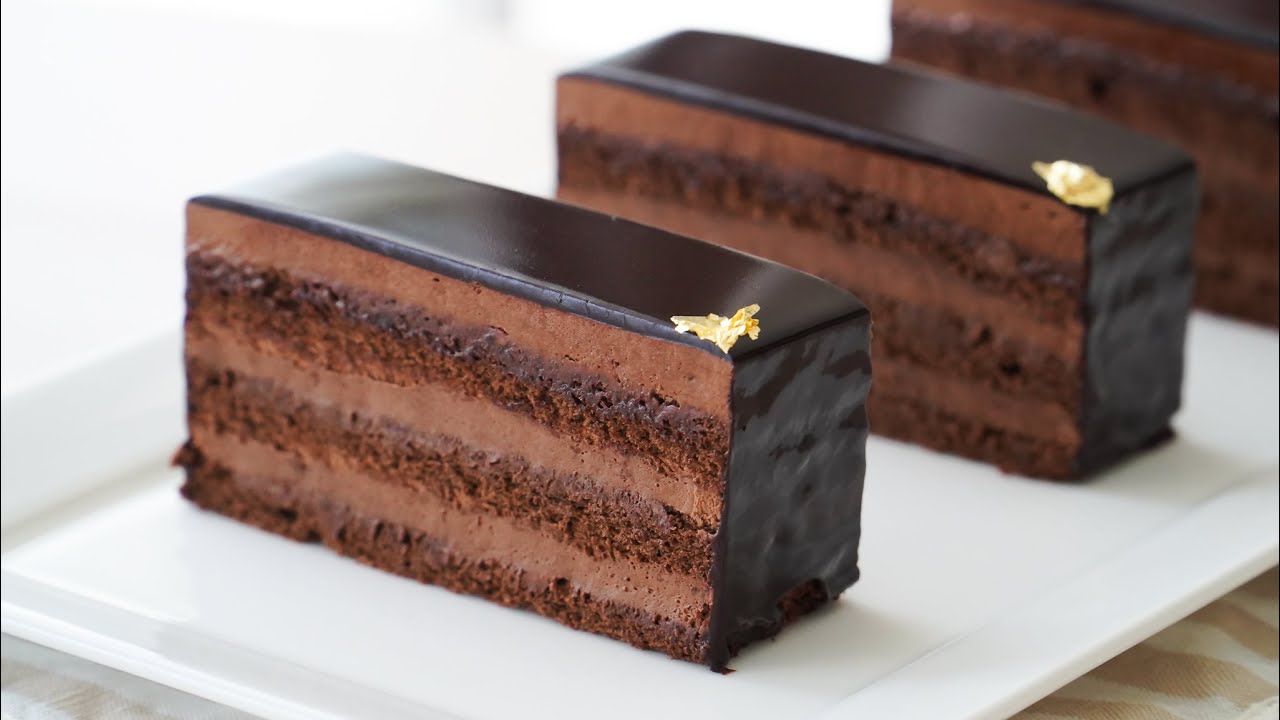
“Flourless chocolate cake is one of the most misunderstood desserts in the home baker's arsenal. People treat it like a regular cake with a missing ingredient. It is not. It is a chocolate torte — a fundamentally different animal built on emulsified fat, aerated eggs, and the structural strength of chocolate itself. When it goes wrong, it goes flat, grainy, or rubbery. When it goes right, it's the kind of thing people ask about for weeks.”
Why This Recipe Works
Flourless chocolate cake is not a cake with an ingredient missing. This is the most important thing to understand before you start. It is a torte — a French technique built on the specific structural properties of chocolate, fat, and aerated eggs working together without any grain-based scaffolding to hold the shape. When people try to bake it like a regular cake, they get a flat, grainy, rubbery failure. When they understand what is actually happening inside the batter, it becomes one of the most reliable, most impressive desserts in the entire repertoire.
The Chocolate Is the Structure
In a conventional cake, flour provides the gluten network that traps steam, rises in the oven, and holds the crumb together. Remove it and you need a replacement architecture. In a flourless chocolate cake, that architecture is the cocoa butter in the chocolate itself. As the batter cools after baking, the cocoa butter crystallizes into a stable matrix — the same process that makes a chocolate bar snap cleanly at room temperature. This is why the center looks dangerously underdone when it comes out of the oven and why you must let it cool completely before cutting. You are not waiting for the eggs to finish setting. You are waiting for the chocolate fat to solidify into a coherent structure. Cut it early and you get lava. Wait it out and you get a truffle.
This is also why chocolate quality matters in this recipe to a degree it does not in most baked goods. A chocolate cake with mediocre chocolate can hide behind flour, sugar, and frosting. Here, the chocolate is the cake. Every percentage point of cacao concentration, every variance in the fat content, every difference in roast profile is fully expressed in the final bite. Use a 70% dark chocolate from a brand you trust. This is not the moment for generic supermarket baking chocolate.
Egg Aeration Is the Only Leavening
Without baking powder and without the steam produced by water in a flour-based batter, the only thing lifting this cake is the air you whip into the eggs. This is not optional and it is not casual. The eggs and sugar need to be beaten together for a full 4-5 minutes in a stand mixer until the mixture has tripled in volume, turned pale yellow, and reaches what bakers call the ribbon stage — where batter falling from the whisk leaves a defined trail on the surface that holds for 3-4 seconds before dissolving. Every bubble of air trapped in this stage is a bubble of lift in the final cake.
The folding step that follows is equally critical. You are combining two things with opposite properties: a dense, glossy chocolate mixture and a light, aerated egg foam. Fold too aggressively and you deflate the eggs. Fold too little and you get visible streaks of chocolate and egg in the final cake. Wide, slow, sweeping motions from the bottom of the bowl — rotating the bowl as you go — is the technique. Stop the moment the two are uniform and glossy. The batter should look like a very thick, very dark, very beautiful mousse.
The Temperature Sequence Is a Chain
Three temperature checkpoints determine whether this cake succeeds. First, the chocolate-butter mixture must cool below 130°F before you add the eggs. Above that threshold, egg proteins begin to coagulate — essentially, you scramble your eggs in slow motion before they ever reach the oven. Test the bowl with your palm. Uncomfortably hot means wait. Warm is correct. Second, the oven temperature of 375°F provides enough heat to set the egg structure rapidly at the edges while leaving the center lagging behind — which is exactly what you want. Third, the internal temperature of the finished cake should read approximately 190°F at the center when it comes out. Below that, the egg proteins have not fully set and the cake will not hold its shape. Above that, the eggs have overcooked and the texture turns from fudgy to dry and crumbly.
Why Espresso
Espresso powder is not in this recipe because the cake needs to taste like coffee. It is in this recipe because of flavor chemistry. Chocolate and espresso share dozens of the same volatile aromatic compounds, particularly quinoxalines and pyrazines — the roasted, slightly bitter, deeply complex notes that make both good coffee and good chocolate so compulsively drinkable. Adding a small amount of espresso essentially amplifies the chocolate's own aromatic profile, making it taste more intensely of itself. The threshold at which it begins to taste like coffee is far above the one teaspoon used here. Remove it and the cake is still good. Keep it and the cake tastes unmistakably, inexplicably better — even to people who would swear they could not identify coffee flavor in a dessert.
The Wobble Test
Pull this cake when the center still wobbles. Not sloshes — wobbles. The distinction matters. A sloshing center means the eggs are still liquid and the bake is incomplete. A wobbling center means the edges are set, the egg proteins at the center are partially coagulated, and residual heat will carry the remaining 10-15% of cooking as the cake cools on the counter. This is called carryover cooking, and it is the mechanism behind every perfectly cooked piece of meat and most perfectly baked cakes. The instant-read thermometer removes the guesswork: 190°F is done. Trust the number over your instincts, especially on the first bake.
Where Beginners Mess This Up
Before we start, read this. These are the 4 reasons your the fudgiest flourless chocolate cake (no flour, no excuses) will fail:
- 1
Adding eggs to hot chocolate: If the melted chocolate-butter mixture is too hot when you add the eggs, you will scramble them. The proteins seize into fine curds that no amount of stirring can reverse. Let the mixture cool to below 130°F — warm to the touch but not hot. Test it with a finger before you commit.
- 2
Under-whipping the eggs: The eggs and sugar need to be whipped together until pale, thick, and tripled in volume. This aeration is the only leavening this cake has. If you stop early, the cake bakes dense as a hockey puck instead of dense as a truffle. Use a stand mixer on medium-high for a full 4-5 minutes, not two minutes with a fork.
- 3
Overbaking past the wobble: The center of a flourless chocolate cake should still wobble like set gelatin when you pull it from the oven. If it comes out firm and set, it is already overbaked. Residual heat will carry the center to done as it cools. Overbaked flourless cake turns grainy and dry — the exact opposite of what you want.
- 4
Skipping the parchment collar: This batter is sticky, eggy, and unforgiving. Without a parchment-lined pan, the cake will tear when you try to unmold it. The crackly top — the most beautiful part — will stay in the pan while the rest of the cake comes out. Line the pan, grease the parchment, and save yourself the grief.
The Video Reference Library
Want to see it in action? Here are the exact videos we analyzed and combined to build this foolproof recipe translation:
The primary technique video for this recipe. Covers the chocolate melting method, egg whipping stages, and the visual cues for doneness — specifically the wobble test that prevents overbaking.
Deep dive into the emulsification science behind flourless chocolate desserts. Excellent explanation of why fat ratio matters and how espresso amplifies chocolate flavor without adding coffee taste.
Broad context for gluten-free baking with a strong section on flourless cakes. Covers common substitutions, storage techniques, and how to serve flourless cake for maximum visual impact.
🛠️ Core Equipment
- 9-inch springform panThe removable sides are non-negotiable for a delicate cake with no flour to hold it together. A standard cake pan means either ruining the top or eating the cake directly from the pan. Both are disappointing.
- Stand mixer or hand mixerWhipping eggs and sugar to the right volume by hand takes 10+ minutes and inconsistent results. A [stand mixer](/kitchen-gear/review/stand-mixer) gets you there in 4-5 minutes with reliable, repeatable aeration every time.
- Double boiler or heatproof bowlDirect heat scorches chocolate almost instantly. A [double boiler](/kitchen-gear/review/double-boiler) — or a heatproof bowl set over simmering water — gives you gentle, even heat that keeps the chocolate smooth and glossy rather than seized and grainy.
- Instant-read thermometerRemoves all guesswork from the chocolate cooling step and from doneness testing. Know when the mixture is safe to add eggs. Know when the center hits 190°F internal temperature and the bake is done. Precision beats instinct every time.
The Fudgiest Flourless Chocolate Cake (No Flour, No Excuses)
🛒 Ingredients
- ✦8 oz (225g) 70% dark chocolate, roughly chopped
- ✦1/2 cup (1 stick / 113g) unsalted butter, cut into pieces
- ✦3/4 cup (150g) granulated sugar
- ✦3 large eggs, room temperature
- ✦1/2 cup (45g) unsweetened cocoa powder, sifted
- ✦1 teaspoon pure vanilla extract
- ✦1 teaspoon instant espresso powder
- ✦1/4 teaspoon fine sea salt
- ✦Powdered sugar or flaky sea salt, to finish
👨🍳 Instructions
01Step 1
Preheat your oven to 375°F (190°C). Grease a 9-inch springform pan, line the bottom and sides with parchment paper, and grease the parchment.
02Step 2
Combine the chopped dark chocolate and butter pieces in a heatproof bowl set over a pot of barely simmering water. Stir gently until completely melted and smooth. Remove from heat.
03Step 3
Stir in the espresso powder, vanilla extract, and sea salt. Let the mixture cool for 8-10 minutes until it is warm but not hot — below 130°F.
04Step 4
In the bowl of a stand mixer fitted with the whisk attachment, combine the eggs and granulated sugar. Beat on medium-high speed for 4-5 minutes until the mixture is very pale, thick, and has tripled in volume.
05Step 5
Pour the cooled chocolate mixture into the whipped eggs. Fold gently with a rubber spatula using wide, sweeping motions from the bottom of the bowl. Stop as soon as the two are combined — do not overmix.
06Step 6
Sift the cocoa powder directly over the batter. Fold again with the same gentle technique until no streaks of cocoa remain. The batter should be thick, glossy, and uniform.
07Step 7
Pour the batter into the prepared springform pan and smooth the top with an offset spatula. Tap the pan gently on the counter twice to settle any air bubbles.
08Step 8
Bake for 23-26 minutes. The edges should be set and pulling slightly from the parchment, while the center still has a distinct wobble when you gently shake the pan.
09Step 9
Remove from the oven and let cool in the pan on a wire rack for 20 minutes. The center will continue to set as it cools. Do not unmold early.
10Step 10
Run a thin knife around the inside edge of the pan, then release and remove the springform sides. Transfer to a serving plate and dust with powdered sugar or a pinch of flaky sea salt.
Nutrition Per Serving
Estimates based on standard preparation. Adjustments alter macros.
🔄 Substitutions
Instead of Unsalted butter...
Use Coconut oil or vegan butter
Coconut oil produces a slightly different texture — a touch firmer and with a faint coconut undertone detectable only if you are looking for it. Refined coconut oil is neutral and preferred. Vegan butter works nearly identically to dairy butter.
Instead of 70% dark chocolate...
Use Bittersweet chocolate chips
Works in a pinch but chocolate chips contain stabilizers that prevent them from melting as smoothly. The final texture will be slightly less glossy. Use a high-quality brand and chop them if possible.
Instead of Granulated sugar...
Use Coconut sugar
Slightly more complex, molasses-adjacent flavor that complements dark chocolate well. Does not whip into the eggs quite as cleanly — expect a marginally denser final texture.
Instead of Espresso powder...
Use 1 tablespoon strong brewed espresso (reduce another liquid if applicable)
Liquid espresso adds moisture, which slightly alters the set. Not ideal but workable. Alternatively, simply omit — the cake is still good, just less dimensionally complex.
🧊 Storage & Reheating
In the Fridge
Store covered at room temperature for up to 2 days, or in the refrigerator for up to 5 days. Bring to room temperature before serving.
In the Freezer
Freeze individual slices wrapped tightly in plastic wrap and then foil for up to 2 months. Thaw overnight in the refrigerator, then bring to room temperature.
Reheating Rules
This cake does not benefit from reheating. Serve at room temperature. If you want a slightly warm, molten-adjacent experience, 10 seconds in the microwave on a slice is the maximum.
❓ Frequently Asked Questions
Why did my flourless chocolate cake come out grainy?
Two likely causes. First, the chocolate seized — either from water contamination in the bowl or from overheating. Even a single drop of water can cause chocolate to seize into a grainy paste. Second, the eggs were added when the chocolate was still too hot and began to cook. Both produce grainy, broken batter that cannot be rescued.
Can I make this dairy-free?
Yes. Replace the butter with refined coconut oil or a high-quality vegan butter at a 1:1 ratio. Ensure your dark chocolate is dairy-free — many 70%+ chocolates are, but always check the label. The texture and flavor will be very close to the original.
Why does the center sink when it cools?
Because there is no flour to provide structural scaffolding. The eggs provide all the lift during baking, and as they cool and contract, the center collapses slightly. This is correct. The sunken center creates the dense, fudgy interior that defines the dessert. A flat flourless chocolate cake is actually a sign something went wrong — usually too many eggs or overbaking.
My cake stuck to the pan. What did I do wrong?
You either skipped the parchment lining or did not grease it adequately. This batter is extremely sticky. Double-line the pan — parchment on the bottom, a parchment collar on the sides — and grease both layers with butter or cooking spray. No exceptions.
Can I make this ahead of time?
Yes, and it actually improves after a day. The flavors deepen and the texture becomes even more fudge-like as it rests. Bake the day before, cool completely, cover at room temperature, and serve the next day. Dust with powdered sugar right before serving.
Is flourless chocolate cake the same as a chocolate lava cake?
No. Lava cake is a separate, underbaked individual cake designed to have a liquid chocolate center at serving time. Flourless chocolate cake is a fully baked, single-layer torte that is dense and fudgy throughout. The fudgy texture comes from structure, not from liquid batter. They share an aesthetic but are fundamentally different recipes.

The Science of
The Fudgiest Flourless Chocolate Cake (No Flour, No Excuses)
We turned everything on this page into a beautiful, flour-proof PDF cheat sheet. Print it out, stick it to your fridge, and never mess up your the fudgiest flourless chocolate cake (no flour, no excuses) again.
*We'll email you the high-res PDF instantly. No spam, just perfectly cooked meals.
AlmostChefs Editorial Team
We translate the internet's most popular cooking videos into foolproof, beginner-friendly written recipes. We analyze multiple methods, test them in our kitchen, and engineer a single "Master Recipe" that gives you the best possible result with the least possible stress.