Perfect Flan (The Caramel Custard That Actually Unmolds Clean)
A silky-smooth Spanish custard with a golden caramel topping, made with evaporated milk and a water bath technique that delivers restaurant-quality results at home. We analyzed the most common failure points to build one foolproof method that nails the set every time.
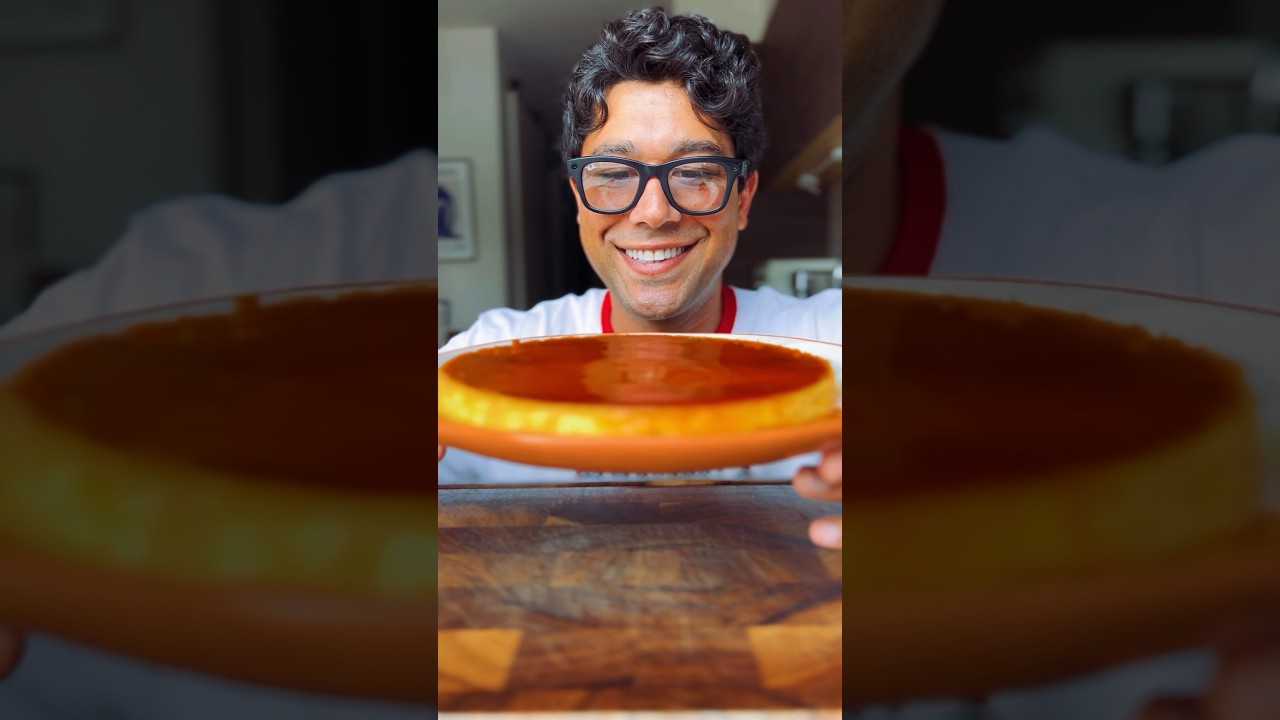
“Flan looks intimidating because of two things: burning the caramel and breaking the custard on the unmold. Both failures are entirely preventable. The caramel just needs you to stop stirring and trust your eyes. The custard just needs a water bath and enough chill time. Get those two things right and flan is one of the easiest elegant desserts you can make.”
Why This Recipe Works
Flan has survived five centuries of culinary history because it is, at its core, a perfect object. Two components — a caramel and a custard — that together create something more sophisticated than either one alone. The problem is that those two components fail in completely different ways, and most recipes don't bother explaining why.
The Caramel Is Just Chemistry
Sugar caramelization is one of the most misunderstood techniques in home cooking. The rules are simple: heat dissolves sucrose molecules, continued heat breaks them into new compounds that taste complex and slightly bitter, and the moment you introduce a foreign crystal — a stir of the spoon, a grain of sugar on the pan wall — the entire batch snaps back into crystalline structure in seconds.
The cream of tartar in this recipe is insurance. It's an acid that inhibits crystallization by breaking sucrose into glucose and fructose, which can't form the same crystal lattice. But it's not a guarantee — it just gives you more margin for error. The deeper issue is color. Most home cooks pull caramel when it turns golden, which is about two shades too early. Golden caramel tastes like plain sugar. Deep amber caramel — the color of an old oak barrel — tastes like caramel. That extra 90 seconds of heat is where all the complexity lives.
Work fast when coating the ramekins. Caramel transitions from pourable to solid in under two minutes. Have all six ramekins waiting on a heat-safe surface before you pour. Tilt immediately and continuously until the bottom is coated. If it sets before you finish, that ramekin gets thicker caramel — not a failure, just a feature.
The Water Bath Is Physics, Not Fussiness
A baked custard is eggs cooked by gentle, indirect heat. The problem: ovens run at 350°F, and egg proteins start tightening into rubber at temperatures above 185°F. A roasting pan filled with water physically cannot exceed 212°F — the boiling point of water. This means the outer edge of your ramekin is insulated from direct heat and the custard cooks from warm vapor rather than dry radiant heat.
Without the water bath, the outer inch of flan cooks at oven temperature and turns rubbery while the center is still liquid. The water bath flattens that gradient and gives you an even, silky set from edge to center. This is not a technique you can skip. It's the entire reason baked custard is possible.
The Jiggle Test Is the Only Metric That Matters
Ignore baking times as absolute numbers — they vary by oven, ramekin thickness, and how hot your water bath was when it went in. The only reliable signal is the jiggle. Open the oven, nudge the pan. The edges should be opaque and set with zero movement. The center should wobble like a loose gelatin mold — not slosh like liquid, but jiggle like set Jell-O. That jiggle is water molecules that haven't yet bound to the egg proteins. Carryover heat during the one-hour cooling will finish them.
Pull it when it jiggles. Every extra minute past that point is another degree of rubbery. The custard will look underdone and it is not underdone. Trust the wobble.
Why Overnight Is the Right Answer
The chill time is where the caramel does its second job. When you first coat the ramekins, the caramel sets hard within minutes — you couldn't unmold it if you tried. During the long refrigeration, the caramel gradually reabsorbs moisture from the custard and softens back into a pourable sauce. After four hours, it's separated cleanly from the ramekin walls. After eight, it flows freely the moment you invert. This is also when the vanilla and nutmeg notes in the custard fully develop and meld with the bitter-sweet caramel. The flan you eat the next morning is measurably better than the one you'd have eaten the night before.
Make flan the day before you need it. The instructions reward patience in every single step.
Where Beginners Mess This Up
Before we start, read this. These are the 4 reasons your perfect flan (the caramel custard that actually unmolds clean) will fail:
- 1
Stirring the caramel after it dissolves: Once the sugar dissolves into liquid, stirring introduces crystals that cause the entire batch to seize into grainy white clumps. Swirl the pan — do not stir. The cream of tartar in this recipe helps prevent crystallization, but stirring will still ruin it. Once the sugar hits the pan and heat, keep your spoon out of it.
- 2
Pulling the custard too early: Flan should be set around the edges with a visible jiggle in the center — not liquid, not fully firm. That jiggle is residual heat finishing the cook outside the oven. If you bake until the center is solid, you've already overcooked it. The carryover cooking during the cooling hour will push it past silky into rubbery.
- 3
Not chilling long enough before unmolding: The caramel needs at least 4 hours — preferably overnight — to fully liquify again after setting and to separate cleanly from the ramekin walls. Trying to unmold after 1-2 hours results in torn custard and caramel that stays stuck to the ramekin instead of cascading over the top.
- 4
Skipping the strainer: Whisking eggs into dairy creates foam and chalaza (the white stringy bits attached to yolks). Pouring this unfiltered into ramekins creates bubbled surfaces and uneven texture. Straining takes 30 seconds and is the difference between a glass-smooth top and a pockmarked one.
The Video Reference Library
Want to see it in action? Here are the exact videos we analyzed and combined to build this foolproof recipe translation:
The primary reference video demonstrating the caramel technique, water bath setup, and correct jiggle test for knowing when the custard is done. Watch for the color cues on the caramel.
🛠️ Core Equipment
- Heavy-bottomed saucepanThin pans create hot spots that burn one side of the caramel while the other is still liquid. A thick-bottomed pan distributes heat evenly and gives you time to swirl. Non-negotiable for any caramel work.
- Six 6-oz ramekins or 9-inch round baking dishIndividual ramekins give you more surface area for the caramel layer and make portioning clean. A single large dish works but requires more precision on the unmold.
- Deep roasting panThe water bath must come halfway up the ramekin sides. A shallow pan won't give you enough depth. The water bath is what prevents the outer edges from overcooking while the center sets.
- Fine-mesh sieveRemoves foam, chalaza, and any overbeaten egg bits that would create an uneven texture in the finished custard. Pour slowly through it into a spouted measuring cup for easy pouring.
Perfect Flan (The Caramel Custard That Actually Unmolds Clean)
🛒 Ingredients
- ✦1 cup granulated sugar, divided (¾ cup for caramel, ¼ cup for custard)
- ✦1 can (12 oz) evaporated milk
- ✦1 cup heavy cream
- ✦5 large eggs
- ✦1 teaspoon vanilla extract
- ✦¼ teaspoon sea salt
- ✦3 tablespoons water (for caramel)
- ✦¼ teaspoon cream of tartar
- ✦Pinch of freshly grated nutmeg
- ✦Boiling water for the water bath
👨🍳 Instructions
01Step 1
Preheat the oven to 350°F and position the rack in the middle.
02Step 2
Combine ¾ cup sugar, 3 tablespoons water, and the cream of tartar in a heavy-bottomed saucepan. Stir gently until the mixture resembles wet sand, then stop touching it.
03Step 3
Cook over medium-high heat, swirling occasionally, until the caramel turns deep amber — about 7 to 9 minutes. It should look like dark iced tea, not lemonade.
04Step 4
Immediately divide the hot caramel among six ramekins, tilting each quickly to coat the bottom and lower sides before it sets. Work fast — you have about 90 seconds.
05Step 5
Whisk together the evaporated milk, heavy cream, eggs, remaining ¼ cup sugar, vanilla, salt, and nutmeg in a large bowl until completely smooth.
06Step 6
Pour the custard mixture through a fine-mesh sieve into a large spouted measuring cup.
07Step 7
Pour the strained custard into the caramel-lined ramekins, filling each about three-quarters full.
08Step 8
Place the ramekins in a deep roasting pan. Pour boiling water into the roasting pan until it reaches halfway up the sides of the ramekins.
09Step 9
Bake for 25 to 30 minutes for individual ramekins, or 35 to 40 minutes for a single dish. The edges should be set; the center should still have a visible jiggle when you nudge the pan.
10Step 10
Remove the ramekins from the water bath and cool on a wire rack for at least 1 hour.
11Step 11
Refrigerate for at least 4 hours, or overnight. The longer it chills, the cleaner the unmold.
12Step 12
To unmold, run a thin knife around the inside edge of each ramekin. Place a serving plate upside-down over the ramekin, then flip in one confident motion. Hold for a few seconds, then lift the ramekin straight up.
Nutrition Per Serving
Estimates based on standard preparation. Adjustments alter macros.
🔄 Substitutions
Instead of Heavy cream...
Use Half-and-half or equal parts Greek yogurt and whole milk
Slightly less rich mouthfeel but still velvety. The yogurt version adds a subtle tang that actually complements the caramel well.
Instead of Granulated sugar...
Use Coconut sugar or monk fruit sweetener (use 75% of the amount for monk fruit)
Coconut sugar caramelizes slightly differently — watch it more closely as it can burn faster. Monk fruit adds minimal calories but the caramel may be less amber in color.
Instead of Evaporated milk...
Use Unsweetened almond milk or oat milk plus 1 tablespoon cornstarch
Lighter texture overall and suitable for dairy-free diets. The cornstarch prevents separation and ensures proper custard setting.
Instead of Vanilla extract...
Use Fresh vanilla bean or ½ teaspoon almond extract
Fresh vanilla bean creates visible specks and a more complex floral flavor. Almond extract pairs beautifully with caramel and adds depth — use sparingly, it's potent.
🧊 Storage & Reheating
In the Fridge
Store covered in the ramekins or covered on plates for up to 4 days. The flavor deepens over the first 24 hours.
In the Freezer
Not recommended. Egg-based custards break on thawing — the texture becomes grainy and weepy.
Reheating Rules
Flan is served cold or at room temperature. Do not microwave or reheat. Remove from the fridge 15 minutes before serving to take the edge off the chill.
❓ Frequently Asked Questions
Why did my caramel crystallize and turn grainy?
You stirred it after it started melting, or your pan had sugar crystals on the sides that fell in. Add a tablespoon of water to the seized batch and dissolve slowly over low heat to recover. Next time: swirl, don't stir, and use a clean pan.
Why is my flan rubbery instead of silky?
It was overbaked. The custard should jiggle in the center when you remove it from the oven. If it was fully set in the oven, carryover heat pushed it past silky into dense and rubbery. Pull it earlier next time.
Why won't my flan release from the ramekin?
It needs more chill time. The caramel must fully re-liquify in the fridge before it will release cleanly. If you've chilled it overnight and it still won't budge, set the ramekin briefly in a shallow dish of warm water for 20 seconds to loosen the caramel from the sides.
Can I make this in a single large dish instead of ramekins?
Yes. Use a 9-inch round cake pan and increase the bake time to 35-40 minutes. The unmold is trickier — make sure it's fully chilled and run the knife confidently around the entire edge before flipping.
Why does my flan have bubbles on the surface?
The custard was overwhisked before baking (too much foam) or the oven temperature was too high. Always strain the custard and tap the ramekins on the counter a few times after filling to release surface bubbles before putting them in the water bath.
What's the difference between flan and crème brûlée?
Both are baked egg custards, but flan uses evaporated milk and has a soft, self-saucing caramel layer on the bottom that becomes the top when unmolded. Crème brûlée uses all heavy cream, is served in the ramekin, and has a torched sugar crust on top. Flan is firmer; crème brûlée is richer.
The Science of
Perfect Flan (The Caramel Custard That Actually Unmolds Clean)
We turned everything on this page into a beautiful, flour-proof PDF cheat sheet. Print it out, stick it to your fridge, and never mess up your perfect flan (the caramel custard that actually unmolds clean) again.
*We'll email you the high-res PDF instantly. No spam, just perfectly cooked meals.
AlmostChefs Editorial Team
We translate the internet's most popular cooking videos into foolproof, beginner-friendly written recipes. We analyze multiple methods, test them in our kitchen, and engineer a single "Master Recipe" that gives you the best possible result with the least possible stress.