Crispy Pan-Seared Fish Tacos (30-Minute Coastal Classic)
Pan-seared white fish with a golden crust, tangy lime cabbage slaw, and silky avocado crema, all wrapped in warm tortillas. We broke down the technique so every component stays crisp, bright, and balanced — no soggy tacos, no flavorless fish.
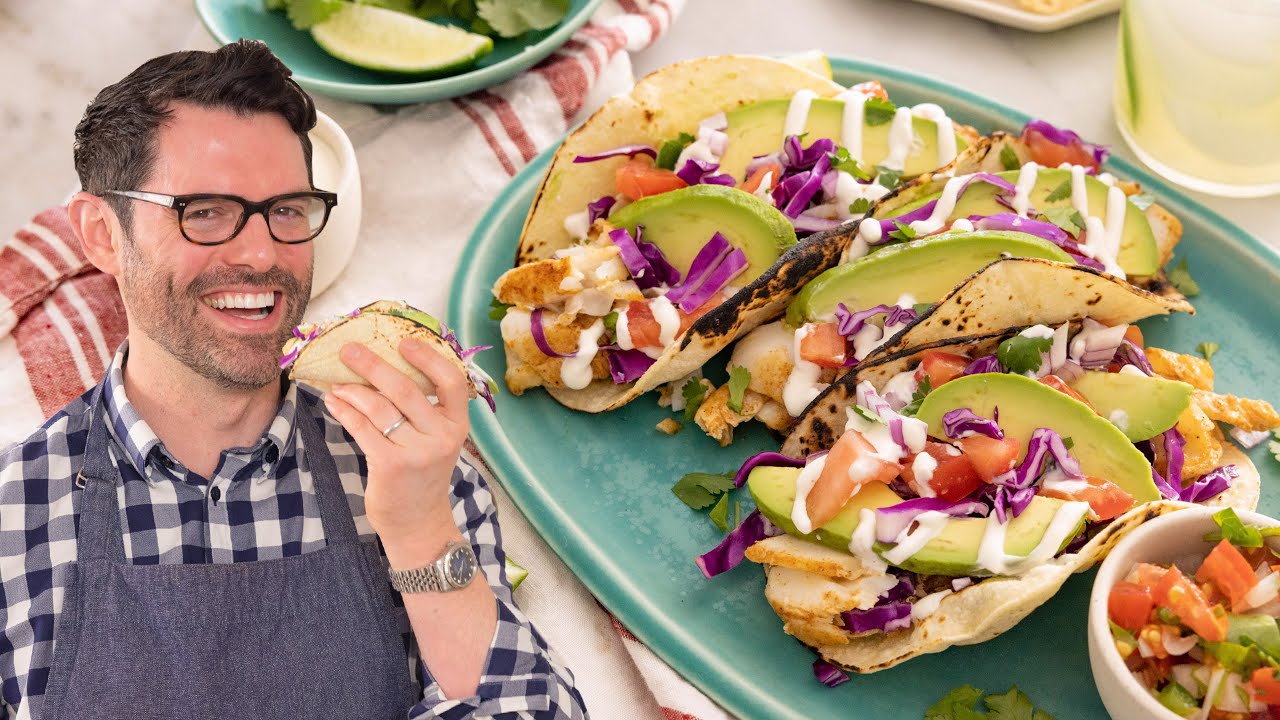
“Fish tacos should be one of the simplest meals you can make. They're also one of the most commonly wrecked. The fish comes out steamed instead of seared. The slaw is waterlogged. The crema is either too thick to drizzle or too thin to cling. None of that is the fish's fault. It's a sequencing problem — and once you understand which components to build in which order, you get restaurant-quality tacos in under 30 minutes on a Tuesday.”
Why This Recipe Works
Fish tacos are a sequencing dish. The ingredients are not the challenge — white fish, cabbage, lime, and avocado are not hard to find or expensive to buy. The challenge is that every component has a different enemy: the fish needs dry heat and needs it fast, the slaw needs acid and needs time, the crema needs fat to stay smooth, and the tortilla needs direct heat at the last possible moment. Build them in the wrong order and you're chasing problems the whole way through assembly.
The Sear First, Questions Later
Pan-searing fish is one of the most misunderstood techniques in home cooking because it looks effortful and feels risky. It isn't either of those things — it just requires that you do two things correctly: get the pan properly hot before the fish touches it, and then leave the fish completely alone.
The heavy-bottomed skillet matters because fish is cold when it comes out of the fridge, and a thin pan drops below searing temperature the moment cold protein hits it. When that happens, you lose the Maillard window — the narrow band of heat where proteins and sugars at the fish's surface convert into the hundreds of flavor compounds that constitute a proper crust. A heavy pan stays hot. A hot pan sears. A sear is the entire point.
Drying the fish before seasoning is not optional and not a suggestion. Surface moisture creates steam. Steam is the opposite of a sear. Pat the fillets dry, season them at the last possible second (salt is osmotic — it draws moisture back out within minutes), and commit to not touching them for the full 3-4 minutes. The fish will tell you when it's ready by releasing cleanly from the pan.
The Slaw Is the Backbone
Most fish taco recipes treat the slaw like garnish. It isn't. It's the acid backbone of the entire dish. The lime juice and vinegar cut through the fat in the crema and the richness of the fish. The crunch of the cabbage offsets the flakiness of the protein. A flat, underdressed slaw produces a flat, underdressed taco regardless of how well you cooked the fish.
Give the slaw 10-15 minutes to rest after dressing. The acid very slightly softens the cabbage — just enough to make it pliable in the taco — while the jalapeño and onion release their aromatics into the liquid. Taste it before assembly. It should make you squint a little. If it doesn't, add more lime juice and a pinch of salt.
The Crema Is a Delivery System
The avocado crema does three things: it provides fat to carry fat-soluble flavor compounds from the spiced fish, it adheres the slaw to the taco so the whole thing doesn't fall apart on the first bite, and it adds richness that makes the bright acid from the slaw feel balanced rather than aggressive. Spread it down the center of the tortilla — not over the top. It goes under the fish so it bonds to the tortilla.
The Tortilla Is the Clock
The moment a warm tortilla meets a moist filling, it starts softening. You have roughly 60-90 seconds before a corn tortilla goes from structured to limp. This means everything — the crema, the fish, the slaw — must be ready at the same moment, and you assemble each taco immediately before it's eaten. There is no holding. There is no making the whole batch and then sitting down. Build one, hand it off, build the next.
Direct flame on the tortilla is not cosmetic. The light char from a gas burner adds a smokiness that ties the whole dish together — a fourth flavor layer that most home versions skip and then wonder why their tacos taste flat. If you don't have gas, a dry cast iron skillet at high heat works. The goal is color and pliability, not just warmth.
Get the sequencing right — slaw first, crema while the fish dries, fish last, tortillas at the absolute final moment — and everything lands at the right temperature, texture, and acidity simultaneously. That's the whole recipe.
Where Beginners Mess This Up
Before we start, read this. These are the 4 reasons your crispy pan-seared fish tacos (30-minute coastal classic) will fail:
- 1
Not drying the fish before seasoning: Surface moisture is the enemy of a sear. If you season wet fish and drop it in a hot pan, the water creates steam before the Maillard reaction can start — and you get gray, mushy fish instead of a golden crust. Pat the fillets completely dry with paper towels. This single step is the difference between seared and steamed.
- 2
Seasoning the fish too early: Salt draws moisture out of protein through osmosis. Season the fish right before it hits the pan — not 10 minutes before, not while you're prepping the slaw. Early seasoning creates a wet surface that defeats everything the drying step accomplished.
- 3
Moving the fish before it's ready to flip: The fish will naturally release from the pan when the crust is set. If you try to flip it early, it tears and sticks. Cook skin-side down for 3-4 minutes undisturbed. When it releases cleanly, it's ready. Forcing the flip early is how fillets fall apart.
- 4
Assembling too early: Warm tortillas sitting under slaw go limp within 90 seconds. The components must stay separate until the moment of serving. Build each taco to order — crema first, then fish, then slaw directly on top. Eating immediately is not optional.
The Video Reference Library
Want to see it in action? Here are the exact videos we analyzed and combined to build this foolproof recipe translation:
The source video for this recipe's core method. Clear demonstration of the sear technique and assembly order that keeps every component at the right texture.
🛠️ Core Equipment
- Large heavy-bottomed skilletThin pans lose heat the moment the fish touches them, dropping below searing temperature and stalling the crust. A heavy skillet — cast iron or stainless — holds its temperature through the thermal shock of cold fish hitting hot metal.
- Fish spatulaIts thin, flexible blade slides under delicate fillets without tearing. A standard spatula is too thick and blunt — it catches on the crust and destroys the sear you just built.
- Large mixing bowlThe slaw needs room to toss without compressing. A cramped bowl bruises the cabbage and makes even coating impossible. Give it space.
- Paper towelsFor drying the fish. This is not a garnish step. It is structural. Keep them on the counter before you touch the fish.
Crispy Pan-Seared Fish Tacos (30-Minute Coastal Classic)
🛒 Ingredients
- ✦1.75 pounds white fish fillets (cod, mahi-mahi, or tilapia)
- ✦10 corn or flour tortillas
- ✦3 cups shredded green cabbage
- ✦3 tablespoons fresh lime juice, divided
- ✦1/2 cup fresh cilantro leaves, chopped, divided
- ✦1/2 cup mayonnaise
- ✦1 ripe avocado, pitted and mashed
- ✦3 cloves garlic, minced
- ✦2 tablespoons extra-virgin olive oil
- ✦1.5 teaspoons ground cumin
- ✦3/4 teaspoon smoked paprika
- ✦1 jalapeño pepper, minced (seeds removed for less heat)
- ✦1/2 medium red onion, thinly sliced
- ✦1 teaspoon kosher salt
- ✦1/2 teaspoon black pepper
- ✦1 teaspoon apple cider vinegar
- ✦Lime wedges for serving
👨🍳 Instructions
01Step 1
Pat the fish fillets completely dry with paper towels on both sides. Set aside uncovered while you build the slaw and crema.
02Step 2
Combine the shredded cabbage, red onion, jalapeño, 1.5 tablespoons lime juice, and apple cider vinegar in a large bowl. Toss gently to coat. Set aside at room temperature.
03Step 3
Mix the mayonnaise, mashed avocado, minced garlic, remaining 1.5 tablespoons lime juice, and half the cilantro in a small bowl until smooth. Season with salt to taste.
04Step 4
Season both sides of the fish fillets with cumin, smoked paprika, kosher salt, and black pepper immediately before cooking.
05Step 5
Heat the olive oil in a large heavy-bottomed skillet over medium-high heat for about 2 minutes, until the oil shimmers and a drop of water flicked in sizzles immediately.
06Step 6
Place the seasoned fish fillets in the skillet and cook undisturbed for 3-4 minutes until the underside turns golden and the edges are opaque.
07Step 7
Flip each fillet carefully and cook for 2-3 minutes on the second side until the fish is opaque throughout and flakes easily when pressed with a fork.
08Step 8
Remove the fish from the pan and let it rest for 1 minute on a cutting board. Break into large, rough flakes — do not shred it fine.
09Step 9
Warm the tortillas directly over a gas flame for 30 seconds per side, or in a dry skillet for 30 seconds per side until pliable and lightly charred.
10Step 10
Spread a thin layer of avocado crema down the center of each warm tortilla. Layer with fish, then slaw. Scatter remaining cilantro over the top.
11Step 11
Serve immediately with lime wedges. Every second the assembled taco sits, the tortilla softens.
Nutrition Per Serving
Estimates based on standard preparation. Adjustments alter macros.
🔄 Substitutions
Instead of Mayonnaise...
Use Greek yogurt
Slightly tangier crema with better nutritional density. Use full-fat Greek yogurt for similar richness. The avocado will keep it creamy.
Instead of Green cabbage...
Use Shredded purple cabbage with fresh kale ribbons
Deeper color and earthier flavor. Purple cabbage also holds its crunch longer after dressing — useful if you're prepping ahead.
Instead of Corn or flour tortillas...
Use Whole grain or sprouted grain tortillas
Nuttier flavor and more substantial texture. Slightly drier, so warm them well and keep them covered until assembly.
Instead of Smoked paprika and cumin...
Use Smoked paprika, cumin, turmeric, and fresh ginger
Warmer, more complex spice profile. Adds anti-inflammatory properties. Go light on the turmeric — it can overpower quickly.
🧊 Storage & Reheating
In the Fridge
Store components separately. Fish keeps for up to 2 days in an airtight container. Slaw keeps for 1 day before it softens too much. Crema keeps for 2 days.
In the Freezer
Cooked fish can be frozen for up to 1 month. Thaw overnight in the fridge. Slaw and crema do not freeze well — make those fresh.
Reheating Rules
Reheat fish in a dry skillet over medium heat for 2-3 minutes per side until warmed through. Avoid the microwave — it steams the crust off and turns the texture rubbery.
❓ Frequently Asked Questions
What's the best fish for fish tacos?
Cod is the safest bet — mild, firm, and widely available. Mahi-mahi is more flavorful and holds together beautifully. Tilapia works but is prone to falling apart. Avoid oily fish like salmon; the richness clashes with the acid-forward slaw and crema.
Why is my fish sticking to the pan?
Two reasons: the pan wasn't hot enough before the fish went in, or you tried to flip too early. The oil needs to shimmer before the fish touches the pan, and the fish will release naturally when the crust is formed. Give it the full 3-4 minutes undisturbed.
Can I grill the fish instead of pan-searing?
Yes. Oil the grates well and cook over direct medium-high heat for 3-4 minutes per side. The sear develops differently — slightly smokier, with grill marks instead of a full crust. Both work. Pat the fish dry either way.
How do I keep the tacos from getting soggy?
Keep every component separate until the moment of serving. Warm the tortillas immediately before assembly. Build each taco to order and eat it within 60-90 seconds. Assembled tacos do not hold.
Can I make the slaw ahead of time?
Up to an hour ahead is fine — the rest time actually improves flavor. Beyond that, the acid breaks down the cabbage structure and you lose the crunch. Don't dress the slaw the night before.
Corn or flour tortillas?
Corn for authenticity and structure — they hold up better under moist toppings and add a subtle earthiness that complements the fish. Flour is softer and more pliable, which some people prefer. Either works; what matters is warming them properly so they don't crack or turn rubbery.
The Science of
Crispy Pan-Seared Fish Tacos (30-Minute Coastal Classic)
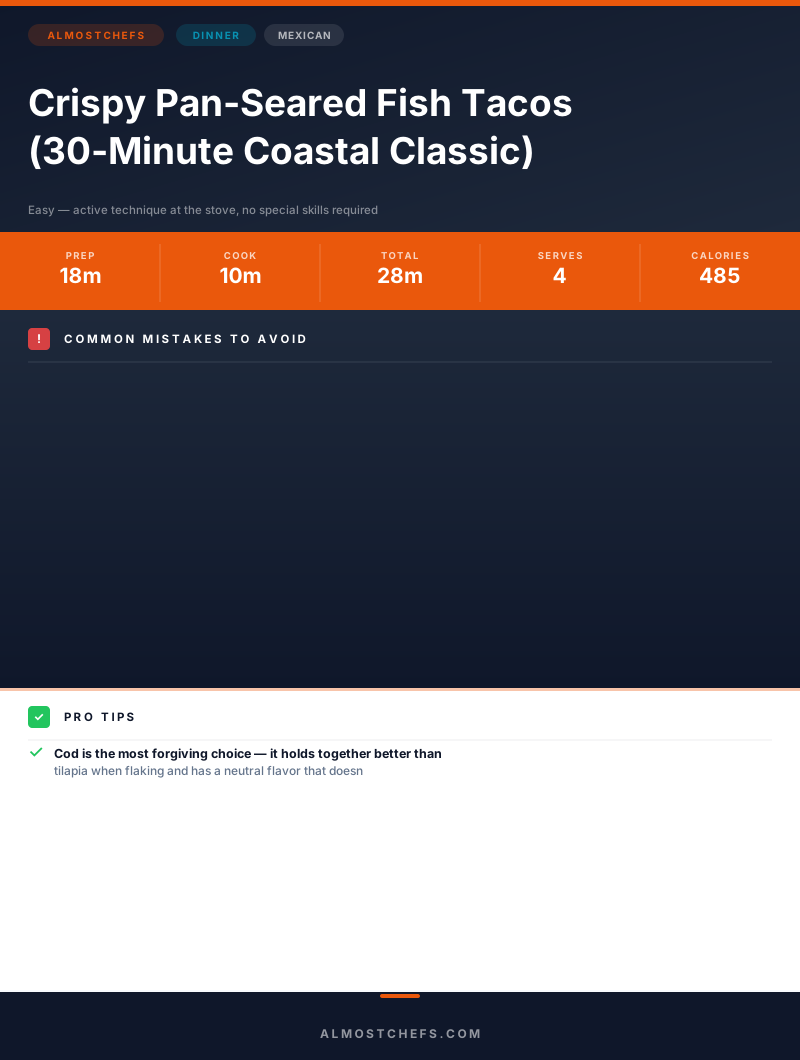
We turned everything on this page into a beautiful, flour-proof PDF cheat sheet. Print it out, stick it to your fridge, and never mess up your crispy pan-seared fish tacos (30-minute coastal classic) again.
*We'll email you the high-res PDF instantly. No spam, just perfectly cooked meals.
AlmostChefs Editorial Team
We translate the internet's most popular cooking videos into foolproof, beginner-friendly written recipes. We analyze multiple methods, test them in our kitchen, and engineer a single "Master Recipe" that gives you the best possible result with the least possible stress.