Fettuccine Alfredo (Real Cream Sauce, Pasta Water Emulsion, No Jarred Sauce)
Classic fettuccine alfredo with a butter-cream-Parmesan sauce emulsified with starchy pasta water. No jarred sauce, no shortcuts. The pasta water is what makes the sauce coat every strand.

“Alfredo is not a cream sauce dumped over noodles. It's an emulsion — butter, cream, Parmesan, and starchy pasta water locked together into something that coats every strand of fettuccine and doesn't pool at the bottom of the bowl. The jarred version cannot do this. Pre-grated Parmesan cannot do this. Skipping the pasta water cannot do this. Three ingredients make or break this recipe: real Parmigiano-Reggiano, properly salted starchy pasta water, and a controlled reduction. Get those three right and the sauce builds itself.”
Why This Recipe Works
Fettuccine Alfredo is not complicated. It's misunderstood. The version most people grow up eating — from a jar, from a chain restaurant, poured over pasta out of a packet — has almost nothing in common with what this dish actually is. The real version has four ingredients in its purest Roman form (pasta, butter, Parmesan, pasta water) and requires twenty minutes. The version here adds cream, garlic, and broth for a more developed flavor profile, but the principle is identical: emulsification, not assembly.
Pasta water starch is the engine of this sauce. When fettuccine cooks in boiling water, starch molecules leach from the pasta surface into the surrounding liquid. After ten minutes of cooking, that water contains a measurable concentration of dissolved starch — enough to behave as a genuine emulsifier. Starch molecules are amphiphilic, meaning they have both water-loving and fat-loving ends. When pasta water is added to a butter-cream sauce and tossed with pasta, those starch molecules position themselves at the fat-water interface in the sauce, stabilizing the emulsion and preventing separation. This is why pasta water — not plain tap water, not stock added mid-sauce — is what makes Alfredo sauce cling to each strand of fettuccine rather than pooling at the bottom of the bowl. Using a slightly smaller pot (around 4 quarts of water rather than 6 or 8) concentrates the starch further and produces cooking liquid that is meaningfully more effective. You will taste the difference.
Real Parmigiano-Reggiano melts differently — because it is different. Parmigiano-Reggiano is a specific product, made in a defined region of northern Italy under strict production rules, aged a minimum of 12 months (usually 18 to 24 months for what you find in grocery stores). That aging process drives off moisture and breaks down proteins, producing a cheese with a complex crystalline structure and a low water content. When freshly grated Parmigiano-Reggiano is added to a warm sauce off the heat, the proteins in the cheese gradually incorporate into the liquid, creating a smooth, cohesive sauce. Pre-grated Parmesan from a bag or a green shaker contains cellulose powder — an anti-caking agent — that coats the cheese particles and prevents them from melting. The result is clumps, not sauce. A good large skillet with residual heat is the right environment for melting the cheese slowly; a hot burner is the wrong one. This is a non-negotiable substitution point: buy the block, grate it fresh, every time.
The cream reduction is not optional, and the timing matters. Cream straight from the container is about 36% fat, with the rest being water. If you dump cold cream into the pan and immediately add pasta, that water content will dilute the sauce and prevent it from coating anything. Reducing the cream by a third — cooking it at a simmer until it visibly thickens and coats the back of a spoon — concentrates the fat and milk proteins. The resulting reduced cream has better body, coats pasta more effectively, and serves as a more stable base for incorporating the Parmesan. This step takes five to six minutes on medium heat. Do not rush it with high heat; a hard boil causes the butterfat to separate unevenly.
Nutmeg is in every cream sauce for a specific reason. This is not a coincidence or a quirk. Nutmeg contains aromatic compounds — myristicin, elemicin, and safrole — that interact with the fatty compounds in cream and butter, rounding out their richness and adding background warmth. Classical French and Italian cream sauces uniformly include nutmeg in small quantities: béchamel, Mornay, Alfredo. At 1/4 teaspoon for four servings, you will not detect nutmeg as a distinct flavor. What you will detect is a cream sauce that tastes more complex and complete than one made without it. Leave it out and the dish tastes slightly flat. Leave it in and people will ask what you did differently.
Garlic timing is a one-minute window. Garlic cooked in butter releases its allicin compounds quickly — within 60 to 90 seconds at medium heat, it goes from raw to fragrant to brown. Brown garlic is bitter garlic, and bitter garlic ruins the entire sauce. The solution is to stay at the pan, stir constantly, and add the liquid the moment the garlic becomes fragrant. The liquid immediately drops the temperature and stops the garlic from cooking further. It continues to infuse the sauce gently during the cream reduction stage. Cook garlic in cold oil or butter brought gradually to heat, not in a preheated pan — the hot pan shortens that window even further.
Lemon juice is the finish that makes it work. Cream and butter are rich to the point of monotony without an acid counterpoint. A tablespoon of lemon juice added at the end doesn't make the dish taste lemony — it cuts through the fat, activates your salivary glands, and makes the entire dish taste brighter and cleaner. This is why restaurant pasta dishes frequently finish with a small amount of acid: not for flavor addition, but for flavor amplification. Skip it and the dish is heavy. Add it and the dish is rich.
The whole thing takes twenty-five minutes. The jarred alternative takes the same amount of time and is objectively worse. There is no version of this calculation where the shortcut wins.
Where Beginners Mess This Up
Before we start, read this. These are the 3 reasons your fettuccine alfredo (real cream sauce, pasta water emulsion, no jarred sauce) will fail:
- 1
Sauce breaks into greasy puddles: You added the Parmesan too fast, or the cream was too hot when the cheese went in. Remove the pan from heat before adding the cheese. Then add it in thirds, tossing constantly between additions. High heat causes the fat in the cheese to separate from the proteins, breaking the emulsion.
- 2
Sauce is watery and won't cling to pasta: The cream wasn't reduced enough before adding the pasta. The cream should reduce by about a third — it should be noticeably thicker before the pasta goes in. Also, be generous with pasta water. The starch is what ties the butter-cream base to the pasta.
- 3
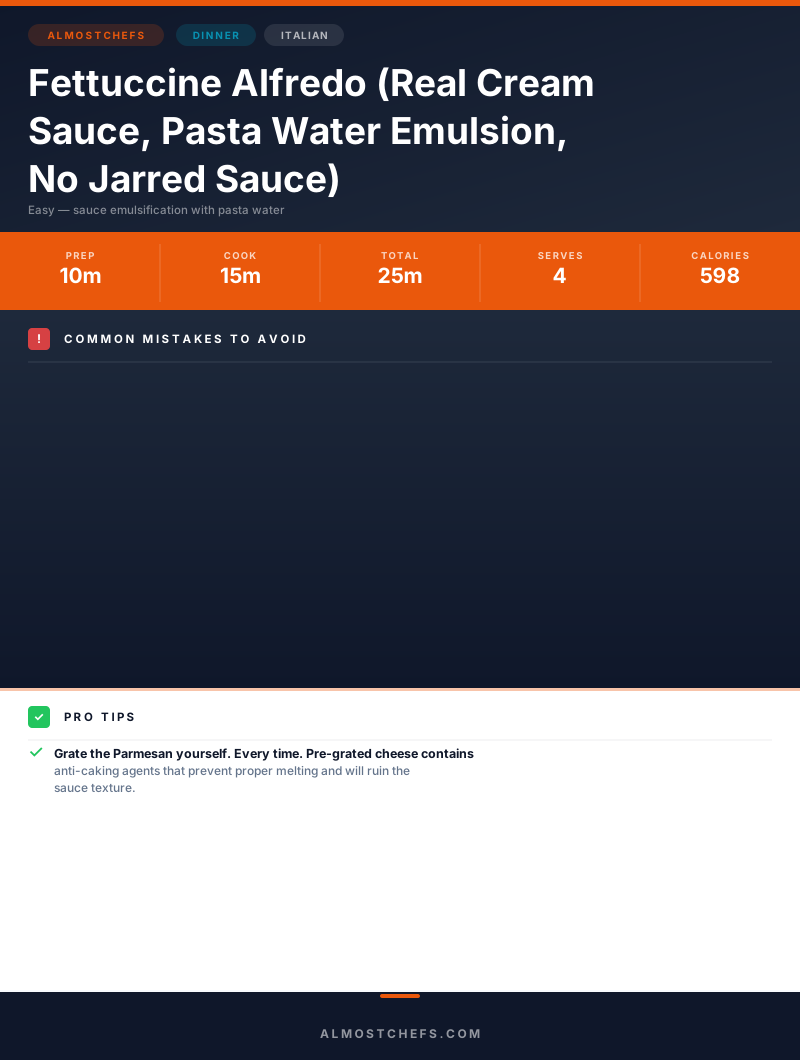
Pre-grated Parmesan clumps and doesn't melt: Pre-grated Parmesan contains cellulose (anti-caking agents) that prevents it from melting smoothly. It will clump into rubbery lumps instead of becoming silky sauce. Buy a block of Parmigiano-Reggiano and grate it fresh on a Microplane or the finest holes of a box grater.
The Video Reference Library
Want to see it in action? Here are the exact videos we analyzed and combined to build this foolproof recipe translation:
The best breakdown of the pasta water emulsification technique and why real Parmigiano-Reggiano behaves differently in the sauce than pre-grated alternatives.
Andrew Rea's take on the butter-only Roman original versus the cream-based American version. Useful for understanding the history and why both versions have a legitimate technical argument behind them.
A sharp explanation of pasta water starch science — why it works as an emulsifier and how to get the most starch out of your cooking water. Directly applicable to Alfredo technique.
🛠️ Core Equipment
- Large skillet (12-inch, stainless or cast iron)The wide surface area lets the cream reduce quickly and evenly. A [12-inch skillet](/kitchen-gear/review/large-skillet) also gives you enough room to toss the pasta without it going over the sides.
- Large pot for pastaYou need enough volume for the fettuccine to cook at a full rolling boil without crowding. Undercrowded pasta produces starchier, more useful cooking water.
- Microplane or fine graterFresh Parmigiano-Reggiano grated fine is the only cheese that works here. A Microplane produces the finest, fluffiest shreds that melt into the sauce without clumping.
Fettuccine Alfredo (Real Cream Sauce, Pasta Water Emulsion, No Jarred Sauce)
🛒 Ingredients
- ✦1 pound fettuccine
- ✦4 tablespoons unsalted butter
- ✦6 cloves garlic, minced
- ✦1 cup heavy cream
- ✦1 cup low-sodium chicken broth
- ✦1 1/2 cups freshly grated Parmigiano-Reggiano
- ✦1/2 teaspoon sea salt
- ✦1/4 teaspoon black pepper
- ✦1/4 teaspoon nutmeg
- ✦2 tablespoons fresh parsley, chopped
- ✦1 tablespoon lemon juice
- ✦1/2 cup reserved pasta water
👨🍳 Instructions
01Step 1
Bring a large pot of salted water to a rolling boil. Salt it assertively — the water should taste like mild broth. Cook fettuccine until one minute shy of al dente according to package directions.
02Step 2
Before draining the pasta, ladle out at least 1 cup of pasta cooking water and set it aside. Drain the pasta.
03Step 3
Melt butter in a large skillet over medium heat. Add minced garlic and cook for 60 to 90 seconds, stirring constantly, until fragrant but not browned.
04Step 4
Pour in chicken broth and heavy cream. Bring to a gentle simmer and cook, stirring occasionally, for 5 to 6 minutes until the sauce reduces by roughly a third and coats the back of a spoon.
05Step 5
Add nutmeg, salt, and pepper. Stir to combine.
06Step 6
Remove the skillet from heat. Add the drained fettuccine and toss to coat in the sauce.
07Step 7
Add the grated Parmigiano-Reggiano in thirds, tossing constantly between each addition. Add pasta water a few tablespoons at a time as needed — the sauce should be fluid and glossy, not thick and gluey.
08Step 8
Add lemon juice and toss once more. Taste and adjust salt.
09Step 9
Plate immediately. Garnish with fresh parsley and additional Parmigiano-Reggiano.
Nutrition Per Serving
Estimates based on standard preparation. Adjustments alter macros.
🔄 Substitutions
Instead of Heavy cream...
Use Half-and-half
Lower fat content means the sauce will be thinner and require a longer reduction. The final texture will be noticeably lighter — acceptable, but not the same richness.
Instead of Parmigiano-Reggiano...
Use Grana Padano
Similar aged hard cheese, slightly milder and less expensive. Works well. Do not substitute pre-grated Parmesan from a green shaker — it will not melt.
Instead of Chicken broth...
Use Vegetable broth or additional cream
Vegetable broth keeps the dish fully vegetarian with minimal flavor change. Additional cream produces a richer, more decadent sauce but tips the dish toward very heavy.
🧊 Storage & Reheating
In the Fridge
Store leftovers in an airtight container for up to 3 days. The pasta will absorb much of the sauce as it sits.
In the Freezer
Not recommended — cream sauces break when frozen and thawed, producing a grainy, separated texture.
Reheating Rules
Reheat gently in a skillet over low heat with a splash of milk or water, tossing constantly until the sauce re-emulsifies. Do not microwave — the sauce will break and become greasy.
❓ Frequently Asked Questions
Why does my Alfredo sauce separate into grease and liquid?
The cheese was added over heat that was too high, or added all at once. Remove the pan from heat before adding the Parmesan, and add it in thirds, tossing constantly between additions. The fat in Parmesan separates from the proteins when heated too aggressively, breaking the emulsion.
Why does pasta water make such a difference?
Pasta cooking water is loaded with dissolved starch — starch molecules that leached out of the pasta during boiling. Those starch molecules act as natural emulsifiers, bridging the fat-phase (butter and cream) and water-phase of the sauce. The result is a sauce that clings to pasta rather than pooling at the bottom of the bowl. Without pasta water, the sauce slides off.
Can I use pre-grated Parmesan from a bag or green shaker?
No. Pre-grated Parmesan contains cellulose powder as an anti-caking agent. That cellulose prevents the cheese from melting smoothly and causes it to clump into rubbery lumps in the sauce. Buy a block of Parmigiano-Reggiano and grate it fresh — it makes a measurable difference in the final sauce texture.
Why is there nutmeg in Alfredo sauce?
Nutmeg appears in nearly every cream-based Italian sauce — béchamel, Alfredo, cream pasta sauces. It doesn't make the dish taste like nutmeg at the quantities used. Instead it adds subtle warmth and aromatic depth that rounds out the heaviness of butter and cream. Without it, cream sauces can taste flat. With it, they taste complete.
Can I make this without chicken broth?
Yes. Replace the broth with additional cream for a richer sauce, or with pasta water for a lighter one. The broth adds savory depth that plain cream doesn't have on its own, but either substitution works fine.
The Science of
Fettuccine Alfredo (Real Cream Sauce, Pasta Water Emulsion, No Jarred Sauce)
We turned everything on this page into a beautiful, flour-proof PDF cheat sheet. Print it out, stick it to your fridge, and never mess up your fettuccine alfredo (real cream sauce, pasta water emulsion, no jarred sauce) again.
*We'll email you the high-res PDF instantly. No spam, just perfectly cooked meals.
AlmostChefs Editorial Team
We translate the internet's most popular cooking videos into foolproof, beginner-friendly written recipes. We analyze multiple methods, test them in our kitchen, and engineer a single "Master Recipe" that gives you the best possible result with the least possible stress.