The Complete Fall Meal Prep (5 Dinners, One Sunday Afternoon)
A structured Sunday meal prep system built around autumn's best produce — roasted squash, braised lentils, spiced sweet potatoes, hearty grains, and a batch-cooked protein that anchors five weeknight dinners. We tested the most-watched fall prep YouTube methods to find the sequence that saves the most time without sacrificing flavor.
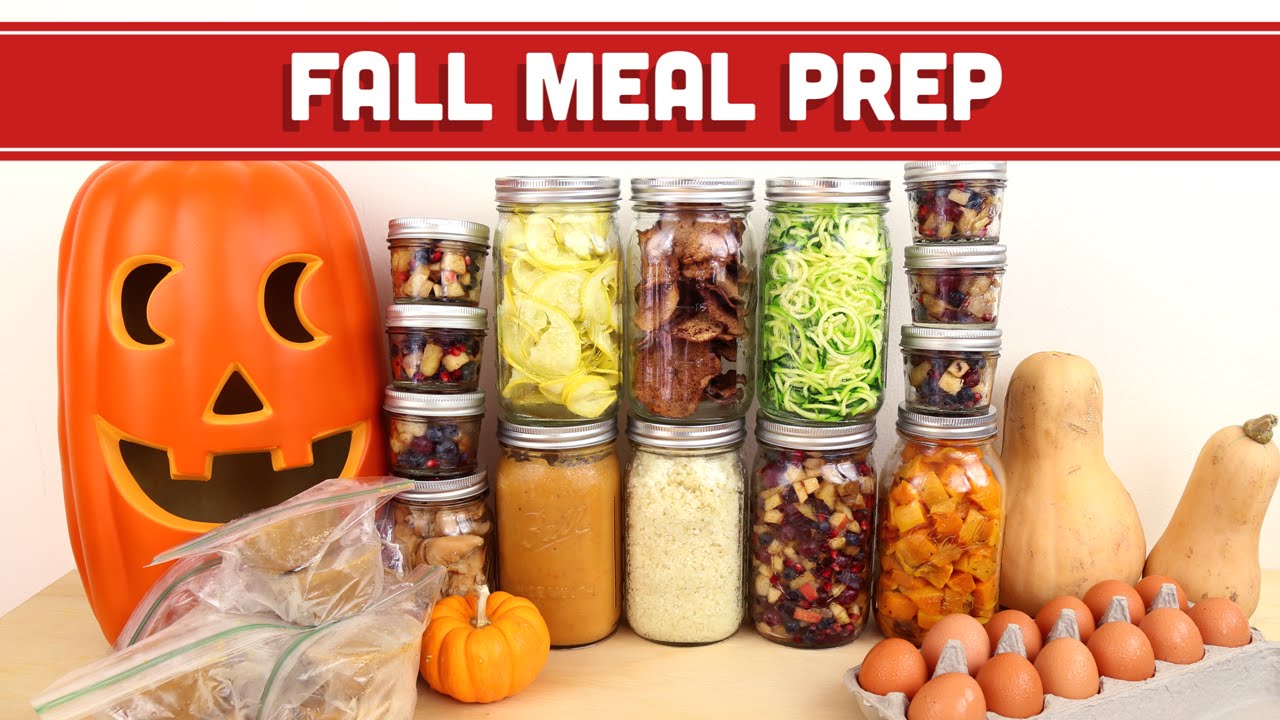
“Most meal prep fails on Wednesday. The food was fine Sunday. By midweek it's sad, soggy, and you're ordering pizza. The problem isn't effort — it's sequencing. Cook the wrong things first and you spend three hours in the kitchen. Cook in the right order and you're done in two, with food that actually holds up through Friday. This fall prep system is built around autumn's most forgiving ingredients: roasted root vegetables, braised lentils, spiced grains, and a batch chicken that anchors every dinner.”
Why This Recipe Works
Fall meal prep has a reputation problem. The internet version — color-coded containers, identical lunches stacked like Pantone chips, influencer kitchens that look like they've never seen a spill — has nothing to do with why batch cooking actually exists. Batch cooking exists because weeknights are brutal, decision fatigue is real, and the gap between having ingredients and having dinner is exactly where good intentions go to die. This system is not about aesthetic. It's about engineering a week where the answer to "what's for dinner" is already in the refrigerator.
Why Fall Ingredients Are the Ideal Prep Canvas
Autumn produce has properties that make it structurally superior for meal prep. Butternut squash, sweet potato, and root vegetables have dense, low-moisture flesh that holds its structure for days after roasting — unlike zucchini or tomatoes, which turn to mush within 24 hours. French green lentils have thick seed coats that resist breaking down even when reheated multiple times. Farro is a grain with enough structural integrity to sit in a container for four days without becoming a paste. These are not coincidences. The reason fall comfort food feels so right in October is the same reason it survives the refrigerator until Thursday.
The spice profile here is built around smoked paprika, cumin, cinnamon, and turmeric — a combination that threads through every component without creating flavor monotony. The cinnamon on the roasted sweet potatoes deepens their natural sweetness. The smoked paprika on the chicken creates a caramelized crust that holds up when reheated. The turmeric in the lentils provides depth and anti-inflammatory properties while tinting the sauce a deep amber that makes the finished bowl look like it required more effort than it did.
The Sequencing Principle
The biggest mistake in any meal prep session is starting without a sequence. Every step in this recipe is ordered to eliminate waiting. The oven preheats while you cube the vegetables. The root vegetables go in first because they take longest. While those roast, the lentils and farro cook on the stovetop. The chicken goes into a skillet in the last 15 minutes. Nothing sits idle, nothing blocks anything else, and every element finishes within a 10-minute window of each other. A heavy-bottomed Dutch oven running simultaneously with two sheet pans means you're using every heat source in your kitchen at once — that is the only way to cut a two-and-a-half-hour prep down to two hours.
The Texture Problem Nobody Talks About
Meal prep's core enemy is moisture migration. Store your roasted butternut squash next to your farro and watch both become unpleasant by Monday afternoon. The squash releases water as it cools, the farro absorbs it, and you end up with gummy grain and collapsed vegetables that neither look nor taste like what you cooked on Sunday. Separate containers are not a lifestyle choice — they are a functional food science decision. Airtight glass storage containers with individual compartments allow each component to maintain its own moisture equilibrium, which is why your farro on day four still has chew and your squash still has caramelized edges.
The Acid Finish
Every rich, starchy autumn component in this prep — lentils, sweet potato, squash, farro — needs acid at serving time. The apple cider vinegar and Dijon that finish the lentils during cooking provide some of this, but the lemon wedges served alongside the assembled bowl are not optional garnish. Acid is a flavor sharpener. It doesn't change what's in the bowl; it changes how your palate perceives it. Without it, five nights of fall meal prep tastes like one long, monotonous meal. With it, each bowl tastes like a decision someone made consciously rather than something scooped from a container out of obligation. A squeeze of lemon takes three seconds. Use it every single time.
Where Beginners Mess This Up
Before we start, read this. These are the 4 reasons your the complete fall meal prep (5 dinners, one sunday afternoon) will fail:
- 1
Roasting everything on the same pan at the same temperature: Sweet potatoes and butternut squash need high heat (425°F) for caramelization. Delicate vegetables like mushrooms and Brussels sprouts need slightly lower heat (400°F) and more space or they steam instead of roast. Crowding one pan produces pale, waterlogged vegetables — not the sticky, caramelized autumn sides you're after. Use two sheet pans and separate the dense from the delicate.
- 2
Cooking grains without seasoning the water: Farro, barley, and brown rice cooked in plain water taste like wet cardboard by day three. Salt your cooking water aggressively — at least one teaspoon per quart — and add a bay leaf or smashed garlic clove. Grains absorb whatever liquid they're cooked in, and unseasoned grains cannot be fixed after cooking.
- 3
Storing everything in the same container: Moisture migration destroys meal prep. Wet components like braised lentils and roasted squash will make grains soggy overnight. Store each component separately in airtight containers and assemble at mealtime. Five minutes of assembly every evening is the difference between food that tastes freshly cooked and food that tastes like a lunchbox from 2009.
- 4
Skipping the acid finish: Fall ingredients — squash, sweet potato, lentils, root vegetables — are rich, sweet, and starchy. Without acid, every meal in your rotation tastes the same: heavy and flat. A squeeze of lemon, a splash of apple cider vinegar, or a spoonful of grainy mustard at serving time cuts through the richness and makes each component taste intentional, not reheated.
The Video Reference Library
Want to see it in action? Here are the exact videos we analyzed and combined to build this foolproof recipe translation:
The source video for this prep system. Strong sequencing advice and clear breakdown of which components can share oven space and which need separation. Excellent visual reference for target roast color on the squash.
Additional technique reference for batch cooking fundamentals and storage best practices.
Supplementary reference covering grain cooking ratios and seasoning strategies for weekly meal prep.
🛠️ Core Equipment
- Two heavy-gauge sheet pansThin, dark sheet pans warp at high heat and create uneven browning. Heavy-gauge aluminum distributes heat evenly across the entire surface, giving you consistent caramelization. You need two — one for dense root vegetables and one for quick-cooking items.
- Dutch oven or heavy-bottomed potFor the braised lentils and chicken. Even heat distribution prevents scorching and allows low, slow cooking without constant supervision. Cast iron enameled pots are ideal — they hold temperature without fluctuation.
- Fine-mesh sieveFor draining grains and rinsing lentils. Farro and barley need a thorough rinse before cooking to remove surface starch; lentils need rinsing to remove dust and debris. A fine-mesh sieve handles both tasks.
- Glass meal prep containers with airtight lidsGlass holds temperature better than plastic during reheating and doesn't absorb odors from spiced foods. Airtight lids are non-negotiable for preventing moisture migration between components.
The Complete Fall Meal Prep (5 Dinners, One Sunday Afternoon)
🛒 Ingredients
- ✦2 pounds boneless, skinless chicken thighs
- ✦1 medium butternut squash (about 2.5 pounds), peeled and cubed into 1-inch pieces
- ✦2 large sweet potatoes, peeled and cubed into 1-inch pieces
- ✦1 pound Brussels sprouts, halved
- ✦8 ounces cremini mushrooms, quartered
- ✦1.5 cups French green lentils, rinsed
- ✦1.5 cups farro, rinsed
- ✦1 large yellow onion, diced
- ✦5 garlic cloves, minced
- ✦1 can (14 oz) diced fire-roasted tomatoes
- ✦3.5 cups low-sodium chicken broth
- ✦3 cups vegetable broth (for lentils)
- ✦4 tablespoons olive oil, divided
- ✦2 teaspoons smoked paprika
- ✦1.5 teaspoons ground cumin
- ✦1 teaspoon ground cinnamon
- ✦1 teaspoon garlic powder
- ✦1 teaspoon onion powder
- ✦1/2 teaspoon ground turmeric
- ✦1/2 teaspoon cayenne pepper
- ✦2 bay leaves
- ✦3 sprigs fresh thyme
- ✦1/4 cup apple cider vinegar
- ✦2 tablespoons grainy Dijon mustard
- ✦Sea salt and freshly ground black pepper to taste
- ✦Fresh flat-leaf parsley, for serving
- ✦1 lemon, cut into wedges, for serving
👨🍳 Instructions
01Step 1
Preheat your oven to 425°F. Line two heavy-gauge sheet pans with parchment paper.
02Step 2
In a large bowl, toss the butternut squash and sweet potato cubes with 1.5 tablespoons olive oil, smoked paprika, cinnamon, garlic powder, salt, and pepper. Spread in a single layer on the first sheet pan.
03Step 3
On the second sheet pan, toss Brussels sprouts and mushrooms with 1 tablespoon olive oil, cumin, salt, and pepper. Spread in a single layer.
04Step 4
Place both sheet pans in the oven. Roast the squash and sweet potato pan for 35-40 minutes, flipping once at the 20-minute mark. Roast the Brussels sprouts and mushrooms for 25-30 minutes, flipping once at 15 minutes.
05Step 5
While the vegetables roast, heat 1 tablespoon olive oil in a Dutch oven over medium heat. Add the diced onion and cook for 6-8 minutes until softened and translucent. Add the minced garlic and cook for 1 minute more.
06Step 6
Add the rinsed lentils, fire-roasted tomatoes, vegetable broth, turmeric, bay leaves, thyme sprigs, and a generous pinch of salt to the Dutch oven. Bring to a boil, then reduce heat to a low simmer. Cook uncovered for 25-30 minutes until lentils are tender but still hold their shape.
07Step 7
Remove bay leaves and thyme sprigs from the lentils. Stir in apple cider vinegar and Dijon mustard. Taste and adjust seasoning. The acid will immediately brighten the flavor.
08Step 8
In a medium saucepan, combine the rinsed farro with chicken broth, 1/2 teaspoon salt, and a bay leaf. Bring to a boil, then reduce to a simmer. Cook covered for 25-30 minutes until farro is tender with a slight chew. Drain any excess liquid.
09Step 9
Season chicken thighs on both sides with onion powder, remaining smoked paprika, salt, and pepper. Heat the remaining 1/2 tablespoon olive oil in a skillet over medium-high heat. Sear chicken thighs for 4-5 minutes per side until golden brown with an internal temperature of 165°F.
10Step 10
Let the chicken rest for 5 minutes, then slice or shred into pieces. The rendered fat in the pan can be drizzled over the chicken before storing — it prevents dryness.
11Step 11
Allow all components to cool completely to room temperature (about 20-30 minutes) before transferring to airtight containers. Store each component separately: chicken, lentils, farro, root vegetables, and Brussels sprouts/mushrooms each in their own container.
12Step 12
Refrigerate all components. To assemble a weeknight dinner, plate farro as a base, add lentils and your choice of roasted vegetables, top with sliced chicken, and finish with fresh parsley and a lemon wedge.
Nutrition Per Serving
Estimates based on standard preparation. Adjustments alter macros.
🔄 Substitutions
Instead of Farro...
Use Brown rice or barley
Barley has a similar chew and holds up well in storage. Brown rice is more neutral in flavor but takes longer to cook (45-50 minutes). Both work with the same seasoning approach.
Instead of French green lentils...
Use Beluga (black) lentils
Beluga lentils hold their shape even better than green lentils and have a slightly earthier, more mineral flavor. They're the meal-prep lentil of choice for people who prioritize texture above all else.
Instead of Chicken thighs...
Use Chickpeas (two 15-oz cans, drained and roasted)
For a fully plant-based prep, toss chickpeas with the same spice blend and roast at 425°F for 25-30 minutes until crispy. They provide protein and texture without any animal products.
Instead of Butternut squash...
Use Delicata squash or kabocha
Delicata doesn't need peeling — slice into half-moons and roast directly. It's sweeter than butternut and caramelizes faster. Check it at the 25-minute mark.
🧊 Storage & Reheating
In the Fridge
Store each component in a separate airtight container for up to 4 days. Do not combine until serving. The chicken should be stored in a shallow container to prevent moisture pooling at the bottom.
In the Freezer
Lentils and farro freeze well for up to 3 months. Roasted vegetables lose texture when frozen — consume those fresh within the week. Cooked chicken can be frozen for up to 2 months.
Reheating Rules
Reheat grains and lentils in a small saucepan with a splash of broth or water over medium-low heat, stirring occasionally. Reheat roasted vegetables in a 400°F oven for 8-10 minutes to restore crispness. Microwave works for the chicken but dries it out — drizzle with a teaspoon of olive oil before microwaving and cover loosely.
❓ Frequently Asked Questions
How do I keep my roasted vegetables from getting soggy in storage?
Two things cause soggy vegetables: steam during storage and excess moisture before roasting. Pat vegetables completely dry before oiling and seasoning, use high heat (425°F), and never crowd the pan. Store in wide, shallow containers with the lid slightly ajar for the first 30 minutes of refrigeration to let residual steam escape.
Can I do this prep entirely in one oven?
Yes, but sequence it correctly. Start the dense root vegetables (squash and sweet potato) first since they take longest. While those roast, prep and cook your grains and lentils on the stovetop. Add the second sheet pan of Brussels sprouts and mushrooms to the oven in the last 25 minutes. Everything finishes within a few minutes of each other.
My farro is still crunchy after 30 minutes. What happened?
Farro varies significantly by brand and variety. Whole farro takes 35-40 minutes; pearled farro takes 20-25 minutes. Check your package — if it says 'whole grain' farro without any pearling notation, add 10 extra minutes and check the texture. The grain should be chewy but not gritty.
How do I prevent the lentils from turning to mush?
French green lentils (also sold as Puy lentils) hold their shape much better than red or brown lentils. Start checking for doneness at the 22-minute mark and pull them the moment they're tender. Residual heat will continue cooking them as they cool. Overcooked lentils cannot be rescued.
Is this prep actually enough food for five full dinners?
The recipe as written makes generous portions for one person across five dinners, or three dinners for two people. The calorie count reflects one assembled dinner bowl. If you're prepping for a family, double the batch — the cook time barely increases since most components cook passively.
What's the best way to add variety so I don't get bored eating the same prep all week?
The fastest method is rotating your sauce. Keep three small containers of different condiments in your fridge — tahini-lemon, harissa, and a soy-ginger vinaigrette — and change the sauce each night. The underlying bowl looks identical but tastes completely different. You can also swap the grain base mid-week by cooking a small amount of pasta or buying a good loaf of bread.

The Science of
The Complete Fall Meal Prep (5 Dinners, One Sunday Afternoon)
We turned everything on this page into a beautiful, flour-proof PDF cheat sheet. Print it out, stick it to your fridge, and never mess up your the complete fall meal prep (5 dinners, one sunday afternoon) again.
*We'll email you the high-res PDF instantly. No spam, just perfectly cooked meals.
AlmostChefs Editorial Team
We translate the internet's most popular cooking videos into foolproof, beginner-friendly written recipes. We analyze multiple methods, test them in our kitchen, and engineer a single "Master Recipe" that gives you the best possible result with the least possible stress.