Perfect Homemade Espresso (No Machine Required)
A concentrated, crema-topped shot made by forcing precisely heated water through a tamped puck of finely ground dark roast beans — no expensive machine needed. We analyzed the most popular YouTube methods and extraction science to build one foolproof technique that delivers café-quality results from your home kitchen.
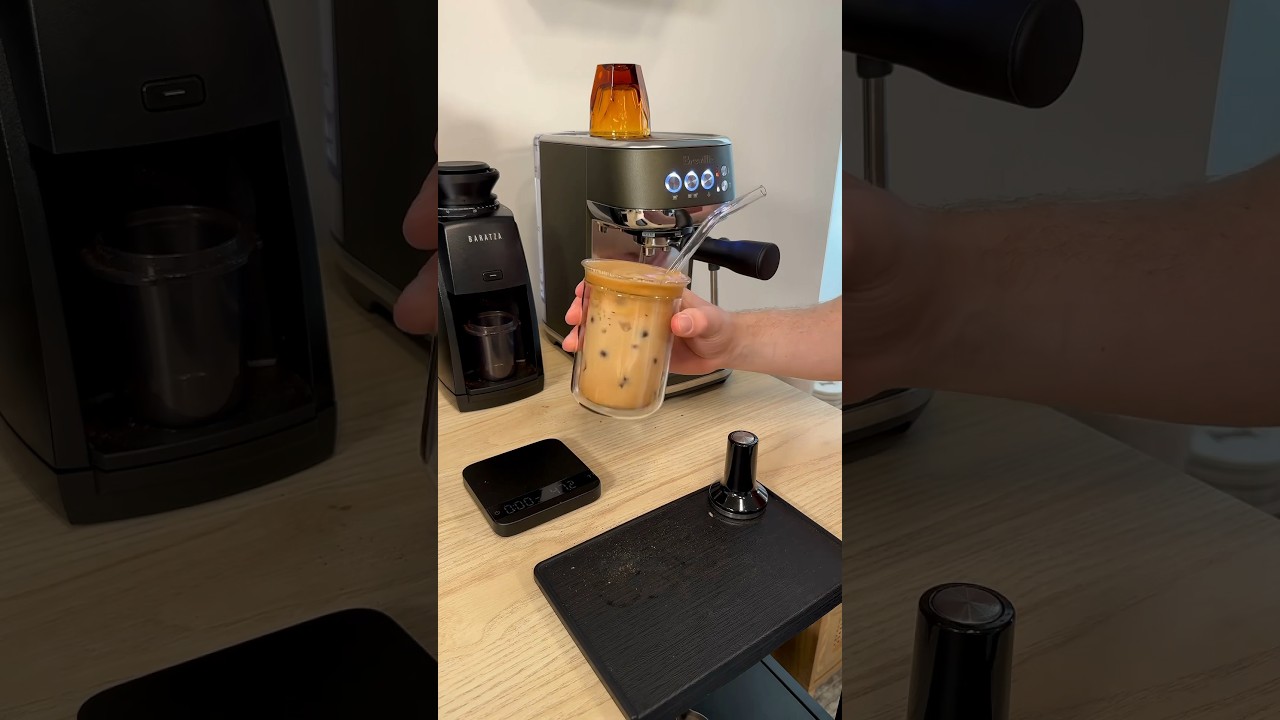
“Most home espresso fails before the water touches the grounds. The grind is wrong, the water is too hot, the tamp is uneven, or the extraction runs too long. The result is a bitter, thin, acrid shot that tastes nothing like what you paid six dollars for last Tuesday. The fix is not an expensive machine — it's understanding the three variables that actually control espresso quality: grind consistency, water temperature, and extraction time. Get those right and the equipment becomes secondary.”
Why This Recipe Works
Espresso is pressure brewing reduced to its simplest form: hot water forced through a dense, uniform puck of finely ground coffee fast enough to extract the good compounds and slow enough not to extract the bad ones. The entire process takes 30 seconds. Getting it right requires understanding exactly three things — grind consistency, water temperature, and extraction time — and then not touching anything else.
The Grind Is Everything
Coffee extraction is a surface area problem. When water contacts ground coffee, it dissolves soluble compounds from the exposed surface of each particle. Finer grounds = more surface area = faster extraction = more dissolved in less time. This is why espresso demands such a fine grind: the 25–30 second extraction window only works if the grounds are packed densely enough to slow the water down.
The problem with blade grinders — the cheap kind shaped like a miniature blender — is that they produce particles ranging from powder to small pebbles in the same batch. Water flows through the coarse particles in seconds, under-extracting them, while simultaneously over-extracting the fine powder. You taste both failures simultaneously: sour and bitter at once. A burr grinder solves this by crushing beans between two abrasive surfaces set at a precise distance, producing uniform particles every time.
If you only make one equipment investment, make it a burr grinder. It matters more than the brewing device.
Temperature Is the Flavor Switch
Water at 212°F doesn't make espresso — it makes burned coffee. The Maillard compounds and volatile aromatics that give espresso its sweetness and complexity have boiling points lower than water. At full boil, they're gone before the extraction even finishes, leaving only the bitter, astringent tannins that survive high heat. The 195–205°F window is calibrated to extract sweetness and body while leaving bitterness behind.
This is not a small difference. The same beans, same grind, same equipment — pulled at 212°F versus 200°F — produce noticeably different shots. The 200°F shot has perceptible sweetness, round body, and a lingering finish. The 212°F shot is flat and harsh. A temperature-controlled kettle makes hitting this window trivially easy. A standard kettle and a 45-second rest off boil gets you close enough.
What the Pre-Infusion Phase Does
Freshly roasted coffee beans are saturated with CO2 — a byproduct of the roasting process that outgasses slowly over several weeks. When hot water hits the grounds, that CO2 wants to escape all at once, creating turbulence that disrupts even water distribution across the puck. Channels form. Water finds the paths of least resistance and sprints through them, leaving most of the puck untouched.
Pre-infusion — that initial 10–15 second slow pour — wets the grounds and lets the CO2 bloom out before full extraction begins. You'll see the grounds swell and rise slightly, releasing small bubbles. After the bloom settles, the puck is uniformly hydrated and the water will flow through it evenly during the main extraction. It's a 15-second step that meaningfully improves shot consistency.
Reading Your Shot
Espresso tells you exactly what went wrong through taste and appearance. Sour means under-extracted — grind finer or slow the pour. Bitter means over-extracted — grind coarser or stop sooner. No crema means stale beans or water too cool. Pale, watery color at 15 seconds means the grind is too coarse and water is channeling through gaps.
The Moka pot is the most accessible home tool for this method, and it produces genuine pressure-brewed concentrate when used correctly. An AeroPress gives you more control over pressure and extraction time. Neither produces the identical 9-bar pressure of a commercial machine — but at this level of technique, that gap closes considerably.
Espresso rewards attention. Pay attention for 30 seconds and you get something extraordinary.
Where Beginners Mess This Up
Before we start, read this. These are the 4 reasons your perfect homemade espresso (no machine required) will fail:
- 1
Grinding too coarse — or too inconsistent: Espresso demands a fine, uniform grind. Blade grinders chop beans into uneven particles — some too fine, some too coarse — causing simultaneous over-extraction and under-extraction in the same puck. The result is a shot that's both bitter and sour. A burr grinder is the single highest-leverage upgrade you can make.
- 2
Water that's too hot: Boiling water (212°F) scorches the coffee grounds, burning off the delicate volatile compounds responsible for sweetness and aroma and leaving only bitterness behind. The target window is 195–205°F. Pull the kettle off heat 30–45 seconds after boiling, or use a temperature-controlled kettle. This one adjustment fixes most bitterness complaints.
- 3
Uneven tamping: A crooked tamp creates channels — paths of least resistance where water flows through without extracting properly. Water is lazy; it finds the gaps and sprints through them, leaving most of the puck under-extracted. Tamp straight down with firm, even pressure. The puck surface should be perfectly level before water touches it.
- 4
Running the extraction too long: A proper espresso pulls in 25–30 seconds. Beyond that, you're dissolving the bitter, astringent compounds that should stay in the grounds. Watch the color: the moment the stream transitions from dark amber to pale yellow, stop. That pale stream is over-extraction in real time.
The Video Reference Library
Want to see it in action? Here are the exact videos we analyzed and combined to build this foolproof recipe translation:
The foundational walkthrough that covers grind size, water temperature, and extraction timing in clear, practical terms. Best starting point for understanding what each variable actually does.
🛠️ Core Equipment
- Moka pot or AeroPressThe most accessible home tools for producing genuine espresso-style concentrate. A [Moka pot](/kitchen-gear/review/moka-pot) uses steam pressure to force water through grounds; an [AeroPress](/kitchen-gear/review/aeropress) uses manual air pressure. Both produce a bold, concentrated shot when used correctly.
- Burr grinderUniform particle size is the foundation of consistent extraction. A [burr grinder](/kitchen-gear/review/burr-grinder) crushes beans between two abrasive surfaces, producing even grounds every time. Blade grinders are the number one cause of inconsistent home espresso.
- Temperature-controlled kettleHitting the 195–205°F window is non-negotiable. A [gooseneck kettle](/kitchen-gear/review/gooseneck-kettle) with a built-in thermometer gives you precision pours and precise temperature control simultaneously.
- Kitchen scaleEyeballing 18 grams of coffee introduces too much variability. A [digital kitchen scale](/kitchen-gear/review/kitchen-scale) accurate to 0.1g is the difference between a repeatable process and daily guesswork.
Perfect Homemade Espresso (No Machine Required)
🛒 Ingredients
- ✦18 grams finely ground dark roast coffee beans
- ✦2 fluid ounces filtered water, heated to 195–205°F
- ✦1 pinch sea salt, optional
- ✦1 teaspoon raw honey or agave nectar, optional
- ✦2 tablespoons unsweetened almond milk or oat milk, optional
- ✦1 small piece fresh orange zest, optional
- ✦Filtered water for rinsing equipment
👨🍳 Instructions
01Step 1
Grind your dark roast beans to a fine consistency resembling table salt — no coarser, no finer. Grind immediately before brewing.
02Step 2
Heat filtered water to 195–205°F. If using a standard kettle, bring to a boil then let sit off heat for 30–45 seconds.
03Step 3
Rinse your Moka pot chamber, AeroPress, or brewing vessel with hot water to preheat all surfaces. Dump the rinse water before proceeding.
04Step 4
Distribute the ground coffee evenly into the basket or filter. Tamp with firm, level pressure — straight down, no rocking. The surface of the puck should be perfectly flat.
05Step 5
Pour the heated water slowly over the grounds in a circular motion. Allow water to saturate the grounds for 10–15 seconds before continuing — this is the pre-infusion phase.
06Step 6
Continue pouring the remaining water at a steady, controlled pace, completing the full extraction in 25–30 seconds total. Stop when you've collected approximately 2 ounces.
07Step 7
Watch the stream. You're looking for a dark, syrupy, amber-colored flow. The moment it shifts to a pale, watery yellow, stop immediately — that's over-extraction.
08Step 8
Pour the espresso immediately into a preheated cup to maintain temperature.
09Step 9
Add a pinch of sea salt if desired — it suppresses bitterness perception without adding flavor of its own.
10Step 10
Top with frothed milk, honey, or orange zest to taste. Consume within 2–3 minutes while crema is intact.
Nutrition Per Serving
Estimates based on standard preparation. Adjustments alter macros.
🔄 Substitutions
Instead of Dark roast coffee beans...
Use Medium roast or single-origin beans
Brighter, more complex flavor with fruity or floral notes. Extraction time stays the same; adjust grind slightly finer to compensate for lower density.
Instead of Raw honey or agave nectar...
Use Monk fruit sweetener or liquid stevia
Zero glycemic impact. Some brands have a detectable aftertaste — start with half the amount you'd use with honey and adjust up.
Instead of Unsweetened almond milk...
Use Oat milk or cashew milk
Oat milk produces significantly more stable microfoam due to its higher starch content — better for latte-style preparations. Cashew milk is richer and creamier straight.
Instead of Filtered water...
Use Filtered water with a small pinch of mineral content (trace minerals or a pinch of baking soda)
Mineral content improves extraction efficiency and highlights sweetness. Completely soft or distilled water produces flat, lifeless espresso.
🧊 Storage & Reheating
In the Fridge
Brewed espresso does not store well — the crema collapses within minutes and oxidation begins immediately. Make only what you'll drink now.
In the Freezer
Freeze espresso into ice cubes for use in cold brew cocktails or iced coffee drinks. Flavor degrades but works well as a base for mixed drinks.
Reheating Rules
Do not reheat espresso. The volatile aromatic compounds that carry flavor evaporate on reheating, leaving only bitterness. Brew fresh.
❓ Frequently Asked Questions
Can I make real espresso without an espresso machine?
You can make a concentrated, espresso-style shot — bold, rich, and suitable as a base for lattes and Americanos — using a Moka pot or AeroPress. True 9-bar machine espresso is not replicable at home without the equipment, but the difference matters less than you think once the technique is right.
Why is my espresso bitter?
Bitterness is almost always over-extraction: water too hot, grind too fine, or brew time too long. Start by pulling the kettle 45 seconds off boil and cutting extraction at 30 seconds. If still bitter, coarsen your grind slightly. Fix one variable at a time.
Why does my espresso taste sour or weak?
Sourness indicates under-extraction — the water moved through the grounds too fast, dissolving the bright acidic compounds but missing the balancing sweetness. Grind finer, slow your pour, or increase water temperature slightly.
How much caffeine is in a shot of espresso?
A standard 2-ounce shot from 18 grams of ground coffee contains approximately 60–75mg of caffeine. Despite its intensity, espresso has less caffeine per ounce than drip coffee because the brew time is shorter.
What does pre-infusion actually do?
Pre-infusion wets the grounds and allows CO2 gas — naturally present in freshly roasted coffee — to escape before full extraction begins. Without it, CO2 creates turbulence that disrupts even water flow, causing channeling and uneven extraction. The 10–15 second bloom produces a significantly more uniform shot.
My crema disappears immediately. What's wrong?
Almost always stale beans. Crema is primarily CO2 trapped in an emulsion with coffee oils — CO2 that was locked in the beans at roasting and releases slowly over time. Beans more than 3–4 weeks past roast date have outgassed most of their CO2. Buy freshly roasted beans and use them within three weeks.
The Science of
Perfect Homemade Espresso (No Machine Required)
We turned everything on this page into a beautiful, flour-proof PDF cheat sheet. Print it out, stick it to your fridge, and never mess up your perfect homemade espresso (no machine required) again.
*We'll email you the high-res PDF instantly. No spam, just perfectly cooked meals.
AlmostChefs Editorial Team
We translate the internet's most popular cooking videos into foolproof, beginner-friendly written recipes. We analyze multiple methods, test them in our kitchen, and engineer a single "Master Recipe" that gives you the best possible result with the least possible stress.