Eomuk Tang (The Korean Fish Cake Soup You've Been Missing)
A deeply savory Korean fish cake soup built on a clean anchovy-kelp broth, loaded with silky eomuk skewers, daikon, and green onion. Deceptively simple street food that outperforms most restaurant versions when you understand the broth.

“You've probably had eomuk tang from a street cart or a pojangmacha tent in the middle of winter and wondered why yours never tastes the same at home. The answer isn't the fish cakes — it's the broth. Most home recipes use water or instant dashi powder and produce a flat, metallic result. The real version starts with a proper myeolchi-dasima base, and once you build that, everything else is fifteen minutes of assembly.”
Why This Recipe Works
Eomuk tang is one of Korean cuisine's most underestimated dishes. It looks like an afterthought — a few skewers of processed fish cake floating in a pot of clear liquid — and it gets dismissed accordingly. That dismissal is a mistake made exclusively by people who have never had a proper version. The best eomuk tang produces a broth so clean and precisely savory that you drink the last of it from the cup like tea. This is not a metaphor. Koreans literally drink the broth from cups at the street cart. Building that broth is the entire project. Everything else is assembly.
The Broth Is the Recipe
Every gram of flavor in eomuk tang originates in the anchovy-kelp base. There is no heavy sauce to hide behind, no spice blend to compensate for a weak foundation. This is transparent cooking in the most literal sense — the liquid is nearly clear, and you taste everything in it without interference.
Dried anchovies (myeolchi) and dried kelp (dasima) are the structural pair. Anchovies contribute inosinates — the same class of compounds responsible for depth in aged Parmesan, slow-cooked meat stock, and cured fish. Kelp contributes glutamates, chemically identical to the active compound in MSG. When inosinates and glutamates combine, they produce a synergistic umami response roughly eight times more intense than either compound in isolation. This is not food mysticism — it is documented flavor chemistry and the scientific reason why myeolchi-dasima broth tastes disproportionately complex for something made from two ingredients and fifteen minutes of simmering.
Build this broth in a medium saucepan or, if you want to serve directly from the vessel (the correct approach), an earthenware pot (ttukbaegi). The ttukbaegi is worth acquiring if you cook Korean soups with any frequency. Its thermal mass retains heat long after the burner is off, which means your soup stays at a proper simmer through the entire meal without a portable burner. The saucepan is the pragmatic backup — fully functional, slightly less elegant.
The critical mistake with kelp is treating it like a spice you simmer indefinitely. Dasima releases its optimal glutamate load within the first ten minutes at a gentle heat. Past that window, extended boiling degrades the cell walls and extracts alginic acid — a bitter, faintly slimy compound that muddles the clarity you're constructing. The protocol is specific: add kelp to cold water, bring to a low simmer, remove it before the liquid reaches a rolling boil. The anchovies tolerate more heat and can remain for the full fifteen minutes without penalty.
Once the broth is built, strain it through a fine-mesh sieve and discard the solids. This step is non-negotiable. Tiny anchovy fragments left in the broth continue steeping as the soup cooks and turn progressively bitter. The sieve removes them cleanly and leaves you with an unambiguous foundation — oceanic, savory, and transparent.
Fish Cake Selection Is Not Decorative
Flat rectangular eomuk sheets are the correct product for this soup. They are made from a blend of white fish, wheat starch, and seasoning, pressed into thin, pliable sheets that fold accordion-style onto wooden skewers. The geometry is not arbitrary. When folded and skewered, the fish cake creates layered surfaces with maximum broth contact. Each fold softens separately as it cooks, producing a silky, yielding texture that absorbs the anchovy base all the way through.
Ball-type and tube-type fish cakes are a category error here. Their higher density means uneven broth penetration — the exterior overcooks while the interior remains dense and rubbery. The flat sheet format exists precisely to solve this problem. Do not substitute based on availability without accepting the textural downgrade.
Soak your wooden skewers in cold water for ten minutes before threading. Unseasoned dry wood scorches at direct contact with hot liquid and imparts a faintly acrid flavor that has no business in a clean broth soup.
Daikon: Flavor Sponge and Structural Counterweight
Daikon operates on two levels in this dish. Functionally, it contributes a clean, subtly sweet brassica note that softens the anchovy's assertive salinity. But its more important role is passive: daikon cooked in a properly built broth for eight minutes becomes deeply seasoned all the way through, functioning as a second delivery mechanism for the soup's flavor. The fish cakes carry savory weight. The daikon carries broth.
Cut it into half-moon slices, not cubes. Half-moons cook evenly because they present consistent thickness throughout. Cubes create uneven cross-sections and awkward geometry in a clear broth soup where visual clarity is part of the presentation. Small decisions compound.
Add daikon to the broth before the fish cakes because it requires more time and actively improves the broth as it cooks. This is not sequencing for its own sake — it's the correct thermal and flavor logic.
Seasoning in Order
Guk ganjang — soup soy sauce — is lighter in color, saltier by concentration, and fermented differently than standard soy sauce. Its purpose is to season without darkening the broth. Using regular soy sauce produces a brown liquid that looks like weak beef stew and carries a slightly muddy flavor profile that's difficult to articulate but immediately noticeable to anyone who knows the dish. If guk ganjang is unavailable, use half the specified quantity of regular soy sauce and accept the compromise consciously rather than accidentally.
Fish sauce is the final umami layer. One teaspoon. The goal is not to taste fish sauce — it should dissolve into the background and make the broth taste more intensely like itself. A tablespoon is a different dish. Measure it.
Sesame oil enters last, near the end of heat or off it entirely. Its volatile aromatic compounds — the ones responsible for that immediately recognizable fragrance — degrade rapidly at cooking temperatures. A teaspoon stirred in thirty seconds before serving coats the surface of the broth with a nutty warmth that is, for many people, the moment they understand why this soup has a following. Heat it through and you've wasted it.
The Pojangmacha Standard
The reference point for eomuk tang is a pojangmacha tent in December — a portable gas burner keeping a large pot at a constant simmer, fish cakes on skewers, broth distributed in small cups to people standing in the cold. That version works because the broth concentrates slowly over hours, the fish cakes cycle in and out of the pot, and the whole operation runs at temperature continuously.
Replicating it at home means keeping your pot on heat at the table and eating immediately. This soup is not designed to sit. The broth concentrates and salts up; the fish cakes continue absorbing and eventually become too soft to hold their shape. Serve it the moment it's seasoned, keep it hot through the meal, and drink what's left in the pot. That is the original intended experience, and there is no upgrade available.
Where Beginners Mess This Up
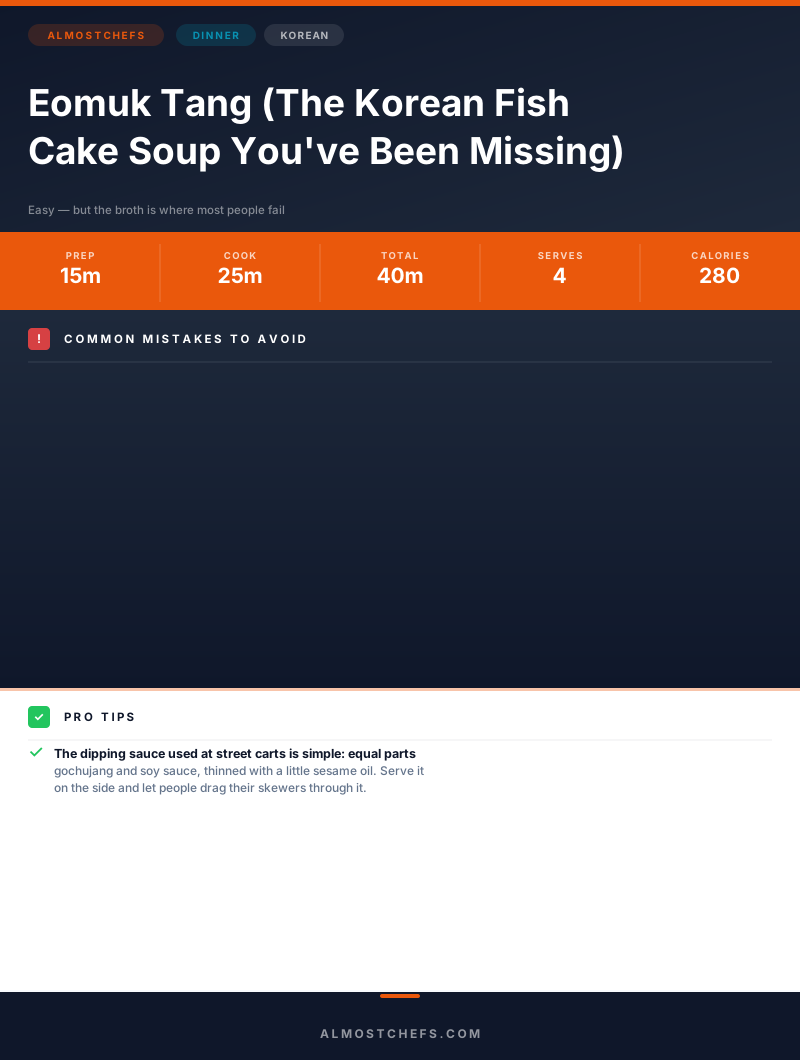
Before we start, read this. These are the 4 reasons your eomuk tang (the korean fish cake soup you've been missing) will fail:
- 1
Skipping a real anchovy-kelp broth: Instant dashi powder and plain water produce soup that tastes like diluted brine. Dried anchovies (myeolchi) and kelp (dasima) simmered together for 15 minutes create a clean, oceanic umami base that is the entire reason eomuk tang tastes the way it does. There is no shortcut worth taking here.
- 2
Boiling the kelp instead of steeping it: Kelp releases its glutamates within the first 10 minutes at a gentle simmer. Extended boiling extracts bitter, slimy compounds that muddy the broth. Add the kelp to cold water, bring to a low simmer, and pull it out before the liquid hits a full boil.
- 3
Using the wrong fish cakes: Flat rectangular eomuk (the kind sold on skewers) is the correct cut for this dish. Tube-shaped or ball-shaped fish cakes are too dense and absorb broth unevenly. Flat sheets soften into silky, yielding pieces that carry the broth flavor all the way through.
- 4
Under-seasoning the broth at the end: Anchovy broth is clean and subtle — intentionally so. The final seasoning with soup soy sauce (guk ganjang) and a small amount of fish sauce is not optional. Without it, the soup tastes like well-intentioned hot water.
🛠️ Core Equipment
- Medium saucepan or earthenware pot (ttukbaegi)A ttukbaegi retains heat beautifully and keeps the soup piping hot through the meal. Any heavy-bottomed saucepan works, but the earthenware pot is worth having for Korean soups specifically.
- Fine-mesh sieveFor straining the anchovy-kelp broth cleanly. Tiny anchovy fragments left in the soup turn bitter as they continue to steep and can muddy an otherwise pristine base.
- Wooden skewersTraditional eomuk tang threads the fish cakes onto skewers before simmering. It's not purely aesthetic — the skewers allow you to serve individual portions without breaking the cakes apart.
Eomuk Tang (The Korean Fish Cake Soup You've Been Missing)
🛒 Ingredients
- ✦14 oz (400g) flat rectangular eomuk (fish cake sheets), thawed if frozen
- ✦8 cups cold water
- ✦1 oz (30g) dried anchovies (myeolchi), heads and guts removed
- ✦1 piece dried kelp (dasima), about 4x4 inches
- ✦6 oz (170g) daikon radish, cut into 1/2-inch half-moons
- ✦3 green onions, cut into 2-inch pieces
- ✦2 tablespoons soup soy sauce (guk ganjang)
- ✦1 teaspoon fish sauce
- ✦1 teaspoon sesame oil
- ✦1/2 teaspoon ground black pepper
- ✦1 teaspoon gochugaru (optional, for heat)
- ✦Wooden skewers, soaked in water for 10 minutes
👨🍳 Instructions
01Step 1
Add cold water, dried anchovies, and kelp to a medium saucepan. Bring to a gentle simmer over medium heat, about 10 minutes.
02Step 2
Continue simmering the anchovies for 5 more minutes. Strain the broth through a fine-mesh sieve and discard the solids. Return the clear broth to the pot.
03Step 3
Add the daikon radish to the broth and simmer over medium heat for 8 minutes until just tender.
04Step 4
While the daikon simmers, fold the eomuk sheets accordion-style and thread them onto soaked wooden skewers.
05Step 5
Add the skewered eomuk to the simmering broth. Cook for 5 minutes, turning once, until the fish cakes are heated through and slightly puffed.
06Step 6
Season the broth with soup soy sauce, fish sauce, and black pepper. Taste and adjust — the broth should be savory, clean, and lightly salty.
07Step 7
Add the green onion pieces and sesame oil. Simmer for 1 minute.
08Step 8
Serve immediately in the pot or individual bowls, skewers intact.
Nutrition Per Serving
Estimates based on standard preparation. Adjustments alter macros.
🔄 Substitutions
Instead of Dried anchovies (myeolchi)...
Use Dried shrimp + a strip of kombu
Produces a slightly sweeter, less pronounced umami base. Acceptable substitution — still produces a clean broth. Use 2 tablespoons dried shrimp per 8 cups water.
Instead of Soup soy sauce (guk ganjang)...
Use Regular soy sauce, halved quantity
Regular soy sauce is darker and stronger. Use 1 tablespoon where the recipe calls for 2, and compensate the saltiness with a small pinch of sea salt.
Instead of Flat eomuk sheets...
Use Tube-shaped fish cake (어묵 원통형)
Cut into 1-inch rounds. The texture is denser and less silky, but the flavor is identical. Cooking time increases by 2 minutes.
Instead of Daikon radish...
Use Napa cabbage (baechu)
Cabbage softens faster — add it at the same time as the fish cakes, not before. Gives a sweeter, more mild backdrop compared to the clean bite of daikon.
🧊 Storage & Reheating
In the Fridge
Store broth and fish cakes separately in airtight containers for up to 2 days. The fish cakes absorb broth continuously in storage and can become overly salty if left submerged.
In the Freezer
Not recommended. Fish cakes develop a spongy, waterlogged texture after freezing in broth. Make fresh.
Reheating Rules
Bring broth back to a simmer in a saucepan and add the fish cakes for 2-3 minutes to reheat. Do not microwave — the fish cakes tighten and become rubbery.
❓ Frequently Asked Questions
What is eomuk tang exactly?
Eomuk tang (어묵탕) is a Korean soup made from fish cake sheets (eomuk or odeng) simmered in a savory anchovy-kelp broth with daikon and green onion. It originated as Korean street food sold from pojangmacha carts, where a large pot stays hot all day and customers drink the broth from cups while eating skewered fish cakes.
Is eomuk the same as odeng?
Yes. Odeng (오뎅) is a Korean phonetic borrowing of the Japanese word 'oden,' and it's used interchangeably with eomuk (어묵), which is the native Korean word for fish cake. Both refer to the same processed seafood product. The soup is called either eomuk tang or odeng tang depending on region and preference.
Why does my broth taste bitter?
Almost certainly the kelp was boiled too long. Dried dasima releases bitter compounds when simmered past 10-12 minutes. Remove it before the water reaches a full boil. If bitterness persists, the anchovies may also be over-steeped — 15 minutes is the ceiling.
Can I make this without fish sauce?
Yes, but add an extra 1/2 teaspoon of soup soy sauce to compensate for the lost depth. Fish sauce contributes fermented umami that plain soy sauce doesn't fully replicate. The soup will be cleaner and slightly less complex but still good.
What makes this a blood sugar-friendly dish?
Eomuk tang is naturally low in refined carbohydrates and relatively high in protein from the fish cakes. The anchovy broth contains no added sugars, and the daikon is a low-glycemic vegetable. It's a filling, savory meal that doesn't spike blood glucose the way noodle or rice-based soups do.
Where do I find flat eomuk sheets?
Any Korean grocery store (H Mart, Lotte, 99 Ranch) carries them refrigerated or frozen near the tofu section. They are sold in large flat packages, often labeled 'fish cake' or '어묵.' Online Korean grocery delivery is also a reliable option if you don't have a local store.
The Science of
Eomuk Tang (The Korean Fish Cake Soup You've Been Missing)
We turned everything on this page into a beautiful, flour-proof PDF cheat sheet. Print it out, stick it to your fridge, and never mess up your eomuk tang (the korean fish cake soup you've been missing) again.
*We'll email you the high-res PDF instantly. No spam, just perfectly cooked meals.
AlmostChefs Editorial Team
We translate the internet's most popular cooking videos into foolproof, beginner-friendly written recipes. We analyze multiple methods, test them in our kitchen, and engineer a single "Master Recipe" that gives you the best possible result with the least possible stress.