The Full English Breakfast (Every Component Done Right)
Eight components. One plate. Zero excuses. The Full English is the most copied, most ruined breakfast in the world — overcooked eggs, anaemic bacon, tinned beans straight from the can. We broke down every element and rebuilt it from first principles so every component hits the plate at exactly the right moment.
“The Full English is not a recipe. It is a coordination problem. Anyone can fry an egg. Anyone can grill a sausage. The question is whether you can do all eight things at once, in the right order, so nothing goes cold while you're finishing the last component. That's the skill. That's why most Full Englishes fail — not bad ingredients, bad sequencing.”
Why This Recipe Works
The Full English Breakfast is treated, almost universally, as a collection of simple tasks — fry this, grill that, open a can. That assumption is the source of every bad fry-up you have ever eaten. The components are simple. The assembly is not. What separates a proper Full English from a cafeteria disaster is sequencing, temperature management, and the understanding that each of the eight components has its own optimal cook time, heat requirement, and resting behaviour. Get any one of those wrong and it degrades the whole plate.
The Sequencing Problem
A Full English is finished when the last component is done — and every component should finish within sixty seconds of each other. That means you need to work backwards from the plate, not forwards from the fridge. Oven goes on first: tomatoes and mushrooms at 400°F for 18-20 minutes, completely hands-off. Sausages start simultaneously in a skillet over medium heat — they need 18-20 minutes of slow, turning browning. Bacon goes in during the sausage's final five minutes. Black pudding gets 90 seconds per side. Eggs are last, in a separate non-stick pan, taking under three minutes. Beans simmer low throughout the final five minutes. Toast during the egg cook.
Write that sequence down before you start. The number one cause of a ruined fry-up is someone who thought they could keep it all in their head and lost track.
The Fat Question
Each component in a Full English performs best in a different fat, and that specificity matters. Sausages render their own internal fat and need no added grease — starting them in a dry pan prevents the casing from softening before it can brown. Bacon follows, cooking in the rendered sausage fat, which gives it a depth you can't replicate with oil alone. Eggs belong in butter, specifically because butter foams at the correct temperature for gentle egg cooking — around 250°F — while the milk solids provide a visual cue that the pan is ready. Mushrooms roast better in a neutral oil that doesn't burn at oven temperatures. These distinctions are not precious. They are functional.
The cast iron skillet is essential for bacon and sausages because it sustains high surface temperature when cold proteins hit the pan. A thin non-stick pan drops temperature the moment you add a cold sausage and never fully recovers — producing a grey, steamed sausage rather than a browned one. For eggs, however, you want the opposite: a non-stick pan at controlled medium heat where you have precise authority over temperature and nothing can stick.
The Egg Problem
Fried eggs are the most technically demanding component on the plate and the most frequently destroyed. The target is non-negotiable: white fully set and opaque throughout, yolk still visibly liquid when you tilt the pan. Achieving this requires medium heat, butter, and restraint. The basting technique — tilting the pan and spooning hot butter over the yolk — sets the surface of the yolk through indirect heat while leaving the interior molten. It is categorically superior to flipping, which risks breaking the yolk and produces an over-set bottom. It takes twenty seconds longer and the results are not comparable.
The most common egg failure is cooking them in the same pan as the bacon without wiping it down. Residual bacon fat in a screaming-hot pan hits eggs with twice the temperature they need. The whites set in under sixty seconds in a lacy, frilled mess, and the yolks firm up before you have time to plate anything else. Always wipe the pan between bacon and eggs, or use a dedicated non-stick pan. A rimmed baking sheet in the oven keeps the finished components warm at 200°F while you execute this final step cleanly.
The Beans Are Not an Afterthought
Tinned baked beans are a legitimate component of a Full English and have been since Heinz began exporting to Britain in the early twentieth century. The problem is that most people treat them as a pantry item that heats itself rather than a sauce that responds to cooking. Two minutes on low heat with a knob of butter and a pinch of smoked paprika — that is the entire intervention — and the result is a sauce that tastes intentional rather than canned. The butter softens the tomato's sharpness. The paprika adds a smoky register that links the beans to the sausages and bacon. This is not complexity. This is minimum viable effort for a disproportionate return.
The Architecture of the Plate
A Full English is not a composed dish in the fine dining sense — components do not need to be arranged with tweezers. But they do need to be arranged with intention. Sausages and bacon anchor the back of the plate; they are the structural protein and they are large. Eggs sit in the centre — they are the visual centrepiece and they need protection from being crushed. Beans go in a defined section with a natural border (toast makes an excellent dam). Tomatoes and mushrooms fill the perimeter. Toast is always served to the side, not under anything, so it retains its structural integrity through the meal.
Every component earns its place on that plate. None of them are garnish. None of them are optional in spirit, even if they're sometimes substituted in practice. The Full English is a system, and systems require respect.
Where Beginners Mess This Up
Before we start, read this. These are the 4 reasons your the full english breakfast (every component done right) will fail:
- 1
Starting everything at the same time: Sausages need 15-20 minutes. Eggs need 3 minutes. If you start them together, your eggs are rubber before the sausages are safe to eat. The Full English is a relay race, not a sprint start — stagger your components in reverse order of cook time.
- 2
Using the wrong pan for eggs: Eggs fried in the same pan as bacon immediately after will hit a scorching hot surface and go crispy and lacy before the whites set. Wipe the pan down or use a separate non-stick pan at medium heat. You want the white fully opaque with a yolk that's still liquid — that requires controlled, gentle heat.
- 3
Neglecting the beans: Tinned baked beans dumped cold into a pan and heated for 90 seconds taste exactly like tinned baked beans. Two minutes more — with a small knob of butter and a pinch of smoked paprika — transforms them entirely. This is a three-minute upgrade with disproportionate returns.
- 4
Grilling instead of roasting the tomatoes: A halved tomato under a grill collapses into wet pulp in under two minutes. Roasted at high heat in the oven for 12 minutes, it caramelizes on the cut face and holds its structure. The difference is a tomato that contributes texture versus one that just adds moisture to your plate.
The Video Reference Library
Want to see it in action? Here are the exact videos we analyzed and combined to build this foolproof recipe translation:
The foundational video for this recipe. Covers component timing, fat selection for each element, and the exact visual cues that tell you when each component is ready. Essential viewing before your first attempt.
Deep dive on egg technique — white opacity, yolk temperature, basting with hot fat. The skills here apply directly to getting your fried eggs right within the Full English system.
Everything you need to know about pork sausage selection, skin splitting prevention, and why low-and-slow is the only acceptable method. Explains the fat content differences between supermarket and butcher sausages.
🛠️ Core Equipment
- Large cast iron or stainless steel skilletYou need sustained, even heat for bacon and sausages. Non-stick pans cannot achieve the surface temperature needed for proper browning without damaging the coating. Cast iron retains heat when cold proteins hit the pan — essential for consistent results.
- Small non-stick panReserved exclusively for eggs. A dedicated non-stick pan at controlled medium heat is the only way to achieve a properly set white with a runny yolk. Using the same pan as bacon — with its residual fat and extreme heat — produces overcooked, rubbery eggs.
- Rimmed baking sheetFor roasting the tomatoes and mushrooms in the oven simultaneously. The rim prevents released liquid from spilling and pooling under other components. Line with foil for easy cleanup.
- Kitchen timer or phoneNot optional. With eight components at different stages, mental tracking fails. Set a timer for each major component. The Full English is a logistics exercise first, a cooking exercise second.
The Full English Breakfast (Every Component Done Right)
🛒 Ingredients
- ✦4 good-quality pork sausages (Cumberland or Lincolnshire preferred)
- ✦4 rashers back bacon (thick-cut, not streaky)
- ✦4 large eggs
- ✦1 can (400g) baked beans in tomato sauce
- ✦4 medium white mushrooms, cleaned and halved
- ✦2 medium vine tomatoes, halved crosswise
- ✦4 slices black pudding (optional but traditional)
- ✦4 slices thick-cut white bread, toasted
- ✦2 tablespoons unsalted butter, divided
- ✦1 tablespoon neutral oil (vegetable or sunflower)
- ✦1/4 teaspoon smoked paprika
- ✦Sea salt and freshly ground black pepper
👨🍳 Instructions
01Step 1
Preheat your oven to 400°F (200°C). Place the halved tomatoes cut-side up on one half of a rimmed baking sheet. Arrange the halved mushrooms on the other half. Drizzle with oil, season with salt and pepper, and roast for 18-20 minutes until the tomatoes are caramelized at the edges and the mushrooms are golden.
02Step 2
Meanwhile, heat the large skillet over medium heat. Add the sausages and cook, turning every 3-4 minutes, for 18-20 minutes total until deeply browned on all sides and cooked through to 160°F internally.
03Step 3
While the sausages are in their final 5 minutes, push them to one side of the skillet and add the bacon rashers. Cook for 2-3 minutes per side until the fat is rendered and the edges are starting to crisp. Remove sausages and bacon to a wire rack set over a baking tray and keep warm in the oven (turned down to 200°F/93°C).
04Step 4
If using black pudding, add the slices to the skillet over medium-high heat and cook for 90 seconds per side until a crust forms. Transfer to the oven with the other components.
05Step 5
Pour the baked beans into a small saucepan over medium-low heat. Add 1 teaspoon of butter and the smoked paprika. Stir and heat for 4-5 minutes until hot throughout and slightly thickened. Keep on the lowest heat setting until serving.
06Step 6
Wipe the skillet clean with a folded paper towel. Add the remaining butter over medium heat. Once the butter foams and subsides, crack in the eggs carefully. Season immediately with salt and pepper.
07Step 7
Cook the eggs for 2.5-3 minutes, basting occasionally by tilting the pan and spooning the hot butter over the yolks. The whites should be fully set and opaque; the yolks should still have visible liquid movement when you gently shake the pan.
08Step 8
Toast the bread while the eggs cook. Plate everything simultaneously: sausages and bacon first (they anchor the plate), then eggs, beans in a small section, tomatoes, mushrooms, black pudding, and toast on the side.
Nutrition Per Serving
Estimates based on standard preparation. Adjustments alter macros.
🔄 Substitutions
Instead of Back bacon...
Use Turkey bacon or halloumi
Turkey bacon works reasonably well but renders less fat, so you'll need additional oil in the pan. Halloumi, sliced and pan-fried, is the best vegetarian bacon substitute — it has the chew, the saltiness, and the browning capacity.
Instead of Pork sausages...
Use Vegetarian sausages (Quorn or Linda McCartney)
Adjust cook time down by 5-6 minutes — vegetarian sausages have no fat to render and will dry out with extended cooking. Watch for browning as your doneness indicator rather than internal temperature.
Instead of Black pudding...
Use Haggis slices or Spanish morcilla
Haggis is milder and earthier. Morcilla is spicier and softer — it breaks apart more easily in the pan. Both are excellent. Skip entirely if offal is a dealbreaker; the plate survives.
Instead of Baked beans...
Use Homemade white beans in tomato sauce
Sauté garlic in butter, add crushed tomatoes, a splash of Worcestershire sauce, and a teaspoon of brown sugar. Add drained cannellini beans and simmer 10 minutes. Significantly better than tinned if you have the time.
🧊 Storage & Reheating
In the Fridge
The Full English is not a dish that stores well as a complete plate. Individual components — sausages, bacon, beans — keep for up to 3 days in airtight containers. Eggs must be cooked fresh.
In the Freezer
Cooked sausages freeze well for up to 2 months. Bacon can be frozen pre-cooked but loses texture. Beans freeze perfectly. Everything else should be cooked fresh.
Reheating Rules
Reheat sausages and bacon in a 350°F oven for 8-10 minutes on a wire rack. Reheat beans on the stovetop with a splash of water. Never microwave sausages — the skin turns leathery and the interior steams unevenly.
❓ Frequently Asked Questions
What makes a Full English different from an American breakfast?
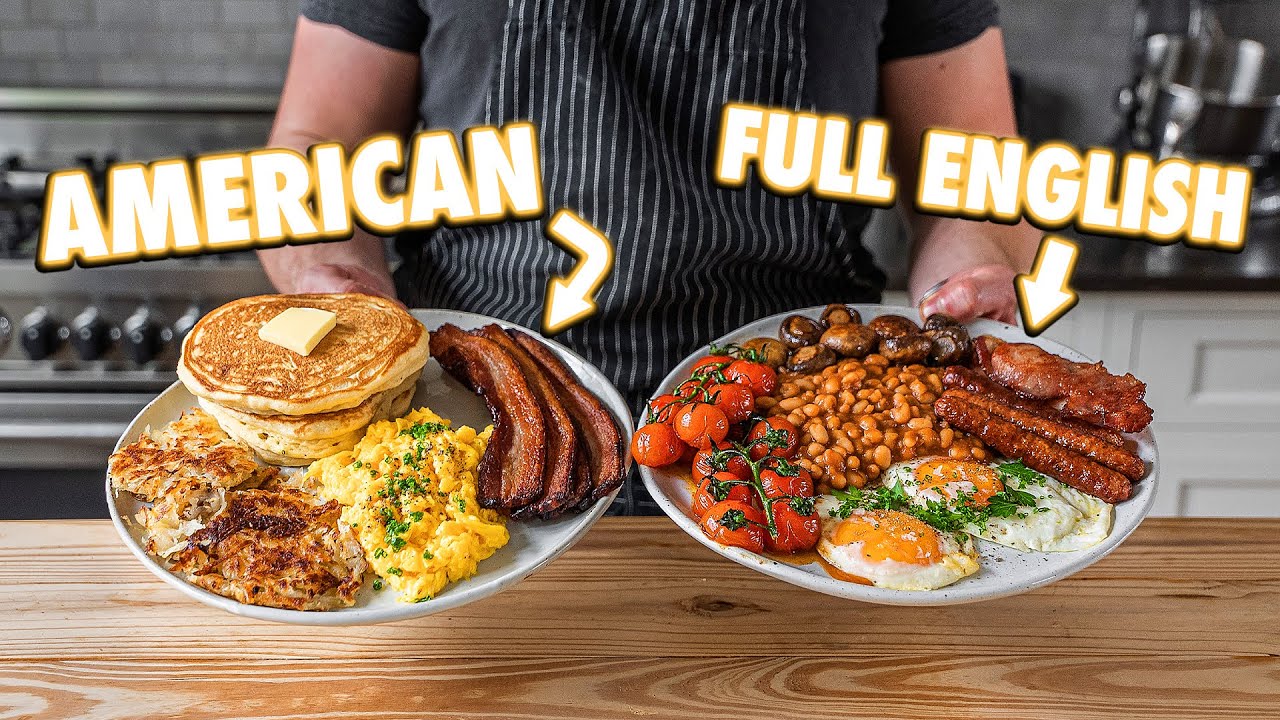
Components and philosophy. An American breakfast centres on pancakes or eggs with some bacon. A Full English is a meat-forward, highly savoury plate with baked beans, black pudding, and grilled tomatoes — it's designed to be a complete, sustaining meal, not a sweet-leaning morning plate. The beans are arguably the biggest cultural dividing line.
Do I need black pudding?
Purists say yes. Pragmatists say no. Black pudding (blood sausage) adds an earthy, mineral richness that the other components don't replicate. If you've never tried it, try it once before writing it off — most people who think they dislike it have only had bad versions. If you genuinely can't source it or won't eat it, the plate is still a Full English without it.
Can I make this for a crowd?
Yes, but you need to abandon the skillet approach. For 4+ people, roast the sausages and bacon on baking sheets in the oven at 400°F — sausages for 20-25 minutes, bacon for 12-15. This frees your stovetop for eggs and beans. The bacon won't be quite as crisp but you'll have everything ready simultaneously, which matters more.
Why do my sausages split during cooking?
Heat is too high. When you cook sausages over high heat, the water inside turns to steam rapidly and the pressure blows out the casing before the exterior has time to firm up. Medium heat lets the interior cook through while the casing gradually browns. Some splitting is unavoidable with very cheap sausages that have high water content — another reason to buy from a butcher.
What fat should I cook the eggs in?
Butter, specifically unsalted butter. It foams at the right temperature for gentle egg cooking, adds flavour, and the milk solids give you visual cues — once the foam subsides, the temperature is correct for eggs. Bacon fat is traditional and excellent. Oil produces acceptable eggs but none of the flavour depth.
Is HP Sauce or ketchup correct?
Both are correct and the question is a trap designed to start arguments. HP Sauce (brown sauce) has a tamarind and vinegar base that cuts through the fat of the sausages and bacon. Ketchup's sweetness works with the beans. Use both. Use whichever you want. The Full English has survived for 150 years regardless of condiment choice.

The Science of
The Full English Breakfast (Every Component Done Right)
We turned everything on this page into a beautiful, flour-proof PDF cheat sheet. Print it out, stick it to your fridge, and never mess up your the full english breakfast (every component done right) again.
*We'll email you the high-res PDF instantly. No spam, just perfectly cooked meals.
AlmostChefs Editorial Team
We translate the internet's most popular cooking videos into foolproof, beginner-friendly written recipes. We analyze multiple methods, test them in our kitchen, and engineer a single "Master Recipe" that gives you the best possible result with the least possible stress.