Homemade Energy Bars (No-Bake, No Excuses)
Chewy, naturally sweetened energy bars built from oats, nut butter, and dried fruit — pressed cold, no oven required. We broke down the binding science and fat-to-sweetener ratios from the most-watched no-bake bar recipes to give you bars that actually hold together and taste like something worth eating.
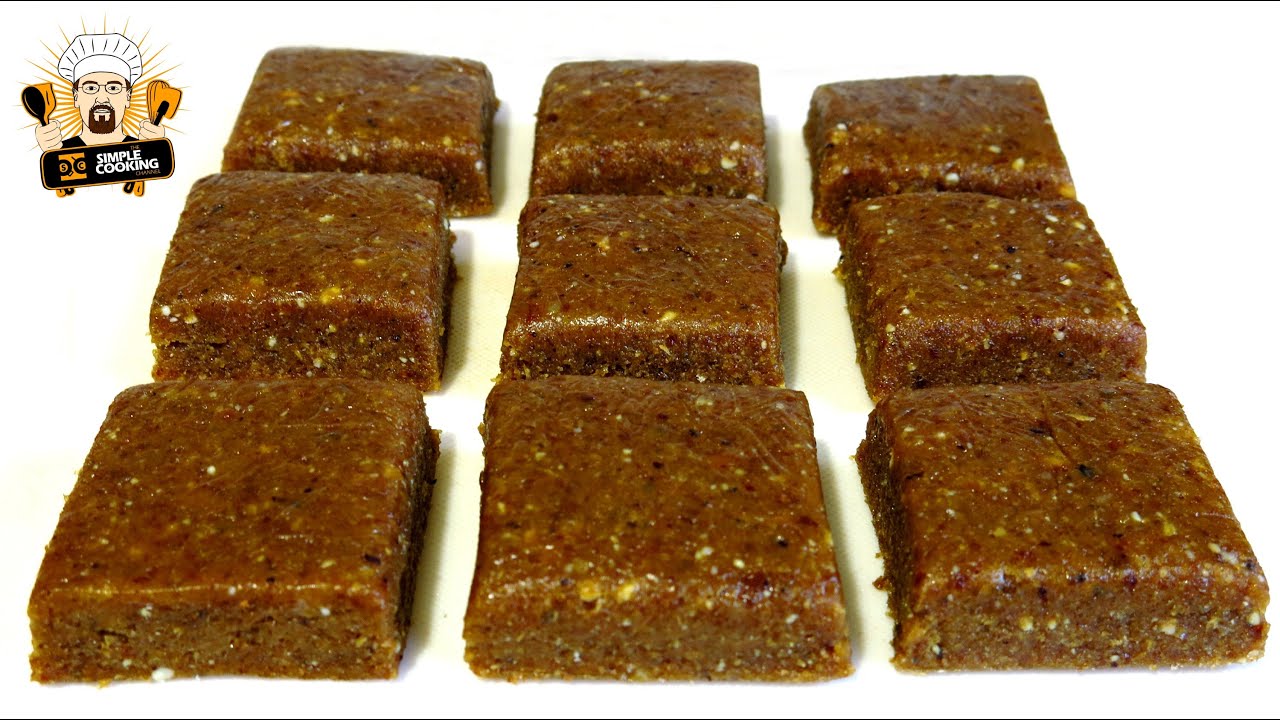
“Commercial energy bars cost three dollars each, taste like sweetened cardboard, and contain seventeen ingredients you can't pronounce. This recipe costs less than forty cents per bar, takes fifteen minutes of actual work, and uses nothing you wouldn't find in a well-stocked pantry. The only failure mode is not pressing the mixture firmly enough — which we will cover in exhaustive detail so you don't make that mistake.”
Why This Recipe Works
The commercial energy bar industry is built on one insight: people will pay a significant premium for convenience food that feels healthy. The ingredient list on a three-dollar bar from the gas station is identical in structure to what you're about to make — oats, nut butter, sweetener, seeds, dried fruit — but the manufacturing process involves industrial binders, preservation additives, and a markup that would embarrass a luxury hotel.
This recipe produces twelve bars for roughly five dollars of ingredients. The fifteen minutes of active work is the only argument anyone should need.
Why No-Bake Works
Conventional baking drives moisture out of food to create structure through protein denaturation and starch gelatinization. No-bake bars create structure through a completely different mechanism: fat crystallization. Natural peanut butter is roughly 50% fat. When you warm it with honey, the fat becomes fully liquid and coats every oat, seed, and nut in the bowl. As the mixture chills in the refrigerator, those fats re-solidify into a continuous matrix that locks every ingredient in place.
This is why the pressing step matters so much. You're not just flattening the mixture — you're eliminating air pockets that would interrupt the fat matrix and create structural weak points. Think of it less like packing a suitcase and more like compressing a brick. The goal is uniform density throughout.
The Sweetener's Dual Role
Raw honey isn't just sugar. It's sugar suspended in a solution with roughly 17% water content, enzymes, and antimicrobial compounds that extend shelf life naturally. That moisture is part of what allows the bars to stay chewy rather than dry out over two weeks. Processed honey has been heated enough to kill the enzymes and alter the crystallization behavior — it sets harder and loses the subtle floral complexity that makes these bars taste like something beyond "oats and peanut butter."
The honey also acts as a humectant, binding water molecules within the bar and preventing them from migrating to the surface. This is why the bars stay cohesive even after a week in the refrigerator rather than turning into a pile of loose oats.
The Fat Architecture
Natural peanut butter and the fat from chopped almonds, walnuts, and sunflower seeds form a layered fat profile. Peanut butter provides the dominant binding fat. The tree nuts contribute smaller fat deposits throughout the matrix that interrupt any large crystalline fat zones, creating a more uniformly chewy texture rather than a waxy one.
The coconut oil in the chocolate drizzle serves a technical purpose: it lowers the melting point of the dark chocolate slightly, keeping the finished layer pliable rather than glass-brittle. A bar with pure dark chocolate on top will shatter on the first bite. A bar with coconut-oil-tempered chocolate bends with the bar instead of cracking off in a sheet.
The Flaxseed Factor
Ground flaxseed is doing more work here than it appears. Its mucilaginous fiber absorbs ambient moisture from the honey and peanut butter, swelling slightly and adding a binding quality independent of the fat matrix. It's essentially a secondary structural element — less dramatic than the peanut butter, but noticeable in its absence. Bars made without flaxseed are softer and more prone to crumbling at the edges. They're also nutritionally inferior, losing a meaningful source of omega-3 fatty acids and soluble fiber.
Use a sharp chef's knife and a sturdy mixing bowl and this recipe rewards you with two weeks of portable, genuinely nutritious snacks that cost less than a single commercial bar. The effort-to-payoff ratio is among the best in the no-bake category. Press hard. Chill long. Cut clean.
Where Beginners Mess This Up
Before we start, read this. These are the 4 reasons your homemade energy bars (no-bake, no excuses) will fail:
- 1
Not pressing the mixture firmly enough: This is the single reason most homemade bars crumble on the cutting board. The mixture needs to be compressed with real force — use the bottom of a measuring cup and lean your body weight into it. Every air pocket you leave is a future crack. Press until the surface feels dense and uniform, not just flat.
- 2
Under-warming the peanut butter and honey: Cold peanut butter doesn't coat the dry ingredients — it clumps around them. The peanut butter and honey need to be warm enough to flow freely and wet every oat and seed in the bowl. If the mixture looks streaky or dry in patches, your binder was too cold.
- 3
Cutting before the bars are fully set: Three hours minimum in the refrigerator is not a suggestion. The bars need the full chill time for the peanut butter fat to solidify and the chocolate to set completely. Cut early and the bars bend, smear, and fall apart. They look done before they are done. Trust the timer.
- 4
Using processed honey or commercial peanut butter: Processed honey has been heated and filtered to the point where its moisture content is dramatically altered. Commercial peanut butter contains hydrogenated oils that change the binding behavior. Both substitutions produce greasy, overly sweet bars that separate. Use raw honey and natural peanut butter — the ones where the oil sits on top.
🛠️ Core Equipment
- 9x13 inch baking panThe surface area determines bar thickness. A smaller pan produces thick bars that don't set evenly through the center. A 9x13 gives you the right depth — about 3/4 inch — for bars that set uniformly in three hours.
- Parchment paperNon-negotiable for removal. Without it, the bars weld themselves to the pan and you extract rubble, not rectangles. Let the edges overhang by two inches on each side so you can lift the entire block cleanly.
- Heavy-bottomed saucepanFor warming the peanut butter and honey without scorching. Thin pans create hot spots that burn the honey on contact. Low and slow in a [heavy saucepan](/kitchen-gear/review/saucepan) gives you a smooth, evenly heated binder.
- Sharp chef's knifeA dull blade drags and tears the bars instead of cutting cleanly. Wipe the blade between each cut to prevent buildup from smearing the edges. Chilled bars cut cleanest.
Homemade Energy Bars (No-Bake, No Excuses)
🛒 Ingredients
- ✦2 cups old-fashioned rolled oats
- ✦1 cup natural peanut butter
- ✦3/4 cup raw honey
- ✦1/2 cup unsalted roasted almonds, chopped
- ✦1/2 cup unsweetened dried cranberries
- ✦1/3 cup ground flaxseed
- ✦1/4 cup unsweetened shredded coconut
- ✦1/4 cup chopped raw walnuts
- ✦2 tablespoons pure vanilla extract
- ✦1/2 teaspoon fine sea salt
- ✦1/4 teaspoon ground cinnamon
- ✦1/4 cup raw sunflower seeds
- ✦1/4 cup dark chocolate chips (70% cacao minimum)
- ✦1 tablespoon coconut oil
👨🍳 Instructions
01Step 1
Combine the rolled oats, chopped almonds, dried cranberries, ground flaxseed, shredded coconut, chopped walnuts, sunflower seeds, sea salt, and ground cinnamon in a large mixing bowl.
02Step 2
Warm the natural peanut butter and raw honey together in a medium saucepan over low heat, stirring constantly until fully combined and smooth, about 3 minutes.
03Step 3
Remove the peanut butter mixture from heat and stir in the pure vanilla extract until well blended.
04Step 4
Pour the warm peanut butter and honey mixture into the bowl with the dry ingredients.
05Step 5
Fold all ingredients together using a sturdy spoon or rubber spatula until every component is thoroughly moistened and the mixture holds together when pressed, about 2 minutes.
06Step 6
Line a 9x13 inch baking pan with parchment paper, allowing the edges to overhang by at least 2 inches on each side for easy removal.
07Step 7
Transfer the entire mixture into the prepared pan and press down firmly and evenly using the bottom of a measuring cup or your moistened hands until compact and level. Apply real pressure — more than you think is necessary.
08Step 8
Melt the dark chocolate chips and coconut oil together in a small bowl set over gently simmering water, stirring occasionally until completely smooth, about 2 minutes.
09Step 9
Drizzle the melted chocolate across the surface of the pressed mixture in a thin, even layer.
10Step 10
Refrigerate the pan uncovered for at least 3 hours, or until the chocolate is completely set and the bars are firm throughout. Do not cover — condensation will make the chocolate surface spotted.
11Step 11
Lift the entire bar block from the pan using the parchment paper overhang and transfer to a clean cutting board.
12Step 12
Cut into 12 equal rectangles using a sharp chef's knife, wiping the blade clean between cuts for neat edges.
13Step 13
Store the finished bars in an airtight container in the refrigerator for up to two weeks, or freeze in individual portions for up to three months.
Nutrition Per Serving
Estimates based on standard preparation. Adjustments alter macros.
🔄 Substitutions
Instead of Raw honey...
Use Pure maple syrup
Slightly thinner consistency — the mixture may need an extra 5-10 minutes in the refrigerator to set. Lower glycemic impact. Adds a distinctive earthy sweetness.
Instead of Natural peanut butter...
Use Natural almond butter
Slightly firmer bars due to almond butter's lower oil content. Higher vitamin E. Milder flavor that lets the vanilla and cinnamon come through more clearly.
Instead of Dark chocolate chips...
Use Unsweetened cacao nibs
Eliminates added sugar entirely. Significantly more bitter — not for everyone. Provides a satisfying crunch instead of a smooth chocolate layer.
Instead of Ground flaxseed...
Use Ground chia seeds
Slightly nuttier flavor. Chia has superior binding properties due to higher mucilage content — bars may set slightly firmer. Enhanced omega-3 profile.
🧊 Storage & Reheating
In the Fridge
Store in an airtight container for up to 2 weeks. Place parchment between layers to prevent sticking.
In the Freezer
Freeze individually wrapped bars for up to 3 months. Thaw at room temperature for 15-20 minutes before eating.
Reheating Rules
These bars are not reheated — they are eaten cold or at room temperature. Warming them defeats the setting process.
❓ Frequently Asked Questions
Why are my energy bars falling apart?
Two likely causes: the mixture wasn't pressed firmly enough into the pan, or the bars were cut before fully chilling. Press with significant force using a flat-bottomed object, and give the bars the full 3 hours in the refrigerator before cutting.
Can I make these without refrigerating?
No. The peanut butter fat needs to solidify at cold temperature to bind the bars. At room temperature, the bars stay soft and won't hold their shape when cut. The refrigerator is doing the structural work that baking does in conventional bars.
How do I know if my peanut butter mixture is warm enough?
It should flow freely off a spoon in a single, unbroken ribbon. If it's thick and sticky and leaves chunks on the spoon, it needs more heat. If it's separated and oily, you've overheated it — let it cool slightly and stir to re-emulsify.
Can I use quick oats instead of old-fashioned rolled oats?
Technically yes, but the texture changes dramatically. Quick oats absorb more moisture and produce a denser, more compact bar that some people find unpleasantly pasty. Old-fashioned rolled oats give you the chewy, slightly textured bite that defines a good energy bar.
Why does my chocolate drizzle crack when I cut the bars?
The coconut oil in the chocolate layer keeps it slightly flexible. If you omitted it or the layer is too thick, it becomes brittle. For stubborn cracking, let the bars sit at room temperature for 5 minutes before cutting — slightly warmer chocolate bends instead of snapping.
Can I add protein powder?
Yes, but replace no more than 2-3 tablespoons of the flaxseed with protein powder. More than that and the binder-to-dry ratio gets thrown off, producing crumbly bars. Unflavored or vanilla protein powder works best — flavored varieties can make the bars taste artificial.
The Science of
Homemade Energy Bars (No-Bake, No Excuses)
We turned everything on this page into a beautiful, flour-proof PDF cheat sheet. Print it out, stick it to your fridge, and never mess up your homemade energy bars (no-bake, no excuses) again.
*We'll email you the high-res PDF instantly. No spam, just perfectly cooked meals.
AlmostChefs Editorial Team
We translate the internet's most popular cooking videos into foolproof, beginner-friendly written recipes. We analyze multiple methods, test them in our kitchen, and engineer a single "Master Recipe" that gives you the best possible result with the least possible stress.