Easy Enchilada Casserole (The Weeknight Crowd-Pleaser)
A layered Mexican-inspired casserole with lean ground turkey, fresh-spiced tomato sauce, corn tortillas, and a Greek yogurt-cheddar topping that bubbles golden in under an hour. We stripped out the canned shortcut sauce and built the flavor from scratch — same comfort, less sodium, better taste.

“Most enchilada casseroles are just a vehicle for canned sauce and shredded cheese. That's fine. But if you swap the canned enchilada sauce for a five-minute skillet sauce built from crushed tomatoes, cumin, and smoked paprika, and replace the sour cream layer with Greek yogurt whisked into sharp cheddar, you get something that tastes like it took twice as long and costs less per serving. This is that version.”
Why This Recipe Works
Enchilada casserole is a dish that exists specifically to solve a problem: traditional enchiladas require individual rolling, sauce-dipping, and careful arrangement that few people have the patience for on a Tuesday night. The casserole format keeps every flavor and texture of the original — sauce, tortilla, seasoned meat, melted cheese — and compresses the assembly into fifteen minutes of layering. It is not a lesser version of enchiladas. It is enchiladas optimized for real life.
The Sauce Is the Recipe
Everything else is scaffolding. The sauce you build in the skillet is the difference between a casserole that tastes alive and one that tastes like canned soup poured over tortillas. This version skips the pre-made enchilada sauce entirely and builds the equivalent in the same pan you cooked the turkey in — crushed tomatoes, chicken broth, cumin, smoked paprika, and oregano, reduced until thick.
The key move is blooming the spices. Ground cumin and smoked paprika added directly to liquid taste flat and raw. Added to hot fat for thirty seconds before the liquid hits the pan, they transform — the volatile aromatic compounds release, bloom, and infuse the oil so every tablespoon of sauce carries that depth. It's the same principle that makes a good curry roux taste different from spices stirred into broth at the end.
Simmer the sauce uncovered for the full 8-10 minutes. A watery sauce makes a watery casserole. The sauce needs to thicken enough to coat the back of a spoon before it goes into the baking dish, because once it's layered between tortillas and sealed under foil, there's no more evaporation happening. What goes in is what you get.
The Yogurt Layer Does Real Work
The Greek yogurt-cheddar mixture is not a novelty swap for sour cream. Yogurt has higher protein content, lower fat, and significantly more tang than sour cream — it creates a binding layer between the tortillas that sets during baking rather than staying loose and liquid. Whisked together with sharp cheddar, it spreads evenly across the sauce surface and acts as a moisture barrier between layers, preventing the tortillas from going completely soft while still allowing them to hydrate enough to become tender.
Sharp cheddar matters here. Mild cheddar doesn't have enough flavor to cut through the spiced tomato sauce. The sharp variety's lower moisture content also means it melts more cleanly when whisked into the yogurt instead of clumping.
The Tortilla Architecture
Corn tortillas over flour, always. Flour tortillas are engineered to be soft and pliable — which makes them a liability in a two-layer casserole where they'll absorb sauce from both sides and turn paste-like. Corn tortillas are denser and more structurally rigid. They soften under the sauce but maintain enough integrity to hold a clean square when you cut and serve.
The base layer of sauce before the first tortilla row is not optional. Dry tortillas on a dry baking dish fuse to the ceramic and tear when you try to serve. A thin half-cup of sauce lubricates the bottom, ensures even heat transfer through the base, and starts hydrating the tortillas from below while the foil traps steam from above.
The Two-Phase Bake
Covered first, uncovered second. This is how you get a casserole that's fully heated through in the center without a dried-out top. The foil creates a miniature steam environment that evenly heats every layer simultaneously — the same principle as dum cooking in biryani, just applied to a Mexican-American casserole. Once the center is hot and the layers have melded, you pull the foil and let the top brown for 10-12 minutes.
Check the casserole at the 10-minute mark after the foil comes off. Ovens run hot, and the difference between bubbling-golden and dried-out-and-cracked is a short window. You want the top to have color and movement — small bubbles at the edges, slight browning on the cheese surface. That's the moment.
Five minutes of resting after the oven is not suggestion. It is structure. The layers need to cool slightly and firm up before you cut, or the sauce runs and the casserole slides apart into a pile. It will still taste good. It just won't look like anything you'd photograph.
Where Beginners Mess This Up
Before we start, read this. These are the 4 reasons your easy enchilada casserole (the weeknight crowd-pleaser) will fail:
- 1
Using wet tortillas without sauce on the bottom: Corn tortillas placed directly on a dry baking dish stick, tear when you serve, and create a stiff layer instead of a tender one. A thin base layer of sauce is non-negotiable — it hydrates the bottom tortilla from below while the casserole bakes.
- 2
Skipping the covered bake first: Baking uncovered from the start dries out the top before the interior layers fully heat through. The first 20 minutes covered with foil traps steam that softens the tortillas and melds the layers. The final 10-12 minutes uncovered is what gives you the golden, bubbling top.
- 3
Not simmering the sauce long enough: A watery sauce makes a soggy casserole. The turkey-tomato mixture needs 8-10 minutes of uncovered simmering to reduce and thicken. If it still looks loose and liquid when you pull it off the heat, give it another few minutes. It should coat the back of a spoon.
- 4
Cutting it immediately out of the oven: Five minutes of resting is all it takes for the layers to set. Cut too soon and the casserole slides apart into a saucy pile. It's still delicious — but it won't hold a square.
The Video Reference Library
Want to see it in action? Here are the exact videos we analyzed and combined to build this foolproof recipe translation:
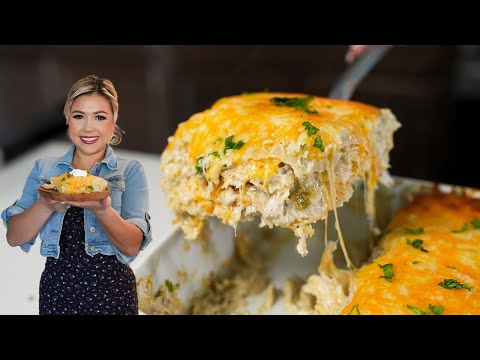
The source video that anchors this recipe. Solid walkthrough of the layering technique and sauce consistency to aim for before it goes into the oven.
2. How to Build the Perfect Casserole Layer
Covers the fundamentals of layered casserole construction — sauce ratios, tortilla placement, and how to get clean squares when serving.
3. Ground Turkey Done RightAddresses the most common ground turkey mistakes: overcrowding the pan, not seasoning early, and pulling it before proper browning. Directly applicable to this recipe.
🛠️ Core Equipment
- 9x13-inch baking dish ↗The dimensions matter. A smaller dish forces you to stack more layers and the center stays undercooked. A 9x13 gives you the right ratio of tortilla surface area to sauce depth.
- Large skillet ↗You need surface area to brown the turkey properly without steaming it. A crowded pan means grey, wet meat instead of properly cooked, slightly caramelized ground turkey.
- Aluminum foil ↗For the covered phase of baking. Tents over the dish without touching the cheese layer, trapping steam while the interior heats through.
- Wooden spoon or silicone spatula ↗For breaking up the turkey as it cooks. Even crumble size means consistent texture in every bite — no large chunks that create uneven layers.
Easy Enchilada Casserole (The Weeknight Crowd-Pleaser)
🛒 Ingredients
- ✦2 tablespoons extra virgin olive oil
- ✦1 pound ground turkey (93% lean)
- ✦1 large yellow onion, finely diced
- ✦4 cloves garlic, minced
- ✦2 teaspoons ground cumin
- ✦1 teaspoon smoked paprika
- ✦1 teaspoon dried oregano
- ✦1 can (28 oz) crushed tomatoes
- ✦1 cup low-sodium chicken broth
- ✦8 small corn tortillas (6-inch)
- ✦1 cup sharp cheddar cheese, shredded
- ✦3/4 cup plain Greek yogurt
- ✦1/2 cup fresh cilantro, chopped
- ✦1 jalapeño pepper, seeded and minced
- ✦1/2 teaspoon sea salt
- ✦1/4 teaspoon black pepper
- ✦1/4 teaspoon cayenne pepper
- ✦Cooking spray for the baking dish
👨🍳 Instructions
01Step 1
Preheat your oven to 375°F and lightly coat a 9x13-inch baking dish with cooking spray.
02Step 2
Heat olive oil in a large skillet over medium-high heat until shimmering, about 1 minute.
03Step 3
Add the ground turkey and cook, breaking it apart with a wooden spoon, until no pink remains — approximately 6-8 minutes.
04Step 4
Push the cooked turkey to the sides of the skillet and add the diced onion to the center. Sauté until softened and translucent, about 4 minutes.
05Step 5
Stir in the minced garlic and cook until fragrant, about 45 seconds. Add the cumin, smoked paprika, and dried oregano, stirring constantly for 30 seconds.
06Step 6
Pour the crushed tomatoes and chicken broth into the skillet, stirring to combine with the turkey mixture. Simmer uncovered for 8-10 minutes until the sauce thickens slightly.
07Step 7
Remove the skillet from heat and fold in the minced jalapeño, half of the fresh cilantro, sea salt, black pepper, and cayenne. Taste and adjust seasoning.
08Step 8
In a small bowl, whisk together the Greek yogurt and shredded cheddar until well combined.
09Step 9
Spread a thin layer of turkey sauce on the bottom of the prepared baking dish — about 1/2 cup.
10Step 10
Arrange 4 corn tortillas in a single layer over the sauce, overlapping slightly as needed to cover the base.
11Step 11
Spread half the remaining turkey sauce over the tortilla layer, then dollop and spread half the yogurt-cheese mixture over the sauce.
12Step 12
Layer the remaining 4 tortillas on top. Finish with the rest of the turkey sauce and yogurt-cheese mixture, spreading evenly to the edges.
13Step 13
Cover the baking dish tightly with foil and bake for 20 minutes. Remove the foil and bake uncovered for an additional 10-12 minutes until the top is lightly golden and bubbling at the edges.
14Step 14
Let the casserole rest for 5 minutes before cutting into squares.
15Step 15
Garnish with the reserved fresh cilantro and serve warm.
Nutrition Per Serving
Estimates based on standard preparation. Adjustments alter macros.
🔄 Substitutions
Instead of Ground turkey...
Use Ground chicken breast (99% lean) or canned black beans
Black beans make this fully vegetarian. Use 2 cans, drained, and reduce the simmer time to 5 minutes since there's nothing to cook through.
Instead of Sharp cheddar cheese...
Use Cotija or crumbled queso fresco
Tangier and saltier than cheddar with less meltability. Sprinkle on top after baking rather than mixing into the yogurt layer.
Instead of Corn tortillas...
Use Sprouted grain or whole wheat tortillas
Nuttier flavor and denser texture. They hold their structure slightly better under the sauce, which helps if you prefer cleaner slices.
Instead of Greek yogurt and cheddar mixture...
Use Cashew cream and nutritional yeast
Soak 1 cup raw cashews for 4 hours, blend with 1/2 cup vegetable broth until smooth, then stir in 3 tablespoons nutritional yeast. Dairy-free and surprisingly rich.
🧊 Storage & Reheating
In the Fridge
Store covered in the baking dish or in an airtight container for up to 4 days. The flavors improve on day two as the sauce fully absorbs into the tortillas.
In the Freezer
Freeze in portions for up to 2 months. Wrap individual squares tightly in plastic wrap, then foil.
Reheating Rules
Add 2 tablespoons of water or chicken broth to the portion before reheating, cover with foil or a microwave-safe lid, and heat at 350°F for 15 minutes (oven) or 2-3 minutes (microwave). The added moisture prevents the tortillas from drying out.
❓ Frequently Asked Questions
Can I use flour tortillas instead of corn?
You can, but corn tortillas hold up better under the sauce without going gummy. Flour tortillas absorb more liquid and can turn paste-like in the center layers. If you prefer flour tortillas, reduce the chicken broth in the sauce by 1/4 cup to compensate.
My casserole came out watery. What went wrong?
The sauce wasn't reduced enough before assembly. It needs 8-10 minutes of active simmering to thicken. Also check that you drained any excess fat from the turkey before adding the tomatoes — ground turkey releases water as it cooks and that water dilutes the sauce.
Can I make this ahead and refrigerate before baking?
Yes, and it's actually better that way. Assemble the casserole, cover tightly, and refrigerate overnight. The tortillas begin absorbing the sauce, which creates more cohesive layers. Add 5-7 minutes to the covered baking time to account for the cold start.
How do I make this vegetarian?
Replace the ground turkey with 2 cans of black beans (drained and rinsed) and use vegetable broth instead of chicken broth. The cooking process stays the same — sauté the onion and garlic, bloom the spices, add the tomatoes and broth, then fold in the beans and simmer for 5 minutes.
Can I add more cheese on top?
You can sprinkle an extra 1/4 cup of shredded cheddar directly over the yogurt-cheese layer before the uncovered bake. It won't make the dish better — it'll just make it more obviously cheesy. Which is a completely legitimate goal.
Is the Greek yogurt necessary or can I skip it?
It's doing real work here. The yogurt provides protein, cuts the acidity of the tomato sauce, and creates a creamy binding layer between the tortillas. If you skip it entirely, the top layer is just loose shredded cheese, which doesn't spread evenly and dries out faster. Sour cream is a 1:1 substitute if yogurt isn't your preference.

The Science of
Easy Enchilada Casserole (The Weeknight Crowd-Pleaser)
We turned everything on this page into a beautiful, flour-proof PDF cheat sheet. Print it out, stick it to your fridge, and never mess up your easy enchilada casserole (the weeknight crowd-pleaser) again.
*We'll email you the high-res PDF instantly. No spam, just perfectly cooked meals.
AlmostChefs Editorial Team
We translate the internet's most popular cooking videos into foolproof, beginner-friendly written recipes. We analyze multiple methods, test them in our kitchen, and engineer a single "Master Recipe" that gives you the best possible result with the least possible stress.