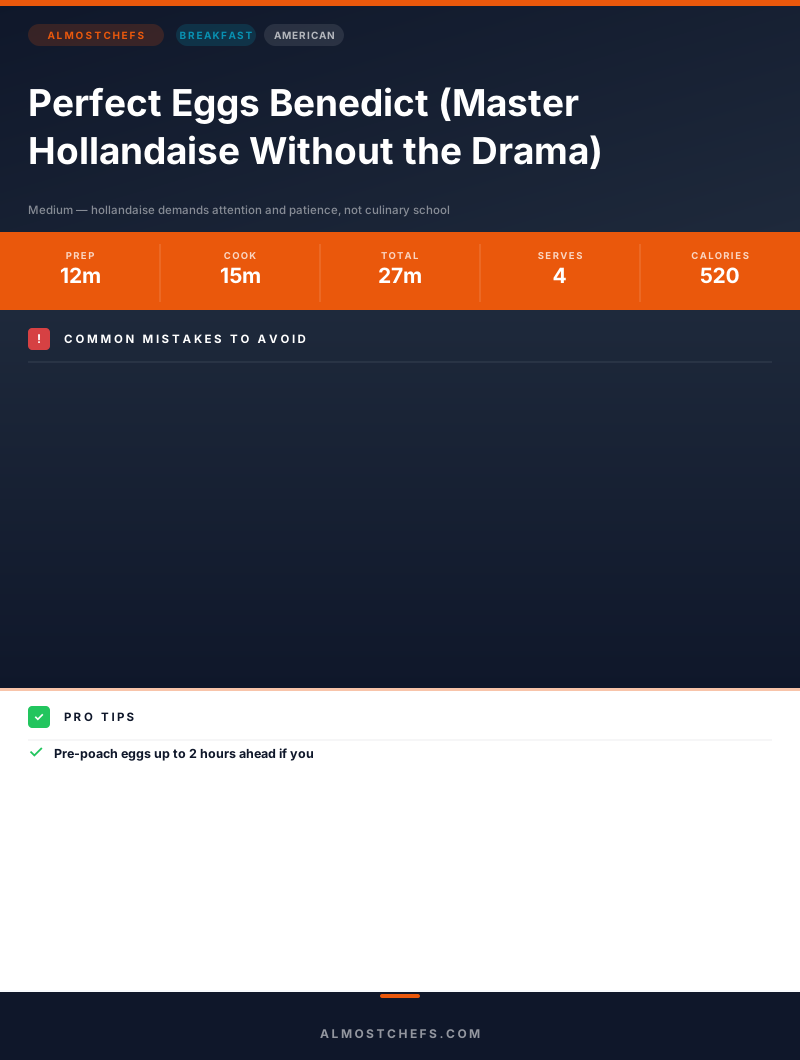
Perfect Eggs Benedict (Master Hollandaise Without the Drama)
A classic brunch showpiece — poached eggs and Canadian bacon on toasted English muffins, buried under a rich lemon-butter hollandaise. We broke down the emulsification science and poaching mechanics so you can pull this off at home without panic or curdled sauce.

“Eggs Benedict has a reputation for being hard. That reputation is partially earned and mostly overstated. The hollandaise is the one technique worth respecting — it's an emulsion, which means it can break, and when it does, people give up and order brunch instead. But the failure point is almost always the same: adding butter too fast. Slow it down, understand what the heat is doing, and you will not fail.”
Why This Recipe Works
Eggs Benedict is not complicated. It is, however, unforgiving about sequence and temperature — which are two different things, and the distinction matters. Complicated means many moving parts. Unforgiving means the moving parts you do have need to happen in a specific order at a specific heat. Master that, and this dish is repeatable every single time.
The Hollandaise Is a Physics Problem
Hollandaise is an emulsion: fat particles suspended in water, stabilized by lecithin molecules in the egg yolks acting as bridges between two things that don't naturally coexist. Every decision in the hollandaise technique exists to protect that fragile molecular architecture.
The double boiler gives you indirect heat, which means you can warm the yolks slowly without the sudden temperature spikes that cause scrambling. The yolks need to reach roughly 140-160°F — warm enough to activate their emulsifying properties, not so hot that the proteins seize and curdle. An instant-read thermometer removes the guesswork entirely.
The butter goes in one cube at a time for the same reason you don't pour a full glass of water into a sponge at once. The yolks can only process fat at a certain rate. Overwhelm them and the emulsion breaks — the fat separates, the sauce goes greasy, and you're starting over. Each cube should disappear completely into the sauce before the next one arrives. Budget 8-10 full minutes for this step. Not 3. Not 5. Eight to ten.
The lemon juice goes in at the end, not the beginning. Acid added too early interferes with emulsification. Added after the butter is incorporated, it brightens the flavor and adds a final stabilizing acidic environment that helps the emulsion hold.
Poaching Is About Temperature Management
The vinegar in the poaching water is not a flavor decision — it's structural. Acid tightens egg white proteins faster, which means they coagulate quickly around the yolk instead of drifting off in wispy sheets across the pan. One tablespoon per four quarts is enough to do the job without leaving any detectable taste.
The water temperature is the other variable people get wrong. A rolling boil is too violent — the turbulence physically shreds the white before it sets. You want a calm simmer, bubbles barely breaking the surface. The gentlest possible movement. At that temperature, the white sets gradually and evenly from the outside in, wrapping the yolk in a firm white shell while leaving the center liquid.
The whirlpool technique helps with single eggs by using centripetal force to wrap the white around the yolk. For multiple eggs, it's impractical — just use a wide shallow saucepan and keep the water barely moving.
Assembly Is a Coordination Exercise
Eggs Benedict fails on the plate more often than it fails during cooking. Everything has a narrow temperature window: hollandaise seizes if it cools, poached eggs overcook if left in hot water, English muffins go from crisp to steam-soft within three minutes of toasting. The only way to win is to set up the entire station before poaching the first egg.
Toast the muffins. Warm the bacon. Have the hollandaise in its warm-water bath. Have a plate ready. Then poach the eggs, extract them fast with a slotted spoon, and build from the bottom up: muffin, bacon, egg, sauce. Plate to table in under 60 seconds. Every second you hesitate is a second closer to mediocre.
The Canadian Bacon Is Already Cooked
This is worth saying directly because a lot of home cooks treat it like raw meat: Canadian bacon is cured and pre-cooked. You are warming it through, not cooking it. One to two minutes per side in a dry skillet over medium heat. The moment you see the edges start to crisp, it's done. Go longer and you're heading toward jerky, which does not belong on a plate with hollandaise.
The entire dish is built around contrast — soft yolk, firm white, chewy muffin, silky sauce. Every component should hit its texture mark. Cook anything too long and the whole system shifts.
Where Beginners Mess This Up
Before we start, read this. These are the 4 reasons your perfect eggs benedict (master hollandaise without the drama) will fail:
- 1
Adding butter too quickly to the hollandaise: Hollandaise is an emulsion — butter fat suspended in water, held together by lecithin in the egg yolks. When you add butter too fast, the yolks can't process the fat load and the emulsion breaks, leaving you with greasy scrambled egg bits floating in butter. Add one cube at a time, fully incorporating before the next. The entire process should take 8-10 minutes.
- 2
Overheating the egg yolks: If the double boiler bowl touches the simmering water below, or the water boils hard rather than simmers, the yolks will scramble before you've had a chance to add a single cube of butter. The bowl should sit above — never in — the water. The target temperature is 140-160°F. If you see any curding starting, immediately pull the bowl off the heat and whisk hard.
- 3
Poaching eggs in rolling boiling water: Boiling water is too violent — it shreds the egg white before it has a chance to set around the yolk. You want a gentle simmer, just below boiling, where the surface barely moves. The vinegar tightens the egg white proteins so they coagulate faster and stay together rather than trailing off into wispy strands.
- 4
Assembling too slowly and letting components cool: Hollandaise seizes as it cools. Poached eggs sitting in a slotted spoon stop cooking but also start cooling. English muffins lose their crunch within minutes. Eggs Benedict is an assembly-line operation — everything needs to be warm, timed, and plated fast. Set up your station before you start poaching.
The Video Reference Library
Want to see it in action? Here are the exact videos we analyzed and combined to build this foolproof recipe translation:
The anchor video for this recipe. Detailed walkthrough of the hollandaise emulsification technique and poaching water setup, with close-ups that show exactly what the sauce should look like at each stage.
🛠️ Core Equipment
- Heatproof mixing bowl and saucepan for double boilerThe double boiler setup gives you indirect, controlled heat for the hollandaise. Direct heat is too aggressive and will scramble the yolks before emulsification can happen.
- Large shallow skillet or wide saucepanShallow water is easier to manage for poaching. Deep water makes it harder to retrieve eggs without breaking the yolk. Wide pans let you poach multiple eggs without crowding.
- Slotted spoonLets you lift the poached egg out of the water while draining the poaching liquid. Essential for a clean transfer to the muffin without flooding the plate.
- Instant-read thermometerTakes the guesswork out of hollandaise temperature. You want yolks warm enough to emulsify fat but never above 160°F. Optional but removes one major stress variable.
Perfect Eggs Benedict (Master Hollandaise Without the Drama)
🛒 Ingredients
- ✦4 English muffins, split in half
- ✦8 large eggs, room temperature (for poaching)
- ✦3 egg yolks, room temperature (for hollandaise)
- ✦8 slices Canadian bacon or smoked ham
- ✦6 ounces unsalted butter, cut into small cubes
- ✦2 tablespoons fresh lemon juice
- ✦1 tablespoon white vinegar (for poaching water)
- ✦1 tablespoon water (for hollandaise)
- ✦1/4 teaspoon cayenne pepper
- ✦1/4 teaspoon white pepper
- ✦1/2 teaspoon sea salt, divided
- ✦4 quarts water (for poaching)
👨🍳 Instructions
01Step 1
Bring 4 quarts of water to a gentle simmer in a large shallow pan. Add 1 tablespoon white vinegar and a pinch of salt.
02Step 2
Whisk 3 room-temperature egg yolks with 1 tablespoon of water in a heatproof bowl until combined.
03Step 3
Set the bowl over a pot of gently simmering water (double boiler) — the bowl should not touch the water. Whisk continuously for about 2 minutes until the yolk mixture thickens slightly and turns pale.
04Step 4
Remove the bowl from heat. Begin whisking in the cubed butter one piece at a time, waiting until each cube is fully incorporated before adding the next.
05Step 5
Continue adding butter until all 6 ounces are incorporated and the sauce is pale, creamy, and falls from the whisk in thick ribbons.
06Step 6
Whisk in 2 tablespoons fresh lemon juice, a pinch of cayenne, white pepper, and salt to taste. Adjust seasoning.
07Step 7
Keep hollandaise warm by setting the bowl over warm (not simmering) water, loosely covered, until ready to serve. Do not let it sit above 130°F or it will scramble.
08Step 8
Toast the English muffin halves until golden brown. Arrange on serving plates.
09Step 9
Warm Canadian bacon slices in a skillet over medium heat for 1-2 minutes per side. Place one slice on each muffin half.
10Step 10
Stir the simmering poaching water to create a gentle whirlpool. Carefully slide one egg into the center of the swirl.
11Step 11
Poach undisturbed for 3-4 minutes until the white is fully set but the yolk gives slightly when gently pressed. Remove with a slotted spoon.
12Step 12
Repeat with remaining eggs, working in batches of 2-3 to avoid crowding.
13Step 13
Place one poached egg on each Canadian bacon-topped muffin half.
14Step 14
Spoon 2-3 tablespoons of hollandaise generously over each egg. Dust with cayenne and white pepper. Serve immediately.
Nutrition Per Serving
Estimates based on standard preparation. Adjustments alter macros.
🔄 Substitutions
Instead of English muffins...
Use Whole wheat English muffins or sprouted grain bread
Nuttier, more substantial base. Adds fiber and slows glucose absorption. Toast slightly longer — whole grain muffins take about 30 extra seconds to reach the same crunch.
Instead of Unsalted butter...
Use Clarified butter or ghee
Lower water content makes emulsification slightly more forgiving. Adds a subtle nuttiness to the hollandaise. Equal substitution by weight.
Instead of Canadian bacon...
Use Smoked salmon or sautéed spinach
Salmon keeps it cold, which contrasts nicely with the warm egg and sauce. Spinach makes it vegetarian. Both eliminate the need to warm a protein, which simplifies timing.
Instead of 3 egg yolks for hollandaise...
Use 2 egg yolks plus 1 tablespoon plain Greek yogurt
Slightly lighter with a subtle tang that amplifies the lemon. Works well — the yogurt contributes some emulsifying protein. Sauce will be marginally less rich.
🧊 Storage & Reheating
In the Fridge
Hollandaise does not store well — it breaks when chilled and reheated. Poached eggs can be stored in cold water in the fridge for up to 2 days. Reheat in warm water for 60 seconds before serving.
In the Freezer
Not recommended. Hollandaise separates on freezing. Poached eggs turn rubbery. This dish is designed to be made and eaten immediately.
Reheating Rules
For leftover poached eggs only: submerge in warm (not boiling) water for 30-60 seconds. Do not microwave — it explodes the yolk.
❓ Frequently Asked Questions
Why did my hollandaise break?
Almost always one of two causes: butter added too fast, or heat too high. The emulsion can only absorb fat at a certain rate, determined by the lecithin in the egg yolks. Exceed that rate and the fat stops binding and pools separately. To fix: whisk a fresh yolk with a teaspoon of warm water in a clean bowl, then slowly whisk in the broken sauce as if you're starting over.
Do I really need the vinegar in the poaching water?
Technically no, but practically yes. White vinegar acidifies the water, which accelerates the coagulation of egg white proteins. The result is a cleaner, tighter poached egg with fewer wispy strands. It doesn't add any detectable flavor at 1 tablespoon per 4 quarts.
How do I poach multiple eggs at once without a mess?
Crack each egg into a small ramekin or cup before adding to the water. Use a wide, shallow pan. Keep the simmer gentle — at the lowest possible bubble — and skip the whirlpool when doing more than one egg. Work in batches of 2-3 maximum.
Can I make hollandaise ahead of time?
You can hold it warm for up to 1 hour by keeping the bowl over warm (not simmering) water at around 120-130°F, loosely covered. Beyond that, quality degrades. Hollandaise is not designed for make-ahead — build your timing around making it to order.
What's the difference between Eggs Benedict and Eggs Florentine?
The protein layer. Eggs Benedict uses Canadian bacon. Eggs Florentine replaces it with sautéed spinach. Eggs Norwegian uses smoked salmon. The poaching and hollandaise technique is identical across all three.
My egg whites are spreading out into thin sheets instead of staying compact. What's wrong?
Two likely causes: the eggs are too cold (cold whites spread before they set), or the water is boiling too hard. Use room-temperature eggs and reduce the heat until the water is barely moving. The whirlpool technique also helps — it wraps the white around the yolk before it has a chance to spread.
The Science of
Perfect Eggs Benedict (Master Hollandaise Without the Drama)
We turned everything on this page into a beautiful, flour-proof PDF cheat sheet. Print it out, stick it to your fridge, and never mess up your perfect eggs benedict (master hollandaise without the drama) again.
*We'll email you the high-res PDF instantly. No spam, just perfectly cooked meals.
AlmostChefs Editorial Team
We translate the internet's most popular cooking videos into foolproof, beginner-friendly written recipes. We analyze multiple methods, test them in our kitchen, and engineer a single "Master Recipe" that gives you the best possible result with the least possible stress.