High-Protein Mediterranean Egg White Omelet (32g Protein, Zero Compromise)
A fluffy egg white omelet packed with Mediterranean filling — wilted spinach, briny feta, and sun-dried tomatoes — engineered to deliver 32g of protein in a single breakfast serving without tasting like gym food. We combined Greek yogurt into the egg whites and cottage cheese into the filling to hit serious protein numbers while keeping the texture light and the flavor genuinely good.
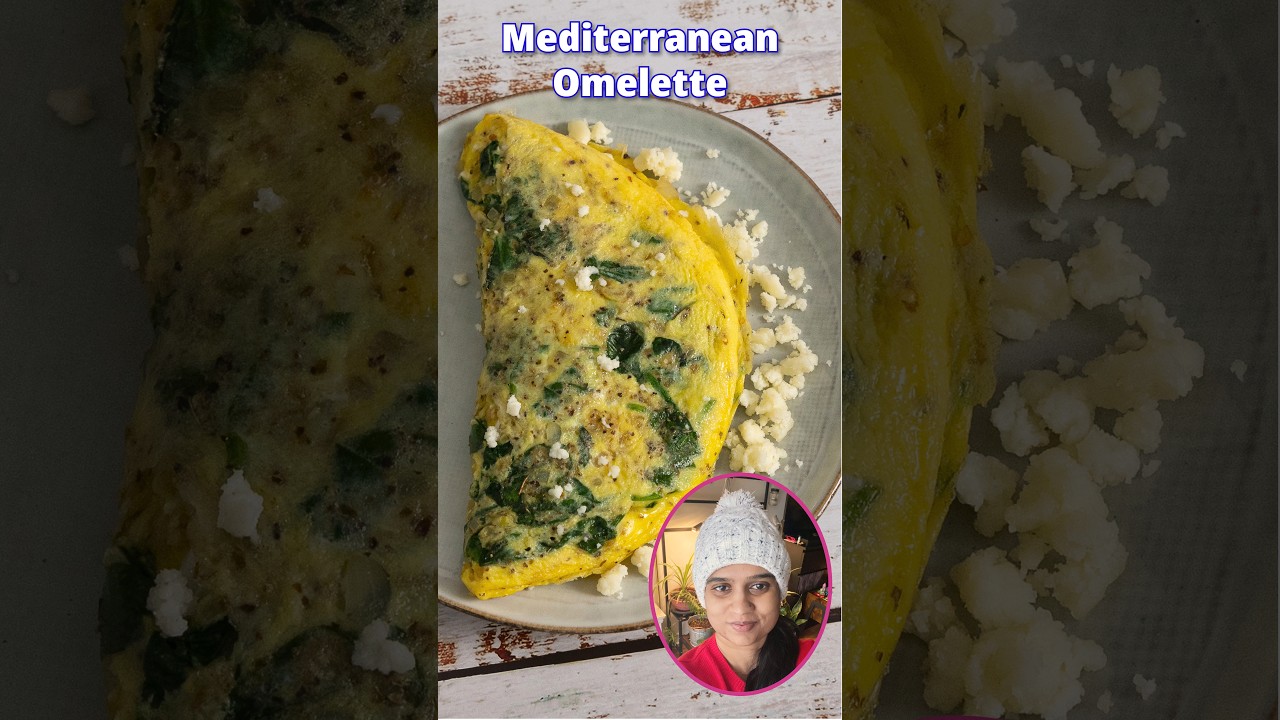
“Most high-protein breakfasts are either boring or actively unpleasant. Egg white omelets have a reputation for being rubbery, tasteless, and sad — a punishment you eat because you have goals. This one is none of those things. By whisking Greek yogurt into the egg whites before cooking and loading the filling with feta, sun-dried tomatoes, and cottage cheese, you get 32g of protein in a single serving that actually tastes like something you'd order at a brunch spot. The technique matters as much as the ingredients.”
Why This Recipe Works
Egg white omelets have a branding problem. They exist in the cultural imagination as diet food — pale, flavorless, aerobic punishment for people who want abs more than they want breakfast. That reputation is earned, but it's earned by bad technique, not by the ingredient. An egg white omelet cooked correctly, with a filling that actually does some work, is a legitimately good breakfast. This one delivers 32g of protein without tasting like a compromise.
The Protein Architecture
Most high-protein breakfasts achieve their numbers through volume — eat more, get more protein. This recipe takes the opposite approach: every ingredient is pulling protein weight. The egg whites provide the base (about 18g). Greek yogurt whisked directly into the whites adds body and another 3g. Cottage cheese in the filling contributes 7g. Feta brings 4g. The result is 32g from a single-serving breakfast that weighs less than a pound in the bowl.
The Greek yogurt addition is not cosmetic. Egg whites are almost entirely protein and water — no fat, no emulsifiers, nothing to buffer the protein matrix as it sets. Without intervention, they cook tight and rubbery. Yogurt introduces a small amount of fat and lactic acid that loosens the protein structure, producing a softer set that stays tender rather than turning to rubber by the time it hits the plate.
Heat Is the Only Variable
This recipe has five minutes of active cooking and exactly one thing that can go wrong: heat. Egg whites are almost entirely protein, and protein denatures — seizes and contracts — quickly under direct heat. Too high and the edges turn to leather while the center is still liquid. Too low and you get a pale, steamed result with no color and no structure.
Medium heat with fully foamed butter is the target. The foam matters — it signals that the water in the butter has cooked off, leaving a thin film of pure fat across the cooking surface. Pour the whites into butter that's still watery and they'll steam instead of set. Pour them into butter that's gone brown and the edges will overcook before the center firms up. The window between foaming and browning is about 30 seconds on a well-calibrated burner.
The push-and-tilt technique handles the rest. An omelet is not a pancake — you don't flip it. Instead, you push the set edges toward the center and tilt the pan to redistribute the liquid egg. This creates even cooking across the surface without ever turning the omelet over. Once the top looks mostly set with a faint shine, the filling goes on and the fold follows immediately.
Why the Filling Needs Two Pans
The temptation is to build the filling first, set it aside, then cook the omelet. The problem is timing: a warm filling folds into a warm omelet and finishes together. A cold filling dropped onto a hot omelet creates a temperature differential that makes the egg whites contract around it, pushing the filling out the sides.
Running both pans simultaneously solves this. The onion-garlic-spinach base takes exactly as long as the omelet base — about 5 minutes total. They finish together. The heat retention of the filling is what makes the cottage cheese melt slightly and bind everything before the fold closes.
A 10-inch nonstick skillet is the correct pan size. Too small and the whites pile up too thick, leaving the center undercooked. Too large and the whites spread too thin, setting before you can push and tilt. Ten inches gives you the right surface area for 8 egg whites at the right thickness.
The Mediterranean Angle
Feta, sun-dried tomatoes, and spinach are not an arbitrary flavor combination. Sun-dried tomatoes are glutamate bombs — they contain concentrated umami from the tomato solids left behind when the water cooks off. Feta provides acidity and salt. Spinach wilts to almost nothing in volume but contributes iron, magnesium, and a mild bitterness that cuts through the richness of the cheese. Together they do what a protein-focused filling needs to do: make you forget you're eating for macros.
The lemon juice matters. Feta and cottage cheese together are rich and slightly heavy. Half a teaspoon of lemon juice brightens the entire filling, sharpening the flavors without adding any meaningful calories. It's the difference between a filling that tastes good and one that tastes finished.
Where Beginners Mess This Up
Before we start, read this. These are the 4 reasons your high-protein mediterranean egg white omelet (32g protein, zero compromise) will fail:
- 1
Overbeating the egg whites: Whisking egg whites too aggressively introduces too much air, creating a foam that deflates unevenly in the pan and produces a spongy, dry omelet. One minute of brisk whisking is enough — you want pale and slightly frothy, not stiff peaks.
- 2
Running the heat too high: Egg whites seize and turn rubbery fast on high heat. Medium heat with fully foamed butter gives you a 3-minute window to set the base before the edges toughen. If the butter browns before it foams, your pan is too hot.
- 3
Skipping the push-and-tilt step: Leaving the omelet completely undisturbed produces an uneven cook — the center stays wet while the edges overcook. Gently pushing the set edges toward the center and tilting the pan to redistribute the liquid whites is what gives you an evenly cooked base without a flipped omelet.
- 4
Filling too early or too much: Adding the filling when the omelet is still visibly wet means the fold traps steam and the bottom goes soggy. Wait until the surface is mostly set with just a slight shine before spooning the filling on. And keep it on one half — overstuffing prevents a clean fold.
The Video Reference Library
Want to see it in action? Here are the exact videos we analyzed and combined to build this foolproof recipe translation:
The source video demonstrating the full technique — push-and-tilt method, simultaneous filling prep, and the folding approach that keeps 32g of protein intact and beautiful on the plate.
🛠️ Core Equipment
- 10-inch nonstick skilletEssential for egg whites, which have almost no fat to prevent sticking. A damaged or poorly seasoned pan will tear the omelet on contact. This is the one time a quality nonstick is non-negotiable.
- Small secondary skilletThe filling cooks simultaneously with the omelet — you need two pans running in parallel. Using the same pan sequentially means the omelet base sits and overcooks while you build the filling.
- Rubber or silicone spatulaFor the push-and-tilt technique and the final fold. Metal spatulas tear egg whites. A flexible silicone edge gets under the omelet cleanly without damage.
- Medium mixing bowlFor whisking the egg whites with Greek yogurt. You need enough volume to whisk properly — a small bowl just pushes the mixture over the sides.
High-Protein Mediterranean Egg White Omelet (32g Protein, Zero Compromise)
🛒 Ingredients
- ✦8 large egg whites
- ✦2 tablespoons nonfat Greek yogurt
- ✦1 tablespoon unsalted butter
- ✦2 cups fresh baby spinach, loosely packed
- ✦1/4 cup crumbled feta cheese
- ✦3 tablespoons sun-dried tomatoes, finely chopped
- ✦2 tablespoons low-fat cottage cheese
- ✦1/4 cup diced red onion
- ✦1 clove garlic, minced
- ✦1/4 teaspoon dried oregano
- ✦1/4 teaspoon black pepper
- ✦1/8 teaspoon sea salt
- ✦1/2 teaspoon fresh lemon juice
- ✦Pinch of red pepper flakes (optional)
👨🍳 Instructions
01Step 1
Whisk together the egg whites, Greek yogurt, black pepper, and sea salt in a medium bowl until pale and slightly frothy, about 1 minute.
02Step 2
Heat a 10-inch nonstick skillet over medium heat. Add the butter and swirl to coat the entire surface evenly.
03Step 3
Once the butter is foaming and golden — about 1 minute — pour in the egg white mixture. Let it cook undisturbed for 2-3 minutes until the bottom is fully set.
04Step 4
Gently push the cooked edges toward the center while tilting the pan so uncooked egg whites flow to the edges. Continue for 1-2 minutes until the omelet is mostly set but slightly wet on top.
05Step 5
Simultaneously, heat a small skillet over medium heat with a light spray of cooking oil. Add the diced red onion and sauté for 2 minutes until softened and translucent.
06Step 6
Add the minced garlic to the onions and cook for 30 seconds until fragrant.
07Step 7
Add the fresh spinach and cook, stirring, until completely wilted — about 1 minute. Remove from heat.
08Step 8
Fold in the crumbled feta, chopped sun-dried tomatoes, cottage cheese, dried oregano, and lemon juice into the spinach mixture. Stir to combine.
09Step 9
Spoon the filling onto one half of the omelet while the surface is still slightly shiny. Don't overfill — it won't fold cleanly.
10Step 10
Fold the unfilled half over the filling and slide onto a plate. Garnish with red pepper flakes if using. Serve immediately.
Nutrition Per Serving
Estimates based on standard preparation. Adjustments alter macros.
🔄 Substitutions
Instead of Egg whites only...
Use 6 egg whites + 2 whole eggs
Slightly richer flavor and texture from the yolks, minimal calorie increase. Whole eggs add choline and creaminess without significantly changing macros. Protein drops slightly to around 28g.
Instead of Feta cheese...
Use Crumbled goat cheese
More pronounced tang and creamier melt. Similar protein content. The flavor profile shifts slightly more toward French than Mediterranean but works well with the spinach.
Instead of Sun-dried tomatoes...
Use 1/4 cup diced fresh tomato + 1 teaspoon tomato paste
Lighter, fresher flavor with less concentrated sweetness and lower sodium. The tomato paste maintains some depth. Works better in summer when tomatoes are actually ripe.
Instead of Butter...
Use 1 tablespoon avocado oil or olive oil
Removes the dairy fat entirely. Avocado oil has a higher smoke point, which gives you slightly more margin on heat. The flavor is cleaner but less rich — still good.
🧊 Storage & Reheating
In the Fridge
The cooked filling keeps in an airtight container for up to 3 days. Cook fresh egg whites daily — pre-cooked egg white omelets turn rubbery when refrigerated.
In the Freezer
Not recommended. Egg whites lose their texture entirely after freezing and thawing.
Reheating Rules
If you must reheat, use a low oven at 275°F covered with foil for 8 minutes. Microwave destroys the texture within 30 seconds.
❓ Frequently Asked Questions
Why use Greek yogurt in the egg whites instead of milk?
Milk thins the mixture and increases the likelihood of a rubbery set. Greek yogurt adds body and protein without adding liquid — it keeps the omelet fluffy rather than flat and tough. It also contributes about 2g of additional protein.
Can I use carton egg whites instead of cracking whole eggs?
Yes, and it's more convenient. Use 1 cup of liquid egg whites — that's roughly equivalent to 8 large egg whites. The protein content is identical. Just check the label: some carton whites contain additives that can affect texture.
Why does the egg white omelet stick even in a nonstick pan?
Usually one of three things: the pan was too hot when the butter went in (warp the fat instead of coating evenly), the pan coating is worn, or the egg whites were poured in before the butter was fully foaming. Let the butter foam completely — that foam is the signal that the water has evaporated and the surface is properly lubricated.
Can I make this ahead for meal prep?
Prep the filling ahead — it keeps for 3 days. Cook the egg white base fresh each morning. It takes 5 minutes total once the filling is ready. A pre-assembled, refrigerated omelet reheats poorly and is genuinely not worth eating.
Why cottage cheese in the filling instead of just more feta?
Feta is high in sodium and has a sharp, salty flavor that dominates at higher quantities. Cottage cheese adds protein more neutrally — it melts into the background, binding the filling and adding about 7g of protein without making everything taste aggressively briny.
Is this recipe actually low-carb?
At 9g of carbs per serving, yes — the carbs come primarily from the sun-dried tomatoes and onion, both of which are under 5g each. The egg whites and dairy contribute essentially zero carbohydrate. It fits comfortably within most low-carb frameworks.
The Science of
High-Protein Mediterranean Egg White Omelet (32g Protein, Zero Compromise)
We turned everything on this page into a beautiful, flour-proof PDF cheat sheet. Print it out, stick it to your fridge, and never mess up your high-protein mediterranean egg white omelet (32g protein, zero compromise) again.
*We'll email you the high-res PDF instantly. No spam, just perfectly cooked meals.
AlmostChefs Editorial Team
We translate the internet's most popular cooking videos into foolproof, beginner-friendly written recipes. We analyze multiple methods, test them in our kitchen, and engineer a single "Master Recipe" that gives you the best possible result with the least possible stress.