Silky Egg Drop Soup (Restaurant Results in 20 Minutes)
A savory Chinese comfort soup with delicate egg ribbons suspended in an aromatic ginger-garlic broth, thickened to silky perfection. We analyzed the technique behind restaurant-quality egg ribbons to give you a foolproof method that works every single time.
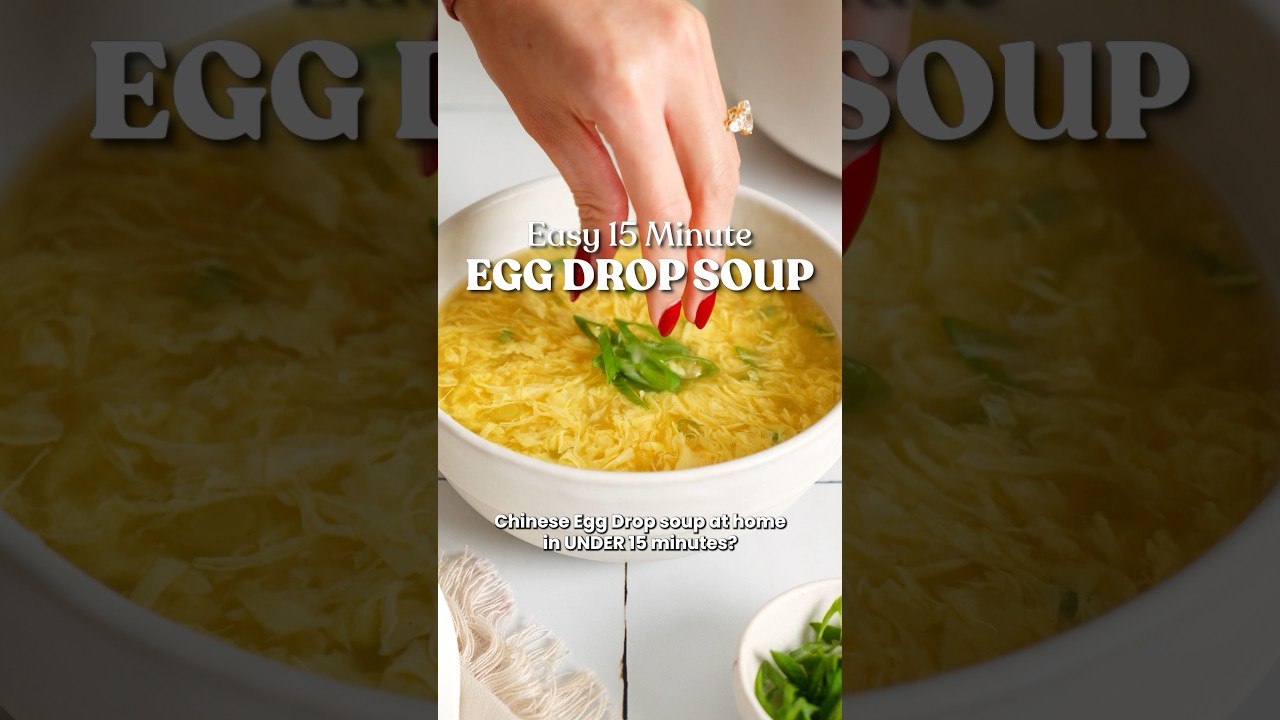
“Every Chinese restaurant serves egg drop soup. Most home cooks have never made it because it looks like a technique dish. It isn't. There are exactly two moments where you can go wrong: the cornstarch slurry and the egg pour. Get those right and you have restaurant-quality results in under 20 minutes with six ingredients you already own.”
Why This Recipe Works
Egg drop soup is one of the most technically misunderstood dishes in home cooking. It looks simple — broth, eggs, done — so people attempt it without reading the instructions and end up with gray, rubbery egg chunks floating in watery broth. The technique is not difficult. But it is specific, and specificity is the entire point.
The Slurry Is Structural
Cornstarch dissolved in cold water is the foundation of this dish, not an optional thickener. When added to hot broth, it creates a light, viscous suspension that does three things: it gives the broth enough body to suspend the egg ribbons instead of letting them sink, it creates the glossy silkiness that distinguishes restaurant egg drop soup from homemade broth with eggs in it, and it slows convection slightly so the eggs set gently instead of shattering on impact.
The slurry must go into simmering, not boiling, broth, and you must stir constantly for the full minute of cook time. Stopped stirring equals instant lumps. Lumps are irreversible. There is no smoothing them out after the fact — the starch has already gelatinized unevenly and no amount of whisking will undo it.
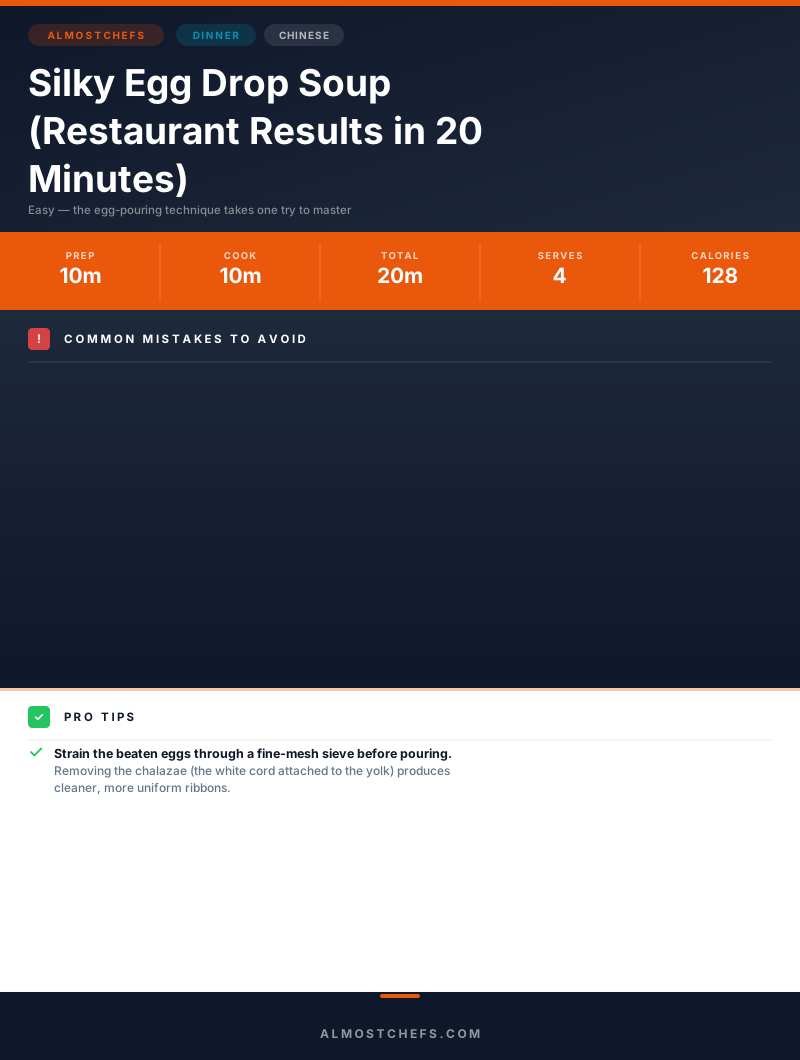
A fine-mesh sieve and a heavy-bottomed pot are the only equipment upgrades worth making here. The sieve, used to strain the beaten eggs before pouring, removes the chalazae and produces cleaner ribbons. The heavy pot maintains even temperature during the slurry and egg stages, where temperature swings cause the most damage.
The Egg Pour Is a Controlled Event
The moment the eggs hit the broth is the moment most home cooks lose the dish. There are four variables in play simultaneously: the temperature of the broth, the speed of the pour, the direction of the stir, and the height from which you pour.
Temperature: gentle simmer only. Visible bubbles but not rolling. White pepper should be drifting, not careening.
Speed: slow and deliberate. The entire pour should take 10-15 seconds. The eggs need time to stretch into ribbons as they hit the moving liquid — pour fast and they set before they can elongate.
Direction: one direction, continuously. The circular current is what stretches the egg stream into long threads. Reverse direction and you shear those threads into chunks.
Height: about six inches above the pot. The fall gives the thin stream slightly more lateral stretch before it contacts the broth surface.
The Aromatic Foundation
Ginger and garlic are not garnishes here — they are the aromatic backbone that elevates this from salted water with eggs to something that tastes like a restaurant made it. One minute in hot broth is all they need to bloom and release their volatile compounds into the liquid. More than two minutes and the garlic turns sharp and slightly bitter.
The shiitake mushrooms contribute glutamates — the same compounds responsible for umami in soy sauce and parmesan — that reinforce the savory depth of the broth without requiring you to make a proper stock from scratch. Shiitakes have a higher glutamate concentration than button mushrooms, which is why they're specified here rather than as a generic mushroom instruction.
Seasoning Order
The rice vinegar goes in last, after the eggs. This isn't incidental — acid added to hot broth too early can affect the proteins in a way that makes egg ribbons set faster and tighter than you want. A post-egg acid addition brightens the entire broth without compromising the texture. The same logic applies to aggressive final seasoning: taste after the eggs are in, not before.
This soup is a precision dish disguised as a weeknight throw-together. Twenty minutes, six active ingredients, one technique to learn. Once you've poured eggs correctly into properly thickened broth and watched the ribbons form, you'll understand why this dish has been on menus for centuries.
Where Beginners Mess This Up
Before we start, read this. These are the 4 reasons your silky egg drop soup (restaurant results in 20 minutes) will fail:
- 1
Adding eggs to boiling broth: Eggs poured into a full rolling boil shatter into ragged chunks instead of forming ribbons. You need the broth at a gentle simmer — small bubbles, not violent ones. The difference between silky ribbons and scrambled egg fragments is entirely about temperature control in this one moment.
- 2
Pouring the eggs too fast: A thin, steady stream — not a dump — is what creates the long, delicate ribbons that make egg drop soup visually and texturally distinct. Pour slowly from a height of about six inches while stirring the broth in a single direction. The stream hits moving liquid and stretches into strands before it sets.
- 3
Skipping the slurry or adding it wrong: Cornstarch dropped directly into hot broth clumps immediately. It must be dissolved in cold water first and then poured into simmering (not boiling) liquid while stirring constantly. The slurry creates the signature silky mouthfeel. Without it, the broth is thin and the eggs sink instead of float.
- 4
Over-seasoning before the eggs go in: Eggs dilute the broth slightly when they cook. Season aggressively after the eggs are in, not before. A broth that tastes perfectly seasoned pre-egg will taste flat at the table.
The Video Reference Library
Want to see it in action? Here are the exact videos we analyzed and combined to build this foolproof recipe translation:
The source video for this recipe. Clear demonstration of the egg-pour technique and slurry timing that produces restaurant-quality ribbons at home.
🛠️ Core Equipment
- Large heavy-bottomed potEven heat distribution prevents hot spots that cause the eggs to cook unevenly. You need precise temperature control for the egg-pour moment.
- Small whisk or forkFor the cornstarch slurry. Lumps form fast — you need to get the starch fully dissolved in cold water before it hits the hot broth.
- Ladle or spouted measuring cupFor the egg pour. You need a vessel that lets you control a thin, steady stream. A bowl with a lip works but a ladle gives you better height control.
- Fine-mesh sieveOptional but useful — strain the beaten eggs through it before pouring to remove chalazae and create the cleanest, most uniform ribbons.
Silky Egg Drop Soup (Restaurant Results in 20 Minutes)
🛒 Ingredients
- ✦6 cups low-sodium vegetable or chicken broth
- ✦2 large eggs, beaten
- ✦1 tablespoon cornstarch
- ✦2 tablespoons cold water
- ✦3 green onions, sliced thin (white and light green parts separated)
- ✦1 tablespoon fresh ginger, minced
- ✦2 cloves garlic, minced
- ✦1 teaspoon sesame oil, plus more for serving
- ✦1/2 teaspoon white pepper
- ✦2 tablespoons low-sodium soy sauce
- ✦1 cup shiitake mushrooms, diced
- ✦1/2 cup frozen peas
- ✦1 tablespoon rice vinegar
- ✦1 teaspoon chicken bouillon powder
- ✦2 cups fresh spinach, roughly chopped
- ✦Salt and white pepper to taste
👨🍳 Instructions
01Step 1
Whisk together cornstarch and cold water in a small bowl until completely smooth. Set aside.
02Step 2
Bring broth to a rolling boil over medium-high heat in a large pot.
03Step 3
Add minced ginger and garlic. Stir and cook for 1 minute until fragrant.
04Step 4
Add diced shiitake mushrooms, soy sauce, and bouillon powder. Reduce heat to a gentle simmer and cook for 3 minutes.
05Step 5
Add frozen peas and chopped spinach. Stir until spinach wilts completely, about 1 minute.
06Step 6
Slowly pour the cornstarch slurry into the simmering broth while stirring constantly in a circular motion. Cook for 1 minute until the broth turns slightly glossy and coats the back of a spoon.
07Step 7
Reduce heat to low and let the broth settle for 30 seconds. It should be at a very gentle simmer — small, lazy bubbles only.
08Step 8
Pour the beaten eggs in a slow, thin stream from about 6 inches above the pot while stirring the broth in one continuous direction. The eggs will set into ribbons within seconds.
09Step 9
Drizzle sesame oil over the surface and stir gently once.
10Step 10
Season with white pepper, rice vinegar, and additional salt or soy sauce to taste.
11Step 11
Scatter the white and light green parts of the green onions across the surface. Let sit 30 seconds.
12Step 12
Ladle into bowls. Top each with the reserved green onion greens and a small drizzle of sesame oil. Serve immediately.
Nutrition Per Serving
Estimates based on standard preparation. Adjustments alter macros.
🔄 Substitutions
Instead of Cornstarch...
Use Arrowroot powder
Use the same ratio — 1:2 with cold water. Arrowroot produces a slightly clearer, lighter thickening. It breaks down faster at high heat, so add it at a lower simmer than you would cornstarch.
Instead of Soy sauce...
Use Coconut aminos or tamari
Coconut aminos cut sodium by roughly 40% while maintaining the savory depth. Tamari is the better choice if you want an identical flavor profile without wheat.
Instead of Sesame oil...
Use Toasted sesame oil (same thing, just ensure it's toasted) or a few drops of chili sesame oil
The toasted version is what produces the nutty, aromatic finish. Plain sesame oil lacks the depth. If avoiding sesame entirely, a small amount of extra-virgin avocado oil preserves the richness without the flavor.
Instead of White pepper...
Use Freshly cracked black pepper
Black pepper is more robust and slightly more bitter. It adds visible specks to the broth and a more assertive heat. Start with half the quantity and adjust.
🧊 Storage & Reheating
In the Fridge
Store without the egg ribbons if possible — they continue cooking in residual heat. If already combined, refrigerate for up to 2 days in an airtight container. The texture of the eggs will degrade.
In the Freezer
The broth base freezes well for up to 2 months. Do not freeze the assembled soup with eggs — they turn rubbery and waterlogged on thaw. Freeze the seasoned broth, then add fresh eggs when reheating.
Reheating Rules
Warm gently over low heat just until steaming. Do not boil — boiling shatters the egg ribbons and makes the cornstarch break down into a gluey consistency. Add a splash of broth or water if it has thickened in the fridge.
❓ Frequently Asked Questions
Why are my egg ribbons chunky instead of silky?
Two possible causes. One: the broth was at a full boil instead of a gentle simmer when you added the eggs. Two: you poured too fast or stirred in multiple directions. The eggs need to hit slowly-moving, not violently bubbling, liquid to stretch into ribbons instead of setting immediately into clumps.
Why is my broth cloudy?
Overcooked garlic and ginger, or eggs added to boiling broth, are the usual culprits. A clear, glossy broth requires gentle simmer temperatures throughout. Bone broth will naturally produce a slightly less clear broth than vegetable stock — that's normal and not a flaw.
Can I make this vegetarian?
Yes. Use vegetable broth and replace the chicken bouillon with a small piece of dried kombu or a teaspoon of white miso dissolved into the broth. The eggs are already vegetarian. The flavor profile shifts slightly — less savory depth, more delicate — but it works well.
My soup thickened too much after sitting. Did I add too much cornstarch?
Probably not — cornstarch gels more aggressively as it cools. The amount here is calibrated for serving immediately. If you're making it ahead, use slightly less cornstarch (3/4 tablespoon) and the consistency will be correct after the broth cools slightly.
Do I have to use shiitake mushrooms?
No. Shiitakes contribute a meaty umami base that reinforces the broth, but any mushroom works. Button or cremini mushrooms are milder. If you skip mushrooms entirely, consider adding an extra half-teaspoon of soy sauce to compensate for the lost depth.
Can I add tofu or chicken?
Yes to both. Silken tofu cut into small cubes goes in with the peas and wilts gently into the broth. Pre-cooked shredded chicken can be added at the same stage. Do not add raw chicken — it won't cook through in the brief simmer time and will cloud the broth.
The Science of
Silky Egg Drop Soup (Restaurant Results in 20 Minutes)
We turned everything on this page into a beautiful, flour-proof PDF cheat sheet. Print it out, stick it to your fridge, and never mess up your silky egg drop soup (restaurant results in 20 minutes) again.
*We'll email you the high-res PDF instantly. No spam, just perfectly cooked meals.
AlmostChefs Editorial Team
We translate the internet's most popular cooking videos into foolproof, beginner-friendly written recipes. We analyze multiple methods, test them in our kitchen, and engineer a single "Master Recipe" that gives you the best possible result with the least possible stress.