Vivid Dyed Deviled Eggs (The Party Trick Everyone Asks About)
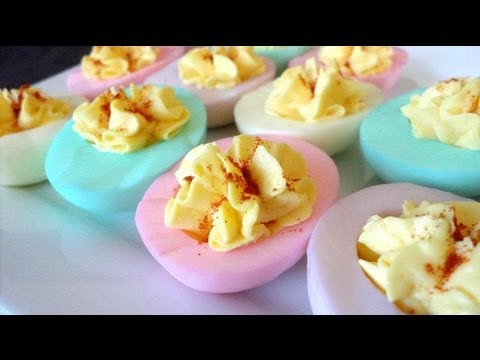
Classic deviled eggs transformed with natural color dye baths — beet, turmeric, butterfly pea flower, and spinach — that turn white egg halves into jewel-toned appetizer bites without artificial dyes. We reverse-engineered the technique to get saturated, even color every time while keeping the filling silky and properly seasoned.

“Deviled eggs are the dish that always disappears first at a party and never gets credited. Dye the whites and suddenly people are asking you for the recipe before they've even finished chewing. The technique is simpler than it looks, but most tutorials produce washed-out pastels when they promised jewel tones. The difference is dye bath concentration, acid ratio, and time — and almost every recipe gets at least one of those wrong.”
Why This Recipe Works
Deviled eggs are one of the oldest party foods in the American repertoire, and for good reason — they are self-contained, pre-portioned, and require no utensils. They disappear faster than almost anything else on the table. Dye the whites and you add something genuinely unexpected: a visual trick that makes people pick them up before they've even processed what they're looking at. The goal here is not novelty for its own sake. It's controlling the technique precisely enough that the color is saturated and even, the filling is silky rather than lumpy, and the whole thing comes together without drama.
The Chemistry Behind Natural Dyes
Natural dyes work through a class of pigment molecules that bind to proteins under the right conditions. Beets contain betalains, turmeric contains curcumin, butterfly pea flowers contain anthocyanins, and spinach contains chlorophyll — each with a different molecular structure, different binding affinity for egg white protein, and different sensitivity to pH. What they share is this: they all need acid to bond properly.
The white vinegar in each dye bath is doing real chemistry, not just adding flavor. A slightly acidic environment causes egg white proteins to partially unfold at their surface — not enough to noticeably change texture, but enough to expose more binding sites for the dye molecules. Without acid, you get surface deposition. With acid, you get genuine penetration. The difference is color that stays on the egg versus color that rubs off on your fingers.
Concentration is the other variable almost every recipe underestimates. Natural colorants are not as potent as synthetic food dyes, and attempting to achieve jewel tones with restaurant-level dilution produces Easter basket pastels. For deep color, use your dye source at full strength or near it — undiluted beet juice, two tablespoons of turmeric in half a cup of water, triple-strength butterfly pea flower tea. The water content in the recipe serves as a carrier, not a diluent. Think of it as a dye bath, not a colored water bath.
Why the Hard-Boil Technique Matters
The gray-green ring around the yolk is sulfur. Specifically, it's iron sulfide forming at the yolk-white interface when the egg is overcooked or cooled too slowly. It doesn't affect flavor meaningfully, but it affects the visual impression of the filling — and in a dish where appearance is the entire point, gray-ringed yolks undermining jewel-toned whites is a contradiction you don't want.
The off-heat method (bring to boil, cover, rest 12 minutes, ice bath) works by reducing the total thermal exposure of the egg. You're using residual heat rather than sustained boiling, which keeps the yolk temperature in the range where it sets fully but sulfur compounds don't form visible deposits. The slotted spoon transfer to the ice bath stops carryover cooking within seconds rather than letting the eggs coast upward in temperature inside the pot.
The Filling Is Not Optional to Get Right
Most deviled egg filling is gritty because most cooks mash the yolks with a fork. Fork mashing crushes the larger yolk particles but leaves smaller fiber clusters intact — clusters that create texture in a dish whose entire appeal is smoothness. Pressing yolks through a fine-mesh sieve is the single step that separates home-cook filling from something that looks and feels professionally made. The difference is immediately visible: fork-mashed filling has a rough, matte surface; sieved filling is glossy and pipes in clean, defined ribbons.
The mayo-to-mustard ratio matters too. Too much mayonnaise and the filling tastes one-dimensional and slightly sweet. Too much mustard and it sharpens into something closer to a condiment. The ratio in this recipe — a third cup mayo to one and a half tablespoons Dijon — sits at the balance point where richness and acidity amplify each other rather than compete.
Assembly Is a Presentation Problem
Dyed deviled eggs are fundamentally a visual dish, which means every finishing decision compounds. The piping bag is non-negotiable — not because spoon-dolloped filling tastes different, but because the raised rosette of filling creates height contrast against the jewel-toned white, and contrast is what makes the plate dramatic rather than flat. Garnish logic follows the same rule: smoked paprika on blue butterfly pea whites, chives on deep red beet whites, dill on green spinach whites. Match the garnish to maximize color contrast, not match it.
Make these for an Easter table, a spring gathering, or any occasion where you want food that looks like it came from somewhere more interesting than your own kitchen.
Where Beginners Mess This Up
Before we start, read this. These are the 4 reasons your vivid dyed deviled eggs (the party trick everyone asks about) will fail:
- 1
Dyeing the eggs before they're fully dry: Wet egg whites repel the dye bath and produce blotchy, uneven color with pale streaks. After halving, pat each white completely dry with paper towels before submerging. Any residual moisture creates a barrier between the dye and the egg surface. This step takes 30 seconds and most people skip it entirely.
- 2
Using a weak dye concentration: Pale pastel results almost always come from under-concentrated dye baths. Natural colorants like beet juice and turmeric need to be used undiluted or at very high ratios — a tablespoon of turmeric in two cups of water produces yellow; a tablespoon in half a cup produces deep gold. Cut the water, not the dye.
- 3
Not enough acid in the bath: White vinegar is not optional. Acid opens the protein structure of the egg white slightly, allowing the dye molecules to penetrate deeper and bond more permanently. Without it, you get surface color that rubs off on your fingers when you serve. One tablespoon of vinegar per cup of liquid is the minimum effective ratio.
- 4
Making the filling too early: Deviled egg filling oxidizes faster than people expect. Mixed filling left uncovered for more than 30 minutes starts to develop a grayish tint and loses its fresh, tangy bite. Make the filling last, pipe it right before serving, and keep it refrigerated until the moment guests arrive.
The Video Reference Library
Want to see it in action? Here are the exact videos we analyzed and combined to build this foolproof recipe translation:
🛠️ Core Equipment
- Small prep bowls or ramekinsOne per dye color. You need vessels just deep enough to fully submerge the egg white halves. Standard cereal bowls work but require more dye. Shallow ramekins use less liquid and produce more concentrated color in less time.
- Piping bag or zip-lock bagA spoon produces lumpy, uneven filling that pools in the center. Even a basic disposable piping bag or a zip-lock bag with one corner snipped gives you clean, professional-looking rosettes. The presentation is half the point of this dish.
- Fine-mesh sieveFor straining spinach liquid and beet juice before use. Pulp and fiber in the dye bath cling to the egg white surface and leave residue that looks like dirt. Strain every natural dye before submerging eggs.
- Slotted spoonFor lifting dyed egg whites out of the bath without tearing or dragging. Regular spoons can break the delicate whites, especially after extended soaking. A slotted spoon drains excess dye as you lift, keeping the color even.
Vivid Dyed Deviled Eggs (The Party Trick Everyone Asks About)
🛒 Ingredients
- ✦12 large eggs
- ✦1/3 cup mayonnaise
- ✦1.5 tablespoons Dijon mustard
- ✦1 tablespoon apple cider vinegar
- ✦1/2 teaspoon fine sea salt
- ✦1/4 teaspoon freshly ground black pepper
- ✦Smoked paprika, for garnish
- ✦Fresh chives or dill, finely chopped, for garnish
- ✦**For the beet dye bath:** 1 cup beet juice (fresh or bottled) + 1 tablespoon white vinegar
- ✦**For the turmeric dye bath:** 1 cup water + 2 tablespoons ground turmeric + 1 tablespoon white vinegar
- ✦**For the butterfly pea flower dye bath:** 1 cup steeped butterfly pea flower tea (cooled) + 1 tablespoon white vinegar
- ✦**For the spinach dye bath:** 1 cup blended and strained spinach liquid + 1 tablespoon white vinegar
👨🍳 Instructions
01Step 1
Place eggs in a single layer in a saucepan and cover with cold water by one inch. Bring to a full boil over medium-high heat, then immediately remove from heat, cover, and let sit for exactly 12 minutes.
02Step 2
Transfer eggs immediately to an ice bath and let sit for at least 10 minutes. Peel under cold running water.
03Step 3
Slice each egg in half lengthwise. Pop yolks into a bowl and set whites aside. Pat each white half completely dry with paper towels — both the cavity and the outer surface.
04Step 4
Prepare your dye baths in separate small bowls: mix each color liquid with its white vinegar. For turmeric, whisk thoroughly to dissolve. For butterfly pea flower, brew tea with boiling water, steep 5 minutes, then cool completely before using.
05Step 5
Place egg white halves cavity-side down into the dye baths — 4 to 6 halves per color. Submerge fully. Soak for 20-30 minutes for deep, saturated color. Check at 15 minutes for lighter pastel tones if preferred.
06Step 6
Remove whites with a slotted spoon and place cavity-side up on a paper towel-lined tray. Pat the outer surfaces gently dry without rubbing the color off. Refrigerate uncovered for 10 minutes to set the dye.
07Step 7
While whites chill, make the filling: press yolks through a fine-mesh sieve into a bowl. Add mayonnaise, Dijon, apple cider vinegar, salt, and pepper. Whisk vigorously until completely smooth and glossy — no lumps.
08Step 8
Transfer filling to a piping bag fitted with a star tip or a zip-lock bag with one corner snipped. Pipe filling generously into each dyed white, mounding it slightly above the rim.
09Step 9
Garnish each egg immediately before serving: a pinch of smoked paprika, a few chive snippets, or a small dill frond. Serve cold.
Nutrition Per Serving
Estimates based on standard preparation. Adjustments alter macros.
🔄 Substitutions
Instead of Mayonnaise...
Use Avocado or vegan mayonnaise
Vegan mayo performs nearly identically in this filling. Avocado-based mayo adds a subtle richness. Both pipe cleanly. Texture difference is minimal.
Instead of Dijon mustard...
Use Whole grain mustard or yellow mustard
Whole grain adds texture and visual interest to the filling. Yellow mustard is sharper and less complex — use slightly less. Both work.
Instead of Apple cider vinegar...
Use White wine vinegar or fresh lemon juice
White wine vinegar is milder and slightly more elegant. Lemon juice adds brightness but can make the filling looser — compensate with a touch less mayo.
Instead of Butterfly pea flower tea...
Use Purple cabbage juice with a pinch of baking soda
Delivers a comparable blue-purple hue through anthocyanin chemistry. The pH of the liquid determines the final color — acidic means pink-purple, alkaline means true blue.
🧊 Storage & Reheating
In the Fridge
Store assembled eggs in an airtight container for up to 2 days. After 24 hours the dye continues to deepen and the filling firms slightly — both changes are acceptable.
In the Freezer
Do not freeze. Hard-boiled egg whites turn rubbery and weep liquid after freezing. There is no recovery.
Reheating Rules
Serve cold. Deviled eggs are not a reheated dish. If they've been refrigerated, let them sit at room temperature for 10 minutes before serving to take the chill off.
❓ Frequently Asked Questions
Can I use food coloring instead of natural dyes?
Yes, and it's faster. Mix 10-15 drops of gel food coloring with 1 cup water and 1 tablespoon white vinegar per color. You'll get more vivid, uniform results in half the time. The trade-off is that natural dyes have slightly more tonal variation — they look handmade in a good way. Gel food coloring looks more uniform, which is better for formal presentations.
Why did my egg whites turn rubbery in the dye bath?
The dye bath was too warm. Heat continues to cook the already-set egg white proteins, tightening them further. Every dye bath must be at room temperature or cooler. If you're in a rush, use an ice bath to cool the liquid before adding eggs.
How do I stop the dye from rubbing off when I handle the eggs?
Two things: sufficient acid in the bath and adequate drying time after soaking. Vinegar helps the dye bond to the protein rather than just sitting on the surface. After soaking, let the whites air dry on a rack for 5-10 minutes rather than immediately handling them. Dye that hasn't bonded transfers easily; dye that's had time to set stays put.
My yolk filling has lumps. What went wrong?
You didn't sieve the yolks. Mashing with a fork leaves fibrous yolk clusters that no amount of stirring will fully smooth out. Press every yolk through a fine-mesh sieve before adding any other ingredients. It takes two minutes and the difference in texture is not subtle.
Can I make these the night before a party?
Yes — with one adjustment. Soak the whites for only 10 minutes instead of 30. They'll continue to absorb color in the refrigerator overnight and arrive at your target saturation by serving time. Store whites and filling separately, covered, and assemble the morning of. Pipe filling no more than 2-3 hours before guests arrive.
Why does my butterfly pea flower dye turn pink instead of blue?
Butterfly pea flower is pH-sensitive — acid turns it pink-purple, alkaline turns it blue. If you add vinegar to the bath, the result will be lavender to pink depending on concentration. For true blue, skip the vinegar and use plain cooled tea. For vivid purple, add a tiny pinch of cream of tartar instead of vinegar.
The Science of
Vivid Dyed Deviled Eggs (The Party Trick Everyone Asks About)
We turned everything on this page into a beautiful, flour-proof PDF cheat sheet. Print it out, stick it to your fridge, and never mess up your vivid dyed deviled eggs (the party trick everyone asks about) again.
*We'll email you the high-res PDF instantly. No spam, just perfectly cooked meals.
AlmostChefs Editorial Team
We translate the internet's most popular cooking videos into foolproof, beginner-friendly written recipes. We analyze multiple methods, test them in our kitchen, and engineer a single "Master Recipe" that gives you the best possible result with the least possible stress.